


Banh Mi Hanoi: The Complete Guide to Vietnam’s Famous Sandwich 2026
Banh Mi Vietnam on the World Food Map
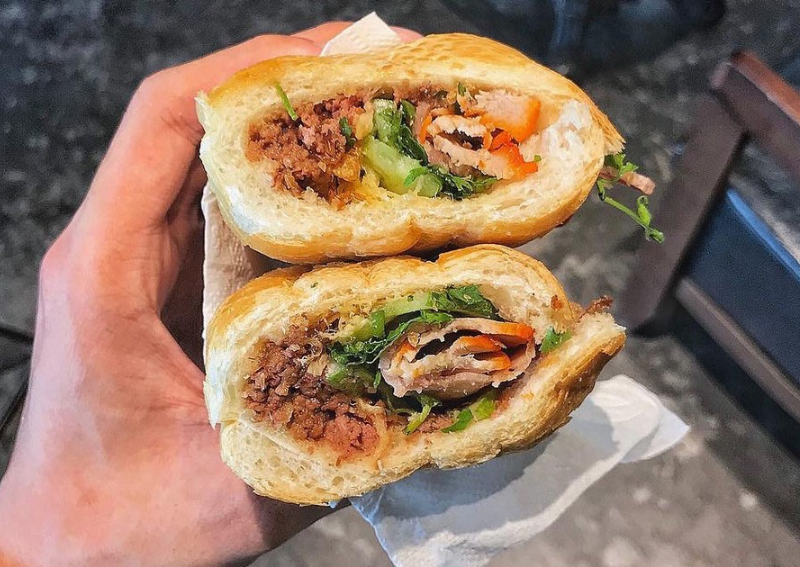
Few dishes travel as well as the Vietnamese sandwich. Crisp bread, rich pate, fresh herbs and a kick of chili have made banh mi in Vietnam one of the most recognised street foods on the planet. The word itself was added to the Oxford English Dictionary in 2011, and banh mi now appears regularly on lists of the world’s best sandwiches and street foods, with shops from Hanoi to cities across the globe.
For visitors, a banh mi is often the first taste of Vietnamese street food and the easiest way to eat well on a small budget. In Hanoi, it also tells a story about the city’s history, its climate and its love of simple food made with care. Whether you are putting together a Hanoi food guide or a list of things to do in Hanoi, a Banh Mi Hanoi stop belongs near the top.
The Origins of Banh Mi Vietnam: From French Baguette to Vietnamese Icon
Banh mi Vietnam began with the baguette, which arrived in Vietnam during the French colonial period along with butter, pate and cold cuts. Vietnamese bakers adapted the loaf to local taste, making it lighter and airier with a thin, crackly crust. Street vendors then did what Vietnamese cooks do best: they made it their own.
Over time, the sandwich left the colonial table and became everyday street food. Vendors filled the bread with local ingredients such as pork, pickles, fresh herbs, chili and savoury sauces, turning a French import into a distinctly Vietnamese dish. Each region added its own character, and Hanoians developed a style that is simple, rich and deeply comforting, built around pate, butter, cold cuts and good bread.
Banh Mi in the North, Centre and South: A Quick Comparison
| North (Hanoi) | Central (Hue, Da Nang, Hoi An) | South (Saigon) | |
| Style | Simple and savoury | Bold, saucy and spicy | Generous and loaded |
| Bread | Crisp crust, often smaller loaf | Crisp and airy, sturdy enough for sauces | Light, crackly baguette |
| Typical fillings | Pate, butter, cold cuts, pork floss, fried egg, sausage | Grilled pork, local sausages, pate, rich sauces | Cold cuts, pate, grilled pork, meatballs, fried egg |
| Vegetables | Light, often cucumber and a little herb | Fresh herbs and pickles | Plenty of pickled carrot and daikon, cucumber, coriander |
| Sauces | Chili sauce, soy sauce, butter | Signature house sauces, chili | Mayonnaise, chili, sweet and savoury sauces |
| Overall flavour | Rich, buttery, pate-forward | Spicy and complex | Sweet, fresh and herbal |
These are general tendencies. Every vendor makes banh mi differently, and styles blend as people and recipes travel.
What Makes Vietnamese Sandwiches in Hanoi Special?
Pate and Butter come first
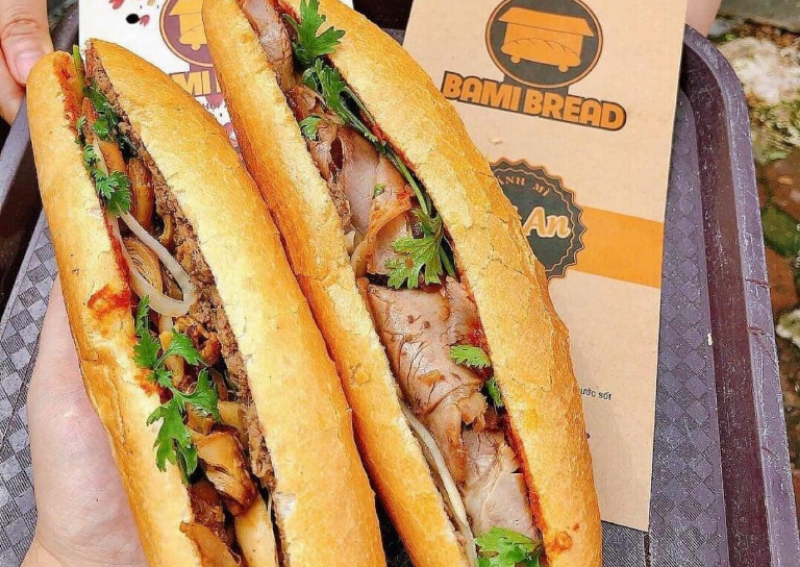
Hanoi banh mi leans closest to its French roots. Silky pate and butter on a crisp loaf are the foundation, often with cold cuts and a spoonful of chili sauce. The result is rich and savoury rather than fresh and herbal.
Simple but carefully made
Many Hanoi vendors keep the fillings short and focus on quality, with homemade pate and well-seasoned meats.
More than one way to eat it
Beyond the classic sandwich, look for:
- Banh mi pate, the simple classic with pate, butter and chili
- Banh mi with fried egg, popular for breakfast
- Banh mi xiu mai, with pork meatballs in a tomato sauce
- Banh mi chao, a sizzling pan of eggs, pate and sausage served with bread for dipping, a favourite on cooler mornings
- Bread dipped in sweetened condensed milk, a nostalgic local breakfast treat
A seasonal food
Hanoi has four seasons, and a warm, buttery banh mi is especially comforting in cooler months, while the Old Quarter’s street culture keeps it popular all year round.
When Do Locals Eat Banh Mi?
Banh mi is not tied to one occasion. It fits into almost any part of the day:
- Breakfast on the go. The most common time and the heart of Hanoi breakfast culture, often with an egg or pate, usually with a glass of iced tea or coffee.
- A quick lunch. Fast, filling and cheap, ideal for office workers and students.
- Late-night snacks. Many shops stay open late, perfect after an evening out in the Old Quarter.
- Travel and day trips. Easy to carry, so it is a favourite for long journeys, picnics and train rides.
- Cold mornings. Hot banh mi chao is a classic winter comfort.
- Sightseeing breaks. Easy to hold in one hand, a banh mi is a handy snack between Hoan Kiem Lake, temples, museums and a walk through the Old Quarter’s historic streets.
Where to Eat the Best Banh Mi in Hanoi
Here are well-known spots for banh mi in Hanoi, most within easy reach of the Old Quarter. They also make an easy base for a self-guided Hanoi food tour or Hanoi walking tour. Prices and hours change, so check Google Maps before you go.
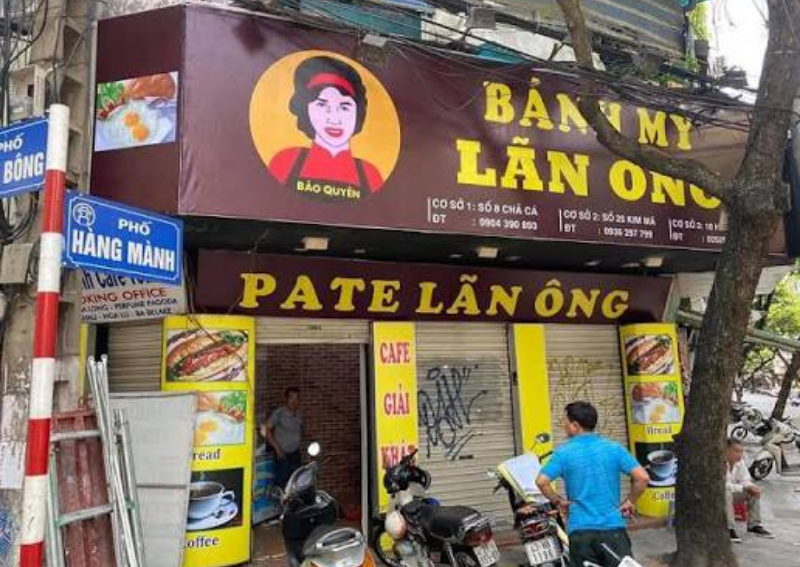
- 25 Hang Ca Street, Hoan Kiem.
The best-known name for visitors, a busy street stall with a wide menu, open roughly 7am to 9pm. Expect about 30,000 to 45,000 VND (about 1.15 to 1.75 USD). There is a seating area nearby on Hang Ca Street.
Banh Mi Pho Hue
- 118A Hue Street, Hai Ba Trung
A family-run institution serving banh mi since the 1970s, loved for its homemade chili sauce and generous choice of fillings. About 20,000 to 50,000 VND (about 0.75 to 1.90 USD).
Banh Mi Nguyen Sinh
- 17 Ly Quoc Su Street, Hoan Kiem
One of Hanoi’s older banh mi shops, known for pate, cold cuts and butter. Pricier and more refined, at roughly 50,000 to 120,000 VND (about 1.90 to 4.60 USD).
Banh Mi Dan To, 32 Tran Nhat Duat Street, Hoan Kiem. A local favourite with simple, affordable sandwiches, about 15,000 to 25,000 VND (about 0.60 to 0.95 USD).
Banh Mi Pho Co
- 38 Dinh Liet Street, Hoan Kiem
A popular Old Quarter stall, praised for homemade ingredients and low prices, about 20,000 to 40,000 VND (about 0.75 to 1.55 USD).
Banh Mi Tram
252 Cua Nam Street, Hoan Kiem
Known for its chili sauce, at around 20,000 VND (about 0.75 USD).
Bami 34
34 Luong Ngoc Quyen Street, Hoan Kiem
A good choice for night owls in the Old Quarter.
Tip: Go early for the freshest bread and shorter queues, and try one classic pate banh mi before branching out.
Where to Stay in Hanoi for a Banh Mi Food Walk
The best way to eat your way through the city is to stay where the food is. Hanoi La Siesta Classic Hang Thung, ranked among the Top 4 Best of the Best Hotels in Vietnam by Tripadvisor, sits in the heart of the Old Quarter, close to Hoan Kiem Lake and within easy reach of Hanoi’s historic streets, local restaurants and cultural attractions. Its location makes it easy to start the day with a fresh banh mi from a nearby stall, then spend the morning exploring the neighbourhood on foot.
For travellers comparing the Best hotels in Hanoi, the hotel offers a boutique setting with Vietnamese-inspired interiors, attentive service and a swimming pool, providing a comfortable retreat after a day of eating and exploring the busy Old Quarter. It is also worth considering for those researching the Best Boutique hotels in Hanoi Old Quarter, particularly if your priority is staying within walking distance of the neighbourhood’s historic streets and street food spots.
From here, a banh mi breakfast, a stroll around Hoan Kiem Lake and an evening street food walk can easily become one compact Old Quarter itinerary, connecting Hanoi’s traditional culture, food and everyday city life.
Frequently Asked Questions
What is banh mi?
Banh mi is a Vietnamese sandwich made with a light, crisp baguette and fillings such as pate, cold cuts, grilled meat, egg, herbs, pickles and chili sauce.
What makes Hanoi banh mi different from Saigon banh mi?
Hanoi banh mi tends to be simpler and richer, focusing on pate, butter and cold cuts, while Saigon banh mi is usually more heavily loaded with pickled vegetables, herbs and sauces.
Where can I find the best banh mi in Hanoi?
Popular choices include Banh Mi 25 (25 Hang Ca Street), Banh Mi Pho Hue (118A Hue Street), Banh Mi Nguyen Sinh (17 Ly Quoc Su Street) and Banh Mi Dan To (32 Tran Nhat Duat Street).
How much does banh mi cost in Hanoi?
Most sandwiches cost about 15,000 to 50,000 VND (about 0.60 to 1.90 USD), with premium shops charging more.
What is the best time to eat banh mi in Hanoi?
Breakfast is the classic time, when bread is freshest, but many shops serve until evening and some stay open late.
Is banh mi suitable for vegetarians?
Some shops offer vegetarian options such as egg or tofu fillings. Ask the vendor before ordering, as pate and sauces often contain meat.
Where should I stay in Hanoi to explore the food scene?
The Old Quarter is the most convenient base. Hanoi La Siesta Classic Hang Thung is in the heart of the Old Quarter, close to Hoan Kiem Lake and many of Hanoi’s best street food spots.