



Bánh Cốm Hanoi 2026: Hanoi Iconic Green Rice Cake and Where to Find the Best of It
Among all the edible souvenirs that visitors carry home from Vietnam, few are as tied to a single street as bánh cốm Hanoi. This soft, jade-green rice cake, wrapped in banana leaf and tucked into simple paper boxes, is one of Hanoi’s most treasured specialty foods, a favorite for gift-giving, weddings, and quiet afternoons with a cup of tea.
This guide covers the origin of bánh cốm, how it is made, what makes it such a distinctive piece of Hanoi’s culinary heritage, and exactly where to buy the most authentic version in the Old Quarter, including the shop most locals will send you to first.
What Is Bánh Cốm Hanoi?
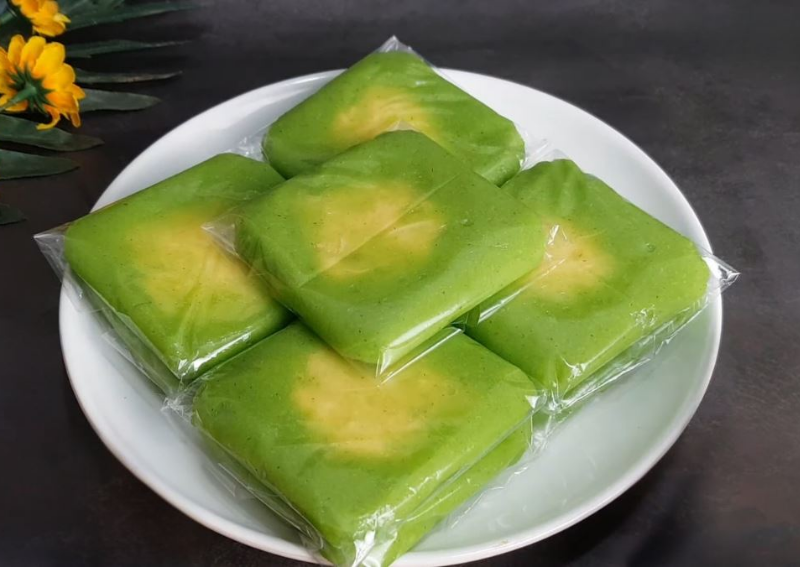
Hanoi Green Rice Cake is made from cốm, the young, flattened green rice grains harvested in early autumn and traditionally associated with Làng Vòng, a village on the outskirts of Hanoi long famous for producing the finest cốm in the country. While fresh cốm on its own is a beloved seasonal snack, someone eventually had the idea to use it as the outer layer of a filled cake, and bánh cốm was born, a way to preserve the fragrance of Hanoi’s autumn rice harvest in a form that could be gifted, stored a little longer, and shared beyond the season itself.
The cake’s home became Hang Than street, in the northern part of the Old Quarter, where a small cluster of family-run shops has produced bánh cốm for well over a century. The most famous of these, Nguyên Ninh at 11 Hàng Than, was founded in 1865 by the Nguyễn Duy family and is widely regarded as the oldest bánh cốm shop in Hanoi, credited by many local food historians as the very place that first popularized the recipe beyond the original cốm-growing villages.
Today, bánh cốm remains one of the most recognizable Hanoi specialty foods, closely associated with the city’s cooler months and often given as a formal gift during weddings and engagement ceremonies, where a tray of bánh cốm is a traditional part of the betrothal gift exchange in northern Vietnam.
How Bánh Cốm Is Made?
The process is deceptively simple in its ingredient list, but demanding in its execution, which is why quality varies so much from shop to shop.
The cốm layer
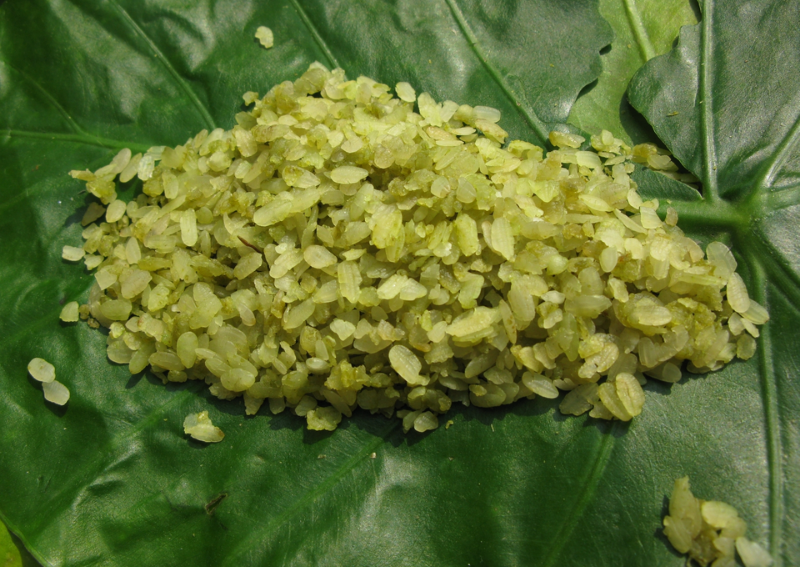
Young rice grains are harvested while still soft, roasted lightly, then pounded and flattened into thin green flakes. For bánh cốm, this cốm is cooked down with sugar and a touch of water until it becomes a pliable, sticky dough that can be rolled thin without cracking.
The Filling
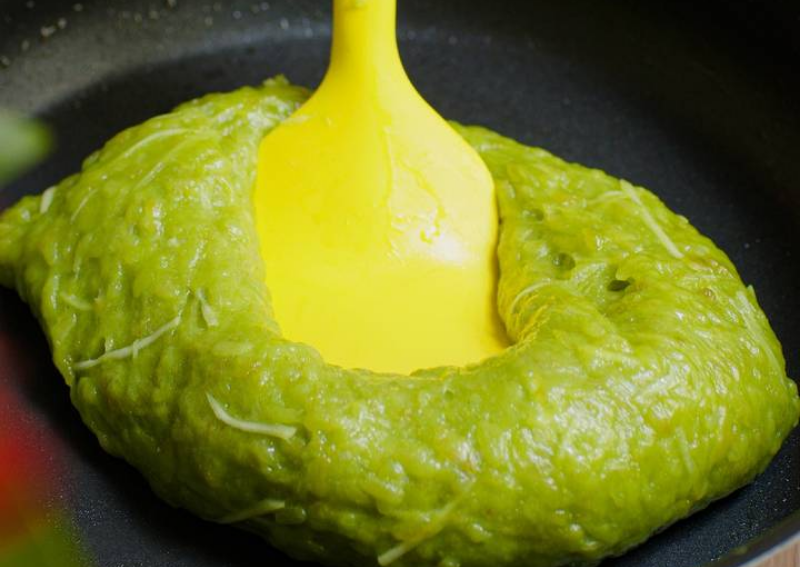
A rich paste of mashed mung beans, sugar, and grated coconut is prepared separately, sometimes enriched with candied lotus seeds or a hint of jasmine or pomelo blossom water for fragrance.
Shaping
A portion of the cốm dough is flattened, the mung bean filling is placed in the center, and the dough is folded into a small, dense square, one of the more finicky steps since the cốm layer must stay intact without tearing.
Wrapping
Each cake is wrapped first in banana leaf, then tied with a thin strip of dyed straw or ribbon, a presentation style that has barely changed in generations and is part of what makes bánh cốm instantly recognizable as a Hanoi specialty souvenir.
Storage
Because traditional bánh cốm is made without preservatives, it is meant to be eaten within just a few days of production, which is why the best shops make small batches fresh throughout the day rather than stockpiling in advance.
What Makes Bánh Cốm Special – Hanoi Souvenirs
Bánh cốm occupies a unique place among Vietnamese desserts because its flavor is tied so tightly to a season. Real cốm can only be harvested for a few weeks each autumn, and while some shops now use frozen or dried cốm to extend availability, the best bánh cốm is still closely linked to Hanoi’s cooler months, when the fragrance of fresh cốm is said to drift through certain corners of the Old Quarter.
It is also a cake defined by restraint rather than sweetness. Unlike many Western-style desserts, bánh cốm keeps its sugar content moderate, letting the grassy, slightly nutty aroma of the rice itself lead the flavor, with the mung bean and coconut filling adding richness rather than overwhelming sweetness.
This makes it a popular choice among visitors looking for Hanoi food souvenirs that feel genuinely local rather than mass-produced, and its cultural role in weddings and formal gift-giving gives it a story that few other traditional Vietnamese sweets can match.
Best Places to Buy Bánh Cốm in Hanoi Old Quarter
Hang Than street, just north of the main Old Quarter grid and an easy walk from Truc Bach Lake, is the single best-known address for this cake, though a few other spots are worth knowing about.
Nguyên Ninh
- Address: 11 Hang Than, Hoan Kiem, Hanoi
The most historic and most recommended name in the city, operating from the same address since 1865 and now run by the sixth generation of the founding family. The shop is famous for staying deliberately understated, with no street display or bright signage, relying instead on a century and a half of reputation. It makes several fresh batches daily and is considered by many longtime Hanoians the definitive version of this Hanoi specialty food, making it a near-essential stop on any Old Quarter food tour focused on edible souvenirs.
Other Hàng Than shops:
Over the decades, several other stores on the same street have adopted similar names using the words “Ninh” or “Nguyên,” so visitors should confirm they are at the original address before buying if authenticity matters to them.
Bánh Cốm from Làng Vòng
For those willing to travel slightly outside the Old Quarter, the original cốm-producing village of Làng Vòng, now part of Cầu Giấy district, remains the source of the raw ingredient itself and sells its own versions of both fresh cốm and cốm-based cakes.
Old Quarter Specialty Food Shops
A number of general Hanoi specialty stores scattered around the Old Quarter, particularly near Đồng Xuân Market, stock bánh cốm alongside other classic gifts like ô mai and mứt sen, useful if you want to build a small tasting box of different Hanoi treats in one stop.
If bánh cốm is going into a suitcase rather than being eaten same-day, ask the shop how long it will keep, since the traditional preservative-free versions are only good for a few days at room temperature.
Frequently Asked Questions
What does bánh cốm taste like?
Bánh cốm has a soft, slightly chewy green rice exterior with a grassy, faintly nutty aroma, wrapped around a sweet mung bean and coconut filling, resulting in a cake that is fragrant rather than intensely sweet.
Where is the best shop to buy in Hanoi?
Hang Than street in the Old Quarter is considered the historic home of bánh cốm, and Nguyên Ninh at 11 Hàng Than, in business since 1865, is widely regarded as the most authentic and longest-running shop.
Is Hanoi Green Rice Cake available year-round?
Traditionally bánh cốm is tied to the autumn cốm harvest, though many shops now use preserved or frozen cốm to make it available for most of the year, with the freshest, most fragrant versions typically found in the cooler months.
Is bánh cốm a good souvenir to bring home?
It makes a distinctive Hanoi food souvenir, though because traditional versions contain no preservatives and last only a few days, it is best suited to visitors who are still traveling or heading home soon rather than a long-haul gift.
Where to Stay in Hanoi Old Quarter
For visitors who want to pick up an authentic box of bánh cốm without a long detour, staying inside the Old Quarter puts Hang Than street within easy reach. Hanoi La Siesta Classic Hang Thung sits in the heart of the Old Quarter, one of the most characterful neighborhoods in Southeast Asia and the natural starting point for exploring everything from Hoan Kiem Lake to the temples and academies that shaped the city’s intellectual history, as well as the short walk north to Hang Than for one of the city’s most beloved edible souvenirs.
Recognized as one of the Top 10 Hotels in Asia in 2025 by TripAdvisor, it has earned its place among the best hotels in Hanoi and the best boutique hotels in Hanoi Old Quarter through beautifully appointed interiors, warm and genuinely attentive service, and a four-season pool that feels especially welcome after a few hours spent crisscrossing the city’s historic sites and specialty food streets on foot.