



Temple of Literature Hanoi 2026: The Complete Guide to Vietnam’s First University
Before Hanoi had skyscrapers or scooters, it had scholars. The Temple of Literature Hanoi, known locally as Van Mieu Quoc Tu Giam, was founded in 1070 to honor Confucius and expanded six years later into Vietnam’s first university. Nearly a thousand years on, it remains one of the most atmospheric places in the city, a complex of courtyards, ponds, and ancient stone steles that tells the story of a country that has always placed enormous value on learning.
For travelers building a Hanoi itinerary, this is one of those rare sites that delivers on every front: deep history, genuine architectural beauty, and a quiet, garden-like calm that feels worlds away from the traffic outside the gate. Here’s everything you need to know before you go.
A Thousand Years of History, Condensed Into One Site
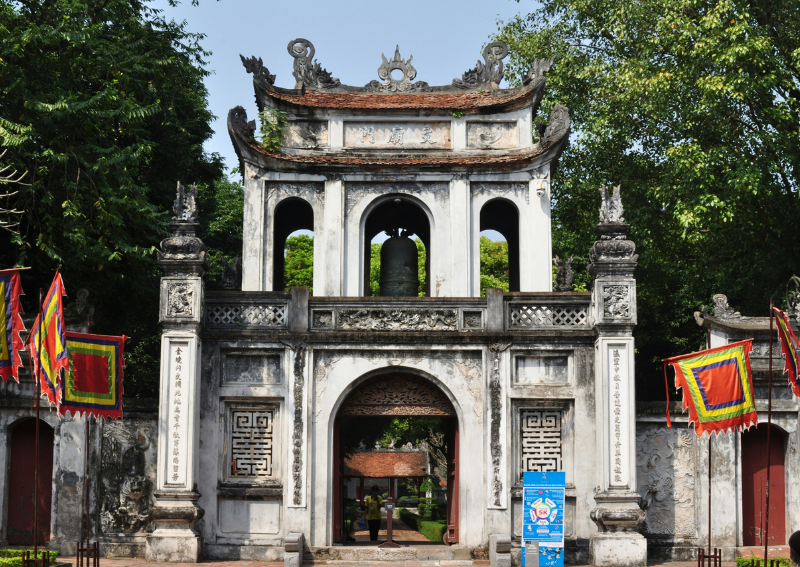
The Temple of Literature was founded by Emperor Ly Thanh Tong in 1070 as a temple dedicated to Confucius, the philosopher whose teachings shaped education, governance, and social values across Vietnam for centuries. In 1076, the site expanded into the Imperial Academy, or Quoc Tu Giam, becoming the country’s first national university and educating generations of scholars under the imperial examination system.
The institution evolved considerably over the centuries. During the Tran dynasty, under Emperor Tran Thai Tong, the school opened its doors to talented students from ordinary families rather than only royal and aristocratic households, a meaningful shift in a strictly hierarchical society. Under King Le Thanh Tong, the tradition began of erecting stone steles to honor doctoral graduates, a practice that still defines the site’s most famous feature today. When the Nguyen dynasty later moved Vietnam’s capital to Hue and established a new academy there, the Hanoi complex was renamed Van Mieu Ha Noi.
The site hasn’t escaped Vietnam’s turbulent history unscathed. In 1947, French artillery damaged sections of the complex during wartime, including the Khai Thanh Temple, leaving only the foundation, two columns, and four stone inkwells standing in the affected area. Much of what visitors see today is the result of careful restoration that closely follows the original architectural layout, which is part of what makes walking through the grounds feel so genuinely historic rather than reconstructed for tourists.
What to See at Temple of Literature Hanoi: The Five Courtyards
The complex spans roughly 54,331 square meters, divided into five sequential courtyards that trace the site’s evolution from a place of worship into a functioning seat of higher learning.
First courtyard
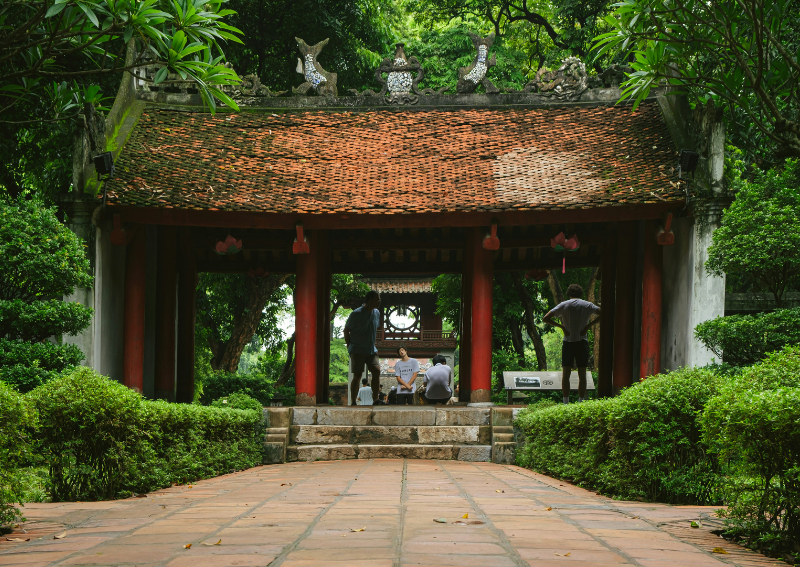
A tree-lined path and open garden space leading from the main entrance to the Great Middle Gate, setting a slow, deliberate pace from the moment you step inside.
Second courtyard
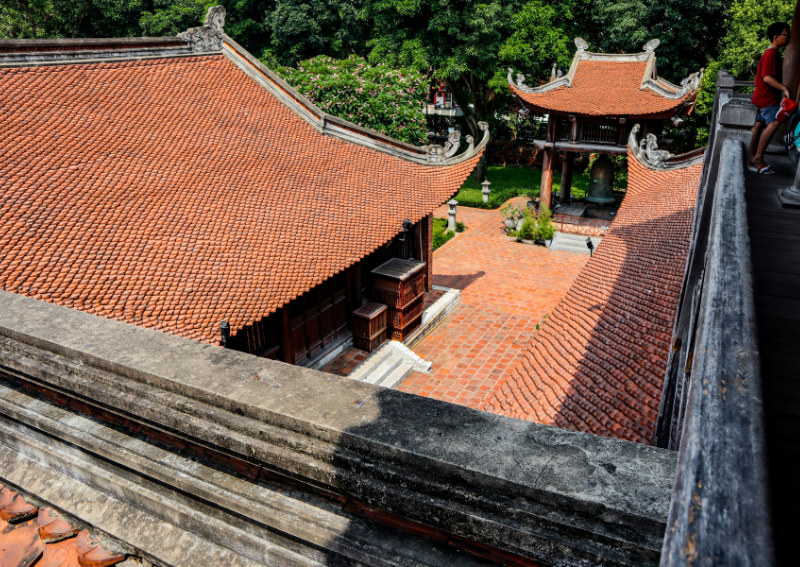
Home to the Khue Van Cac, or Pavilion of the Constellation, built in 1805 and now Hanoi’s most recognized architectural symbol, appearing on the back of the 100,000 Vietnamese dong note. The pavilion’s upper level features circular windows resembling the sun and moon, symbolizing the Confucian ideal of harmony between heaven and earth. Two side gates here, the Virtue Gate and Talent Gate, reflect the emperor’s aspirations for his students’ achievement, while a carved fish above the main gate references the legend of fish leaping over powerful waves to become dragons, a metaphor for the transformation that diligent study was believed to bring.
Third courtyard
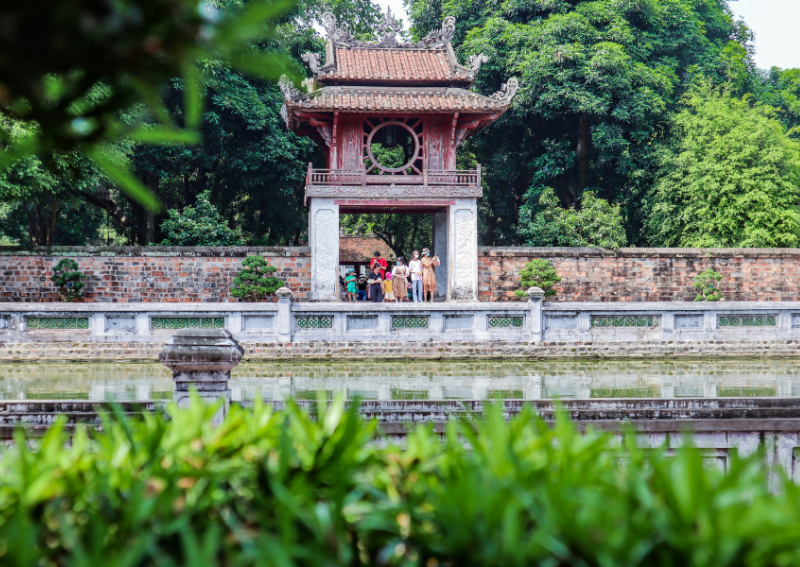
Centered on the Thien Quang Well, or Well of Heavenly Clarity, a square pond symbolizing mental clarity that mirrors the surrounding trees and sky. On either side stand the famous 82 doctoral steles, each mounted on the back of a stone turtle, a Vietnamese symbol of longevity and wisdom. The steles record the names and birthplaces of doctoral graduates from imperial examinations held between 1442 and 1779, and UNESCO has recognized them as part of its Memory of the World Programme. Many visitors, students especially, still place a hand on a turtle’s head before exams, a small ritual believed to carry forward a little of that scholarly fortune.
Fourth courtyard
Home to the Dai Bai Duong, or Great House of Ceremonies, the main ritual hall with red-lacquered columns and a central altar housing statues of Confucius and his four principal disciples. This is the ceremonial heart of the complex and one of its most visually striking interiors.
Fifth courtyard
The site of the former Imperial Academy itself, where Vietnam’s brightest scholars studied for centuries under the imperial examination system, a system that unfolded across three stages: Regional, National, and Royal examinations, with roughly a three-year wait between attempts.
Visiting Information: Hours, Tickets, and Getting There
Address
58 Quoc Tu Giam Street, Van Mieu, Dong Da District, Hanoi, at the intersection of four busy streets: Nguyen Thai Hoc, Ton Duc Thang, Van Mieu, and Quoc Tu Giam itself. Many of the surrounding roads are one-way, so it helps to plan your approach in advance.
Opening hours
The Temple of Literature is open every day of the week from 8:00 AM to 5:00 PM, with the ticket counter typically closing about thirty minutes before the official closing time. The site may occasionally close for state ceremonies or maintenance, though this is rare and usually announced in advance.
Ticket prices
- Daytime entry: costs around 70,000 VND for adults, with a reduced student rate available with valid ID. Bring cash, since the ticket office does not accept card payments.
- Night tours: Since 2024, the Temple of Literature has run evening tours combining traditional performances with a 3D light-mapping show, usually held Wednesday, Saturday, and Sunday from around 6:30 PM to 9:30 PM, though the schedule can shift around festivals. It’s an entirely different way to experience the site, with sound and light installations layered over the historic courtyards, and even an interactive AI conversation with the symbolic “wisdom turtle.” Tickets for the night experience are separate from daytime entry.
Getting there from the Old Quarter
- Walking: around 35 to 40 minutes via Nguyen Thai Hoc Street, passing through Hanoi’s tree-lined French Quarter along the way; a genuinely pleasant walk if you have the time.
- Taxi or Grab: the most straightforward option, taking roughly 10 to 15 minutes and costing about 50,000 to 75,000 VND.
- Cyclo: a slower, more scenic option for travelers who want part of the journey to feel like sightseeing in itself.
How much time to allow
At least 90 minutes to move through all five courtyards without rushing. History-minded visitors who want to read every information board at the stele gardens should allow closer to two hours.
Practical Tips Most Guides Leave Out
- Dress modestly. Tank tops and miniskirts aren’t permitted inside, and hats should come off once you’re in the sanctuary areas. This is a working spiritual and cultural site, not just a photo backdrop.
- Go early or late for the best light and the fewest crowds. Right at 8:00 AM opening or after 2:00 PM tends to mean fewer tour groups, and the Khue Van Pavilion photographs particularly well in soft, early morning light from the east-facing angle.
- Bring water. The courtyards offer limited shade at midday, especially in the summer months.
- Pair it with a longer day in this part of the city. The Temple of Literature sits within easy reach of several other Hanoi landmarks, and combining two or three sites by foot, bicycle, or ride-hailing app is straightforward if you’re building a fuller day around it.
Where to Stay for the Full Hanoi Experience
A morning spent among thousand-year-old courtyards and doctoral steles is the kind of experience that deserves a base worthy of it, somewhere that makes the rest of the day feel just as considered. That’s where Hanoi La Siesta Classic Hang Thung comes in. Hanoi La Siesta Classic Hang Thung sits in the heart of the Old Quarter, one of the most characterful neighborhoods in Southeast Asia and the natural starting point for exploring everything from Hoan Kiem Lake to the temples and academies that shaped the city’s intellectual history.
Recognized as one of the Top 10 Hotels in Asia in 2025 by TripAdvisor, it has earned its place among the best boutique hotels in Hanoi through beautifully appointed interiors, warm and genuinely attentive service, and a four-season pool that feels especially welcome after a few hours spent crisscrossing the city’s historic sites on foot.
For travelers shaping a Hanoi itinerary around the kind of depth and authenticity that a place like the Temple of Literature delivers, Hanoi La Siesta Classic Hang Thung offers a base that matches that same standard. Central, considered, and consistently welcoming, it remains one of the best hotels in Hanoi Old Quarter for travelers who want the city itself to feel as rewarding as the landmarks they’ve come to see.