



Temples and Pagodas in Hanoi: A 2026 Guide to Spirituality
Western spirituality often emphasizes personal introspection, whereas in Vietnam, spirituality is a living practice deeply rooted in the city’s culture. In Hanoi, this connection blurs the line between the sacred and the mundane.
Temples and pagodas in Hanoi are more than architectural landmarks; they are sanctuaries where locals seek balance and connect with ancestral roots. Visiting these hallowed grounds is a vital ritual for anyone seeking stillness amidst Hanoi’s urban rush.
So, let’s explore the most iconic pagodas and temples of Hanoi together!
Phu Tay Ho (Tay Ho Temple)
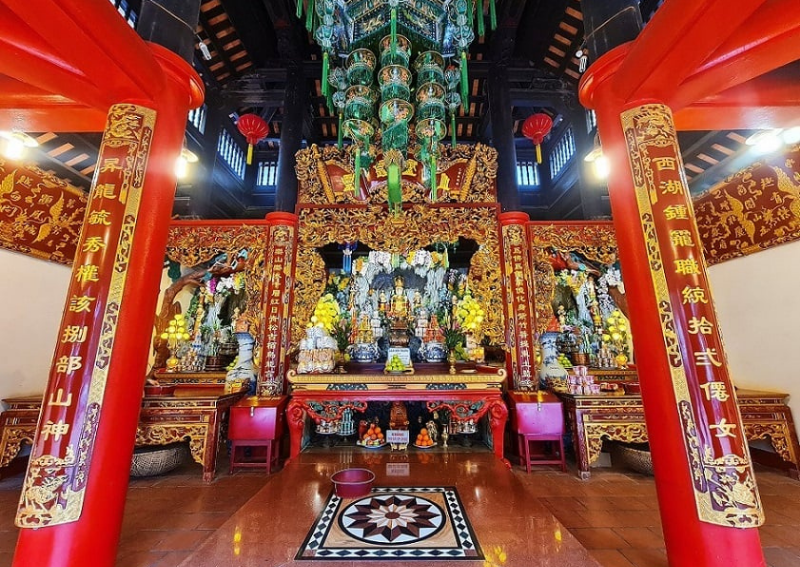
- Address: 52 Dang Thai Mai, Tay Ho District, Hanoi.
- Opening hours: 5 AM – 6 PM
Located on a peninsula jutting out into West Lake, Phu Tay Ho is one of the most popular stops for locals and travelers alike. This temple honors Princess Lieu Hanh, a central figure in Vietnamese folk beliefs. Beyond its spiritual significance, the temple’s unique triple-gate architecture creates a striking silhouette against the water. It is an ideal spot to enjoy a quiet moment while taking in the expansive views of the lake.
Tran Quoc Pagoda
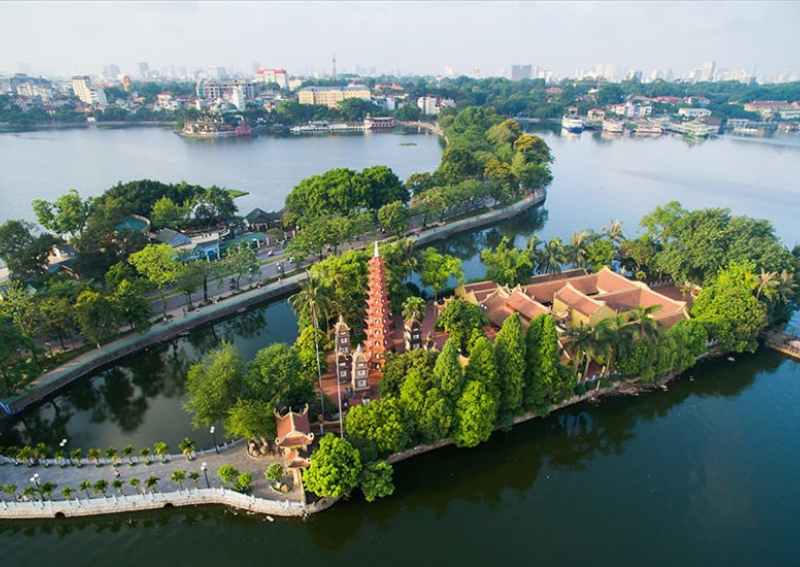
- Address: 46 Thanh Nien Road, Tay Ho District, Hanoi.
- Opening hours: 7:30 AM – 5 PM (closed between 11 AM and 1:30 PM)
With a history spanning over 1,500 years, Tran Quoc Pagoda stands as the oldest Buddhist temple in the city. Perched on a small island on the eastern side of West Lake, its ancient red stupas and tall towers create an atmosphere of quiet dignity. Many visitors come here to escape the city’s bustle, find a sense of peace, and pray for health and happiness under the shade of the historic Bodhi tree.
Quan Thanh Temple
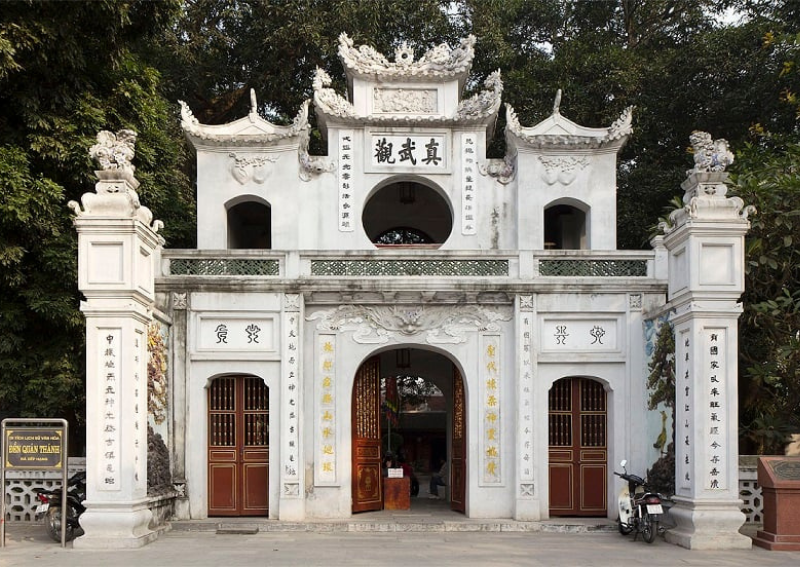
- Address: 190 Quan Thanh Street, Ba Đình District, Hanoi.
- Opening hours: 8 AM – 5 PM
As one of the “Four Sacred Temples” guarding the ancient gates of Thang Long, Quan Thanh Temple protects the North. This temple is famous for its giant bronze statue and intricate wood carvings. Visiting Quan Thanh is more than just a spiritual trip; it is a way to appreciate the architectural finesse of old Hanoi. The temple’s courtyard, shaded by ancient trees, adds a poetic and nostalgic touch to the busy intersection nearby.
Chua Ha (Ha Pagoda)
- Address: 86 Chua Ha Street, Cau Giấy District, Hanoi.
- Opening hours: 8 AM – 6 PM
While many of the temples and pagodas in Hanoi are sought out for peace or prosperity, Chua Ha (formally known as Thanh Duc Tu) holds a unique place in the hearts of locals as the ultimate spot to pray for love. Now recognized as a national site, it draws crowds of visitors, especially young people, who come on the first and middle days of the lunar month. Whether you are looking for a new connection or simply want to soak in the lively yet soulful atmosphere, Chua Ha is a must-visit.
Ngoc Son Temple
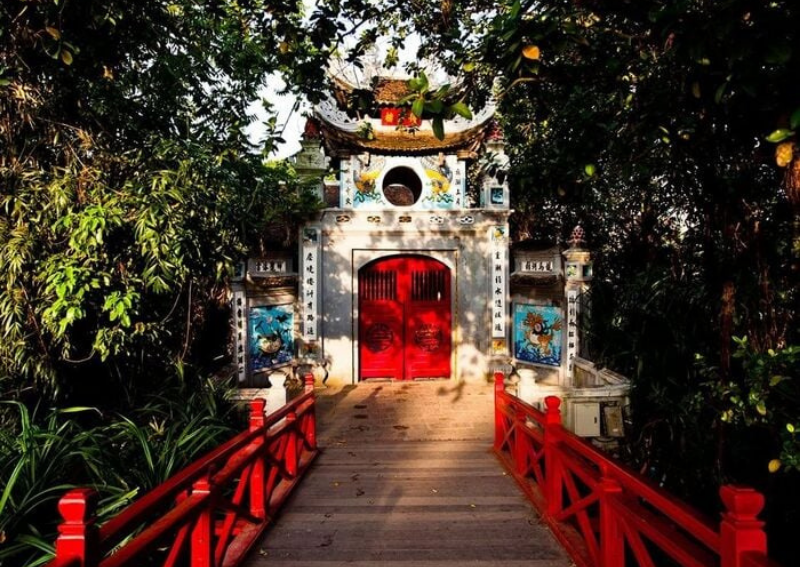
- Address: Dinh Tien Hoang St., Hang Trong, Hoan Kiem, Hanoi.
- Entrance Fee: Adults: 50,000 VND | Children under 15: Free.
- Opening hours: 7 AM- 6 PM (open until 10 PM on weekends)
Perched peacefully on Jade Island in the northeast of Hoan Kiem Lake, Ngoc Son Temple creates a stunning picture alongside the iconic red Huc Bridge. This sanctuary honors two historical figures: General Tran Hung Dao and the deity Van Xuong De Quan. The architecture captures the quiet essence of Northern Vietnam, housing two statues that radiate a sense of calm and spiritual weight. During the Vietnam Lunar New Year or on special holidays, the space becomes truly vibrant as locals arrive to offer prayers and seek peace.
Quan Su Pagoda
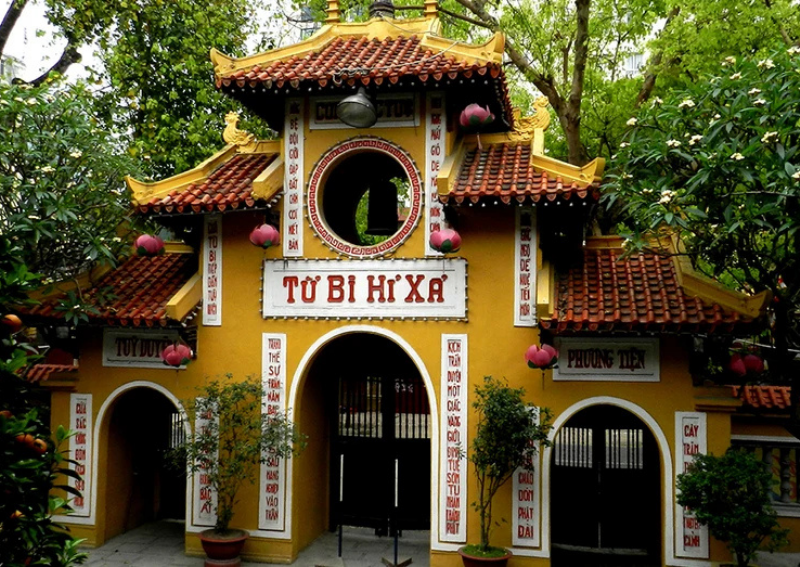
Dating back to the 15th century, Quan Su Pagoda originally served as a guesthouse for visiting ambassadors. While the original residence has faded over time, the pagoda remains a centerpiece of Vietnamese Buddhism. Its architecture is classic Northern style, featuring arched roofs, scale-shaped tiles, and a central bell tower.
One Pillar Pagoda
- Address: Chua Mot Cot St., Doi Can, Ba Dinh, Hanoi.
- Entrance fee: VND30,000
- Opening hours: 7 AM – 5 PM
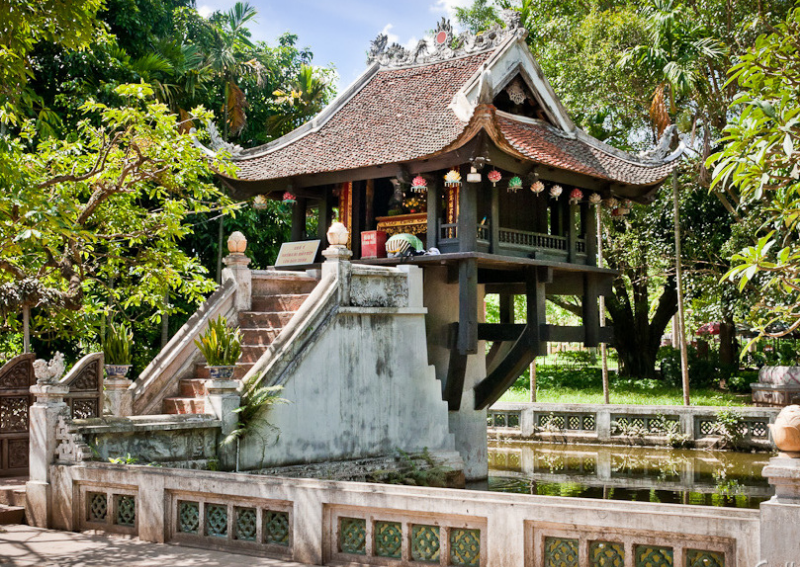
As a true symbol of the capital, Hanoi’s One Pillar Pagoda is a must-visit site among Hanoi’s pagodas and temples. Built during the reign of King Ly Thai Tong, its standout feature is the Lien Hoa Dai (Lotus Station), designed to look like a lotus flower blossoming from a single stone pillar in the middle of a pond. After being rebuilt in 1955 following historical damage, it continues to stand as one of the most unique architectural works in Asia.
Phuc Khanh Pagoda
- Address: 382 Tay Son St., Thinh Quang, Dong Da, Hanoi.
- Opening hours: 5 AM – 9 PM
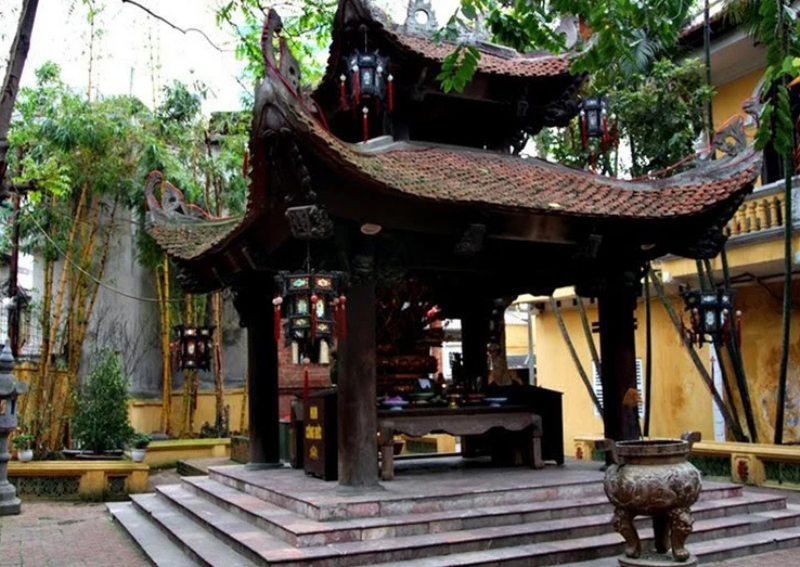
Often called “Chua So,” Phuc Khanh Pagoda is a long-standing sanctuary tucked away in the bustling Dong Da district. The temple has a deep connection to the history of King Quang Trung and has been restored several times to maintain its solemn beauty. Today, it is a favorite gathering spot for locals, especially during the full moon. People come here to chant, pray for health, and find a quiet moment of reflection away from the city’s vibrant pulse.
Huong Pagoda
- Address: Huong Son, My Duc, Hanoi.
- Opening hours: 6 AM – 6 PM
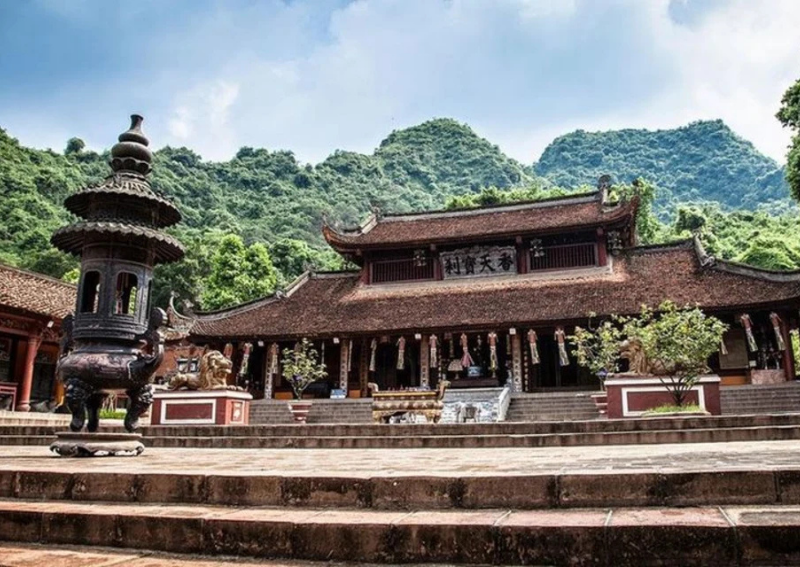
Huong Pagoda is more than just a temple; it is a vast complex of shrines and pagodas nestled along the scenic Yen Stream. This spiritual journey involves rowing through natural landscapes and hiking up to the Huong Tich cave. Every spring, when the apricot blossoms whiten the hills, thousands of visitors flock here for the festival. Whether you are rowing, hiking, or listening to traditional folk songs, the experience is a beautiful way to embrace the fresh energy of the new year.
[H2] Essential Tips for Visiting Temples and Pagodas in Hanoi
To make the most of your visit to these landmarks of Hanoi Spirituality, a little preparation goes a long way. Keeping things respectful helps preserve the calm atmosphere that makes temples and pagodas in Hanoi so special.
Hanoi temple dresscode
Opt for modest clothing that covers your shoulders and knees. This is the simplest way to show respect for the local culture.
Keep it Quiet in Hanoi Temples
These Temples and Pagodas in Hanoi are meant for reflection. Try to keep your voice down, avoid running, and turn your phone to silent mode. It allows everyone, including yourself, to enjoy the stillness.
Photography Etiquette
While the architecture of Temples and Pagodas in Hanoi is incredibly photogenic, some indoor altar areas may restrict photography. Always look for signs or check with a staff member before snapping a photo of the main statues.
Simple Offerings
If you’d like to make an offering, keep it simple with fresh flowers or fruit. It’s best to avoid leaving small change or paper votives directly on the altars; most Temples and Pagodas in Hanoi provide designated donation boxes instead.
Protect the Environment
Help keep these historic grounds beautiful by not picking flowers or breaking branches. Be sure to take any trash with you to maintain the clean, serene landscape for the next visitor.
A Stay in the Best Boutique Hotel in Hanoi to Embark on a Hanoi Spirituality Journey
For a stay that mirrors the peace of Hanoi spirituality, Hanoi La Siesta Classic Hang Thung is a standout choice. Recently recognized in the Top 10 Hotels in Asia 2025 by TripAdvisor, this best boutique hotel in Hanoi offers a refined atmosphere and a four-season pool, serving as a quiet oasis right in the city’s heart.
The hotel’s calm interiors and four-season pool help center your mind, putting you in a mindful mood before you step out to explore the city’s hallowed grounds. Its golden location in the Old Quarter makes it a sophisticated home base, placing you within effortless reach of most iconic temples and pagodas in Hanoi.
Staying here allows you to transition seamlessly from a restful morning to a day of discovery. It is the perfect way to ensure your journey through Hanoi spirituality world feels both vibrant and complete.