



Imperial Citadel of Thang Long 2026: The Complete Travel Guide to Hanoi’s Ancient Royal Heart
Quick Facts
| Address | 19C Hoang Dieu Street, Ba Dinh Ward, Hanoi |
| Opening Hours | Tuesday – Sunday, 8:00 AM – 5:00 PM (Closed Mondays) |
| Entrance Fee | 100,000 VND (~USD $4) per adult · Children under 16: Free |
| UNESCO Status | World Heritage Site since 2010 |
| Ideal Visit Time | 2 – 3 hours (full site); 3 – 4 hours with archaeological zone |
| Best Time to Visit | October – April (cool, dry season) |
| Night Tour | Friday & Saturday, 7:00 PM – “Decoding the Imperial Citadel” |
What Is the Imperial Citadel of Thang Long?
There are ancient sites, and then there are sites that change the way you understand an entire civilization. The Imperial Citadel of Thang Long – Hoàng Thành Thăng Long in Vietnamese is definitely the latter.
Standing at the geographical and historical center of the Capital, this UNESCO World Heritage Site in Hanoi is not a museum reconstruction or a tourist replica. It is a living archaeological record of over 1,300 years of continuous power, from the early Ly Dynasty emperors who first looked upon this land and saw a soaring dragon rising from the Red River, to the generals of modern Vietnam who commanded wartime operations from bunkers buried beneath the ancient foundations.
For Western travelers arriving in Hanoi, whether you have two days or two weeks, the citadel answers a question that no amount of café-hopping or street food touring can: How did this country become what it is?
A Thousand-Year Story: The History of Thang Long Citadel Hanoi
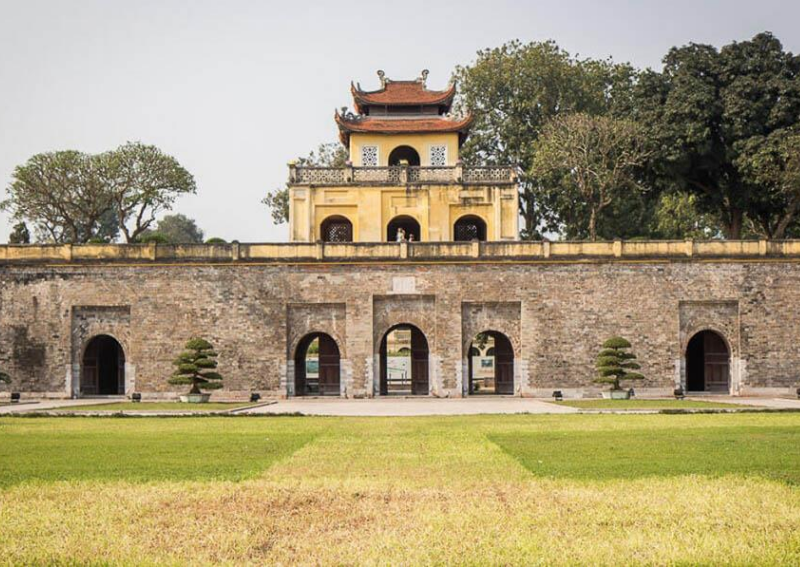
The Dragon’s Rising – 1010 AD
The name says everything. Thăng Long translates as “Rising Dragon”, and the story goes that when Emperor Ly Thai To sailed up the Red River and chose this site for his new capital in 1010 AD, he witnessed a golden dragon ascending from the waters into the sky. He took it as a divine sign, and he was right.
What he built became the political nucleus of an independent Vietnamese nation, a break from centuries of Chinese domination that had only recently ended.
The Ly Dynasty constructed grand palaces, ceremonial gates, and a complex of administrative buildings that would define Vietnamese royal architecture for generations.
Thirteen Centuries of Dynasties
What makes Thang Long Citadel extraordinary is not any single era, but the accumulation of them. Over thirteen centuries, successive Vietnamese dynasties, the Ly, Tran, Ho, Later Le, Mac, Trinh, and Nguyen, each left their mark on this ground, building over, beside, and beneath what came before.
When archaeological excavations began in earnest in 2002, ahead of the construction of the new National Assembly building, what emerged from the soil was staggering: relics spanning every major period of Vietnamese history, layer upon layer, reaching from the 7th century to the 19th century. Artifacts showed not just Vietnamese craftsmanship, but a rich exchange of influences with Chinese imperial culture to the north and the Cham civilization to the south.
The discovery transformed what historians already suspected into undeniable proof: Hanoi had been the beating heart of Southeast Asian civilization for well over a millennium.
The Colonial Interruption – 19th Century
When French colonial forces arrived in the late 19th century, the citadel did not disappear – it was repurposed. The French military occupied and modified sections of the complex, demolishing some historical structures while inadvertently preserving others. The transformation was both an erasure and, in a strange way, an additional layer of history in a site already dense with it.
The Secret War Beneath the Palace – 20th Century
Perhaps no chapter of the citadel’s story is more gripping to modern visitors than its role in the Vietnam Revolution against America. The D67 Command Bunker, located within the citadel grounds, served as the operations center for Vietnam’s military leadership, including General Vo Nguyen Giap, during the American War. Meetings were held, maps were drawn, and the decisions that shaped the war’s outcome were made in these reinforced underground rooms, directly beneath the ruins of 11th-century imperial palaces.
It is one of the most extraordinary spatial collisions in the world: ancient royal ceremony and 20th-century guerrilla strategy occupying the same soil.
UNESCO Recognition – 2010
The Central Sector of the Imperial Citadel of Thang Long was formally inscribed on the UNESCO World Heritage List in 2010, the same year the site opened properly to international visitors after decades of restricted military use. UNESCO recognized it for its exceptional cultural significance as one of the oldest continuous centers of political power in the world, and for the unique synthesis of Chinese, Cham, and Vietnamese cultural influences visible in its archaeological record.
What to See in the Imperial Citadel of Thang Long
Doan Mon Gate Hanoi (Southern Gate)
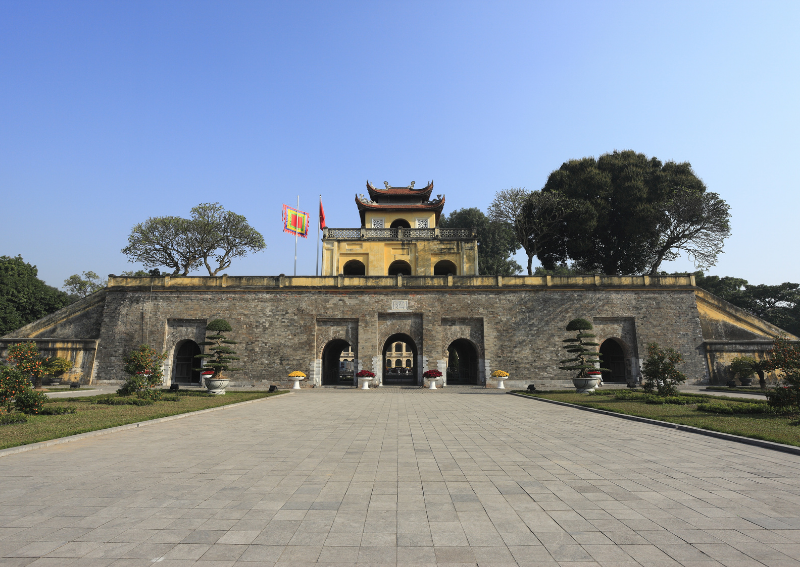
The main ceremonial entrance to the imperial inner city, Doan Mon was the gate through which emperors processed on state occasions. Its five arched entranceways, the central one reserved exclusively for the emperor, give you an immediate sense of the hierarchical world that once governed life inside these walls. Climb the ramparts for a panoramic view over the entire complex.
Kinh Thien Palace Hanoi
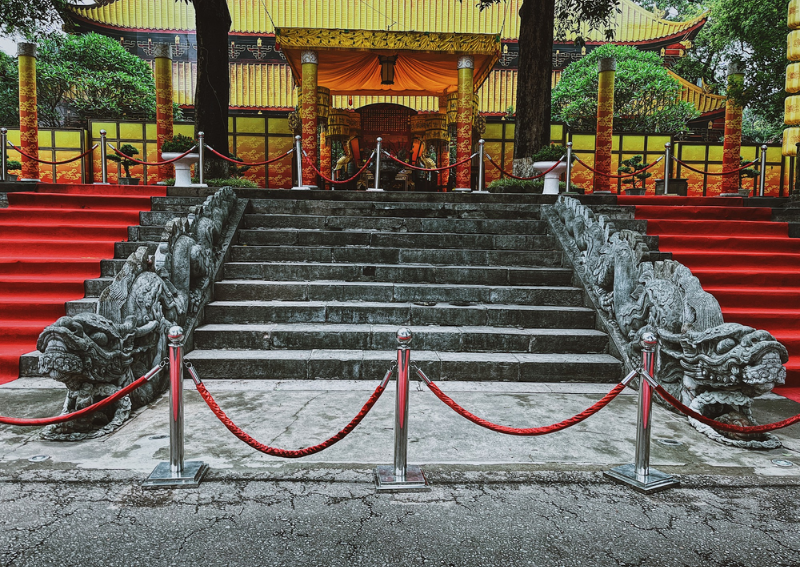
The palace itself was demolished by the French, but the stone dragon staircases that once flanked its steps remain, extraordinary examples of 15th-century Le Dynasty stone carving. The carved dragons here are considered among the finest examples of Vietnamese sculptural art. The foundation platform gives a powerful sense of the palace’s original scale.
Hanoi Flag Tower (Cot Co Ha Noi)
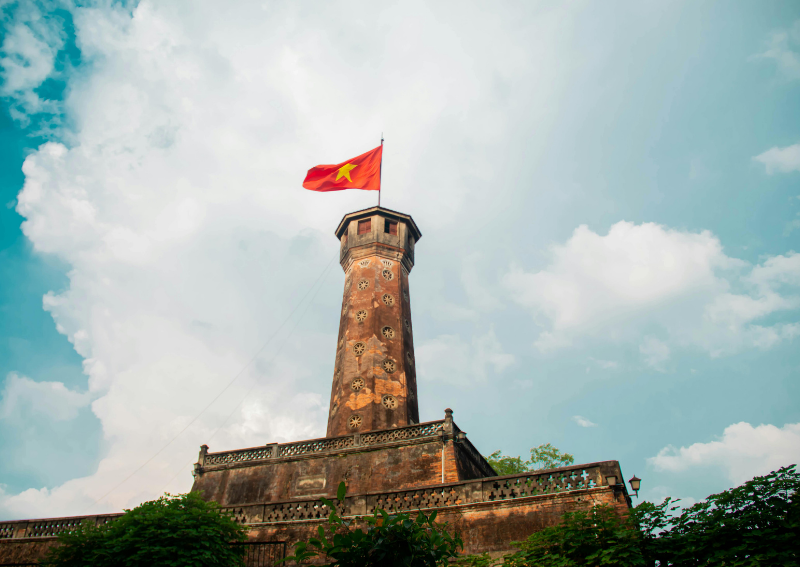
Built in 1812 during the Nguyen Dynasty, this 33-meter tower is one of Hanoi’s most recognizable landmarks and one of the few structures on the citadel grounds that the French colonial administration chose not to demolish (they used it as a military observation post). Today it flies the Vietnamese national flag and anchors the southern approach to the site.
Hau Lau (Princess Pagoda)
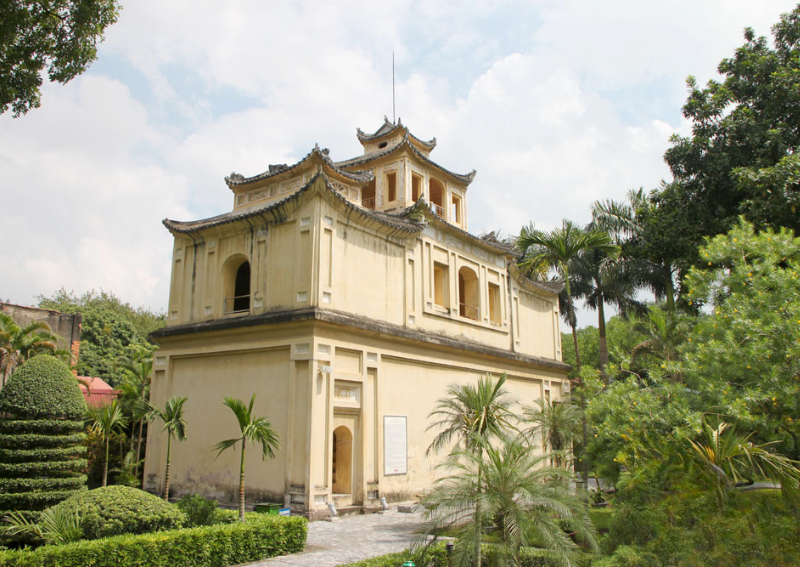
A graceful three-story structure of French-Vietnamese hybrid architecture – built in the late 19th century, it has served at various times as a watchtower, a residence for imperial concubines, and a French officers’ quarters. Its layered history in miniature reflects the layered history of the entire complex.
Bac Mon (North Gate)
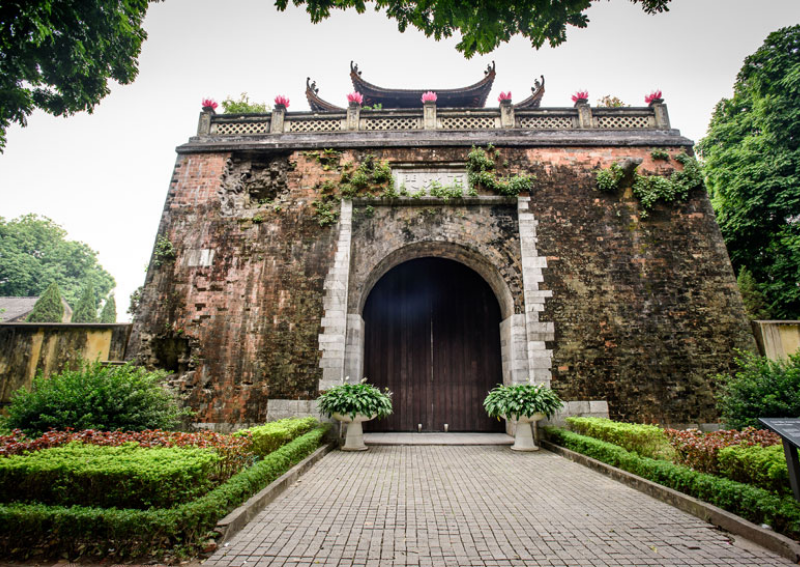
The northern gate of the citadel dates to the Le Dynasty and retains much of its original form. Less visited than the southern entrance, it offers a quieter, more contemplative approach to the ruins, and gives a clearer sense of the citadel’s original defensive scale.
The D67 Command Bunker Hanoi
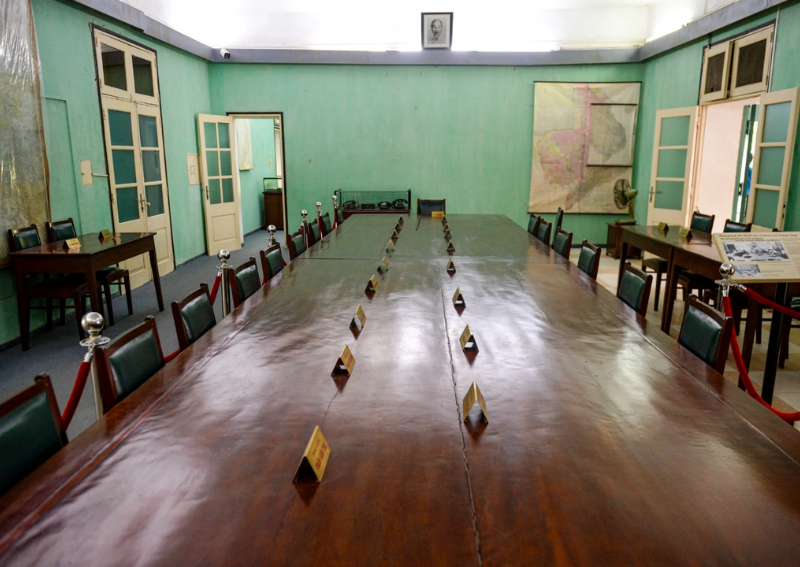
Opened to the public in recent years, this wartime command center is one of the most haunting spaces in Hanoi. Descend into the low-ceilinged corridors where General Giap and the Politburo met during the most intense years of the American War. Maps still hang on walls. Communication equipment sits in place. The contrast between the ancient grandeur above and the utilitarian urgency below is deeply affecting.
The 18 Hoang Dieu Archaeological Zone
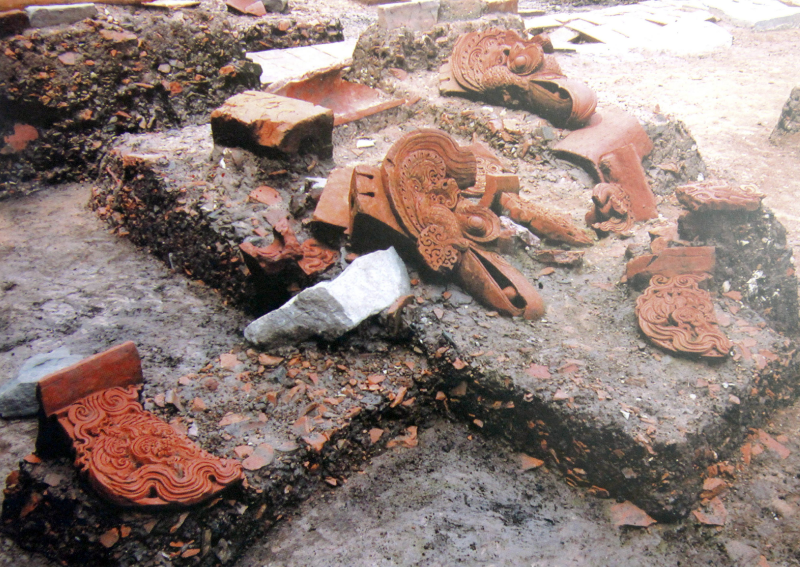
Across the road from the main complex, this excavation site – covering nearly two hectares – is where the most extraordinary underground discoveries were made in 2002. Visitors walk elevated walkways above active and preserved excavation areas, where foundations, drainage systems, column bases, ceramics, and architectural fragments from across thirteen centuries lie exposed and labeled.
This is where the citadel stops being abstract history and becomes something you can see, in the ground, with your own eyes.
How to Get to Thang Long Citadel
The citadel is located in Ba Dinh District, approximately 2–2.5 km northwest of Hoan Kiem Lake and the Old Quarter. It is within easy reach of most hotels in central Hanoi.
- By Grab (ride-hailing app): The fastest and most convenient option for most visitors. A ride from the Old Quarter costs roughly 40,000–60,000 VND and takes 10–15 minutes depending on traffic. Grab is widely available and reliable across Hanoi.
- By taxi: All major Hanoi taxi companies serve the route. Insist on the meter, or use the Grab app to verify a fair price in advance.
- By bicycle or e-bike: A lovely option on a cool morning. Head west from Hoan Kiem Lake along Trang Thi Street, continuing onto Dien Bien Phu Street, then turning onto Hoang Dieu Street to reach the main entrance at No. 19C.
- By public bus: Route 22 stops directly at the Hoang Dieu Street entrance. Routes 09, 18, 33, and 45 stop nearby. Fare: 7,000 VND, an excellent budget option.
- On foot: Possible from the Old Quarter in 25–35 minutes for confident walkers. A pleasant route passes the Ba Dinh Square area and the Ho Chi Minh Mausoleum.
Practical Visitor Information
Tickets & Hours
Thang Long Citadel is open Tuesday to Sunday, 8:00 AM to 5:00 PM. It is closed on Mondays.
From January 1, 2025, the entrance fee is 100,000 VND per person (approximately USD $4 / EUR €3.70 / AUD $6.20) for all international and domestic adult visitors. Children under 16 enter free. Students with valid Vietnamese school ID pay 50,000 VND. Tickets can be purchased at the gate or booked online at the official site: vedientu.hoangthanhthanglong.com
The Night Tour
On Friday and Saturday evenings at 7:00 PM, Thang Long citadel runs its “Decoding the Imperial Citadel of Thang Long” night experience, a guided after-dark exploration with atmospheric lighting and cultural performances. This is highly recommended for travelers who want something beyond the standard daytime visit.
Book in advance as spaces are limited.
Ideal Visit Time
Allow 2–3 hours for a thorough visit of the main complex. Add another hour if you plan to explore the 18 Hoang Dieu archaeological zone. History enthusiasts can easily spend a full half-day on-site.
Best Time of Year to Visit
The October to April dry season offers the most comfortable conditions — cooler temperatures (15–25°C / 59–77°F) and minimal rain. Hanoi’s summer months (May–September) are hot and humid with frequent afternoon showers. If you visit during summer, arrive at 8:00 AM before the heat builds.
What to Bring
Comfortable walking shoes are essential, the site involves considerable ground-level walking on uneven surfaces. Light clothing is recommended year-round, but bring a layer in the cool season. A hat and sunscreen matter in summer. Water is available inside the complex but bring your own to be safe.
Accessibility
The main citadel grounds are largely flat and walkable. Some areas, including archaeological display platforms, involve steps. The D67 Bunker involves a descent via stairs with limited headroom.
Thang Long Imperial Citadel in Context: Combining It with Other Hanoi Landmarks
Thang Long Citadel sits at the heart of Hanoi’s political and historical district. Within walking distance are some of the city’s most significant landmarks, making it easy to combine into a half-day heritage circuit:
- Ho Chi Minh Mausoleum & Ba Dinh Square, 600 meters south. The mausoleum is open mornings only (7:30–10:30 AM, closed Monday and Friday). Visit here first, then walk to the citadel.
- Presidential Palace & Ho Chi Minh’s Stilt House, within the same Ba Dinh complex. The contrast between the French colonial Presidential Palace (which Ho Chi Minh refused to live in) and his simple wooden stilt house is one of Hanoi’s most quietly powerful experiences.
- One Pillar Pagoda, 5 minutes’ walk from the mausoleum. One of Vietnam’s most iconic images: a lotus-shaped pagoda rising from a single stone pillar in a small lake. Dating to 1049 AD, it was built during the same Ly Dynasty era as the original Thang Long Citadel.
- Temple of Literature (Van Mieu), 1.5 km south of the citadel. Vietnam’s first national university, founded in 1070, offers a beautifully preserved Confucian complex and a peaceful counterpoint to the citadel’s grandeur.
- Military History Museum, directly adjacent to the citadel’s southern boundary. Displays Vietnam’s military history from the resistance against French colonialism through the American War, with an extraordinary outdoor courtyard of captured aircraft and artillery.
Where to Stay for the Best Citadel Experience: Hanoi La Siesta Premium Lakeside
A trip to the Imperial Citadel of Thang Long deserves more than just a convenient base – it deserves a hotel that matches the quality of the experience.
Hanoi La Siesta Premium Lakeside delivers exactly that. Consistently ranked among the best boutique hotels in Hanoi, it sits in the heart of the French Quarter, minutes from the Old Quarter, walkable to Hoan Kiem Lake, and perfectly positioned for morning trips out to Ba Dinh District, the citadel, and the cluster of historic landmarks that surround it.
The location is, frankly, ideal. From the hotel, you can reach the citadel’s main entrance in 10 – 15 minutes by Grab, or take a leisurely bicycle ride along some of Hanoi’s most beautiful colonial-era streets. After a morning among ancient palaces and wartime bunkers, you return not to a generic transit hotel but to genuinely elegant rooms, attentive and warm service, and an in-house restaurant where lingering over lunch feels like the natural conclusion to a morning well spent.
Hanoi La Siesta Premium Lakeside – one of the best hotels in Hanoi for exploring the Southeast Asia’s greatest ancient capitals.
Frequently Asked Questions
Is the Imperial Citadel of Thang Long worth visiting?
Absolutely. It is one of the most historically significant sites in Southeast Asia and one of Hanoi’s most rewarding half-day experiences, combining genuine archaeological depth with stories that span from ancient imperial ceremony to 20th-century warfare.
How much time do I need at Thang Long Citadel?
Plan for 2–3 hours at the main complex, plus 45–60 minutes if visiting the 18 Hoang Dieu archaeological zone. A full morning (8:00 AM to noon) allows a relaxed and thorough exploration.
Is the Thang Long Citadel night tour good?
Yes, highly recommended for visitors who want a more atmospheric and immersive experience. The Friday and Saturday evening tours (from 7:00 PM) use lighting and cultural programming to dramatic effect. Book in advance.
What is the entrance fee for the Imperial Citadel of Thang Long?
From January 2025, the fee is 100,000 VND per adult (approximately USD $4 / AUD $6 / GBP £3.20). Children under 16 are admitted free.
Can I walk to Thang Long Citadel from the Old Quarter?
Yes, in 25–35 minutes on foot, or 10–15 minutes by Grab. The walk passes interesting neighborhoods and is pleasant in cool weather.
What is the best time to visit Hanoi and the citadel?
October to April offers the most comfortable weather. November to February is particularly pleasant, cool, mostly dry, and ideal for outdoor sightseeing.