



Hanoi Art Museums and Spaces 2026: A Traveler’s Guide to Vietnamese Fine Art and Contemporary Galleries
Hanoi Art Scene – Why Hanoi Belongs on Every Art Lover’s Travel Map
Hanoi rarely tops the list of Asia’s great art capitals in the way Tokyo, Singapore, or Seoul do, and that is exactly what makes exploring its art scene so rewarding. The city holds one of Southeast Asia’s most significant national fine arts collections inside a beautifully preserved French colonial building, alongside a fast-growing network of independent art spaces and Hanoi contemporary art galleries tucked into Old Quarter alleyways, converted French villas, and shopping mall basements.
Together, they tell two different but connected stories: one of Vietnam’s deep artistic heritage, from Cham sculpture to Indochinese painting, and another of a contemporary art scene that is actively redefining what Vietnamese art looks like today. This guide walks through some of the best museums in Hanoi, what to expect inside each one, and how to plan a route between them.
TOP 7+ Hanoi Art Museums & Spaces
Vietnam National Museum of Fine Arts
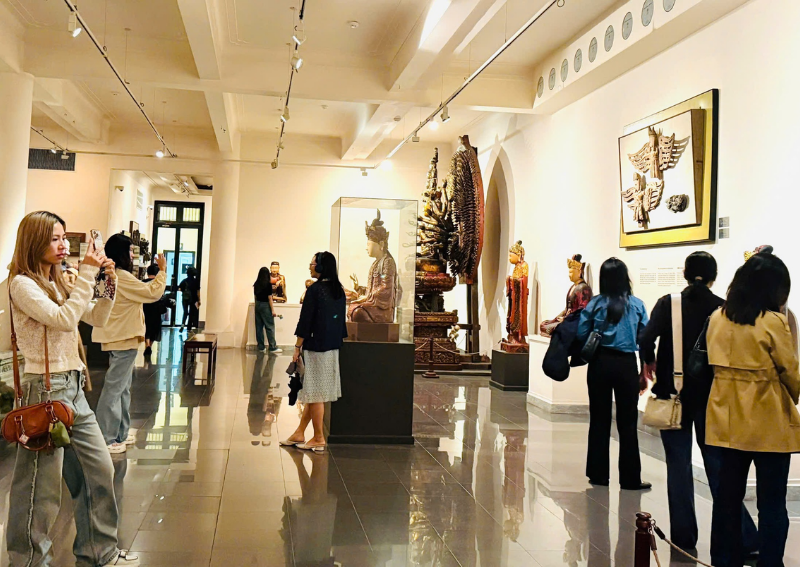
The Vietnam National Museum of Fine Arts is the single most important art institution in the country and the natural starting point for any art-focused visit to Hanoi. Operating under the Ministry of Culture, Sports and Tourism, the museum is widely regarded as the most significant repository of Vietnamese visual art and heritage in the national museum system.
The museum’s history is woven into the building itself. The structure was originally built in 1930 to serve as a boarding school for the daughters of French colonial officials. Following Vietnamese independence, the government repurposed the building in 1962 to house the nation’s fine arts collections, and the museum was officially inaugurated in 1966. Today the museum occupies two connected French-style buildings separated by quiet garden courtyards, an architectural setting that frames the art as elegantly as any purpose-built modern gallery.
Inside, the collection is genuinely vast. The museum houses more than 20,000 objects in total, with around 2,000 works on permanent display spread across exhibition halls organized chronologically. Visitors move through prehistoric and early historical artifacts, then into sculptures from the Champa and Funan kingdoms alongside 20th-century lacquer paintings, before reaching folk art traditions including the Dong Ho and Hang Trong woodblock print styles, and finally a wing dedicated to modern and contemporary Vietnamese painting.
Among the most celebrated holdings is the museum’s collection of lacquer art, a technique for which Vietnamese painters are internationally recognized, alongside major works by pioneering Vietnamese artists such as To Ngoc Van, Nguyen Gia Tri, and Bui Xuan Phai, whose paintings have become defining images of 20th-century Vietnamese art.
The atmosphere inside is unhurried and contemplative. Natural light, high ceilings, and wide corridors create a calm setting well suited to walking slowly rather than rushing through, and most visitors find themselves spending one to two hours moving through the galleries. The museum sits directly across from the Temple of Literature, making the two an easy and complementary pairing for a single morning of cultural exploration.
Vincom Center for Contemporary Art (VCCA Hanoi)
- Address: Basement R3, Royal City Mall, 72A Nguyen Trai Street, Thuong Dinh Ward, Thanh Xuan District
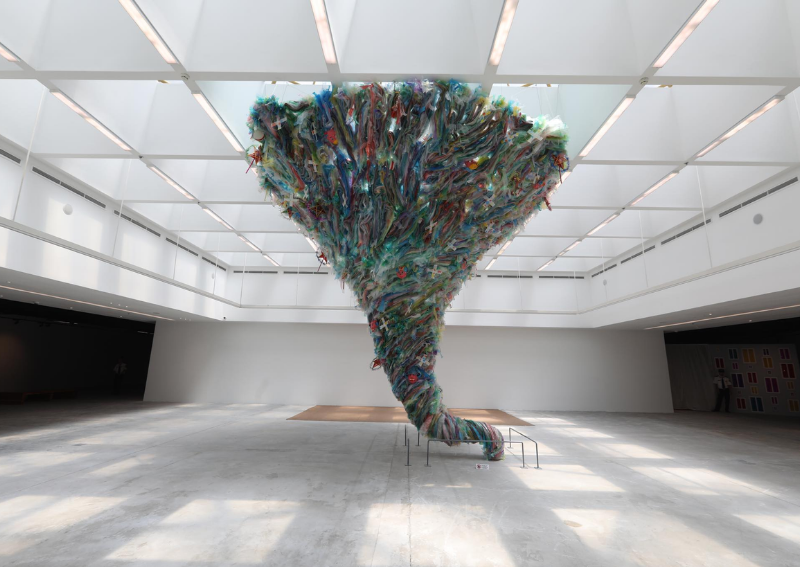
A striking contrast to the National Museum’s heritage setting, VCCA is a non-profit contemporary art center funded by the Vingroup corporation, occupying a vast subterranean exhibition space beneath one of Hanoi’s largest shopping malls. The choice of location is deliberate: by placing serious contemporary art inside a mall most Hanoians already visit regularly, VCCA has built one of the most accessible entry points into contemporary art anywhere in the city.
The center’s stated mission is to connect Vietnamese contemporary artists with international currents in art, bringing global contemporary practice into dialogue with Vietnamese creative voices. With international-standard infrastructure rarely found in independent Vietnamese art spaces, VCCA is able to host large-scale exhibitions, multimedia installations, and visiting international shows that smaller galleries cannot accommodate.
The atmosphere inside is dramatically different from the National Museum’s quiet colonial galleries. Industrial-scale ceiling heights, flexible modular walls, and gallery lighting designed specifically for contemporary installation work give VCCA the feel of a major international kunsthalle. For travelers interested in where Vietnamese art is heading rather than where it has been, VCCA offers the clearest picture available in Hanoi.
The Muse Art Space
Located on Trang Tien Street in Hanoi’s elegant French Quarter, The Muse Art Space operates as a dedicated platform for exhibiting Vietnamese cultural and artistic works while introducing emerging artists to the public. The name draws directly from Greek mythology, referencing the nine Muses who were believed to inspire creativity, poetry, and the arts, a fitting reference for a space built around discovery and creative encounter.
The Muse positions itself as both an exhibition venue and a meeting point for people who want to engage with and share a genuine appreciation for art, rather than simply view it passively. Its location on Trang Tien Street places it within Hanoi’s most architecturally distinguished French Quarter corridor, close to the Hanoi Opera House and within easy walking distance of Hoan Kiem Lake, making it a natural stop on a French Quarter walking route.
Mo Art Space Hanoi
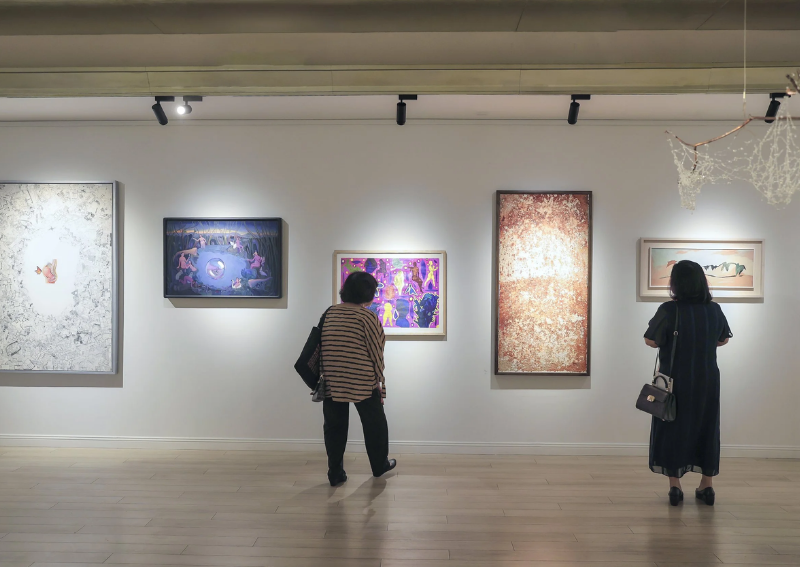
Mo Art Space sits in the heart of the Old Quarter and traces its lineage back to Apricot Gallery, a respected name in Vietnamese contemporary art with a history spanning both northern and southern Vietnam. Built with the explicit goal of advancing Vietnamese visual art and supporting Vietnamese artists, the gallery positions itself as a bridge between the art-going public and the wider contemporary art world.
What distinguishes Mo Art Space is its curatorial approach: exhibitions are carefully assembled to weave together the past and present, tradition and innovation, heritage and modernity, often within a single show. The gallery’s basement setting in an Old Quarter building gives exhibitions an intimate, almost discovered quality, in contrast to the grander scale of VCCA or the National Museum. For travelers who enjoy stumbling upon small, thoughtfully curated spaces while wandering the Old Quarter’s narrow streets, Mo Art Space is among the most rewarding finds.
Hanoi Studio Gallery
Established in 1997, Hanoi Studio Gallery is one of the longest-running and most respected contemporary art galleries in Vietnam, located in the heart of the French Quarter on Trang Tien Street, a stone’s throw from The Muse Art Space and the Hanoi Opera House. The gallery focuses on presenting and promoting contemporary Vietnamese artists working across painting and sculpture, with an emphasis on diversity of practice rather than a single house style.
Currently directed and curated by Duong Thu Hang, the gallery has built a reputation over nearly three decades for identifying and supporting significant contemporary Vietnamese artistic voices. Its central French Quarter location and long operating history make it one of the more reliable stops for travelers seeking a focused, well-curated introduction to contemporary Vietnamese painting and sculpture without the scale of a major museum visit.
Heritage Space Hanoi
Operating since 2014, Heritage Space is an independent, interdisciplinary art platform that goes well beyond traditional exhibition formats. Alongside visual art exhibitions, the space regularly hosts a library, music and performance events, artist residencies, educational programs, and cross-disciplinary exchange initiatives, run by a team of curators and program organizers.
Heritage Space’s ambition is to function as a genuine meeting point for individuals, collectives, and organizations from across creative disciplines, both Vietnamese and international, with the long-term goal of contributing meaningfully to contemporary culture and art in Vietnam. For travelers interested in experiencing Hanoi’s art scene as a living, evolving community rather than a fixed collection, Heritage Space offers some of the most dynamic and unpredictable programming in the city, with new exhibitions, talks, and performances appearing throughout the year.
Manzi Artspace Hanoi
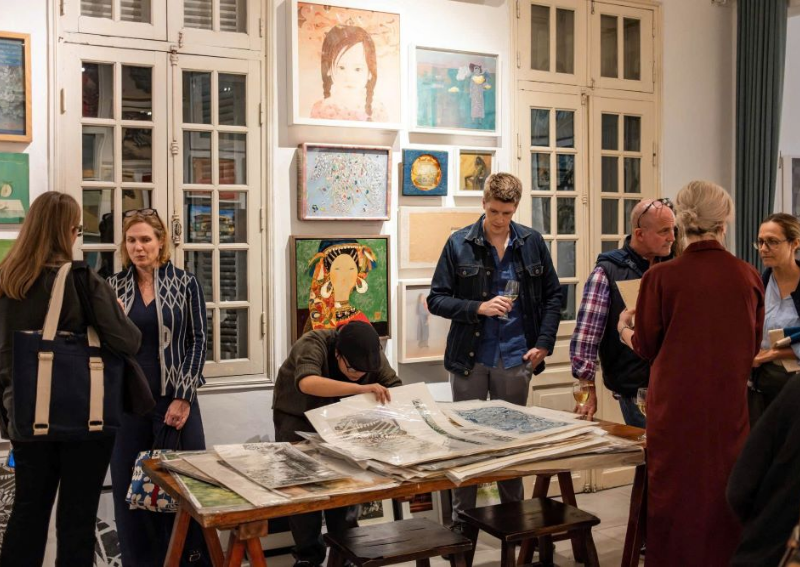
Set on a quiet street between the Old Quarter and West Lake, Manzi Artspace is widely regarded as one of the most diverse and consistently interesting art venues in Hanoi. The program spans visual art exhibitions, talks and panel discussions, workshops, book launches, film screenings, and live music and dance performances, all under one roof in a relaxed, café-adjacent setting.
Manzi’s mission centers on supporting and introducing contemporary art to the Vietnamese public while encouraging genuine cultural and artistic dialogue. The space deliberately collaborates with local artists and intellectuals as well as Vietnamese cultural and artistic organizations, resulting in programming that feels rooted in the local creative community rather than imported from outside it.
Many travelers who visit Manzi for an exhibition end up staying for a coffee and conversation, which is very much the point. Its location between the Old Quarter and West Lake also makes it an easy stop for travelers exploring either neighborhood.
Thanh Uy Gallery
Thanh Uy Gallery occupies a different category entirely: a private collection built by a single dedicated collector with the explicit aim of bringing art closer to the public. Starting his collection in 2008, the owner has assembled more than 1,200 works spanning graphic art, painting, and sculpture from 60 different Vietnamese artists and sculptors.
Each piece in the collection is intended to represent a meaningful moment in the artist’s body of work, together tracing different chapters of Vietnamese fine art history through one private collector’s eye. Located further from the city center in Nam Tu Liem District, Thanh Uy Gallery is best suited to travelers with a particular interest in Vietnamese art history who are willing to venture slightly beyond the central districts for a more personal, curator-led encounter with the collection.
How to Plan an Art-Focused Day in Hanoi
For travelers with a single day to dedicate to Hanoi’s art scene, the most efficient route begins at the Vietnam National Museum of Fine Arts in the morning, when the galleries are quietest and the light through the colonial windows is at its best. From there, the Temple of Literature sits directly across the street, making for a natural midday cultural pairing.
In the afternoon, heading toward the French Quarter allows travelers to combine The Muse Art Space and Hanoi Studio Gallery, both on Trang Tien Street within a few minutes’ walk of each other and close to the Hanoi Opera House. For those staying into the evening, Manzi Artspace or Heritage Space often host talks, screenings, or performances that offer a different kind of cultural immersion entirely, one built around the city’s living creative community rather than its historical collections.
Travelers based near Hoan Kiem Lake will find that nearly all of these spaces, with the exception of VCCA and Thanh Uy Gallery, sit within a short taxi radius of the lake, making central Hanoi an unusually efficient base for art exploration.
Where to Stay for the Best Hanoi Art and Sightseeing Experience
The name says it: Lakeside. Hanoi La Siesta Premium Lakeside is located in Hanoi’s French Quarter, within one minute’s walking distance of Hoan Kiem Lake and positioned at the crossroads of everything the city center has to offer, including the very Trang Tien Street galleries and Old Quarter art spaces covered in this guide.
This is the hotel that Hoan Kiem Lake visitors are looking for, whether they know it by name or not. Staying at one of the best hotels in Hanoi means being able to walk to The Muse Art Space and Hanoi Studio Gallery on Trang Tien Street in minutes, wander into Manzi Artspace or the Old Quarter’s smaller galleries on a whim, and still make it back to the lake before sunset.
Consistently ranked among the best boutique hotels in Hanoi, La Siesta Premium Lakeside puts you within a 5 to 8 minute walk of the lake’s southern bank, close enough to arrive for the 6:00 AM morning tai chi scene without a taxi, and close enough to wander back after an afternoon of gallery hopping through the French Quarter without worrying about transport.
For travelers who want their cultural exploration of Hanoi to unfold at its own pace, one museum, one gallery, and one quiet lakeside walk at a time, a genuinely central, walkable location is what makes that kind of trip possible.
Frequently Asked Questions
What is the most important art museum in Hanoi?
The Vietnam National Museum of Fine Arts is the country’s most significant art institution, housing over 20,000 objects spanning prehistoric artifacts, Champa sculpture, traditional folk art, and modern Vietnamese lacquer painting.
Are there contemporary art galleries in Hanoi?
Yes. Hanoi has a growing network of independent contemporary art spaces including VCCA, Manzi Artspace, Heritage Space, Mo Art Space, and Hanoi Studio Gallery, each with its own curatorial focus and programming.
How much time should I spend at the Vietnam National Museum of Fine Arts?
Most visitors spend between one and two hours exploring the permanent collection, though dedicated art enthusiasts may wish to allow longer.
Which galleries are near Hoan Kiem Lake?
The Muse Art Space and Hanoi Studio Gallery are both located on Trang Tien Street in the French Quarter, within easy walking distance of Hoan Kiem Lake. Mo Art Space sits in the Old Quarter, also close to the lake.
Is Hanoi’s art scene worth exploring for first-time visitors?
Yes. Combining the Vietnam National Museum of Fine Arts with one or two contemporary galleries offers a far deeper understanding of Vietnamese history and culture than sightseeing landmarks alone, and most of the city’s best art spaces are concentrated in walkable central districts.