



Bun Bo Hue Vietnam 2026: Vietnam’s Most Underrated Noodle Soup
Pho gets international headlines, but anyone who has eaten their way seriously through Vietnamese cuisine will tell you that Bun bo Hue Vietnam deserves equal attention. This spicy, deeply aromatic beef and pork noodle soup from the ancient imperial city of Hue is arguably the most complex bowl in the Vietnamese repertoire, built on a broth that takes the better part of a day to develop and seasoned with ingredients that most outsiders have never encountered before. Anthony Bourdain once called a bowl of it, eaten at Dong Ba Market in Hue, the greatest soup in the world. That is not a claim made lightly.
This guide covers where bun bo Hue comes from, what makes it taste the way it does, how the bowl differs between Hue and Hanoi, and where to find the best versions in the capital.
The Origins of Bun Bo Hue Vietnam – Hue Cuisine
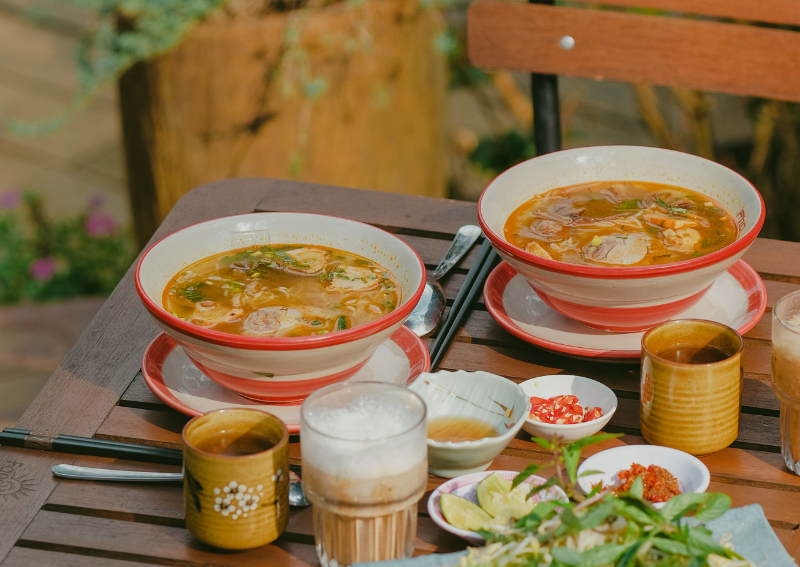
Bun bo Hue traces its origins to the royal kitchens of the Nguyen lords, with some accounts placing its creation as far back as the 16th century during the reign of Lord Nguyen Hoang. The dish was born in Hue, the seat of Vietnamese imperial power for centuries, in a culinary environment defined by precision, balance, and an insistence on using every part of an ingredient. The royal court’s approach to food in Hue was fundamentally different from the simpler, peasant-rooted cooking of the north and south: flavors were more deliberate, spicing was more sophisticated, and presentation was treated as part of the meal itself.
Note that while the dish is known universally as bun bo Hue outside the city, locals in Hue itself simply call it bun bo, or bun bo gio heo, which translates more literally as beef and pork trotter noodle soup. The Hue designation was added by people elsewhere to identify its origin, in the same way that Hoi An and Hanoi have lent their names to dishes that traveled and became associated with their place of birth.
What Goes Into the Bowl – Vietnamese Food Guide
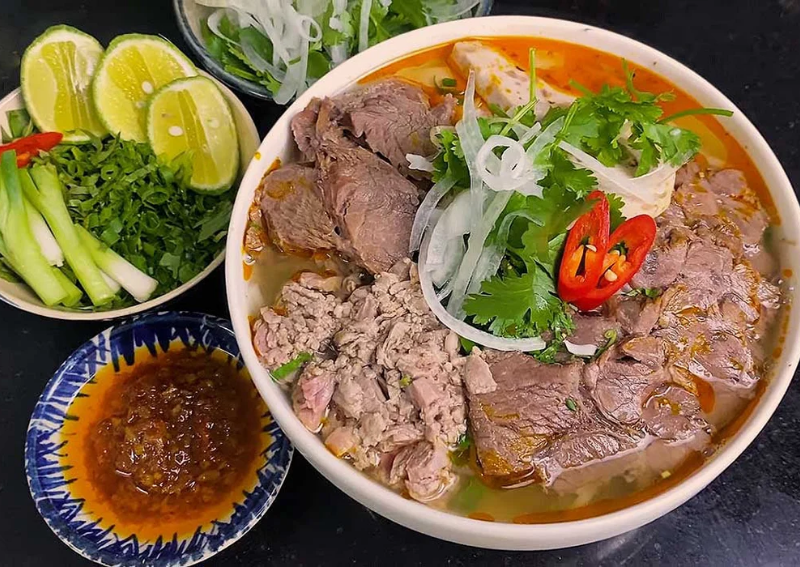
The Soul of Vietnamese Beef Noodle Soup – the Broth
A proper bowl of bun bo Hue is built around four essential elements: the broth, the noodles, the proteins, and the fresh garnishes served alongside.
The broth. This is where bun bo Hue separates itself from almost every other Vietnamese noodle soup. The base is made from beef bones and pork bones, simmered for a minimum of six to eight hours to extract a deep, natural sweetness. Two ingredients then define the final flavor profile in ways that are entirely unique to this dish.
Mam Ruoc (Shrimp Paste)
The first is mam ruoc, a fermented shrimp paste from the central coast of Vietnam that is darker, saltier, and more pungent than the fermented shrimp pastes used elsewhere in Southeast Asia. Added in carefully measured amounts, mam ruoc gives the broth a funky, savory depth that cannot be replicated with any other ingredient. It is the soul of bun bo Hue and the reason the dish smells like nothing else in Vietnamese cooking.
Spice Oil
The second defining element is the spice oil, a fragrant mixture of lemongrass, shrimp paste, dried chili, and annatto seeds cooked together in oil and stirred through the broth. Annatto gives the soup its distinctive reddish-orange color, lemongrass provides an herbal citrus note, and dried chili builds a slow heat that sits in the back of the throat rather than hitting immediately. The result is a broth that is simultaneously sweet, savory, spicy, and faintly funky, with enough complexity to reward a full bowl’s worth of attention.
The Noodles
Unlike the flat rice noodles used in pho, bun bo Hue uses round, medium-thick rice noodles, closer in diameter to spaghetti than to linguine. They have a slightly firm, chewy texture that holds up well in the hot broth without becoming soft or sticky.
The Proteins
A traditional bowl includes thin slices of beef shank, braised pork trotters, cubes of congealed pork blood (huyet), and cha cua, a steamed crab and pork patty that adds a delicate seafood sweetness to the bowl. Beef meatballs are also common. Each element contributes a different texture, and the best versions of the dish have all four.
The Garnishes
Served on a side plate rather than pre-mixed into the bowl, the accompaniments typically include banana blossom shaved thin, morning glory, bean sprouts, fresh herbs, sliced lime, and fresh or pickled chili. These are not optional garnishes but essential components of how the dish is meant to be eaten, adding freshness and crunch to counterbalance the richness of the broth.
Bun Bo Hue in Hue vs Bun Bo Hue in Hanoi
This is a distinction worth understanding before ordering, because the two versions can taste quite different from each other.
| Feature | Bun Bo Hue (in Hue) | Bun Bo Hue (in Hanoi) |
| Broth Intensity | Deeply savory, bold and complex | Sweeter, milder, lighter |
| Mam ruoc (shrimp paste) | Used generously and without apology | Used sparingly or in reduced concentration |
| Spice level | Considerably spicy, notably pungent | Frequently milder |
| Noodle thickness | Slightly thicker | Standard thickness |
| Flavor profile | Bold, complex, pungent | Clean, light, approachable |
| Protein – crab patty | Cha cua appears in almost every bowl | Often replaced with gio (pork sausage) |
| Bone base | Equally balanced beef and pork bones | Sometimes pork-forward |
| Overall character | Uncompromising, true to original recipe | Adapted to northern Vietnamese palate |
None of this makes the Hanoi version inferior. It makes it different, and in some cases the adaptation suits the climate and the pace of the northern city well. But travelers who want the full, unreduced version of the dish should seek out the handful of Hanoi restaurants run by cooks who actually came from Hue, where the mam ruoc is used without compromise and the cha cua is made fresh each morning.
Where to Eat Bun Bo Hue in Hanoi – Hanoi Food Tour
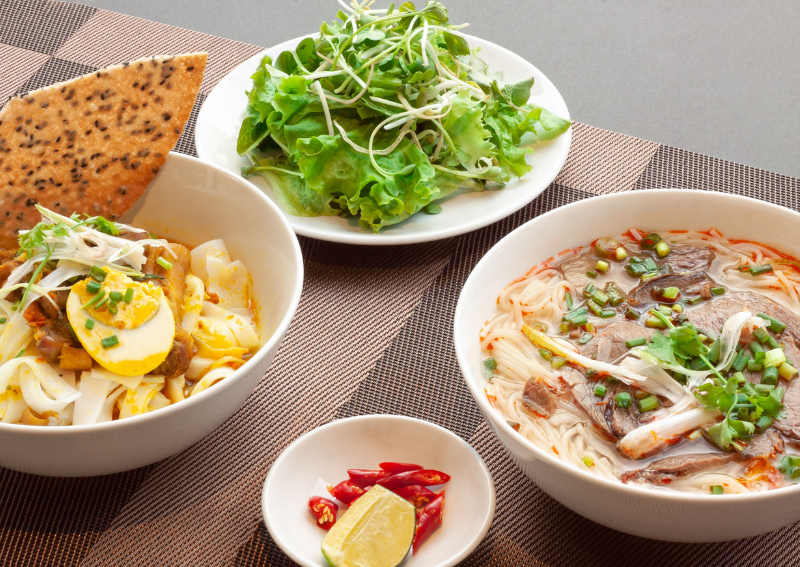
Refer to the list of best bun bo Hue in Hanoi below
Bun Bo Hue Hang Ca
Address: 36 Hang Ca, Hoan Kiem, Hanoi
One of the most conveniently located options for visitors staying in or around the Old Quarter, this long-running spot uses a broth built on a natural sweetness from pork and beef bones without relying on flavor enhancers, which gives it a cleaner finish than many competitors. The toppings are generous, the bowl is large, and the proximity to Hoan Kiem Lake makes it an easy starting point for a morning walk. A reliable, crowd-friendly bowl with genuine kitchen care behind it.
Bun Bo Hue Huyen Anh
Address: 65 Truong Dinh, Hai Ba Trung, Hanoi
One of the most talked-about destinations for bun bo Hue among Hanoi food lovers, this family-run operation has been open for more than two decades and built its reputation slowly through consistency rather than marketing. The broth here is on the richer, more Hue-faithful side, with mam ruoc playing a noticeable role, and the pork trotters are braised until the skin is soft without losing the slight resistance that makes them worth eating. A favourite for food-minded visitors who want something closer to the original.
Bun Bo Hue An Cuong
Address: Doi Can Street, Ba Dinh, Hanoi
This Ba Dinh district spot is run by cooks with roots in Hue and is among the most frequently recommended addresses by residents of the capital who grew up eating the dish in the central region. The distinguishing feature is the tóp mo chung with chili, a rendered pork fat preparation unique to this kitchen that adds a richness to the bowl that no other Hanoi bun bo Hue replicates. The broth is clean and properly seasoned rather than northern-adapted mild. Open from early morning and usually sold out before noon.
Bun Bo Hue O Sim
Address: 289 Kim Ma, Giang Vo, Ba Dinh, Hanoi
The owners of O Sim are originally from Hue and prepare the dish according to the methods they grew up with rather than adjusting to northern preferences, which makes this one of the most authentic addresses available in the capital. The broth is fragrant with mam ruoc and lemongrass, the sợi bun are the correct thick round variety, and the cha cua is made in-house. The space is simple but clean and the kitchen produces a consistent result across services.
Net Hue
Multiple locations across Hanoi
A small chain with several branches spread across the city, Net Hue has earned genuine respect rather than chain-restaurant skepticism by maintaining quality standards that many one-location competitors fall short of. The broth is Hue-faithful, the cha cua is present in every bowl, and the familiarity of the brand means consistent expectations are met regardless of which branch you visit. A practical option for travelers who want a reliable bowl without navigating an unfamiliar neighborhood.
Bun Bo Hue O Hoa
Address: 102 Dong Tac, Dong Da, Hanoi
A newer spot that has quickly established a following thanks to a broth that balances the mam ruoc-forward depth of the Hue original with enough sweetness to make it accessible without compromising the essential character of the dish. The beef is sliced thin and tender, the pork trotters are braised correctly, and the cha cua has the right fresh, delicate sweetness. Well kept, consistently open, and worth the short trip from the center of the city.
Practical Tips for Eating Bun Bo Hue
Bun bo Hue is primarily a breakfast and early morning dish, typically served from around 6:00 AM until mid-morning when many kitchens run out of broth. Attempting to find it at lunchtime or in the evening is possible but the best stalls will be closed or serving the last, thinner dregs of the pot. Go early.
The garnish plate is not a suggestion. Adding the banana blossom, herbs, and lime to the bowl is how the dish is designed to be eaten, and skipping it means missing the textural and flavor contrast that makes bun bo Hue more than just a spicy broth.
If the level of mam ruoc in the broth is unfamiliar or intense on first encounter, order a bowl of plain broth to sip alongside rather than asking the kitchen to reduce the seasoning. The pungency fades quickly after the first few spoonfuls.
Where to Stay When Exploring Hanoi’s Food Culture
Bun bo Hue is a morning dish, which means the ideal base is somewhere you can step out early and be on foot within minutes of the city’s best breakfast spots. Hanoi’s Old Quarter and the streets around Hoan Kiem Lake are where the most accessible options concentrate, and that is also where Hanoi La Siesta Premium Lakeside is positioned.
Consistently ranked among the best hotels in Hanoi for its combination of location, design, and service, Hanoi La Siesta Premium Lakeside puts guests within walking distance of the Old Quarter’s noodle stalls, including Bun Bo Hue 36 Hang Ca, from the moment they step outside. A 5 to 8 minute walk from Hoan Kiem Lake, it sits at the edge of the French Quarter with immediate access to the historic streets where Hanoi’s food culture runs deepest, early morning bowls of bun bo, coffee at a lakeside stall, and the kind of slow, unhurried morning that Vietnamese food was designed to be eaten in.
Recognized as one of the best boutique hotels in Hanoi French Quarter, La Siesta Premium Lakeside offers the kind of thoughtfully managed stay that complements a food-focused trip rather than competing with it for attention: a well-considered retreat to return to after the kitchen visits, the market walks, and the noodle bowls are done for the day.