
Múa Lân Vietnam 2026: Inside Vietnam’s Vibrant Lion Dance Tradition
Few sights capture the energy of a Vietnamese festival quite like the pounding drums, clashing cymbals, and swirling colors of Múa Lân Vietnam, the traditional lion dance. Seen at Tet celebrations, Mid-Autumn festivities, business openings, and weddings across the country, this performance is far more than street entertainment. It is a living piece of Vietnamese folk art, one that offers travelers a genuinely memorable window into local tradition, symbolism, and community spirit.
What Is Múa Lân Vietnam and Where Did It Come From?
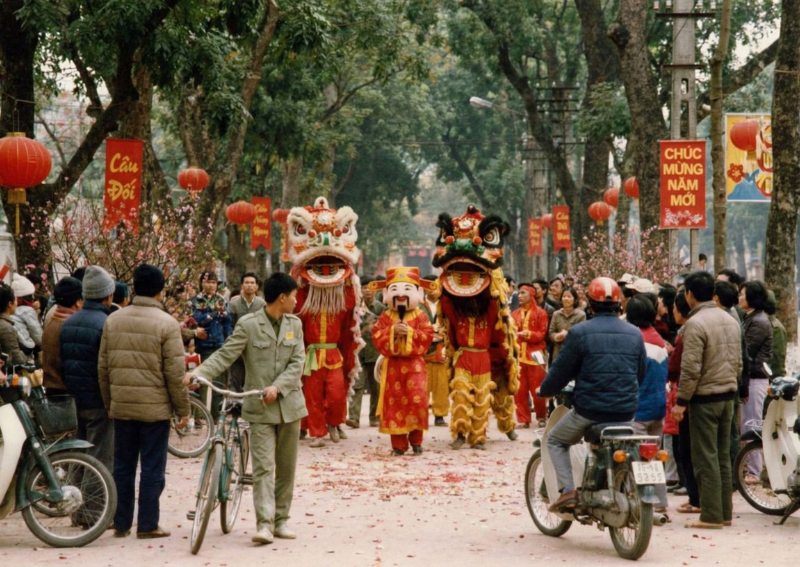
Múa lân, sometimes called múa sư tử, translates roughly to unicorn dance or lion dance, and it draws on the mythical creature kỳ lân, a beast similar to the Chinese qilin. The tradition is widely believed to be around 2,500 years old, with most sources tracing its roots back to ancient China, though Vietnam developed its own distinct regional style over centuries of local adaptation.
Vietnamese lion dance largely borrows from the Chinese southern lion tradition, particularly the Fut San school, but it carries clear local characteristics that set it apart. One of the clearest differences is the addition of Ông Địa, the jovial Earth God character who leads the lion through the performance with a large, smiling mask and a fan, adding comic relief to the otherwise intense choreography. Vietnamese lion heads are also traditionally crafted without a horn, a practical adjustment made after years of competing troupes damaging each other’s costumes during energetic street performances.
What Vietnam Lion Dance Symbolizes
According to Vietnamese traditions, the lion dance is believed to bring good luck, prosperity, and protection to those who witness it. The lion’s loud drumming, sharp movements, and bright colors are traditionally thought to drive away evil spirits and bad fortune, clearing the way for a fresh, auspicious start.
Beyond luck, the dance carries a strong communal role. A lion dance performance in a neighborhood during Tet or the Mid-Autumn Festival can turn an ordinary street into a shared celebration within minutes, drawing crowds of children and adults alike. There is also a cultural preservation dimension: lion dance troupes pass down choreography, musical rhythms, costume-making techniques, and performance discipline from one generation to the next, keeping a centuries-old art form visibly alive in modern Vietnamese life.
The Beauty of a Lion Dance Performance – Traditional Vietnamese Performance
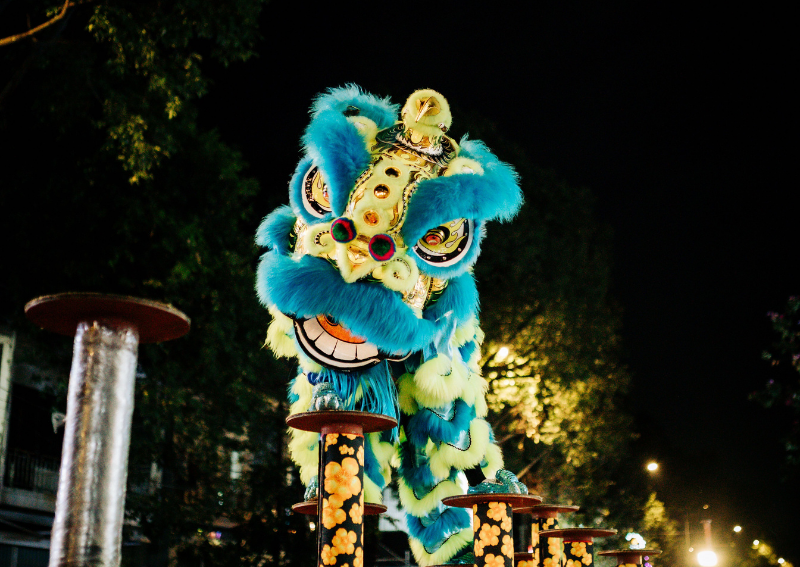
A standard performance typically involves two performers working inside a single lion costume, one controlling the head, which features blinking eyes, an openable mouth, and a mirror on its forehead, and the other forming the long, flowing body and tail. Their movements have to be perfectly synchronized to bring the animal to life, mimicking playful curiosity, sudden alertness, and dramatic leaps.
The performance is built entirely around rhythm. Drums, cymbals, and gongs drive every motion, with the tempo rising and falling to match the lion’s mood, from a slow, cautious prowl to an explosive burst of energy. In more advanced performances, dancers execute an acrobatic sequence known as mai hoa thung, leaping between raised poles to represent the lion scaling a mountain, a display of genuine athletic skill layered on top of the theatrical storytelling.
Combined with the vivid colors of the costume and the comic interplay with Ông Địa, the result is a performance that engages the eyes, ears, and emotions all at once, which is exactly why it remains such a highlight for travelers experiencing Vietnamese culture firsthand.
When Vietnamese People Perform Múa Lân Vietnam
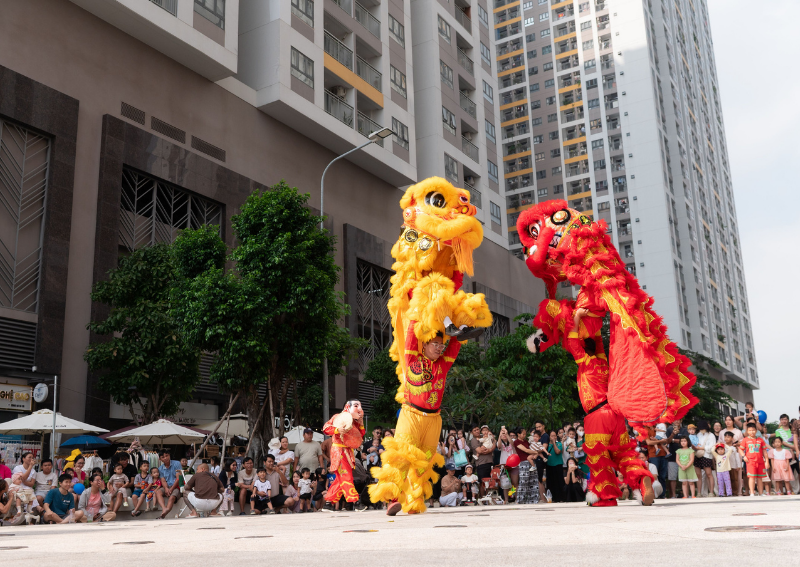
Tet, the Lunar New Year: Vietnam’s most significant holiday, marking family reunions and a fresh start, when lion dance troupes tour neighborhoods to bring luck for the year ahead
Vietnam Mid-Autumn Festival: held on the fifteenth day of the eighth lunar month, when lion dances fill the streets alongside lantern parades and mooncake traditions, particularly delighting children
Business grand openings: shop owners commonly hire a lion dance troupe to bless a new venture with prosperity and a strong start
Weddings: performances can bless a couple with happiness, sometimes accompanied by symbolic banners wishing them a long, joyful marriage
Temple festivals and other local celebrations: many regional festivals throughout the year continue to feature lion dance as part of their programming
Travelers are most likely to encounter these performances in major cities and cultural hubs such as Hanoi, Ho Chi Minh City, Hoi An, and Da Nang, especially in the weeks surrounding Tet and the Mid-Autumn Festival, when entire streets fill with drumbeats, bright costumes, and excited crowds.
Where to Stay in Hanoi to Enjoy It All
Consistently recognized among the best boutique hotels in Hanoi French Quarter for its combination of location, design, and service, Hanoi La Siesta Premium Lakeside puts guests within easy reach of the Old Quarter’s lantern-lined lanes, temple courtyards, and festival streets from the moment they step outside. It sits a 5 to 10 minute walk from Hoan Kiem Lake, close enough to catch a neighborhood lion dance performance during Tet or Trung Thu without much planning, and near enough to Hang Ma Street to return in the evening when the lantern displays and street celebrations are in full swing.
Recognized for offering the kind of thoughtfully managed stay that complements a food and culture focused trip rather than competing with it for attention, Hanoi La Siesta Premium Lakeside is a well-considered retreat to return to after the parades, the drumbeats, and the festival crowds are done for the day. For travelers comparing the best hotels in Hanoi, its central location and calm, characterful interiors make it an easy base for timing a visit around Vietnam’s most vibrant festival traditions.