


The Ha Giang Loop 2026: Everything You Need to Know Before You Ride
If there’s one journey in Vietnam that consistently stops travelers in their tracks, sometimes literally, at the edge of a vertiginous cliff with a camera in hand, it’s the Ha Giang Loop. This legendary motorbike route through Vietnam’s northernmost province is raw, remote, and completely unlike anything else in Southeast Asia. For backpackers chasing something real, something off the tourist trail, the Loop isn’t just a highlight of Vietnam, it’s the best destination in Vietnam for adventurous minds.
Here’s everything you need to know before you saddle up.
Ha Giang Loop – Best destination in Vietnam for adventures
The Ha Giang Loop is a roughly 350-kilometer motorbike circuit through the mountainous borderlands of northern Vietnam, winding between Ha Giang city and the Chinese frontier. The classic route traces a path through Quan Ba, Yen Minh, Dong Van, and Meo Vac, before looping back, passing through gorges, karst plateaus, rice-terraced hillsides, and river valleys that look more like a painting than a real place.
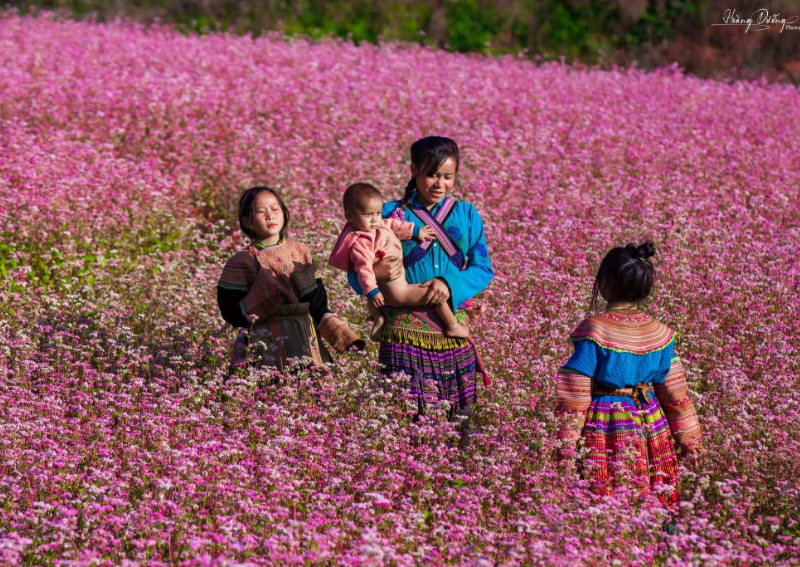
What makes it truly special isn’t just the scenery, dramatic as it is. Along the way, you’ll pass through the territories of 22 distinct ethnic minority groups, each with their own languages, textiles, traditions, and food. The cultural richness layered on top of the natural beauty is what elevates the Ha Giang Loop from a great road trip to a genuinely life-changing journey.
The crown jewel of the entire route is the Ma Pi Leng Pass, widely considered one of the most spectacular mountain roads in all of Southeast Asia, and one of Vietnam’s four legendary “great passes.” If you do nothing else on the Loop, ride Ma Pi Leng slowly, and stop often.
How Long Does It Take to Complete the Ha Giang Loop?
Technically, you can rush through the Ha Giang Loop in three days. But most experienced travelers will tell you that’s doing it a disservice. Four to five days is the sweet spot — enough time to actually stop, wander, and soak it all in rather than just ticking off kilometers.
Here’s a practical day-by-day breakdown to use as your base itinerary:
| Leg | Distance | Approx. Riding Time |
| Ha Giang → Yen Minh | 100 km | ~3 hours |
| Yen Minh → Dong Van | 50 km | ~1.5 hours |
| Dong Van → Meo Vac | 30 km | ~1 hour |
| Meo Vac → Du Gia | 70 km | ~3 hours |
| Du Gia → Ha Giang | 70 km | ~2.5 hours |
Build in buffer time wherever you can. The roads demand your full attention, and the viewpoints demand that you actually stop and breathe them in.
When Is the Best Time to Explore the Ha Giang Loop?
Timing matters on this trip, perhaps more than any other journey in Vietnam. Here’s a quick seasonal guide:
- Late September – November (Peak Season — Highly Recommended) This is widely considered the best time to explore the Ha Giang Loop. The summer rains have cleared, the skies open up, and the terraced rice fields turn a rich, cascading gold just before harvest. The landscapes are at their most photogenic, and the riding conditions are at their most reliable. If you can only go once, go now.
- December – February (Winter — Beautiful but Cold) The Loop takes on an entirely different character in winter. Misty valleys, frost on the higher passes, and a quiet, almost meditative atmosphere make this a hauntingly beautiful time to visit. Pack warm layers — temperatures at altitude can drop significantly. The Lunar New Year period (usually late January to mid-February) adds a festive cultural dimension, with local markets and village celebrations in full swing.
- March – May (Spring — A Hidden Gem Window) Dry conditions, comfortable temperatures, and the famous buckwheat flower blooms that coat the Dong Van plateau in purple make spring a genuinely underrated time for the Ha Giang Loop. Fewer crowds than autumn, and still very rideable.
- June – August (Avoid) Monsoon season brings heavy rain, muddy roads, and a real risk of landslides on the mountain passes. Unless you’re an experienced off-road rider with a high tolerance for risk, it’s best to plan around this window entirely.
What to See on the Ha Giang Loop: Top Highlights
There’s no shortage of remarkable stops along this route. Here are the ones that genuinely deserve a spot on your itinerary:
Quan Ba Pass & the Twin Mountains
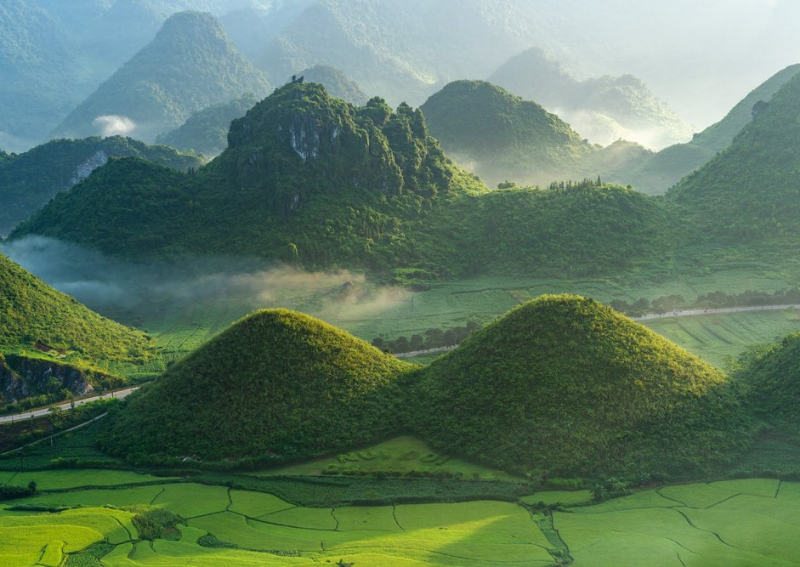
Your first major milestone leaving Ha Giang city, the Quan Ba Heaven Gate marks the point where the highlands truly begin. From here, the famous Twin Mountains – two near-perfect conical peaks rising from the valley floor — come into view. It’s a surreal, storybook landscape that sets the tone for everything that follows.
Lung Khuy Cave
Hidden within Quan Ba District, this cave was only discovered in 2015 and remains beautifully uncrowded. The dragon-shaped rock formation that gives it its name is striking enough, but the interior — filled with towering stalactites and glittering stalagmites — is the real reward.
Tham Ma Pass
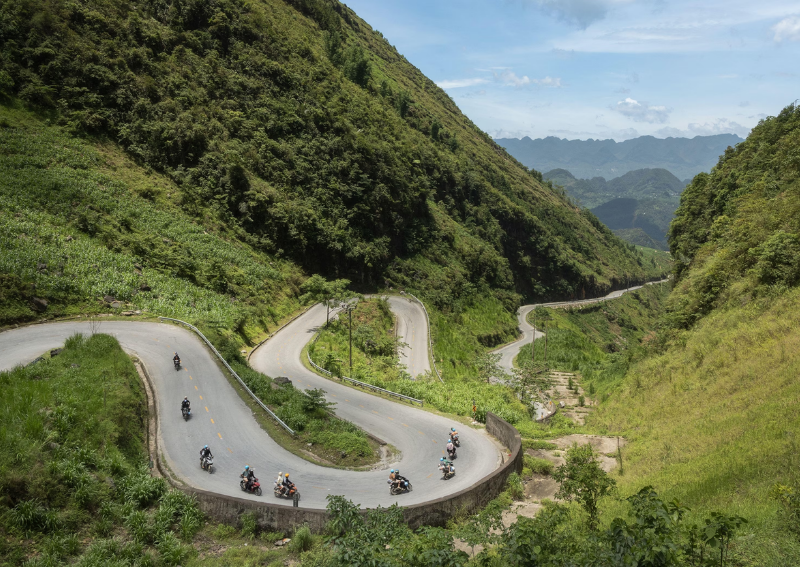
En route from Yen Minh to Sa Phin, the Tham Ma Pass cuts through the heart of the Dong Van Karst Plateau Geopark, a UNESCO-recognized geological wonder. The views from the top are wide, wild, and well worth the climb.
Sung La Valley
Just beyond the pass lies Sung La Valley, considered the most scenic highland commune on the entire Dong Van Plateau. Return during flower season and you’ll find the valley blanketed in color – particularly the iconic red buckwheat blossoms.
H’mong King Palace
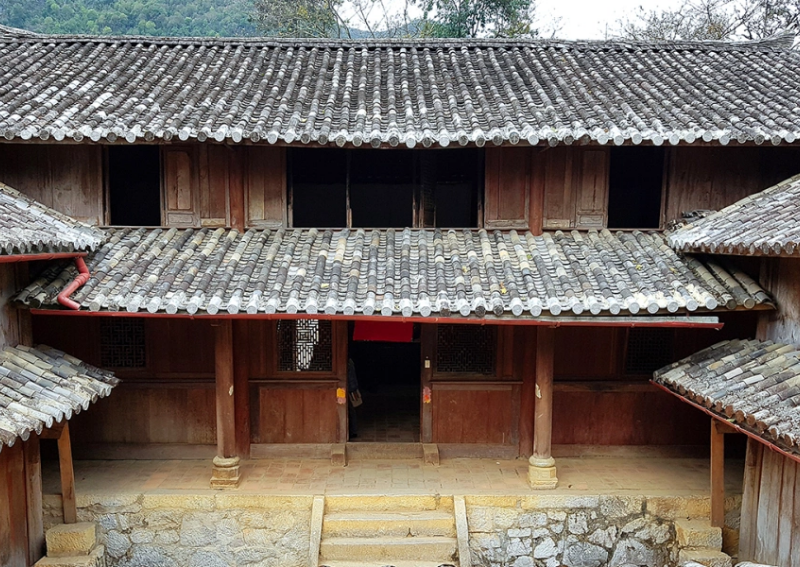
The former seat of the Vuong Dynasty in Sa Phin, this striking palace offers a window into the history and culture of Ha Giang’s H’mong ethnic minority — a community that once governed this remote mountain kingdom. It’s one of the most architecturally distinctive stops on the Loop.
Sa Phin Market
Held every six days, this traditional market draws villagers from across the surrounding mountains, arriving in their finest ethnic minority dress to trade everything from farm tools to fresh produce. Arrive early for the most vibrant atmosphere.
Lung Cu Flag Tower
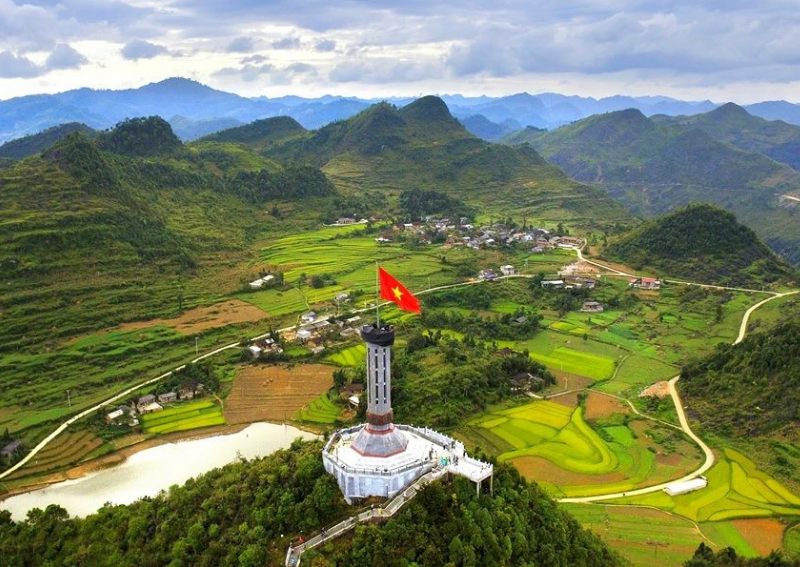
Perched at Vietnam’s northernmost tip, the Lung Cu Flag Tower is both a symbol of national sovereignty and an extraordinary viewpoint. On a clear day, you can see deep into China. It’s a moving, perspective-shifting stop that many travelers cite as a highlight of the entire journey.
Dong Van Old Quarter & Market
Founded in the early 20th century by families from H’mong, Tay, and Chinese communities, the Dong Van Old Quarter is atmospheric, unhurried, and genuinely charming. The weekly market here is one of the largest in the region, a riot of traditional costumes and mountain produce that’s unlike anything you’ll encounter in the lowlands.
Ma Pi Leng Pass
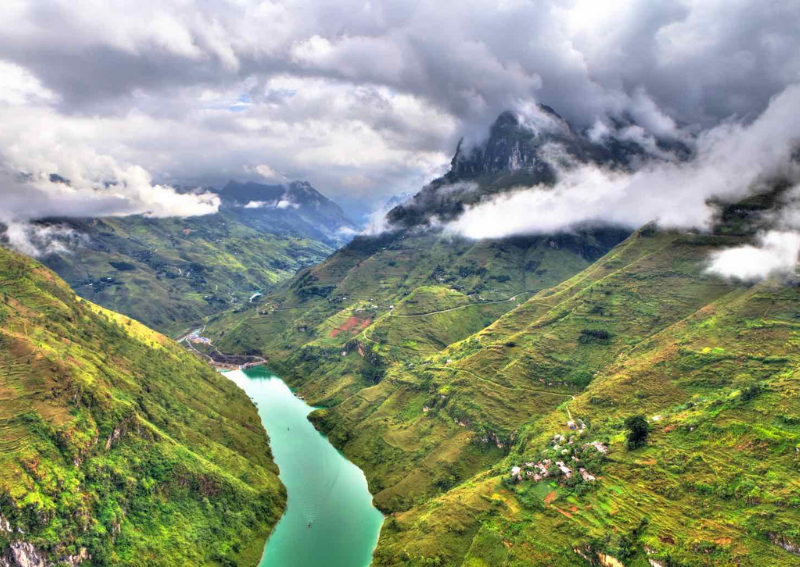
No questions, this is the centerpiece of what to see on the Ha Giang Loop. The road here clings to sheer cliff faces above the Nho Que River, whose turquoise waters wind far below through one of Vietnam’s deepest canyons. Ride slowly. Stop at every pullout. You’ll understand why travelers come back to Ha Giang just to ride this pass again.
Meo Vac Market
One of the largest ethnic minority markets in all of northern Vietnam, Meo Vac’s weekly gathering is a genuine cultural experience rather than a tourist spectacle. The energy, the color, and the sheer variety of what’s on offer make it a memorable stop.
Mau Due Commune & Du Gia Village
The stretch from Meo Vac through Mau Due and down to Du Gia is one of the Loop’s best-kept secrets. The road rivals Ma Pi Leng for pure drama, weaving through minority villages and across staggering mountain scenery. Du Gia itself is a peaceful, welcoming village where the rice fields and the warmth of the local community make it a perfect final overnight before heading back to Ha Giang.
What to Bring for Ha Giang Loop Backpacking
Packing smart makes a real difference on this trip. Here’s a practical gear list for Ha Giang Loop backpacking:
- Helmet: Prioritize a full-face helmet with a pull-down visor for maximum protection on mountain roads. Make sure the fit is snug and the straps are secure.
- Jacket: A riding jacket is ideal, but a warm, windproof layer is the minimum. Temperatures drop sharply at altitude – even in spring and autumn – so don’t underestimate the cold.
- Trousers: Comfortable, durable hiking trousers work well. In cooler months, add a thermal base layer underneath.
- Footwear: Proper riding boots are best, but sturdy hiking shoes are a solid alternative. Absolutely avoid sandals or flip-flops on mountain passes.
- Gloves: Pack two pairs – one lightweight for warmer stretches, one thicker and waterproof for altitude and early mornings.
- Rain gear: Non-negotiable regardless of season. A zip-up waterproof jacket and trousers serve double duty as wind protection on the passes.
- Knee and elbow pads: Especially recommended if you’re a less experienced rider. Lightweight pads offer meaningful protection without bulk.
- Navigation: Google Maps works in most areas, but always cross-check with locals or fellow riders – road conditions and detours can change quickly due to weather or ongoing construction. Don’t rely solely on your phone.
The Perfect Base for Your Ha Giang Adventure: Hanoi La Siesta Premium Lakeside
Every great Ha Giang Loop journey starts and ends in Hanoi, which makes your choice of base in the capital more important than it might seem. After days of mountain roads, cold passes, and remote village homestays, the return to the city hits differently. What you want is somewhere genuinely comfortable, central, and restorative.
Hanoi La Siesta Premium Lakeside delivers all of that and more. Consistently ranked among the best boutique hotels in Hanoi, it sits in the heart of the French Quarter – minutes from the Old Quarter, walkable to Hoan Kiem Lake, and well-positioned for the early-morning bus or car north to Ha Giang.
Whether you’re arriving the night before your Loop departure and need a great night’s sleep, or returning dust-covered and exhilarated after five days in the highlands, this is the kind of place that resets you. Elegant rooms, attentive service, and an in-house restaurant that makes lingering over breakfast feel like the natural thing to do.
For travelers planning a serious northern Vietnam adventure, among all the best hotels in Hanoi, La Siesta Premium Lakeside stands apart as both a practical launchpad and a very well-earned reward at the end of the road.