
Vietnam Mooncakes 2026: The History, Meaning, and Best Shops to Try Them in Hanoi
Few foods carry as much symbolism in Vietnam as banh trung thu, Vietnam mooncakes baked and shared every year around the Vietnam Mid-Autumn Festival. Round, dense, and often intricately patterned, these cakes are as much about ritual and family as they are about flavor. For travelers visiting Hanoi in the weeks around the full moon, understanding what a mooncake represents, and knowing where to find a genuinely good one, adds real depth to the trip.
This guide covers where mooncakes come from, what they mean, what makes them different from other baked goods, how Vietnamese families actually eat them, and where to find the best ones in the city, along with where to stay to be close to it all.
The Origins of the Vietnam Mooncakes
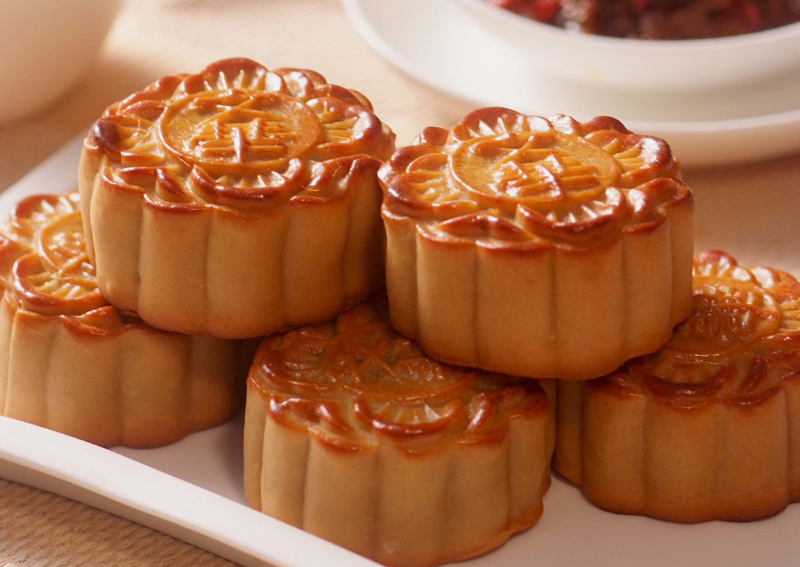
The mooncake’s roots trace back centuries across East and Southeast Asia, tied closely to the same harvest and full moon traditions that gave rise to the Mid-Autumn Festival itself. The round shape of the cake is not incidental. It is a direct reference to the full moon, and by extension, to wholeness, completeness, and family unity, the central themes of the entire holiday.
In Vietnam, the mooncake evolved into its own distinct tradition, developing two forms that are now inseparable from the festival: banh nuong, the baked mooncake, and banh deo, the soft, white, glutinous rice mooncake. While neighboring countries have their own versions of the mooncake, Vietnamese bakers developed their own recipes, fillings, and ways of preparing the dough over generations, resulting in a cake that tastes and looks distinctly Vietnamese even where the underlying tradition is shared more broadly across the region.
What the Traditional Vietnamese Mooncakes Means
At its heart, the mooncake is a symbol of family reunion. Its round form represents the full moon overhead and, by extension, the wish for families to remain whole and together, no matter how far apart daily life might scatter them. Sharing a single cake, cut into small wedges at the table, is itself an act of togetherness, which is part of why mooncakes are rarely eaten alone.
Beyond the family table, mooncakes have also become an important gesture of respect and gratitude. Gifting a box of mooncakes to parents, teachers, employers, or business partners in the weeks before the festival is a widely practiced custom, a way of acknowledging a relationship and wishing the recipient well as the year moves into its final quarter. This dual role, as both a family food and a formal gift, is a large part of why mooncake season becomes such a visible, citywide event in the weeks leading up to the full moon.
What Makes Vietnamese Mooncakes Different
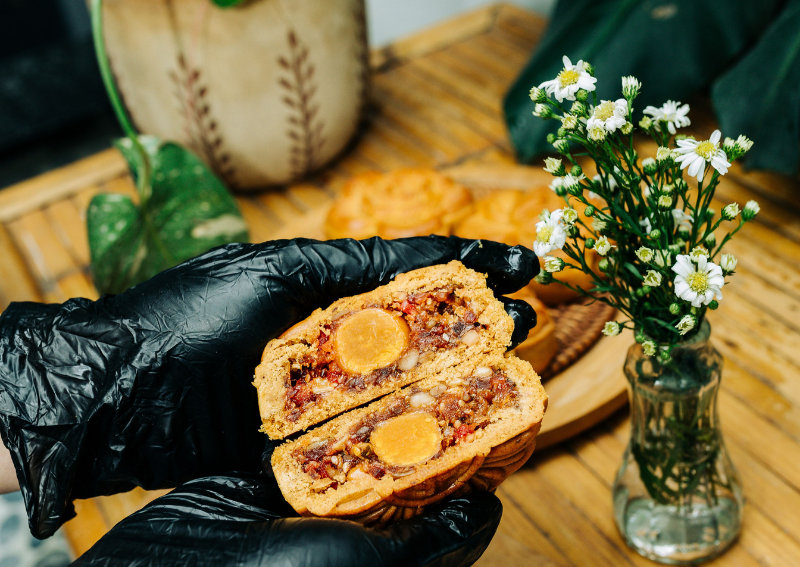
The two main styles of Vietnamese mooncake are made in almost entirely different ways, and understanding the distinction is part of what makes tasting them interesting.
Banh Nuong (Baked Mooncake)
It starts with a wheat flour dough enriched with a syrup that bakers prepare weeks or even months in advance, allowing it to age and darken, which is what gives the finished crust its deep amber color and characteristic chew. The filling, most traditionally thap cam, or “mixed,” combines candied winter melon, roasted sesame, dried fruit, lotus seeds, and often a whole salted duck egg yolk at the center, meant to represent the moon itself. The assembled cake is pressed into a carved wooden mold, then baked in stages, brushed with egg wash between rounds, until the surface takes on its glossy, deeply patterned finish.
Banh Deo (Soft Mooncake)
It is made without any baking at all. Glutinous rice is toasted and ground into flour, then combined with a cooled sugar syrup and kneaded into a smooth, pure white dough. The filling is typically simpler and sweeter than banh nuong, often built around mung bean or lotus seed paste. Like banh nuong, the dough is pressed by hand into a wooden mold to create its pattern, but because it contains no preservatives and is not baked, banh deo has a much shorter shelf life and is meant to be eaten within days of being made.
How Vietnamese People Eat Mooncakes
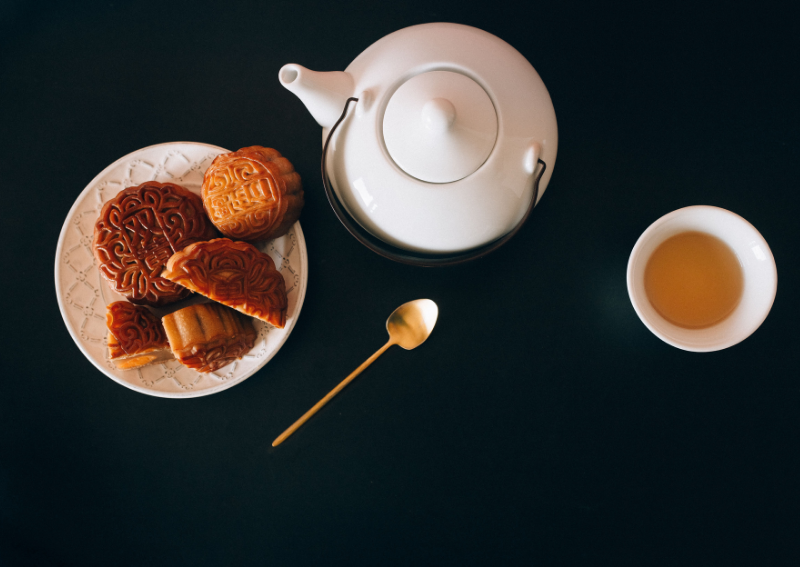
Mooncakes are almost never eaten as a quick snack on their own. The traditional way to eat one is to cut it into small wedges, usually four or eight per cake, and share it among the family gathered at the table, often outdoors or by an open window with a clear view of the full moon. Because the cakes are rich and dense, they are almost always paired with hot tea, most commonly a lightly floral variety like lotus tea or jasmine tea, which cuts through the sweetness and makes the pairing feel lighter than the cake alone.
This slow, shared way of eating is very much the point. Mooncakes are meant to be lingered over, cut and passed around while conversation continues, rather than eaten quickly. For children, the evening often includes a lantern procession through the neighborhood before the family settles down to share the cake together, tying the mooncake directly to the wider rituals of the festival night.
Best Mooncake Bakeries in Hanoi
Bao Phuong Mooncake Hanoi
Widely regarded as Hanoi’s most iconic mooncake maker, Bao Phuong has been baking from this same Thuy Khue Street location since shortly after Hanoi’s liberation in 1954, making it one of the oldest mooncake shops still operating in the city. It keeps a short menu of purely traditional flavors such as mixed nut and dried fruit, mung bean, and lotus seed, made without preservatives, and every Mid-Autumn season the shop draws lines of customers stretching down the street, some queuing from early morning to secure a box.
Banh Trung Thu Ba Dan
- Address: 52 Hang Be Street, Hoan Kiem District, Hanoi
Tucked into the Old Quarter, this long-running family bakery has built its reputation on closely guarded recipes passed down through generations, producing mooncakes with a distinct, old-fashioned flavor that regulars return for year after year. It keeps a low profile for most of the year and shifts into mooncake production only in the weeks around the festival, which is part of its appeal to those seeking something less commercial.
Ninh Huong
Better known for most of the year as a shop specializing in candied lotus seeds and scented tea, Ninh Huong turns its attention to mooncakes each Mid-Autumn season, applying the same careful, old-school approach to ingredients that built its reputation as a lotus and tea specialist. It is a good stop for travelers who want to pick up tea to pair with their mooncakes in the same visit.
Banh Trung Thu Hang Chieu
Set on one of the Old Quarter’s classic trading streets, this shop has served Hanoi families for decades with a straightforward, no-frills approach to traditional baked and soft mooncakes, favoring proven recipes over seasonal novelty. Its location makes it an easy stop to combine with a walk through the nearby lantern displays on Hang Ma Street.
Madame Huong
A newer name compared to the century-old shops of the Old Quarter, Madame Huong has built a following by pairing classic Vietnamese mooncake fillings with contemporary flavors like matcha, jasmine saffron, and coffee, presented in refined packaging. It suits travelers who want to try mooncakes in a more polished, boutique setting alongside the more traditional bakeries on this list.
FAQ: Vietnamese Mooncakes for Travelers
What is the difference between banh nuong and banh deo?
Banh nuong is a baked mooncake with a golden brown crust and a rich, dense filling, while banh deo is an unbaked, soft white mooncake made from glutinous rice flour with a simpler, sweeter filling.
Where is the best place in Hanoi to buy traditional mooncakes?
Bao Phuong on Thuy Khue Street is generally considered the city’s most iconic mooncake bakery, though several other long-running shops in the Old Quarter, including Ba Dan and Hang Chieu, are also well regarded by locals.
How should mooncakes be eaten?
Mooncakes are traditionally cut into small wedges and shared among family or friends, paired with hot tea, most often lotus or jasmine, to balance their richness.
How long do mooncakes stay fresh?
Baked mooncakes typically keep for around two weeks, while soft mooncakes, since they contain no preservatives, are best eaten within about a week of purchase.
Where to Stay in Hanoi for Mooncake Season
Since most of Hanoi’s best mooncake bakeries sit within or just outside the Old Quarter, staying centrally makes it far easier to work a few shops into a single day, alongside a walk through the lantern displays and the general festival atmosphere that builds through the weeks before the full moon. The streets around Hoan Kiem Lake and Hanoi’s Old Quarter are where the best hotels in Hanoi concentrate, and that is exactly where Hanoi La Siesta Premium Lakeside is positioned.
Consistently recognized among the best boutique hotels in Hanoi French Quarter for its combination of location, design, and service, La Siesta Premium Lakeside puts guests within easy reach of the Old Quarter’s bakeries, tea shops, and lantern-lined lanes from the moment they step outside.
It sits a 5 to 10 minute walk from Hoan Kiem Lake, close enough to fold a mooncake tasting or two into a morning walk without much planning, and near enough to Hang Ma Street to return in the evening for the lantern displays. A short taxi ride reaches Bao Phuong on Thuy Khue Street, making it realistic to try the city’s most famous mooncakes on the same day as a stroll through the Old Quarter’s older bakeries.
Recognized for offering the kind of thoughtfully managed stay that complements a food and culture focused trip rather than competing with it for attention, La Siesta Premium Lakeside is a well-considered retreat to return to after the bakery visits, the tea tastings, and the evening lantern walks are done for the day.