



Vietnam National Day 2026: The History, Meaning, and Best Way to Experience September 2nd in Hanoi
Every year on September 2nd, Vietnam marks its National Day or Independence Day, the anniversary of the moment the country declared itself independent in 1945. For travelers planning a trip around this date, 2026 is a meaningful year to be in the country, and there is no better place to feel it than Hanoi, the city where it all began. This guide covers the history behind the day, what it means to Vietnamese people today, how the country and the capital celebrate, the sites travelers can visit to understand the story firsthand, and where to stay to be close to it all.
The History Behind Vietnam National Day – Vietnam History
On September 2, 1945, at Ba Dinh Square in Hanoi, President Ho Chi Minh stood before tens of thousands of citizens and read the Declaration of Independence, formally announcing the birth of the Democratic Republic of Vietnam, the state that would later become today’s Socialist Republic of Vietnam. The declaration followed the success of the August Revolution, a nationwide uprising that had swept through the country earlier that same month and ended decades of colonial rule.
The path to that afternoon began weeks earlier. In mid August 1945, at Tan Trao in Tuyen Quang province, Ho Chi Minh and the Viet Minh convened a national congress attended by representatives from across the country, laying the political groundwork for the uprising that followed. Within days, revolutionary forces took control of cities and provinces one after another, and by the time Ho Chi Minh arrived in Hanoi to draft the declaration, the old order had already collapsed.
On the day itself, Ba Dinh Square Hanoi (then a public garden known as Vuon Hoa Ba Dinh) was transformed for the occasion, with a red and white ceremonial platform and a tall white flagpole at its center. Streets across Hanoi were decorated with flags, lanterns, and banners in Vietnamese, French, English, Chinese, and Russian. Shops and markets closed for the day, and residents of every age filled the streets and converged on the square to witness the declaration and the mass rally that followed. Vietnam’s constitution formally recognizes September 2, 1945 as the country’s National Day, and the date has been observed as the country’s founding anniversary ever since.
What the Day Means to Vietnamese People
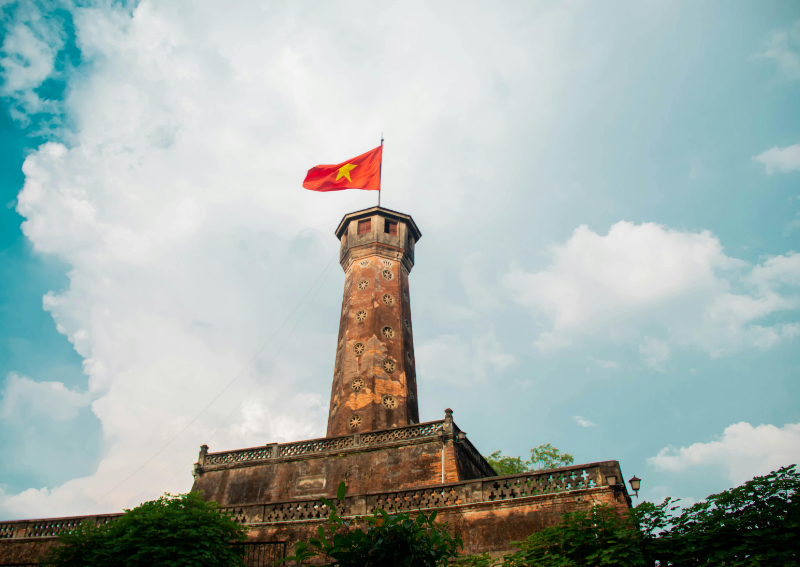
For Vietnamese citizens, Vietnam National Day or Vietnam Independence Day is not simply a date on the calendar. It is the successful end of August Revolution Vietnam. It represents the end of colonial rule and the start of Vietnam’s modern statehood, and it is remembered as one of the defining turning points in the country’s long history of resistance and self-determination. The declaration itself is still studied in schools and referenced in official ceremonies as a founding document, comparable in weight to how other nations regard their own declarations of independence.
Beyond its political meaning, the day carries deep personal and generational significance. Many families use the holiday to reflect on the sacrifices made by earlier generations, visit war memorials, or simply gather together, since September 2nd falls within Vietnam’s official public holiday period. It is also, for many Vietnamese, tied closely to the memory of Ho Chi Minh himself, whose legacy remains deeply connected to the story of the country’s founding.
How Vietnam Celebrates National Day
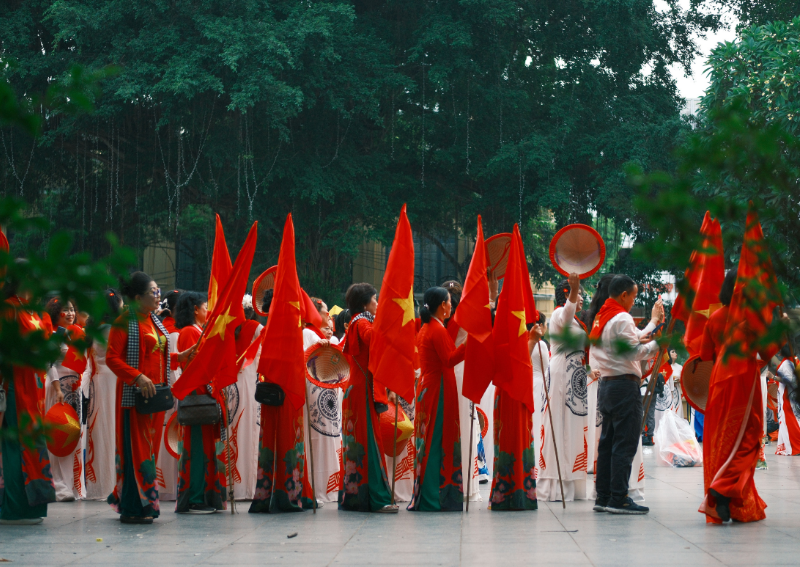
Across the country, September 2nd is marked by flag displays on homes and public buildings, official ceremonies, cultural performances, and family gatherings. Because it falls during a multi-day public holiday, it is also one of the busiest domestic travel periods of the year, with many Vietnamese families using the extended break to visit relatives or travel within the country. Television broadcasts, official events, and community activities throughout the holiday period reflect on the country’s founding and its journey since 1945.
How Hanoi Celebrates, Specifically
As the city where independence was declared, Hanoi’s celebrations carry extra weight. The center of it all is the solemn flag raising ceremony at Ba Dinh Square, held at dawn in front of the Ho Chi Minh Mausoleum. A ceremonial guard of 34 soldiers, a number chosen to represent the founding members of the Vietnam People’s Army, marches into the square before sunrise as crowds gather, some arriving as early as 5 a.m., to watch the flag rise while the national anthem plays. After the ceremony, many visitors continue on to pay respects at the mausoleum itself.
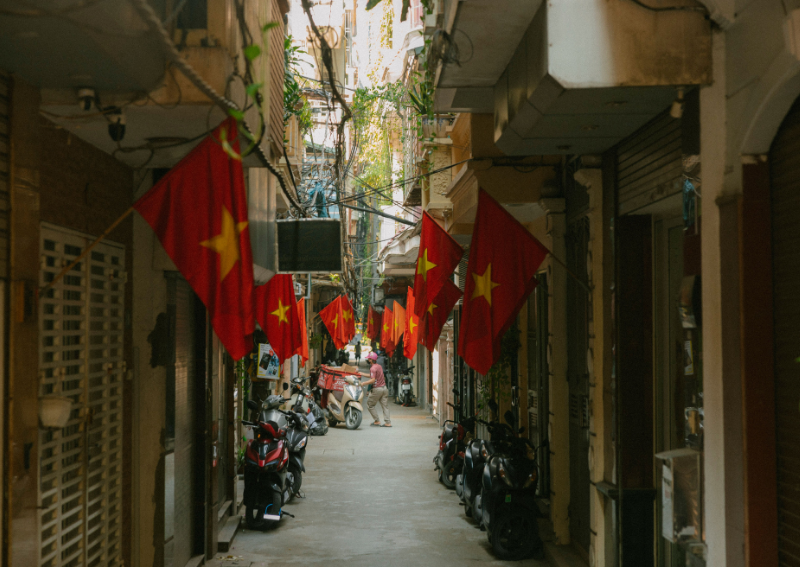
Later in the day, the city’s public spaces fill with color: red flags with the yellow star hang from balconies and storefronts throughout the Old Quarter, and streets around Hoan Kiem Lake see cultural performances, music, and family outings well into the evening. On milestone anniversary years, the city has also held military and civilian parades that pass the main ceremonial platform before moving out through Hanoi’s central streets, though the scale of public events can vary from year to year.
Even outside of formal ceremonies, the atmosphere across the Old Quarter and around Hoan Kiem Lake on National Day is distinctly festive, making it one of the more memorable times of year to be walking those streets.
What Travelers Can Do on Vietnam Independence Day
For visitors who want to understand the history behind the holiday and experience it firsthand, Hanoi offers a concentrated cluster of historic sites, most of them within a short distance of one another in the Ba Dinh district and the Old Quarter. Here are the places worth building a day around.
Ba Dinh Square Hanoi

This is the site of the 1945 Declaration of Independence and the location of the daily (and especially significant, on September 2nd) flag raising ceremony. Arriving before dawn gives travelers a chance to witness the ceremonial guard and the raising of the national flag in the same square where Ho Chi Minh addressed the crowd eight decades ago.
Ho Chi Minh Mausoleum
Located directly behind Ba Dinh Square, this is where Ho Chi Minh’s preserved body lies in state. It remains one of the most visited sites in the city, particularly around National Day, when the surrounding grounds are busiest with both local and international visitors.
Ho Chi Minh Museum
Set beside the mausoleum complex, this museum traces Ho Chi Minh’s life and the broader independence movement through photographs, documents, and personal artifacts, offering useful context before or after visiting the square.
Presidential Palace Historical Site and Ho Chi Minh’s Stilt House
This is where Ho Chi Minh lived and worked for much of his later life, in a modest stilt house rather than the grand French colonial palace nearby. It offers a quieter, more personal look at the man behind the declaration.
One Pillar Pagoda
A short walk from the mausoleum complex, this small pagoda built on a single stone pillar is one of Hanoi’s most recognizable historic and spiritual landmarks, and a natural stop while touring the Ba Dinh area.
Vietnam Military History Museum
This museum documents Vietnam’s military history from earlier dynasties through the twentieth century, with exhibits directly connected to the events of August and September 1945.
Hoa Lo Prison Relic
Originally built by French colonial authorities to hold Vietnamese political prisoners, this site offers essential context for understanding the decades of resistance that preceded the 1945 declaration.
Temple of Literature Hanoi
Vietnam’s first national university, founded in the eleventh century, this site connects visitors to a much older thread of Vietnamese national identity and scholarship, a useful contrast to the twentieth century sites nearby.
Hoan Kiem Lake and Ngoc Son Temple
The symbolic heart of Hanoi and the center of the city’s National Day atmosphere in the evening, with flag displays, street performances, and crowds gathering along the lakeside well after the morning ceremonies at Ba Dinh have ended.
Long Bien Bridge
Built during the French colonial period and later a target during wartime, this bridge is tied closely to Hanoi’s twentieth century history and offers a good vantage point over the Red River in the late afternoon.
FAQ: Vietnam National Day for Travelers
What is Vietnam National Day?
It is the anniversary of September 2, 1945, when Ho Chi Minh read the Declaration of Independence at Ba Dinh Square in Hanoi, founding the state that became today’s Socialist Republic of Vietnam.
Is Vietnam National Day a public holiday?
Yes. It falls within an official multi-day public holiday period, one of the busiest domestic travel windows of the year in Vietnam.
Can tourists attend the flag raising ceremony at Ba Dinh Square?
Yes, the ceremony is open to the public and free to attend. Arriving before dawn is recommended, as the square fills quickly with local visitors as well.
Is Hanoi a good place to be for Vietnam National Day?
Hanoi is the city where independence was declared, and it hosts the country’s most significant National Day ceremonies, making it the most historically resonant place to experience the holiday.
Where to Stay in Hanoi for Vietnam National Day
Given how much of the day’s history and atmosphere is centered around Ba Dinh Square, the Old Quarter, and Hoan Kiem Lake, staying nearby makes it far easier to reach the flag raising ceremony before dawn and still be within walking distance of the city’s evening celebrations. The streets around Hoan Kiem Lake and Hanoi’s Old Quarter are where the best hotels in Hanoi concentrate, and that is exactly where Hanoi La Siesta Premium Lakeside is positioned.
Consistently recognized among the best boutique hotels in Hanoi French Quarter for its blend of location, design, and attentive service, La Siesta Premium Lakeside puts guests within a short walk of the Old Quarter’s narrow streets and food stalls from the moment they step outside. It sits just a 5 to 10 minute walk from Hoan Kiem Lake and a short taxi ride from Ba Dinh Square, close enough to reach the early morning flag ceremony comfortably and still be back in time for breakfast. In the evening, when flags come out across the Old Quarter and crowds gather by the lakeside, guests are already in the middle of it.
Recognized for offering the kind of thoughtfully managed stay that complements a history and culture focused trip rather than competing with it for attention, La Siesta Premium Lakeside is a well-considered retreat to return to after the ceremonies, the museum visits, and the long walks through Hanoi’s old streets are done for the day.