

Why Does Every Street in Hanoi Old Quarter Have a Craft Name? The 1,000-Year Secret Behind “Hàng”
You’re walking down a narrow lane in Hanoi Old Quarter, weaving past a woman balancing a bamboo pole stacked with fruit, ducking under a strand of lanterns, and squinting at a street sign. Hàng Bạc. Then Hàng Đào. Then Hàng Mã. Then Hàng Thiếc. Four streets. Four names. And if you stop long enough to ask why: why silver, why peach-pink silk, why votive paper, why tin – you’ve just asked the question that most visitors walk straight past.
The answer reaches back more than a thousand years, to a moment when Hanoi was not yet a city but a cluster of craft villages pressed up against the walls of a royal citadel. What those villagers built, street by street, guild by guild, is still legible today, if you know how to read it.
“Hàng” – One Word in Every Hanoi Craft Streets’ name
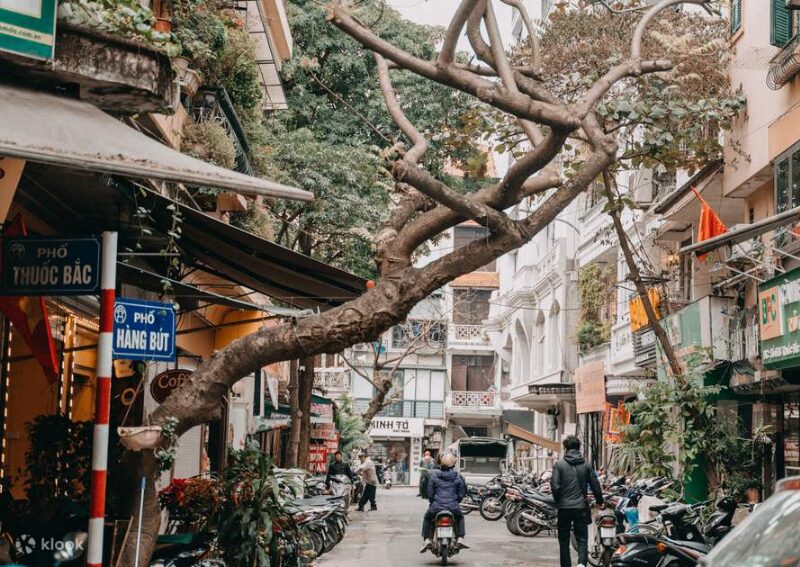
Before diving into individual streets, there’s one word worth understanding: hàng.
In Vietnamese, hàng means merchandise, goods, or wares. After the imperial court moved to Thăng Long in the 11th century, artisans and merchants from surrounding villages gradually settled in the capital. Craftspeople working in the same trade often gathered on the same street, which led to the naming pattern “Hàng + product.” A street of silversmiths became Hàng Bạc (Silver Wares Street). A street of silk-dyers became Hàng Đào (Peach-pink Silk Street). A street of tin-smiths became Hàng Thiếc (Tin Wares Street).
The naming logic was entirely practical. Customers arriving in the capital knew exactly where to go. Need silk? Head to the silk street. Need a drum for a ceremony? Follow the sound to the drum street (Hàng Trống). It was practically easy for customers from everywhere. The city organized itself like a giant, walkable marketplace, one that happened to span centuries.
The Guild System: Hanoi’s Medieval Marketplace
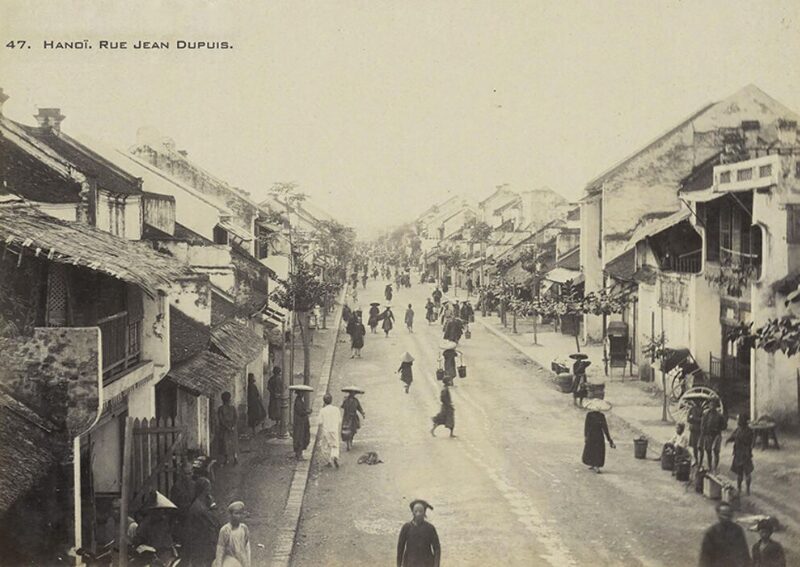
What made Hanoi Old Quarter remarkable wasn’t just that craftsmen gathered here. It was how they organized themselves.
In the early 13th century, the collection of tiny workshop villages which clustered around the palace walls evolved into craft cooperatives, or guilds. When the craftsmen moved from outlying villages into the capital, they brought with them their religious practices, transferring their temples, pagodas, and communal houses to their new location. Each guild honored its own patron saint or founder.
Take Hàng Bạc as an example. The craft of silversmithing was brought by people from Châu Khê in Hải Dương and Đồng Xâm in Thái Bình. They brought not just their craft but their rituals and communal temple. Silver was melted and poured into molds for the royal treasury at one end of the street; finished jewelry was sold to the public at the other. The knowledge was kept tightly within the guild, passed between generations, protected from outsiders.
This model repeated itself across dozens of streets. The craft of tin-smithing on Hàng Thiếc was brought by people from Phú Thứ village in Hoài Đức, while traditional medicine on Thuốc Bắc came from practitioners from Đa Ngưu village in Hưng Yên. Each group occupied its own lane, maintained its own guild hall, and honored its own ancestral founder.
By the 15th century, scholar Nguyễn Trãi was already documenting the specialized trade streets of Thăng Long in his “Dư Địa Chí”, one of the earliest written records of what we now call Hanoi Old Quarter.
The Mystery of “36”: A Number That Was Never Meant to Be Exact
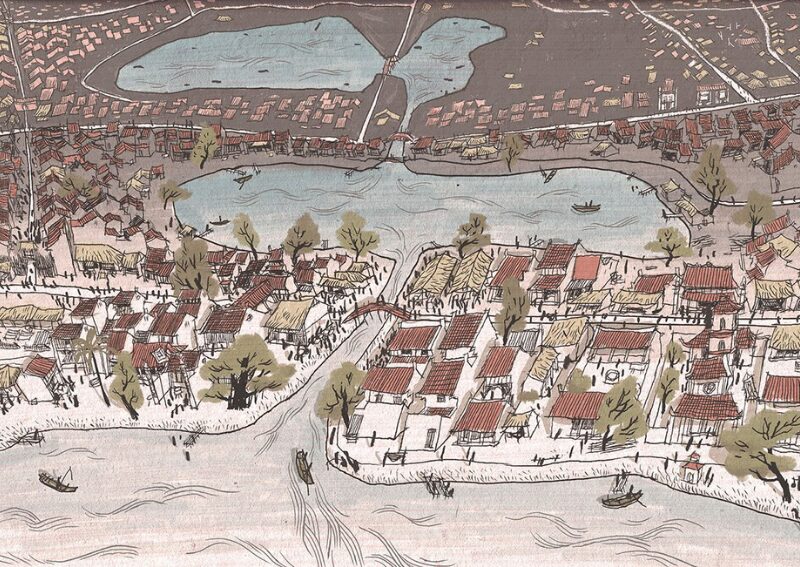
Here’s a detail that surprises most visitors: the famous “36 streets” was never actually 36 streets.
The number 36 carries symbolic meaning, representing the 36 craft guild wards as referred to during the Lê dynasty, not an exact count of streets. As the district expanded over time, the number of streets grew well beyond 36, which is why modern lists of Hanoi’s 36 Streets are not always the same. Some researchers believe the number 36 came from the 15th century when there might have been 36 guild locations, which were workshop areas, not streets. When streets were later developed, the guild names were applied to them.
The takeaway: when you hear “36 streets,” think living historical district, not a numbered list. The official Hanoi Old Quarter today contains 76 streets, more than double the mythologized figure.
Which Streets Still Practice Their Original Craft?
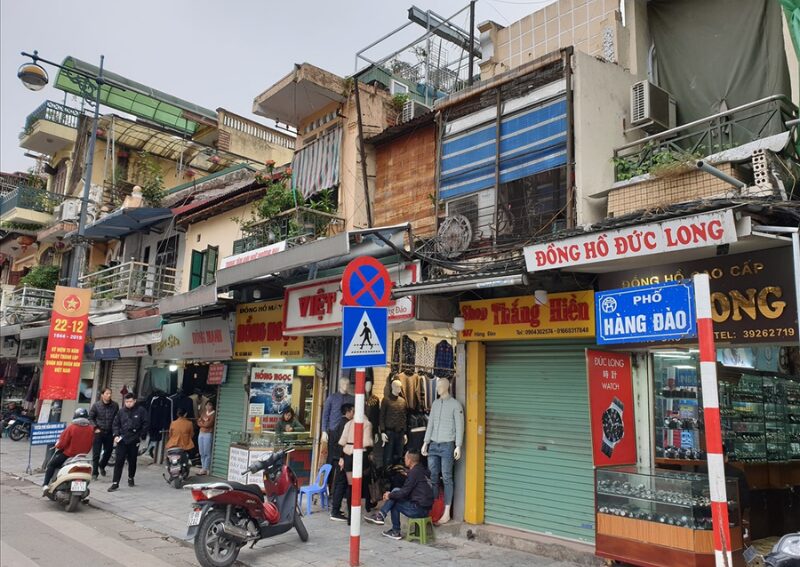
This is where Hanoi Old Quarter becomes genuinely interesting for travelers who look closely. Not all streets kept their original trade, but more than you might expect still do, at least partially.
Streets that still largely honor their original trade:
- Hàng Bạc (Silver Street): Still lined with gold and silver jewelers. Đình Kim Ngân, a communal hall dedicated to the silversmiths’ guild, remains an active cultural landmark on this street. The craft families from Châu Khê still have a presence here.
- Hàng Thiếc (Tin Street): Metalworking continues. You’ll still hear the tap of hammers on tin sheeting and see craftsmen cutting and shaping sheet metal into kitchen implements. It’s one of the most audibly authentic streets in the quarter.
- Hàng Mã (Votive Paper Street): The trade has evolved but the spirit is intact. Originally selling paper offerings for ancestral ceremonies, the street is particularly alive during Tết, Mid-Autumn Festival, and other holidays, with elaborate paper lanterns, decorations, and handmade items filling every shopfront.
- Thuốc Bắc (Northern Medicine Street): Traditional herbal medicine, brought by practitioners from Đa Ngưu village, is still dispensed here from jars of dried roots, bark, and seeds lining shop shelves.
Streets where the trade has shifted completely:
- Hàng Đào (Silk Street): Once a center for silk dyeing, particularly in the distinctive peach-pink (đào) hue. Today it’s a busy retail street for ready-made clothing.
- Hàng Buồm (Sails Street): Sails once made sense here, when the Red River ran close enough for boats to moor at the edge of the quarter. Today it’s known for Vietnamese cakes and candy.
- Hàng Khoai (Sweet Potato Street): The produce is long gone; kitchenware has taken over.
The contrast between these two categories tells a broader story about urbanization, tourism, and the slow erosion of craft identity, a conversation Hanoi is still actively having.
What to do in Hanoi Old Quarter: A Self-Guided Walking Route – 8 Stops, 2 Hours
The best way to understand the Old Quarter’s craft history isn’t to read about it. It’s to walk it. This 2-hour route starts near Hoàn Kiếm Lake and moves north through the most historically layered streets.
Ô Quan Chưởng Gate
Start here, the last remaining original city gate of the Old Quarter, built in 1749. Standing underneath it, you’re crossing the same threshold that traders and craftsmen passed through for centuries.
Hàng Chiếu (Mat Street)
Woven rush mats were once produced and sold here by craftsmen from villages south of the capital. The architecture, narrow shophouses with tile roofs, is among the most intact in the quarter.
Hàng Mã (Votive Paper Street)
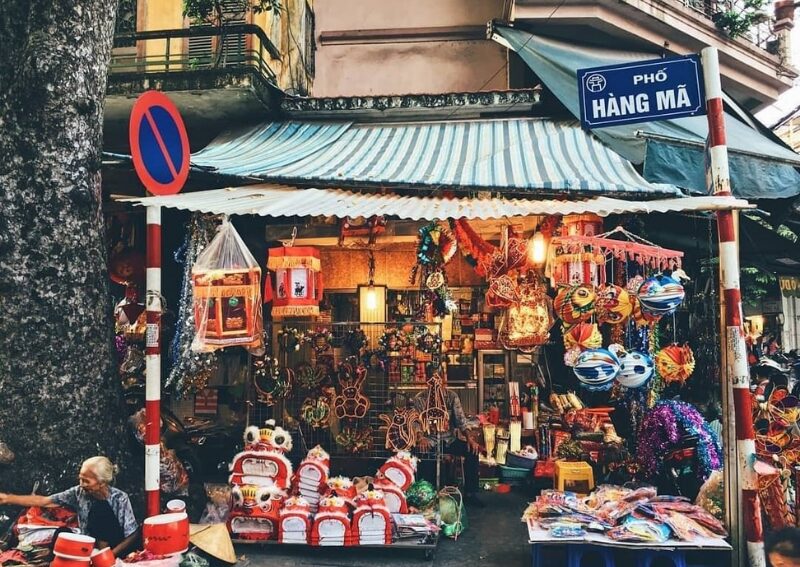
Even outside festival season, this street rewards a slow walk. Watch how paper is cut, folded, and assembled into offerings. The craftsmanship is meticulous and the visual spectacle, walls of red and gold, is unlike anything else in Hanoi.
Đồng Xuân Market
Built in the late 19th century during French colonial rule, Đồng Xuân Market is considered the commercial backbone of Hanoi Old Quarter. The upper floors are a maze of fabric bolts, dried goods, and household items. Go early for the full sensory experience.
Hàng Thiếc (Tin Street)
This is the street where the Old Quarter sounds most like itself. The metalworking continues in small workshops tucked between shopfronts, a living reminder that “Hanoi craft streets” is not yet entirely a historical artifact.
Hàng Bạc (Silver Street)
Walk the full length slowly. Look for Đình Kim Ngân at No. 42, the communal temple of the silversmiths’ guild, one of the few surviving guild halls in Hanoi Old Quarter and a registered cultural heritage site.
Mã Mây Street
Mã Mây Street was formed by the merger of two older streets: Hàng Mã (Votive Offerings) and Hàng Mây (Rattan), both named for goods that once arrived by boat from the Red River, which used to flow closer to this area. Today it retains some of the best-preserved colonial-era architecture in the quarter, and it’s where you’ll find La Siesta Classic Mã Mây.
Hàng Buồm to Hoàn Kiếm Lake
End at the lake. Hàng Buồm’s name is a quiet reminder of how dramatically the city’s geography has changed. When this street was named, the Red River’s tributary ran close enough for sailing vessels to moor here. Now the water is gone, but the name holds the memory.
Where to stay in Hanoi Old Quarter: Make La Siesta Classic Mã Mây Your Home Base
Understanding Hanoi craft streets intellectually is one thing. Waking up inside them is another.
Staying in Hanoi Old Quarter puts you within walking distance of every stop on this guide, no taxi needed, no morning rush to beat. The narrow lanes are quietest before 8am and after 10pm, and those hours belong to a different city entirely: incense smoke drifting from temple offerings, the clatter of early market vendors, the particular quality of light through old tile roofs.
For a stay that genuinely matches the character of the neighborhood, Hanoi La Siesta Classic Mã Mây is the natural choice. Positioned on one of the quarter’s most historically layered streets, a street with two craft histories embedded in its very name, this is one of the best hotels in Hanoi Old Quarter to capture the traditional, atmospheric character of the old road while offering the warmth and thoughtfulness of world-class hospitality. Its signature architecture echoes the nhà ống tube-house style that defines the neighborhood, creating a sense of place that larger hotels in the area simply cannot replicate.
More than a comfortable place to sleep, La Siesta Classic Mã Mây serves as the ideal base for exploring Hanoi craft streets, heritage sites, and living history streets. Everything described in this guide is within a short walk of its front door. Step outside in the morning, and Hanoi Old Quarter is already yours.
Quick Reference: Hanoi Craft Streets – Origin vs. Today
| Hanoi Old Quarter Street | Meaning | Original Craft | Today |
| Hàng Bạc | Silver Wares | Silversmithing, coin-casting | Still active, jewelers and guild hall |
| Hàng Đào | Peach-pink Silk | Silk dyeing and trading | Ready-to-wear clothing |
| Hàng Thiếc | Tin Wares | Tin-smithing | Still active, metalworking |
| Hàng Mã | Votive Offerings | Ceremonial paper goods | Still active, decorations and votive goods |
| Hàng Gai | Hemp/Silk | Rope, then silk | Handicrafts, lacquerware |
| Hàng Buồm | Sails | Sailmaking | Cakes and candy |
| Hàng Bông | Cotton | Cotton batting, quilts | Varied retail |
| Thuốc Bắc | Northern Medicine | Herbal medicine | Still active, traditional medicine |
| Mã Mây | Votive and Rattan | Paper goods and rattan weaving | Preserved architecture, tourism |
| Hàng Gà | Chicken | Live poultry | Wedding stationery |
Explore more about Hanoi Old Quarter: Hanoi Old Quarter 2026: Where to See the City’s Soul