



Cốm Varieties Hanoi: The Best Specialties Made From Green Rice This Autumn 2026
Every city has a flavor that marks the turning of its seasons, and in Hanoi that flavor is cốm, the delicate young green rice flake harvested only in autumn. What makes cốm so interesting for anyone exploring Hanoi food culture is not just the raw rice itself, but the wide range of cốm varieties Hanoi it turns into: plain cốm wrapped fresh in lotus leaves, warm stir fried cốm xào, hearty xôi cốm, and the iconic bánh cốm sold in shops across the city.
Each specialty from cốm Hanoi has its own texture, sweetness level, and proper way of eating it, which is exactly what makes this ingredient such a rewarding rabbit hole for visitors who want to go beyond pho and banh mi. This guide walks through every major cốm variety worth trying in Hanoi, where to find the best specialties made from cốm Hanoi in the Old Quarter, and where to stay so that discovering them feels effortless rather than rushed.
What Exactly Is Cốm Hanoi, and Why Hanoi Loves It So Much
Cốm Hanoi is made from young, unripe glutinous rice that is harvested early, roasted lightly, then pounded and flattened by hand until it turns into soft, fragrant green flakes. The process is delicate and time sensitive, which is part of why cốm is treated as a seasonal delicacy rather than an everyday staple. Traditionally associated with autumn in northern Vietnam, cốm Hanoi carries a subtle grassy sweetness and a slightly chewy texture that Vietnamese people describe as tasting like the smell of a rice field right after rain.
It is often given as a gift between family and friends during the Mid-Autumn season, wrapped carefully in lotus leaves to keep its aroma intact. For anyone curious about authentic Vietnamese cuisine, understanding cốm Hanoi is a good starting point, since it connects directly to Hanoi’s agricultural roots and its rhythm of seasonal eating that still defines the city today.
Cốm Varieties Hanoi
Cốm Hanoi Wrapped in Lotus or Banana Leaf: The Purest Way to Eat It
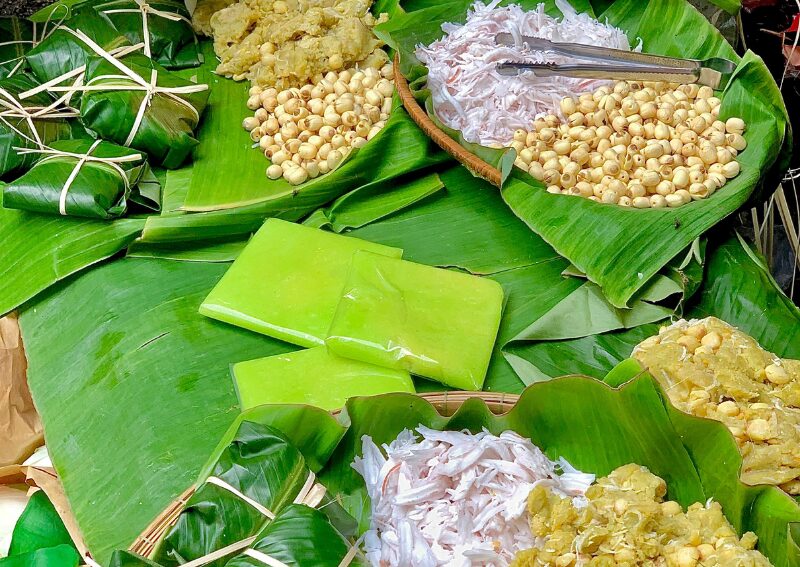
The most traditional way to enjoy cốm is also the simplest. Fresh cốm is sold loose, wrapped in lotus leaves or banana leaves, tied with a thin strip of straw. This packaging is not just decorative, the lotus leaf actually enhances the rice’s natural fragrance during the short walk home. Locals eat it plain, a small pinch at a time, sometimes paired with ripe banana, which is the classic Hanoi combination for a reason: the banana’s sweetness balances the slightly savory, grassy note of the rice.
This is considered the truest test of quality cốm, since there is nowhere for a vendor to hide inferior rice with sugar or frying. If you want to taste cốm the way generations of Hanoians have, skip the processed versions first and try it fresh, straight from the leaf, ideally within a day of purchase since it does not keep well.
Cốm Xào: Buttery, Warm, and Deeply Comforting
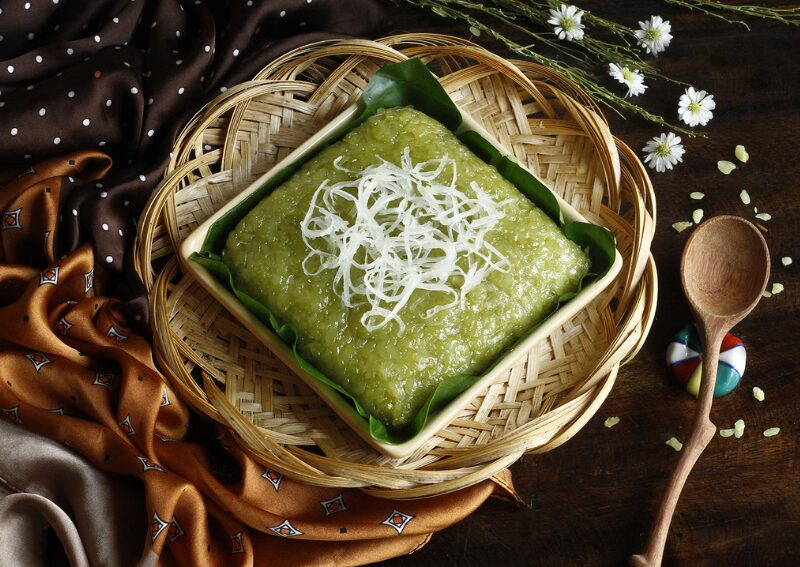
Cốm xào is stir fried cốm, cooked gently with sugar and a touch of coconut, sometimes with mung bean paste folded through it. The cooking process softens the rice slightly and gives it a warm, almost custardy texture, quite different from the chewier bite of raw cốm. This is often the version recommended to first time visitors, since the sweetness is more immediate and approachable compared to the plain, grassy flavor of unprocessed cốm.
Vendors typically serve it warm in small paper cups or banana leaf parcels, perfect for eating while wandering the Old Quarter in the cooler autumn air. Some stalls add a light dusting of sesame or a few strands of dried coconut on top for extra texture. Cốm xào is best eaten fresh off the pan, and many Hanoians consider it a proper afternoon snack rather than a dessert, something to pair with a cup of hot green tea while people watching from a sidewalk stool.
Xôi Cốm Hanoi: Sticky Rice Meets Young Rice
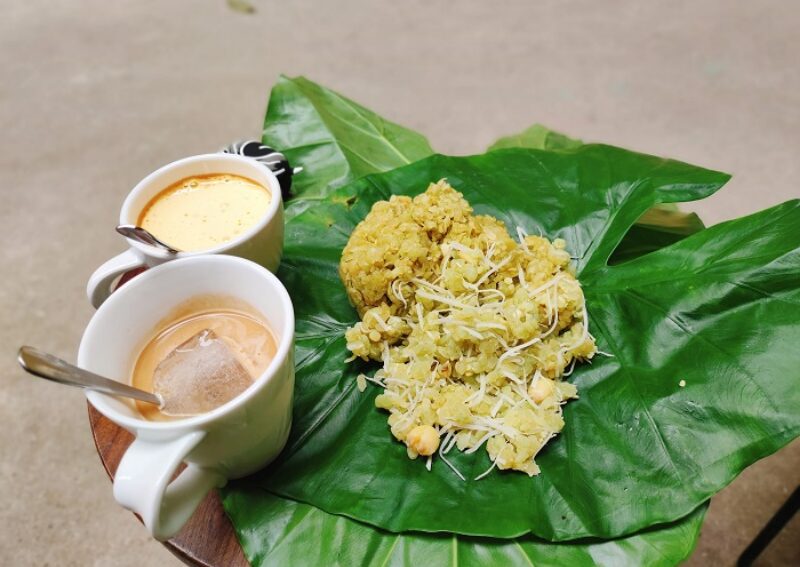
Xôi cốm combines cốm with glutinous sticky rice, steamed together until the two textures meld into something soft, fragrant, and slightly sweet. It is usually topped with shredded coconut, a scattering of roasted mung bean paste, and sometimes a drizzle of sweetened condensed milk for richness. This dish sits somewhere between breakfast food and dessert, and in Hanoi it is common to see it sold in the early morning alongside other xôi varieties from carts near local markets.
The color alone, a soft jade green flecked through white sticky rice, makes it one of the more photogenic dishes for anyone documenting a Hanoi food guide. Texturally, xôi cốm is denser and more filling than plain cốm or cốm xào, making it a satisfying option if you are exploring the Old Quarter on foot for hours and need something more substantial than a quick snack.
Bánh Cốm Hanoi: Hanoi’s Iconic Green Rice Cake
Bánh cốm is perhaps the most recognizable cốm product outside of Vietnam, a small square cake made from pounded cốm dough wrapped around a sweet mung bean and coconut filling. Unlike the fresh, seasonal versions, bánh cốm has a longer shelf life, which makes it a popular gift and souvenir, especially during wedding season and Mid-Autumn Festival. The outer layer has a slightly chewy, glutinous texture, while the filling is dense, sweet, and fragrant with vanilla or pandan.
Traditionally, bánh cốm is associated with a handful of long standing family businesses in Hanoi that have been making it the same way for decades, and locals are often loyal to a specific shop the way people elsewhere might be loyal to a particular bakery. If you are looking for something to bring home that represents traditional Vietnamese desserts, bánh cốm travels well and keeps its flavor for several days when stored properly.
Where to Find the Best Cốm Hanoi in the Old Quarter
Cốm shows up in a few different forms around Hanoi, and knowing where to look makes a real difference. Street vendors carrying shoulder baskets appear seasonally throughout the Hanoi Old Quarter, often near Hoan Kiem Lake and the streets radiating out from Dong Xuan Market, selling fresh cốm wrapped in lotus leaf for roughly 40,000 to 70,000 VND (about 1.6 to 2.8 USD) per basket depending on quality and quantity.
For a more concentrated shopping experience, Nha Chung street is one of the best known spots, with several specialty shops selling fresh cốm, cốm xào, and bánh cốm side by side, making it easy to compare and taste before buying. Prices for bánh cốm typically run between 5,000 and 10,000 VND (about 0.2 to 0.4 USD) per piece, while a small portion of cốm xào from a street stall usually costs around 20,000 to 40,000 VND (about 0.8 to 1.6 USD). Early morning is the best time to shop, since cốm sells out quickly and quality drops noticeably by late afternoon.
Where to Stay in Hanoi to Experience Autumn the Right Way
Hanoi La Siesta Classic Ma May, one of the best hotels in Hanoi Old Quarter, sits at the center of all of this. Located on Ma May Street, one of the Old Quarter’s most historically layered corridors and within easy walking distance of Nha Chung street’s cốm shops, the early morning market stalls near Dong Xuan Market, and the shoulder-basket vendors who appear only in autumn, it offers the kind of stay that makes the city feel like it belongs to you rather than the other way around.
The hotel’s traditional architecture and genuinely warm hospitality create a retreat that feels embedded in the life of the neighborhood, a quiet, considered sanctuary that gives you the energy to head back out and follow the season’s freshest cốm.
Whether you are stepping out at dawn to catch a vendor unwrapping the first batch of fresh cốm from its lotus leaf, or returning in the late afternoon to find Nha Chung street’s specialty shops in full swing, Hanoi La Siesta Classic Ma May is the kind of base that makes every part of the Hanoi street food experience feel unhurried and entirely your own. Consistently celebrated as one of the best boutique hotels in Hanoi Old Quarter, it is the right starting point for anyone who wants to taste Hanoi one season at a time.