



Da Nang Vietnam 2026: Vietnam’s City of Bridges, Beaches, and Everything Between
Da Nang Vietnam sits on the central coast of Vietnam, sheltered to the north by the Hai Van Pass where a spur of the Truong Son range extends to the sea, and to the northeast by the forested Son Tra Peninsula reaching into the East Vietnam Sea, where three UNESCO World Heritage Sites sit within a 90-minute drive of each other. The city itself is modern, well-organized, and genuinely liveable in a way that some of Vietnam’s older, denser cities are not, and that practical quality makes it one of the best base camps in Southeast Asia for a longer, more exploratory trip.
Da Nang is the most practical gateway to Central Vietnam’s three UNESCO World Heritage Sites: Hoi An Ancient Town, the Hue Imperial Citadel complex, and My Son Sanctuary. But it deserves far more than a transit stop. Plan at least three days, and consider four if you want to do it properly.
A Brief History of Da Nang Vietnam
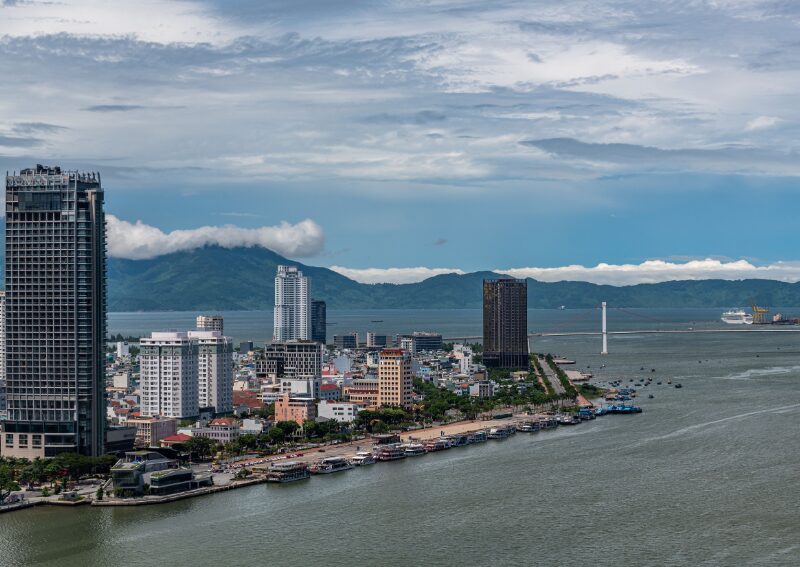
Da Nang’s position at the mouth of the Han River made it a natural deepwater port, and it has served that function for most of its recorded history. The surrounding region was part of the ancient Champa Kingdom for centuries, and the Cham people once ruled much of Central Vietnam, leaving behind ruins of temples that have since been excavated around Da Nang. The city’s Cham Museum of Sculpture, housed in a French colonial building constructed in 1915, holds the largest collection of Cham sculpture in the world and provides the most coherent single account of that civilization available anywhere.
Da Nang was one of the first cities occupied by French colonial forces in 1858, an event that opened Vietnam to a century of French administration and left a visible architectural legacy in the city’s cathedral and several heritage buildings. During the Vietnam War, Da Nang served as a major American military base, home to one of the busiest airports in the world at the height of the conflict. The Hai Van Pass connecting Da Nang and Hue was contested ground for much of the war, and the American military outpost at its summit still stands as a bullet-scarred relic of that period.
Today Da Nang is one of Vietnam’s fastest-growing cities and a genuinely popular destination in its own right, drawing visitors with a combination of serious beaches, strong infrastructure, affordable food, and proximity to some of the most significant historical sites in the country.
Top Things to Do in Da Nang
My Khe Beach
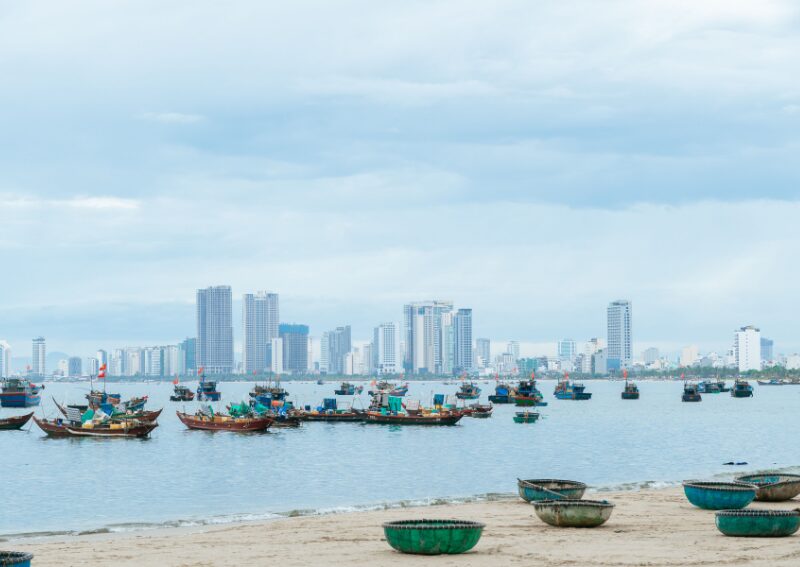
My Khe Beach runs along the coastline for more than 30 kilometers south of Son Tra Peninsula and is considered one of the best urban beaches in Asia. The sand is fine and pale, the water is warm and swimmable from April through October, and the beach is noticeably less crowded than similarly ranked beaches elsewhere in Southeast Asia. Lifeguards monitor the roped-off swimming sections during peak season. Local residents use the beach at dawn for swimming and tai chi, which makes a 6:00 AM visit one of the more genuinely memorable things to do in the city. Lounge chairs and umbrellas are available for less than 50,000 VND along most of the beach’s length.
Dragon Bridge
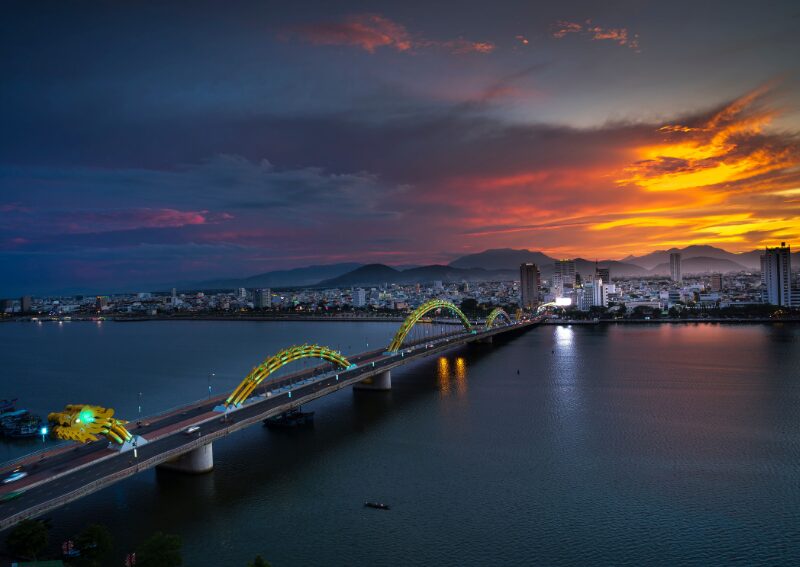
Opened in 2013 and connecting Da Nang Airport to the beaches of My Khe and Non Nuoc, the Dragon Bridge is a steel dragon that breathes fire and water at 9:00 PM on Saturdays, Sundays, and public holidays. The bridge itself is 666 meters long and illuminated in rotating colors after dark, making it worth seeing on any evening. The fire and water show draws large crowds along the Han River embankment, and the atmosphere on those weekend nights has a genuine carnival energy that is entirely its own thing.
Marble Mountains
A cluster of five limestone peaks filled with caves and Buddhist shrines, the Marble Mountains sit about 9 kilometers south of the city center and take their names from the five classical elements: metal, wood, water, fire, and earth. Only Thuy Son, the water mountain, is fully open to visitors, and it rewards the climb with a system of natural caves containing centuries-old Buddhist altars, a hilltop pagoda with sweeping views across the coastline, and a peaceful sense of layered history that contrasts sharply with the beach resort energy of the surrounding area. Go early morning when the caves are cool and the light filters down through natural openings in the rock.
Son Tra Peninsula and Lady Buddha
The Son Tra Peninsula, also called Monkey Mountain, lies on the northeastern side of Da Nang and sprawls across an enormous area of sixty kilometers, covered with forests and beaches. The most visited site on the peninsula is Linh Ung Pagoda, home to a 67-meter white Lady Buddha statue whose gaze crosses the South China Sea and is visible from much of the city’s coastline.
The road around the peninsula passes through primary forest, past small hidden beaches accessible only on foot or by motorbike, and offers the best panoramic views of Da Nang Bay available anywhere. Red-shanked douc langurs, an endangered primate species, inhabit the peninsula’s forests and are sometimes spotted near the road in the early morning.
Ba Na Hills and the Golden Bridge

The Golden Bridge at Ba Na Hills is a 500-foot-long golden bridge that appears to be cradled by two gigantic hands amidst the clouds, sitting at an elevation of around 1,400 meters in the hills west of the city. Reached by a cable car that holds multiple world records for length and elevation gain, Ba Na Hills combines the Golden Bridge with a French village recreation, an amusement park, and panoramic views that on clear days extend to the coastline far below. It is a full-day excursion from Da Nang, approximately 45 minutes by taxi or private car. Book tickets in advance during school holidays and weekends when queues can be significant.
Museum of Cham Sculpture
The Da Nang Museum of Cham Sculpture is one of the first museums built in Vietnam by the French, with the main building constructed in 1915, evoking motifs of French colonial architecture. The collection inside represents the most comprehensive assembly of Cham art and sculpture anywhere in existence, covering pieces from the 7th to the 15th centuries including altars, deities, and ceremonial objects from excavated temple sites across central Vietnam. For anyone spending a day at My Son Sanctuary, a morning at this museum beforehand provides context that makes the ruins considerably more legible.
Da Nang Cathedral
Known as Rooster Cathedral for the gray rooster figure installed on its top, Da Nang Cathedral is the only cathedral in Da Nang built during the French colonial period, located on Tran Phu Street in the Hai Chau district. The pink exterior and tall Gothic spire make it one of the most photographed buildings in the city center, and the interior is worth a brief visit during the cooler morning hours.
Han River and the City’s Bridges
Da Nang’s identity as the City of Bridges is earned: seven bridges cross the Han River through the city, each with a distinct design and character. Walking or cycling along the riverfront at dusk, with the bridges beginning to light up and the evening markets setting out along the embankment, is one of the most pleasant ways to experience the city’s energy at no cost.
Day Trips From Da Nang
Hoi An Ancient Town. One of the oldest cities in Asia, Hoi An is a UNESCO World Heritage Site just a 45-minute drive from Da Nang, its preserved trading port streetscape lined with yellow-walled shophouses, wooden merchant houses, and Japanese covered bridges. The town is best experienced in the early morning before the day-tripper crowds arrive, or in the evening when paper lanterns along the Thu Bon River create one of the most atmospheric settings in Southeast Asia. Most visitors from Da Nang combine Hoi An with a stop at My Son Sanctuary, the Cham temple complex 40 kilometers southwest of Hoi An, on the same day.
Hai Van Pass. The 21-kilometer mountain pass connecting Da Nang and Hue, reaching 500 meters above sea level at its highest point, is one of the most dramatic coastal drives in Vietnam. The route passes through cloud forest, past the remains of American military fortifications from the Vietnam War, and offers views down to Lang Co Beach and the lagoon systems to the north that make it genuinely worth doing even if you have already been to Hue. Most travelers cover it by motorbike, bicycle, or private car rather than bus.
What to Eat in Da Nang
Da Nang’s food scene combines central Vietnamese cooking traditions with the fresh seafood advantage of a working coastal port, producing a local cuisine that is genuinely distinct from both the north and south.
Mi Quang Da Nang
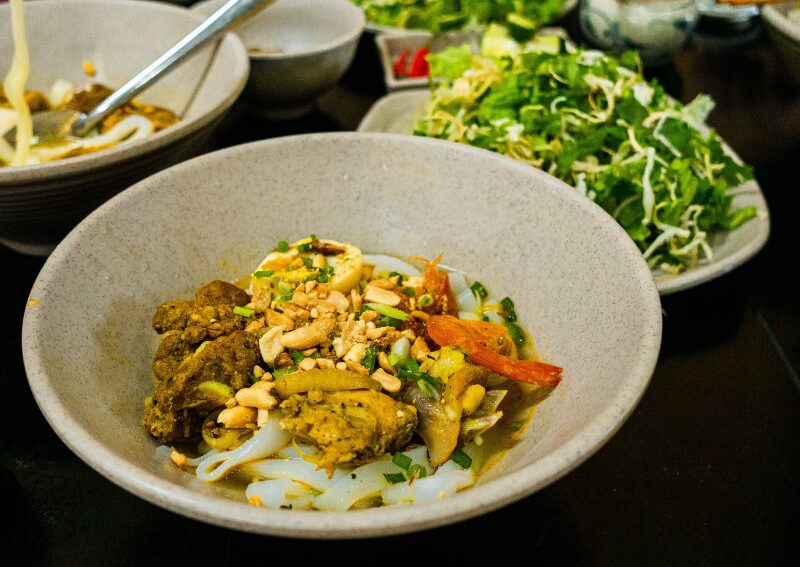
A dish of rice noodles, pork, shrimp, quail eggs, peanuts, and fresh herbs, mi Quang is Da Nang’s most iconic dish and the one most local residents would point to as the taste that defines the city. The broth is used sparingly, almost like a sauce rather than a soup, and the combination of textures from the wide flat noodles, the crunchy peanuts, the fresh herbs, and the crispy rice crackers served on the side makes it one of the most compositionally interesting noodle dishes in the country.
Banh Xeo Da Nang
The central Vietnamese version of the sizzling rice flour pancake is larger and crispier than its southern equivalent, filled with pork, shrimp, and bean sprouts, and eaten wrapped in mustard leaf and rice paper with a peanut-based dipping sauce. One of the most satisfying street food experiences in the city.
Bun Cha Ca
Fish cake noodle soup, specific to Da Nang and the surrounding central coast, built around hand-formed fish cakes in a lightly seasoned broth. Simple, clean, and entirely regional.
Fresh Seafood Da Nang
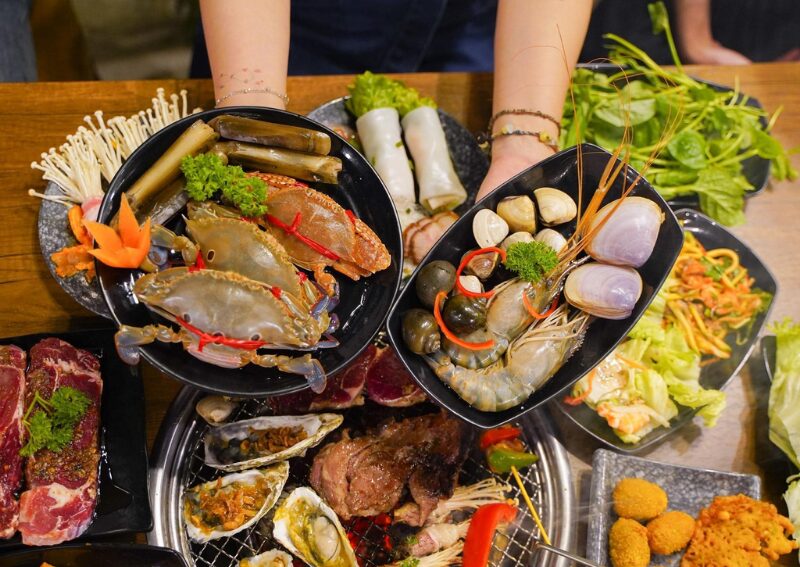
The seafood restaurants along My Khe Beach and around the Con Market area serve morning catches at prices that make ordering by weight genuinely affordable, with options ranging from grilled fresh squid and steamed clams to whole fish and crab. The quality is directly tied to proximity to the fishing boats, and Da Nang’s port location means both are reliably high.
Con Market and Han Market
Both of Da Nang’s central markets have ground-floor food sections where local vendors serve the city’s signature dishes from early morning through to early afternoon. Con Market in particular is worth a visit for both the food and the general atmosphere of a working Vietnamese city market without the tourist overlay of its counterpart in Hoi An.
Practical Visiting Information
Getting to Da Nang
Da Nang International Airport sits just a few kilometers from the city center and receives direct flights from Hanoi in approximately 1 hour 15 minutes, with multiple daily services across several Vietnamese airlines. A Grab or metered taxi from the airport to My Khe Beach hotels takes 10 to 15 minutes and costs around 70,000 to 100,000 VND.
Da Nang is also a major stop on the Reunification Express train line connecting Hanoi and Ho Chi Minh City. The train journey from Hanoi takes between 14 and 17 hours depending on the service, passing some of the most scenic coastal terrain in the country on the final approach from the north through the Hai Van Pass. An overnight sleeper is the most practical option.
From Hue, Da Nang is approximately 100 kilometers south, reached in 2 to 2.5 hours by road via the Hai Van Pass. From Hoi An, it is 30 kilometers north, a straightforward 45-minute taxi or Grab ride.
Best time to visit Da Nang Vietnam
The best months to visit Da Nang are March to May and September to October, when the weather is warm. June to August sees little rain and the sea is clear and calm. The rainy season runs from October through December, with November typically the wettest month. January and February are cooler and drier. The Da Nang International Fireworks Festival, held annually in April and May, brings the city’s riverside to life with competing displays from international teams and is worth timing a visit around if the dates align.
Getting around Da Nang
The city center is compact enough to walk or cycle. For the Dragon Bridge, Lady Buddha, and Marble Mountains, a Grab or metered taxi is the simplest option. For Ba Na Hills, a private car or taxi is most practical since the road requires a driver. Renting a motorbike opens up Son Tra Peninsula and the surrounding coastline to a more flexible pace. Grab is the easiest option for short city hops.
How much time to allow
Three days covers My Khe Beach, the Dragon Bridge fire show, Marble Mountains, Son Tra Peninsula, and the Cham Museum comfortably. Four days allows for a full day in Hoi An plus My Son Sanctuary, or a half-day trip to the Hai Van Pass. Five days is the right window for travelers who also want to spend a night in Hue.
Combining Da Nang With a Hanoi Trip
Da Nang and Hanoi represent two very different registers of the Vietnamese experience. Da Nang is modern, coastal, and built around natural beauty and easy movement. Hanoi is ancient, layered, and built around a thousand years of history concentrated into a dense, living urban fabric. Experienced together, ideally with Hue or Hoi An added between them, they give a genuinely complete picture of what Vietnam is and has been.
The flight between Hanoi and Da Nang takes around 1 hour 15 minutes, making the combination as logistically simple as any two-city trip in Vietnam. A practical combined itinerary runs three to four days in Hanoi, two days in Hue or Hoi An, and three days in Da Nang, or the reverse depending on your arrival point. Hanoi to Da Nang flights run multiple times daily with no advance booking drama.
For the Hanoi portion of any central Vietnam trip that includes Da Nang, the base matters considerably. Hanoi La Siesta Classic Ma May, one of the best hotels in Hanoi Old Quarter, sits at the center of everything the capital has to offer. Located on Ma May Street, one of the Old Quarter’s most historically layered corridors and within easy walking distance of Hoan Kiem Lake, the Temple of Literature, the best pho and bun rieu cua stalls in the neighborhood, and the morning tra da setups that define street life in this part of the city, it offers the kind of stay that makes Hanoi feel like it belongs to you rather than the other way around.
Whether you are stepping out at 6:00 AM to watch Hoan Kiem Lake come alive before a day of Old Quarter exploration, or returning from a morning at the Vietnam Museum of History before your afternoon flight south to Da Nang, Hanoi La Siesta Classic Ma May is the kind of base that makes every part of the Hanoi experience feel unhurried and entirely your own. Consistently celebrated as one of the best boutique hotels in Hanoi Old Quarter, it is the right starting point for any central Vietnam journey that begins in the capital and works its way south toward the beaches and bridges of Da Nang.