


Mắm Tôm Vietnam 2026: The Fermented Shrimp Paste Behind Vietnam’s Boldest Flavors
If you are curious about the more adventurous side of Vietnamese cuisine, mắm tôm is one of the most defining ingredients to understand. This deep purple, intensely pungent fermented shrimp paste is one of the most polarizing flavors in Vietnamese street food, adored by locals and often met with hesitation by first-time visitors. But for anyone serious about a real Hanoi food guide, understanding mắm tôm is understanding a piece of how northern Vietnamese cooking actually works.
The Origins of Mắm Tôm Vietnam
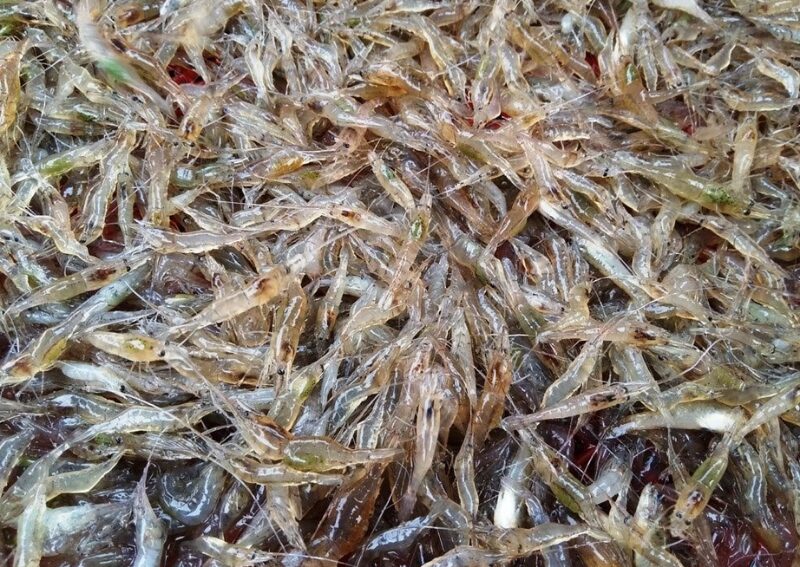
Mắm tôm belongs to a much larger family of fermented fish and seafood sauces that have shaped Vietnamese cuisine for centuries, alongside better-known relatives like fish sauce, or nuoc mam. While fish sauce dominates further south, mắm tôm became especially associated with the north of the country, particularly coastal provinces near Thanh Hoa and Nghe An, where small shrimp and krill are abundant and salting-and-fermenting seafood was historically one of the most reliable ways to preserve a short-lived catch.
Over generations, mắm tôm made its way from coastal households into everyday Hanoi cooking, carried along migration routes and trade networks that connected the coast to the capital. It settled into the city not as a rare specialty ingredient but as an everyday pantry staple, the kind of thing found in nearly every home kitchen and street stall, used sparingly but essentially.
Its strong smell and assertive flavor make it one of the most recognizable markers of authentic Vietnamese noodles and traditional Vietnamese dishes, and trying it is often described by food-focused travelers as one of the more memorable parts of exploring what to eat in Hanoi.
What Makes the Preparation Special
Mắm tôm is made by fermenting small shrimp or krill with salt over a period that typically stretches from several weeks to a few months, depending on the maker and the region. The shrimp are crushed and layered with salt in large jars or vats, then left to break down slowly under controlled heat and time, developing the sauce’s signature funk and umami depth. Unlike fish sauce, which is pressed off as a clear liquid, mắm tôm keeps its shrimp solids intact, giving it a thick, almost paste-like texture and a much deeper purple color.
The result is an ingredient that is rarely eaten on its own. Before serving, mắm tôm is almost always whisked with lime juice, sugar, and a bit of chili, then sometimes a spoonful of hot oil is stirred in, which mellows the raw sharpness and brings out a rounder, more balanced flavor. This preparation step matters enormously: a well-made dipping sauce transforms mắm tôm from something intimidating into something genuinely craveable, which is why so many Hanoi street food guides insist that trying it properly prepared, rather than straight from the jar, is the fairest way to judge it.
How Vietnamese People Use Mắm Tôm
Mắm tôm shows up across a surprising range of Hanoi’s most iconic dishes, each time playing a specific role rather than simply adding saltiness.
Bún Đậu Mắm Tôm
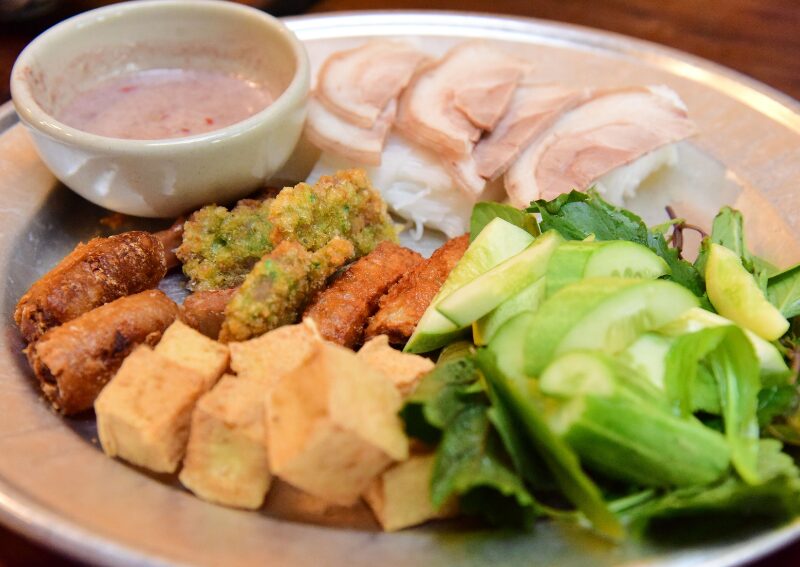
A plate of rice vermicelli, fried tofu, and boiled pork served with a whipped mắm tôm dipping sauce, is probably the dish most associated with the ingredient. Here, the sauce is the entire point: its funky depth cuts through the richness of the fried tofu and fatty pork, giving the whole plate a savory backbone it would otherwise lack.
- Bún Đậu Hàng Khay – 27B Hang Khay, Trang Tien, Hoan Kiem, Hanoi
- Bún Đậu Mã Mây – 8 Ma May Street, Hoan Kiem, Hanoi
- Bún Đậu Cô Hoa – 25 Au Trieu Street, Hoan Kiem, Hanoi
Chả Cá Lã Vọng
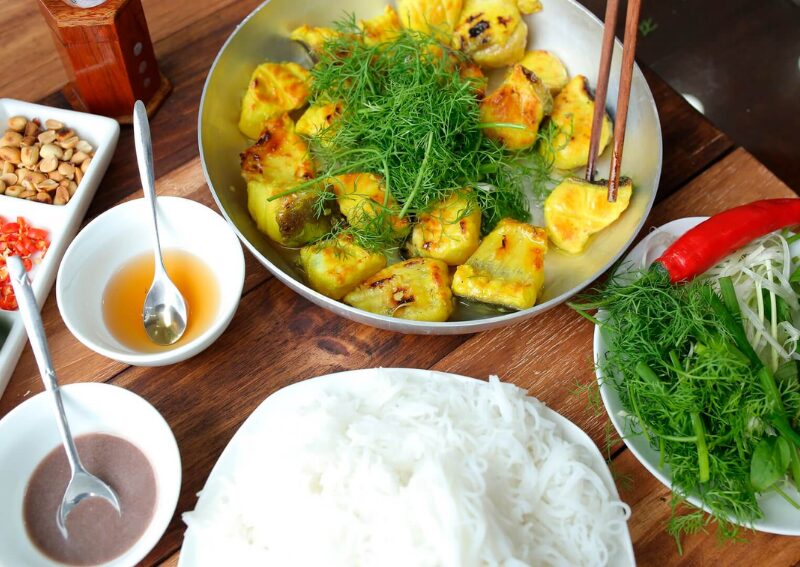
The turmeric fish dish native to Hanoi’s Old Quarter, traditionally uses a mắm tôm-based dipping sauce rather than the more familiar nuoc cham. The pungency of the shrimp paste stands up to the smoky, dill-heavy fish rather than getting lost beside it, which is part of why the pairing has lasted for generations.
- Chả Cá Thăng Long – 6b Duong Thanh Street, Hoan Kiem, Hanoi
- Chả Cá Hàng Sơn – 77 Hao Nam Street, Dong Da, Hanoi
- Chả Cá Thúy Hồng – 12 Hang Ga Street, Hoan Kiem, Hanoi
Bún Riêu and Bún Ốc
Two beloved Hanoi noodle soups built around crab paste or freshwater snails, sometimes get a small spoonful of mắm tôm stirred directly into the broth. Used this way, it works almost like a seasoning rather than a sauce, deepening the broth’s savoriness without announcing itself the way it does in bún đậu.
Across all of these dishes, the underlying principle is the same: mắm tôm is a flavor amplifier, built to add funk, salt, and umami depth to foods that are otherwise fatty, mild, or in need of a sharper counterpoint. For visitors exploring Vietnamese street food, learning to spot mắm tôm on a menu, and knowing which dishes rely on it, is a genuinely useful piece of Hanoi travel guide knowledge.
Where to Stay in Hanoi to Enjoy It All
The best way to make the most of a Hanoi culinary experience like this one is to base yourself somewhere that puts these flavors within easy reach. That means staying in the Old Quarter, where bún đậu stalls, noodle shops, and family-run kitchens sit only a few minutes apart on nearly every street.
Hanoi La Siesta Classic Mã Mây, one of the best hotels in Hanoi Old Quarter, sits at the center of all of this. Located on Ma May Street, one of the Old Quarter’s most historically layered corridors and within easy walking distance of the neighborhood’s bún đậu mắm tôm stalls, noodle shops, and morning market stands, it offers the kind of stay that makes the city feel like it belongs to you rather than the other way around.
The hotel’s traditional architecture and genuinely warm hospitality create a retreat that feels embedded in the life of the neighborhood, a quiet, considered sanctuary that gives you the confidence to try a dish you might otherwise have hesitated over.
Whether you are stepping out at midday to try bún đậu mắm tôm for the first time, or returning in the evening curious to track down a bowl of bún riêu with that same distinctive depth, Hanoi La Siesta Classic Mã Mây is the kind of base that makes every part of the Hanoi food experience feel unhurried and entirely your own. Consistently celebrated as one of the best boutique hotels in Hanoi Old Quarter, it is the right starting point for anyone who wants to understand the city not just as a collection of sights but as a place with flavors worth being a little brave for.

Leave a Reply