Every city has a flavor that marks the turning of its seasons, and in Hanoi that flavor is cốm, the delicate young green rice flake harvested only in autumn. What makes cốm so interesting for anyone exploring Hanoi food culture is not just the raw rice itself, but the wide range of cốm varieties Hanoi it turns into: plain cốm wrapped fresh in lotus leaves, warm stir fried cốm xào, hearty xôi cốm, and the iconic bánh cốm sold in shops across the city.

Each specialty from cốm Hanoi has its own texture, sweetness level, and proper way of eating it, which is exactly what makes this ingredient such a rewarding rabbit hole for visitors who want to go beyond pho and banh mi. This guide walks through every major cốm variety worth trying in Hanoi, where to find the best specialties made from cốm Hanoi in the Old Quarter, and where to stay so that discovering them feels effortless rather than rushed.

What Exactly Is Cốm Hanoi, and Why Hanoi Loves It So Much


Cốm Hanoi is made from young, unripe glutinous rice that is harvested early, roasted lightly, then pounded and flattened by hand until it turns into soft, fragrant green flakes. The process is delicate and time sensitive, which is part of why cốm is treated as a seasonal delicacy rather than an everyday staple. Traditionally associated with autumn in northern Vietnam, cốm Hanoi carries a subtle grassy sweetness and a slightly chewy texture that Vietnamese people describe as tasting like the smell of a rice field right after rain.

It is often given as a gift between family and friends during the Mid-Autumn season, wrapped carefully in lotus leaves to keep its aroma intact. For anyone curious about authentic Vietnamese cuisine, understanding cốm Hanoi is a good starting point, since it connects directly to Hanoi’s agricultural roots and its rhythm of seasonal eating that still defines the city today.

Cốm Varieties Hanoi


Cốm Hanoi Wrapped in Lotus or Banana Leaf: The Purest Way to Eat It


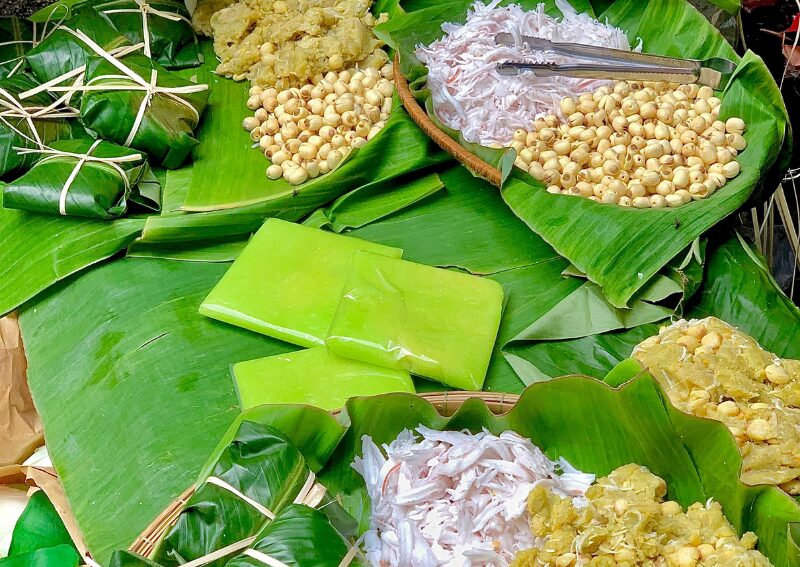
The most traditional way to enjoy cốm is also the simplest. Fresh cốm is sold loose, wrapped in lotus leaves or banana leaves, tied with a thin strip of straw. This packaging is not just decorative, the lotus leaf actually enhances the rice’s natural fragrance during the short walk home. Locals eat it plain, a small pinch at a time, sometimes paired with ripe banana, which is the classic Hanoi combination for a reason: the banana’s sweetness balances the slightly savory, grassy note of the rice.

This is considered the truest test of quality cốm, since there is nowhere for a vendor to hide inferior rice with sugar or frying. If you want to taste cốm the way generations of Hanoians have, skip the processed versions first and try it fresh, straight from the leaf, ideally within a day of purchase since it does not keep well.

Cốm Xào: Buttery, Warm, and Deeply Comforting
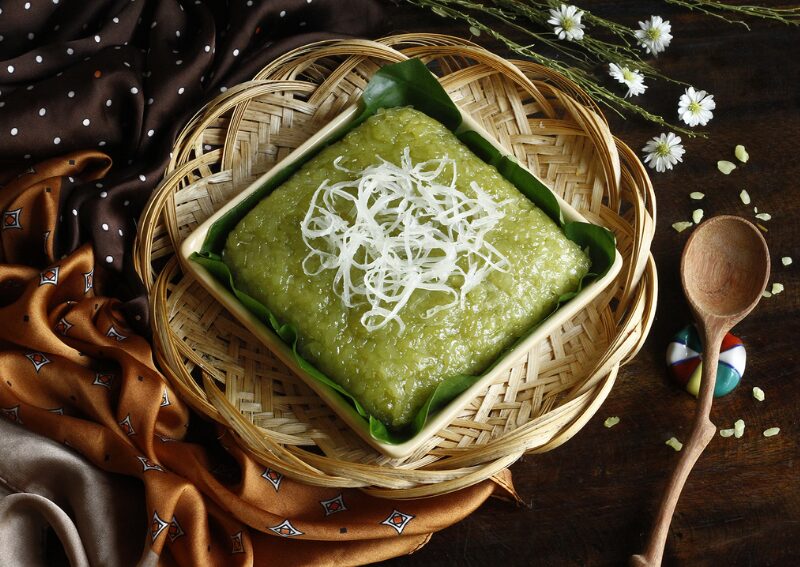


Cốm xào is stir fried cốm, cooked gently with sugar and a touch of coconut, sometimes with mung bean paste folded through it. The cooking process softens the rice slightly and gives it a warm, almost custardy texture, quite different from the chewier bite of raw cốm. This is often the version recommended to first time visitors, since the sweetness is more immediate and approachable compared to the plain, grassy flavor of unprocessed cốm.

Vendors typically serve it warm in small paper cups or banana leaf parcels, perfect for eating while wandering the Old Quarter in the cooler autumn air. Some stalls add a light dusting of sesame or a few strands of dried coconut on top for extra texture. Cốm xào is best eaten fresh off the pan, and many Hanoians consider it a proper afternoon snack rather than a dessert, something to pair with a cup of hot green tea while people watching from a sidewalk stool.

Xôi Cốm Hanoi: Sticky Rice Meets Young Rice
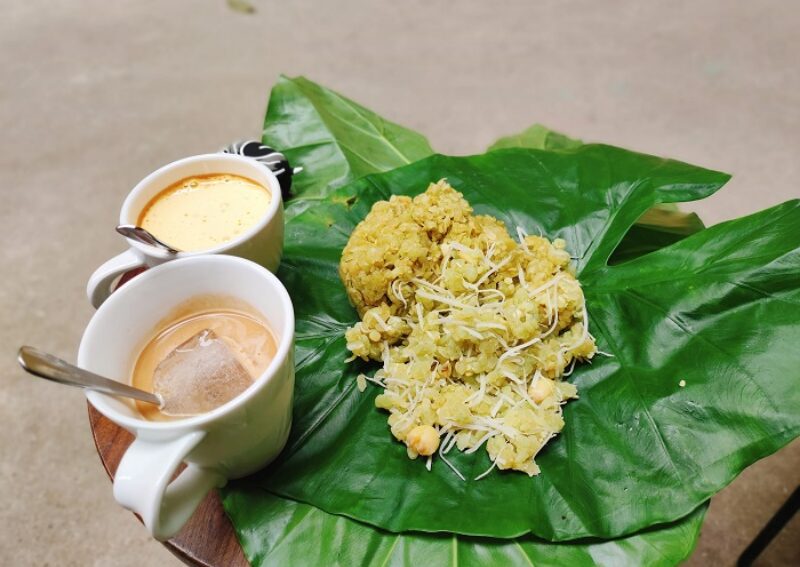


Xôi cốm combines cốm with glutinous sticky rice, steamed together until the two textures meld into something soft, fragrant, and slightly sweet. It is usually topped with shredded coconut, a scattering of roasted mung bean paste, and sometimes a drizzle of sweetened condensed milk for richness. This dish sits somewhere between breakfast food and dessert, and in Hanoi it is common to see it sold in the early morning alongside other xôi varieties from carts near local markets.

The color alone, a soft jade green flecked through white sticky rice, makes it one of the more photogenic dishes for anyone documenting a Hanoi food guide. Texturally, xôi cốm is denser and more filling than plain cốm or cốm xào, making it a satisfying option if you are exploring the Old Quarter on foot for hours and need something more substantial than a quick snack.

Bánh Cốm Hanoi: Hanoi’s Iconic Green Rice Cake


Bánh cốm is perhaps the most recognizable cốm product outside of Vietnam, a small square cake made from pounded cốm dough wrapped around a sweet mung bean and coconut filling. Unlike the fresh, seasonal versions, bánh cốm has a longer shelf life, which makes it a popular gift and souvenir, especially during wedding season and Mid-Autumn Festival. The outer layer has a slightly chewy, glutinous texture, while the filling is dense, sweet, and fragrant with vanilla or pandan.

Traditionally, bánh cốm is associated with a handful of long standing family businesses in Hanoi that have been making it the same way for decades, and locals are often loyal to a specific shop the way people elsewhere might be loyal to a particular bakery. If you are looking for something to bring home that represents traditional Vietnamese desserts, bánh cốm travels well and keeps its flavor for several days when stored properly.

Where to Find the Best Cốm Hanoi in the Old Quarter


Cốm shows up in a few different forms around Hanoi, and knowing where to look makes a real difference. Street vendors carrying shoulder baskets appear seasonally throughout the Hanoi Old Quarter, often near Hoan Kiem Lake and the streets radiating out from Dong Xuan Market, selling fresh cốm wrapped in lotus leaf for roughly 40,000 to 70,000 VND (about 1.6 to 2.8 USD) per basket depending on quality and quantity.

For a more concentrated shopping experience, Nha Chung street is one of the best known spots, with several specialty shops selling fresh cốm, cốm xào, and bánh cốm side by side, making it easy to compare and taste before buying. Prices for bánh cốm typically run between 5,000 and 10,000 VND (about 0.2 to 0.4 USD) per piece, while a small portion of cốm xào from a street stall usually costs around 20,000 to 40,000 VND (about 0.8 to 1.6 USD). Early morning is the best time to shop, since cốm sells out quickly and quality drops noticeably by late afternoon.

Where to Stay in Hanoi to Experience Autumn the Right Way


Hanoi La Siesta Classic Ma May, one of the best hotels in Hanoi Old Quarter, sits at the center of all of this. Located on Ma May Street, one of the Old Quarter’s most historically layered corridors and within easy walking distance of Nha Chung street’s cốm shops, the early morning market stalls near Dong Xuan Market, and the shoulder-basket vendors who appear only in autumn, it offers the kind of stay that makes the city feel like it belongs to you rather than the other way around.

The hotel’s traditional architecture and genuinely warm hospitality create a retreat that feels embedded in the life of the neighborhood, a quiet, considered sanctuary that gives you the energy to head back out and follow the season’s freshest cốm.

Whether you are stepping out at dawn to catch a vendor unwrapping the first batch of fresh cốm from its lotus leaf, or returning in the late afternoon to find Nha Chung street’s specialty shops in full swing, Hanoi La Siesta Classic Ma May is the kind of base that makes every part of the Hanoi street food experience feel unhurried and entirely your own. Consistently celebrated as one of the best boutique hotels in Hanoi Old Quarter, it is the right starting point for anyone who wants to taste Hanoi one season at a time.
You might be interested

Hanoi Old Quarter or Hanoi French Quarter 2026: Where to Stay in Hanoi for the Trip You Actually Want

Choosing where to stay in Hanoi is really a choice between two moods. The city’s historic core splits into two neighborhoods that sit almost next to each other geographically but feel worlds apart in pace: the Old Quarter, loud and alive at every hour, and the French Quarter, elegant and unhurried.

5+ Hanoi Coffee Varieties: The Vietnamese Coffee Styles You Can Only Truly Taste in Hanoi

Coffee is not just a drink in Vietnam, it is a daily ritual, and nowhere is that ritual more inventive than in Hanoi.

Top 15+ Vietnamese Fruits You Must Try: A Seasonal Guide for Travelers

Vietnam’s long, narrow shape stretches across several climate zones, which means the country produces an extraordinary range of tropical and subtropical fruit almost year round.

Mắm Tôm Vietnam 2026: The Fermented Shrimp Paste Behind Vietnam’s Boldest Flavors

If you are curious about the more adventurous side of Vietnamese cuisine, mắm tôm is one of the most defining ingredients to understand.

Bún Ngan Hanoi 2026: Hanoi’s Comforting Duck Noodle Soup Every Traveler Should Try

If you are exploring Hanoi food beyond pho, Bún Ngan Hanoi deserves a spot on your list. This is a clear, fragrant noodle soup built around slow-simmered muscovy duck, known locally as ngan, paired with rice vermicelli, bamboo shoots, and a rich, house-made pork meatball called moc.

Tra Da Via He Hanoi 2026: The Iced Tea Culture That Defines Hanoi Street Life

There is a version of Hanoi that exists in guidebooks, full of temples and lakes and carefully curated itineraries.

Da Nang Vietnam 2026: Vietnam’s City of Bridges, Beaches, and Everything Between

Da Nang Vietnam sits on the central coast of Vietnam, sheltered to the north by the Hai Van Pass where a spur of the Truong Son range extends to the sea, and to the northeast by the forested Son Tra Peninsula reaching into the East Vietnam Sea, where three UNESCO World Heritage Sites sit within a 90-minute drive of each other.

Hue Vietnam 2026: Vietnam’s Imperial City and Everything Worth Knowing Before You Go

There are cities in Vietnam that surprise you, and then there is Hue Vietnam, which does something rarer: it slows you down.

Tam Dao Vietnam 2026: The Cool Mountain Escape Just Outside Hanoi

Eighty kilometers and roughly two hours from the heat and noise of Hanoi, there’s a town where the temperature drops ten degrees, clouds roll through the streets at eye level, and the architecture still carries the fingerprints of French colonial planners from a century ago.

A Traveler’s Guide to Hanoi History Museums 2026: What to See, When to Go, and Why It Matters

Hanoi rewards travelers who slow down enough to look past the lakes and street food stalls and into the rooms where the country’s modern story was written.

Why Does Every Street in Hanoi Old Quarter Have a Craft Name? The 1,000-Year Secret Behind “Hàng”

You’re walking down a narrow lane in Hanoi Old Quarter, weaving past a woman balancing a bamboo pole stacked with fruit, ducking under a strand of lanterns, and squinting at a street sign. Hàng Bạc. Then Hàng Đào. Then Hàng Mã. Then Hàng Thiếc.

Ho Chi Minh Mausoleum 2026: What to Know Before You Visit Hanoi’s Most Solemn Landmark

You’re standing in Ba Dinh Square at six in the morning. The sun has just cleared the rooftops. Red flags move slowly in the early breeze. Around you, a line of people stretches back across the square in near-total silence.

Áo Dài: Vietnam Traditional Costume and Where to Get One Made in Hanoi (From Luxury to Budget) 2026

You’re standing on a street corner in Hanoi’s Old Quarter at seven in the morning, coffee in hand, watching the city wake up. A woman glides past on a motorbike, her silk áo dài catching the light, the fabric rippling behind her like a brushstroke.

A Complete Guide to Traveling from Hanoi to Sapa 2026

The highland town of Sapa Vietnam sits about 300 kilometers northwest of the capital – far enough to feel like a different world, close enough to make a long weekend genuinely worthwhile. But that middle distance creates a real decision: how do you actually get there?

Mu Cang Chai 2026: A Travel Guide to Vietnam’s Most Breathtaking Rice Terrace Country

Some destinations earn their reputation through clever marketing. Mu Cang Chai earns it through sheer, undeniable beauty.

Sapa 2026: Your Highland Travel Guide for First-Timers

Somewhere between the mist rolling off a terraced hillside at dawn and the smell of corn wine drifting from a village kitchen, Sapa gets under your skin.

Hung Kings Festival 2026: From Hanoi to Phu Tho

Every spring, Vietnam pauses for a moment of collective remembrance during the Hung Kings Festival- a deeply meaningful national holiday that honors the country’s ancient origins.

Hanoi Old Quarter 2026: Where to See the City’s Soul

Few places capture the spirit of Vietnam’s capital quite like the Hanoi Old Quarter. With a history stretching back nearly a thousand years, this historic neighborhood remains the cultural heartbeat of the city.

TOP 10 BEST “Phở” shops in Hanoi you need to try

For a traveler in Hanoi, the scent of charred ginger and star anise defines the morning air. Pho is more than just a Vietnamese noodle soup; it is a cultural icon, consistently ranked among the world’s top culinary experiences by CNN Travel.

14+ Must-Try Dishes in Hanoi

Vietnamese cuisine has long been recognized as one of the world best cuisine for its balance, depth, and cultural richness.

TOP 7 MUST-VISIT TRADITIONAL CRAFT VILLAGES IN HANOI

Beyond the bustling Old Quarter, there lies a more profound side of the capital on the outskirt of the City.

Duong Lam Ancient Village – “Forgotten Old Town” of the capital

44 km from Hanoi, Duong Lam ancient village is the perfect choice if you are looking for a peaceful countryside to rest after the chaos of life.

Van Phuc silk village – A traditional cultural beauty from thousands of years

Talking about the beautiful and famous silk weaving village in Vietnam, we cannot help but mention the name Van Phuc silk village, with delicate embroidery lines and patterns.

Quang Phu Cau Incense village – a special beauty in the suburbs of Hanoi

Quang Phu Cau incense village in Hanoi has existed for more than 100 years, preserving the traditional incense-making profession, and is a beautiful check-in place that attracts tourists from near and far.

Hanoi Post Office: Three centuries ‘flowing’ through a name

Hanoi Post Office (also known as Bo Ho Post Office) is a work located opposite Hoan Kiem Lake, Hanoi, consisting of three post offices located at Dinh Tien Hoang, Le Thach and Dinh Le streets. , built in neoclassical and Art Deco architectural styles.

3 Jazz Bars for Jazz Lovers in Hanoi

Wandering in the middle of the city’s nightlife, it’s easy to see bustling, crowded bars and clubs. In the midst of the busy scene is the feeling of being alone, but the desire to find a place to belong.

Top 10 best cafe shops that you must visit when in Hanoi

Hanoi Cafe – If you are neither born in Hanoi nor a true connoisseur of cafe, Hanoi’s old cafes will still have a strange appeal. The feeling of sipping a cup of cafe in a tight space, looking out at the busy street with people passing by will linger in the hearts of anyone who has experienced it once.

Dong Xuan market – Hanoi’s biggest Trade market

As someone once said: “Whoever has the opportunity to come to Hanoi, if he has not been to Dong Xuan market, it is considered that he only knows a small part, a small corner, or has not been to Hanoi”.

West Lake – A romantic beauty in the heart of Hanoi

West Lake is one of the famous beautiful landscapes in Hanoi capital, where there are many historical and cultural relics associated with the history of formation and development of the ancient Thang Long Citadel and present-day Hanoi.

Temple of Literature – Vietnam’s first university

Temple of Literature – Quoc Tu Giam is no longer a strange name for Hanoi’s lovers, referring to this place, everyone will immediately think of the talented and virtuous people who are listed on the stone turtles.

Hanoi Opera House – A French’s architectural beauty in the heart of Hanoi

After the French finished their invasion of Vietnam, they began to build a system of government throughout the country. In 1901, the French colonialists started construction of the Hanoi Opera House.

Saint Joseph Cathedral – Ancient architecture across 3 centuries

With bold French architecture, for a long time, Hanoi Cathedral is an ideal place for tourists from all over the world to visit. For Catholics, the Cathedral is a great place to attend Mass and pray.

Top 10 best places in Hanoi to watch fireworks display on Lunar New Year’s Eve

Only about 2 more months and Hanoi city will be filled with the idyllic, nostalgic and cozy atmosphere of the traditional Tet holiday. This will be the time when tourists can experience a very poetic, quiet, deserted Hanoi, far from the hustle and bustle of everyday life.
×

BEST PRICE HERE

Find a lower rate? We’ll beat it!
FREE 01 soft drink or local beer
20% OFF F&B services
20% OFF all Spa treatments
30% OFF Laundry services
FREE Early check-in & Late check-out (subject to room availability)

BOOK NOW
×