

Banh Xeo 2026: The Giant Sizzling Pancake That Defines Southern Vietnamese Comfort Food
Ask any local in Ho Chi Minh City what dish best captures the easygoing, generous spirit of the South, and banh xeo is almost always near the top of the list. Unlike its smaller, more delicate cousin from Central Vietnam, the Southern version of this Vietnamese sizzling pancake is bold, oversized, and meant to be shared, much like the people who make it.
If you are putting together a list of must try dishes for your trip, Banh Xeo Nam Bo, the Southern style sizzling pancake, deserves a spot near the top of your Saigon food map. This guide covers where the dish comes from, how it is made and what sets it apart, a few interesting stories behind its rise to fame in Saigon, the best places in the city to try it, and some practical tips on how to wrap and eat it properly, including exactly why that mountain of fresh herbs sitting next to your pancake matters more than you might think.
At the end, we will also point you toward a place to stay in the heart of District 1 that puts you within easy reach of the city’s best food.
Where Banh Xeo Vietnam Comes From: A Dish With Roots Still Debated Today
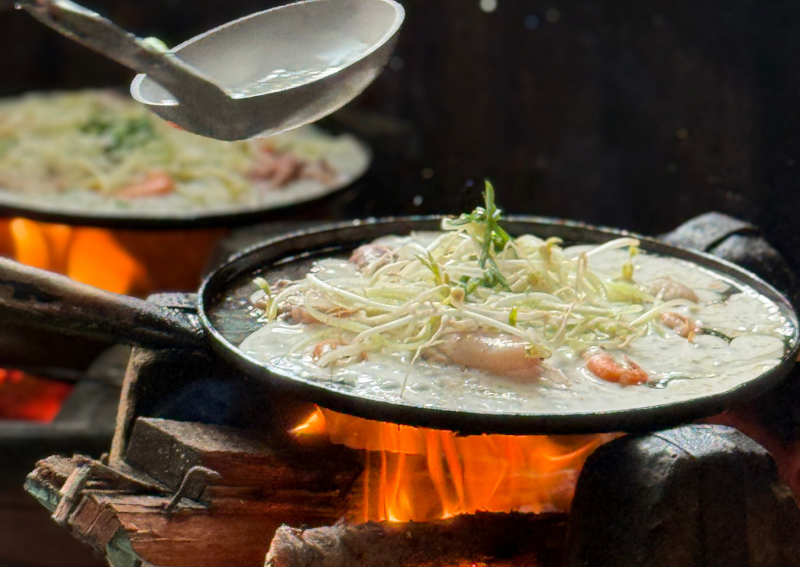
Unlike many Vietnamese dishes with a single, agreed upon origin story, banh xeo’s history is genuinely contested, and even food historians in Vietnam do not fully agree on where it began. Some believe the dish traces back to Central Vietnam, evolving from Hue’s banh khoai, a smaller, crispier pancake still served in the former imperial capital today.
Others argue the recipe was borrowed centuries ago from Cham culture, while a few researchers have gone even further back, suggesting a connection to South Indian dosa that may have traveled into Vietnam through trade routes in the first millennium. Some accounts even point to Khmer influence in the South, given the deep cultural overlap between Khmer and Vietnamese communities throughout the Mekong Delta region.
What is far better documented is how the dish became such a defining symbol of Saigon street food specifically. Interestingly, banh xeo was not always common in the city. Historical accounts suggest the dish was not particularly widespread in Saigon during the 1960s or 1970s, but it gained real popularity in the 1980s as more workers, including many from Central Vietnam, moved south for work and brought their regional cooking traditions with them.
Street carts selling the pancake began appearing on Saigon’s corners, originally as an affordable, working class meal, before wealthier residents took notice and the dish gradually worked its way into proper restaurants across the city. Today, the name itself, banh xeo, simply means sizzling cake, a direct reference to the sound the rice batter makes the instant it hits a scorching hot pan.
How Banh Xeo Is Made and What Makes the Southern Version Special
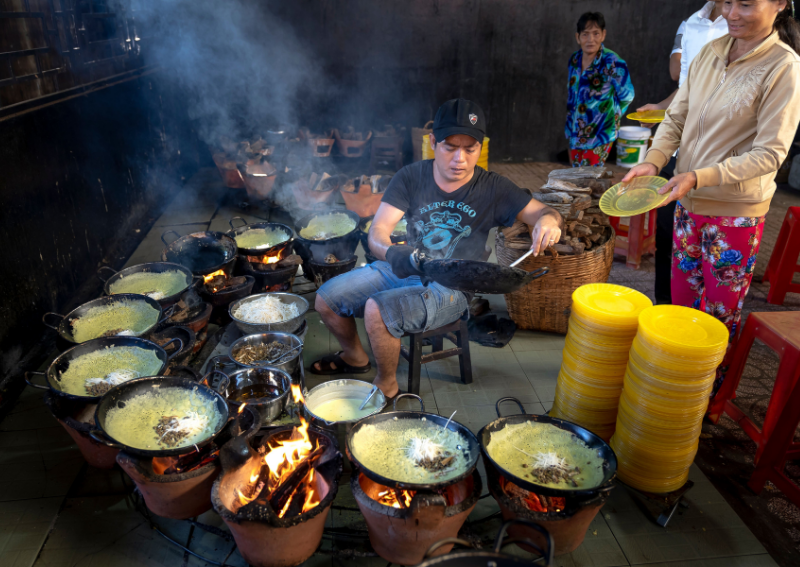
The Southern, or Mien Tay, style of banh xeo associated with the Mekong Delta and Ho Chi Minh City is instantly recognizable for one reason above all: its size. While the Central Vietnamese version is roughly the size of a hand, the Southern pancake is often compared to a small to medium pizza, large enough that one order is typically meant to be shared between two or more people.
The Batter
The batter is made from rice flour mixed with water, turmeric powder for that signature golden color, and crucially, coconut milk, which gives the Southern version its slightly sweet, fragrant character and helps the edges fry up especially thin and crisp. Some cooks add a splash of beer to the batter as well, a trick that contributes to an even crunchier finish once it hits the pan.
The Filling
The fillings in the Southern style are notably more generous and varied than in other regions. A typical filling includes shrimp, thin slices of pork belly, mung beans, bean sprouts, and often sliced green onion, all cooked briefly before the batter is poured over them in a thin, even layer across a wide, hot pan. Once the edges turn golden and crisp, the cook folds the pancake in half, creating that signature crescent shape.
The Dipping Sauce
The dipping sauce, known as nuoc cham, is a sweet and sour mix of fish sauce, lime juice, sugar, garlic, and chili, sometimes with shredded carrot or pickled radish added for crunch and a bit of tang. This sauce ties the entire dish together and is just as essential as the pancake itself.
What truly distinguishes the eating experience, however, is the accompanying plate of fresh herbs and greens, something locals will tell you is not a garnish but genuinely half the dish. A proper banh xeo platter comes with lettuce, mustard greens, perilla, Thai basil, mint, and often fish mint, a distinctly flavored herb with a unique aroma that surprises many first time visitors. In the Mekong Delta specifically, you may even encounter shredded green mango or wild foraged leaves added to the mix, a reflection of the region’s close relationship with its land and rivers.
Interesting Stories Behind the Dish’s Rise to Fame
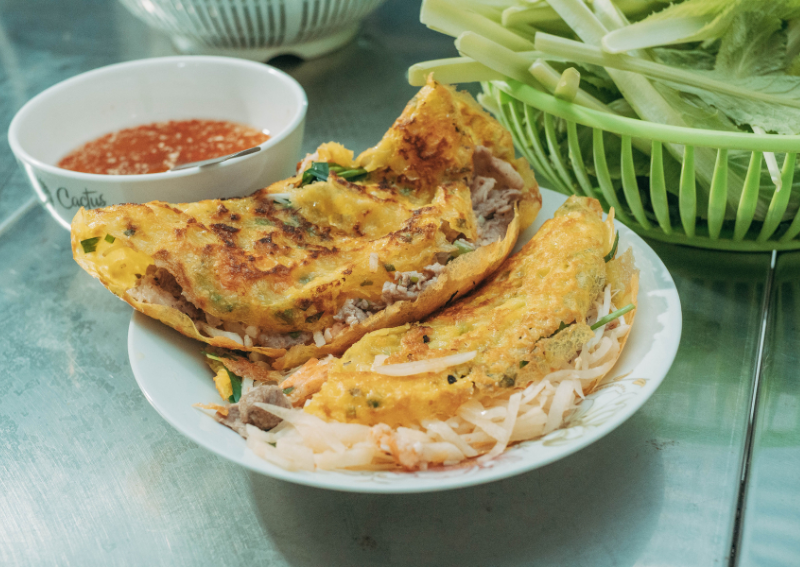
One of the most fascinating things about banh xeo is just how differently it is eaten and prepared depending on where in Vietnam you are standing. Travel from the South to the North and the pancake shrinks, the fillings simplify, and even the dipping sauce changes character entirely, becoming richer and saltier in Central Vietnam, where the iconic nuoc leo, a thick peanut and liver based sauce, replaces the lighter fish sauce dip found further south. This regional diversity has made banh xeo something of a culinary tour unto itself, with food lovers actively seeking out different versions across the country just to compare them.
The dish’s reputation in Saigon also received a significant boost thanks to international media attention. One particular restaurant, which has been serving the same recipe for decades in the heart of District 1, gained worldwide recognition after being featured on Anthony Bourdain’s television show, eventually earning a spot in the Michelin Guide as well. That kind of validation has helped cement banh xeo’s place as one of the dishes most associated with Saigon’s culinary identity on the international stage, alongside pho and banh mi.
It is also worth noting that banh xeo has occasionally been referred to in Vietnamese media as something close to a national dish, not because of any official designation, but because of how widely it is loved across nearly every region and income level. Few dishes manage to be street food staples and restaurant centerpieces at the same time quite as successfully as this one.
The Best Places to Eat Banh Xeo in Saigon
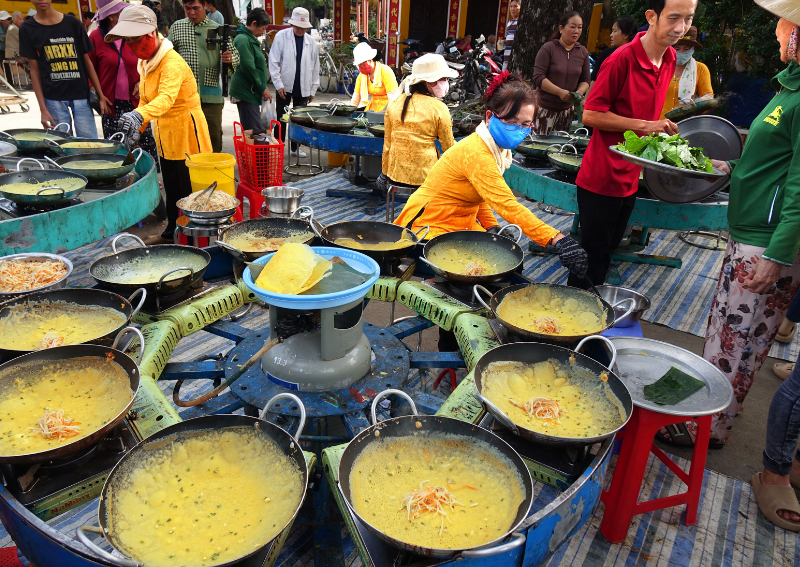
Here are some of the most well regarded spots for banh xeo in Ho Chi Minh City, with several conveniently located within or close to District 1.
- Banh Xeo 46A (46A Dinh Cong Trang Street, Tan Dinh): Operating for more than seven decades, this is arguably the most famous banh xeo address in the entire city. It has been featured on Anthony Bourdain’s show, recommended in countless guidebooks, and holds a Michelin Bib Gourmand distinction. The kitchen still cooks over charcoal, giving the pancakes a subtle smokiness that sets them apart from gas fired versions elsewhere.
- Xeo Restaurant (44 Dang Thi Nhu Street, District 1): A more polished take on the dish, offering a refined Mekong Delta style experience in a cozy, stylish setting with both indoor and outdoor seating, ideal for travelers who want the same authentic flavors with a slightly more comfortable dining atmosphere.
- Banh Xeo Ngoc Son: Known among locals for its especially crispy, thin batter and generous use of fresh herbs, with reasonable prices that make it an easy stop to add into a day of exploring the city.
- Bep Me In (136/9 Le Thanh Ton Street, District 1): A cozy restaurant with a Michelin Guide mention, specializing in home style Vietnamese cooking. Their Southern style banh xeo is a standout, golden and crispy, served in a setting that feels more like a traditional Vietnamese kitchen than a typical restaurant.
- Banh Xeo Mien Tay Thanh Phuong (Hoang Hoa Tham Street, Tan Binh): A spot dedicated specifically to the Mekong Delta style, known for thinly spread, crispy pancakes packed with shrimp, mushrooms, and meat, served alongside pickled vegetables for extra brightness.
Most of these spots sit close enough to central Saigon that they fit easily into a day spent exploring the rest of the things to do in Saigon, particularly if you are already wandering through District 1.
How to Eat Banh Xeo the Right Way (And Why the Herbs Matter So Much)
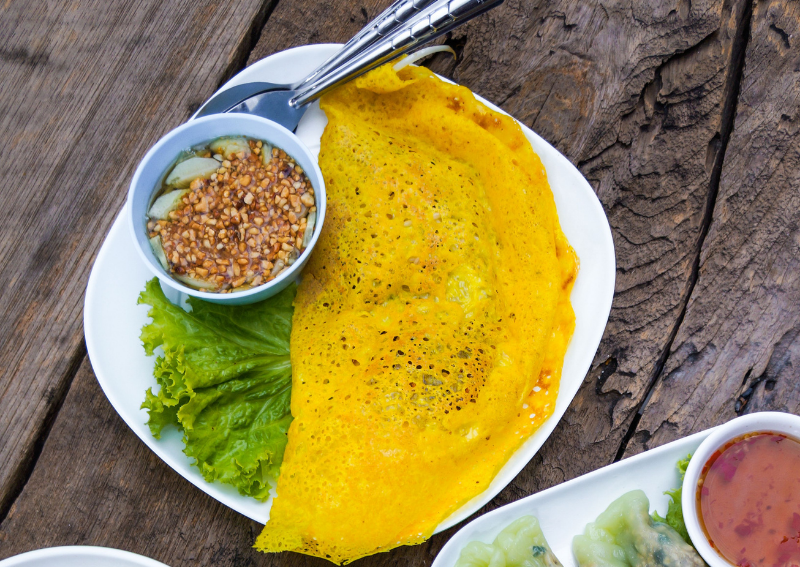
Eating banh xeo properly is genuinely part of the experience, and getting the technique right makes a noticeable difference in flavor and enjoyment.
- Step one: break it down. Since the Southern pancake is large, use your chopsticks to cut off a manageable piece rather than trying to eat it whole.
- Step two: build your wrap. Take a large lettuce or mustard leaf and lay it flat in your palm. If rice paper is provided, place it underneath the leaf first for extra structure. Add a piece of the crispy pancake on top, making sure to grab a bit of the filling along with the crunchy edge.
- Step three: load up on herbs, generously. This is the step many first time visitors underestimate, and it is worth understanding why the herb plate matters so much. The pancake itself is rich, fried, and fairly heavy thanks to the coconut milk and oil. Fresh herbs like mint, Thai basil, and perilla cut through that richness and add brightness, while something like fish mint introduces a completely different, slightly tangy note that balances the dish rather than competing with it.
- Step four: roll it up. Fold the leaf and its contents into a tight roll, similar to how you would wrap a spring roll, tucking the ends in so nothing falls apart on the way to the dipping sauce.
- Step five: dip and enjoy. Dunk the roll into the bowl of nuoc cham, and eat it in one or two bites while everything is still warm and crisp. The contrast between the hot, crunchy pancake and the cool, fresh herbs is really the entire point of the dish.
A few additional notes worth keeping in mind: banh xeo is best eaten immediately, while it is still hot enough to be crispy, so do not let it sit too long before you start wrapping. It also works wonderfully as a shared appetizer or light meal rather than a heavy main course, so consider ordering one large pancake for two people along with a few other Vietnamese dishes to round out the meal. Vegetarian versions filled with mushrooms and tofu are widely available as well, so don’t hesitate to ask if you prefer a meat free option.
Where to Stay for Easy Access to Saigon’s Best Banh Xeo and Beyond
After a satisfying meal of crispy banh xeo wrapped in fresh herbs, what you need next is a place to stay that keeps you close to the rest of Saigon’s food scene and major landmarks without losing a sense of comfort and calm at the end of the day. Staying at one of the best hotels in Saigon places you steps away from Nguyen Hue Walking Street, Ben Thanh Market, the Saigon riverfront, and every major landmark District 1 has to offer.
Recognized among the best boutique hotels in Saigon, La Siesta Premium Saigon Central offers elegant comfort right in the heart of District 1, making it a natural and effortless base for exploring Saigon food map, from the famous banh xeo addresses listed above to the countless other dishes that make this city one of the most exciting food destinations in Southeast Asia.