



Banh Trang Tron Vietnam 2026: The Addictive Rice Paper Salad That Took Over Saigon’s Streets
Walk past any school gate or busy sidewalk in Ho Chi Minh City in the late afternoon, and you will likely spot a small cart surrounded by teenagers, all waiting for the same thing. That thing is banh trang tron, Vietnamese rice paper salad, tossed together right in front of you in a big metal bowl. It is messy, loud with crunch, packed with contrasting flavors, and somehow completely addictive. For travelers exploring Saigon street food beyond pho and banh mi, this is one snack worth seeking out.
This guide covers where banh trang tron comes from, how it is made, a few interesting stories behind its rise to fame, the best places to try it, the different styles you will come across, and some simple tips for enjoying it the right way. At the end, we will also point you toward a place to stay in the heart of District 1 that makes finding all of this delicious chaos a lot easier.
Where Banh Trang Tron Comes From
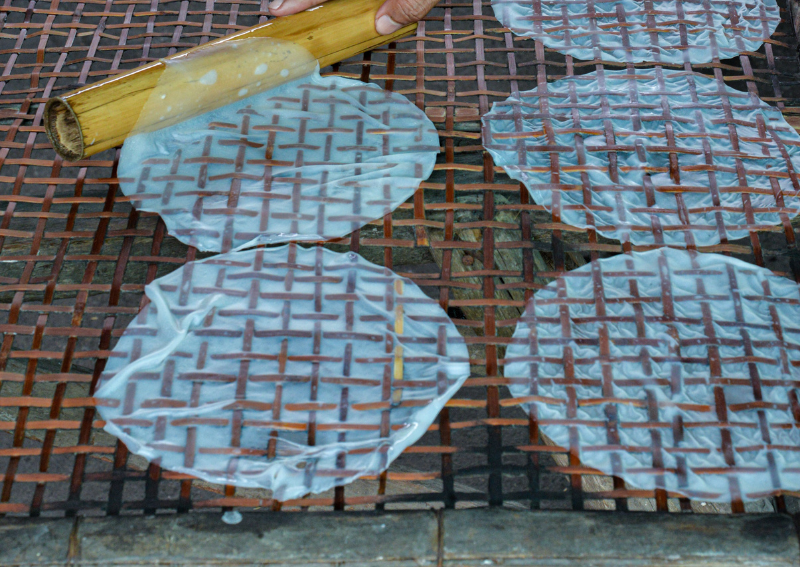
The story of banh trang tron starts in Tay Ninh, a province known across Vietnam for producing some of the country’s finest rice paper.
According to local legend, the dish began almost by accident. Rice paper makers in Tay Ninh often ended up with leftover scraps and uneven trimmings cut from the drying sheets. Rather than waste them, families started mixing these scraps with a little oil, fried shallots, chili salt, and dried shrimp powder for a simple home snack. That humble improvisation tasted far better than anyone expected. Word spread, and the dish slowly traveled beyond Tay Ninh kitchens into local markets and street stalls.
From there, banh trang tron found its way into Saigon, where vendors began adding more ingredients to the mix, including beef jerky, dried squid, quail eggs, and shredded green mango. The dish kept evolving with each new vendor, and Saigon eventually became the place most associated with the snack today, even though its roots clearly trace back to Tay Ninh.
It is worth noting that Vietnamese rice paper itself has an even older story. Some accounts trace its origins to Binh Dinh province in Central Vietnam, with one popular legend connecting it to the 18th century Tay Son army, who reportedly carried rice paper as an easy to store ration on their way to battle. As communities migrated south over the centuries, the recipe evolved and eventually gave rise to Tay Ninh’s now famous version.
How Banh Trang Tron Is Made – Authentic Vietnamese Food
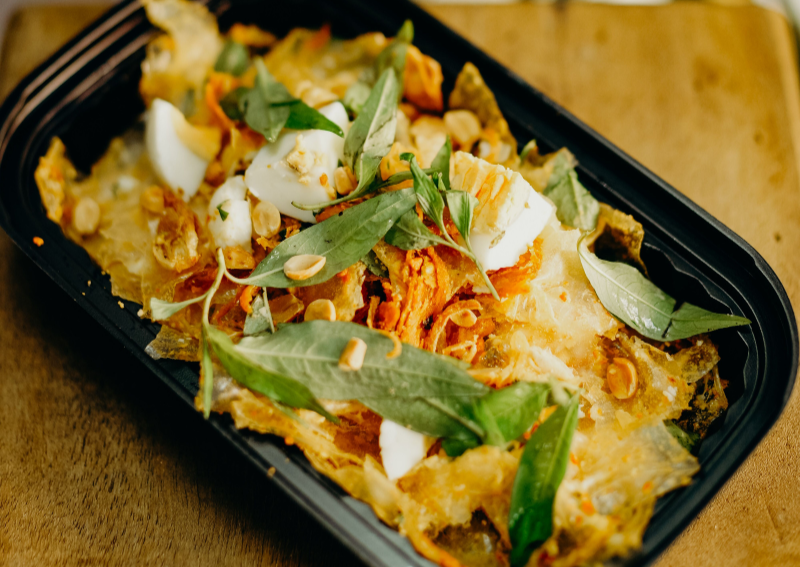
The base of the dish is simple: rice paper, cut into thin strips.
Vendors typically use a softer, slightly thicker type of rice paper rather than the very thin, brittle kind used for spring rolls. This softer paper holds up better once it is tossed with sauce and other ingredients.
The sauce is where most of the magic happens. A typical mix includes tamarind or kumquat juice, chili sate sauce, a touch of fish sauce, and sometimes a small amount of annatto oil for color. Each vendor tends to guard their exact recipe closely, which is part of why one stall’s version can taste noticeably different from another’s just a few streets away.
Once the rice paper strips are tossed with the sauce, the real assembly begins. Common add ins include shredded green mango for tartness, roasted peanuts for crunch, fried shallots for fragrance, boiled quail eggs, and a mix of dried jerky, often beef, squid, or pork. A handful of fresh herbs goes in toward the end, almost always Vietnamese coriander, known locally as rau ram, which has a sharp, slightly peppery flavor that cuts through the richness of everything else.
Everything gets mixed by hand in a large bowl, usually right in front of you, until the rice paper softens just enough to become chewy while still holding a bit of bite.
A Few Interesting Stories Behind the Dish
Banh trang tron has become something of a generational marker in Vietnam. Anyone who grew up in Saigon over the past two decades almost certainly has a memory tied to this snack, usually involving a school gate, a few coins, and a small plastic bag.
The dish is also notable for how democratic it is. Unlike many Vietnamese specialties tied to a single fixed recipe, banh trang tron is endlessly customizable. Vendors will happily add or remove ingredients based on what a customer likes, which has helped the dish spread so widely while still allowing every region, and even every cart, to put its own spin on it.
Its rise also mirrors Vietnam’s broader street food culture, where dishes invented out of necessity or thrift often go on to become beloved national snacks. What started as a way to use up rice paper scraps has become a snack so popular that it is now sold across the entire country, far beyond its Tay Ninh origins.
The Different Types of Banh Trang Worth Trying
Banh trang tron is just one member of a much larger rice paper family, and travelers exploring Saigon’s street food scene should know there are several worthwhile variations beyond the classic mixed salad.
Banh trang tron (mixed rice paper salad)
The original and most well known version, with rice paper strips tossed in sauce alongside mango, jerky, peanuts, and herbs.
Banh trang nuong (grilled rice paper)
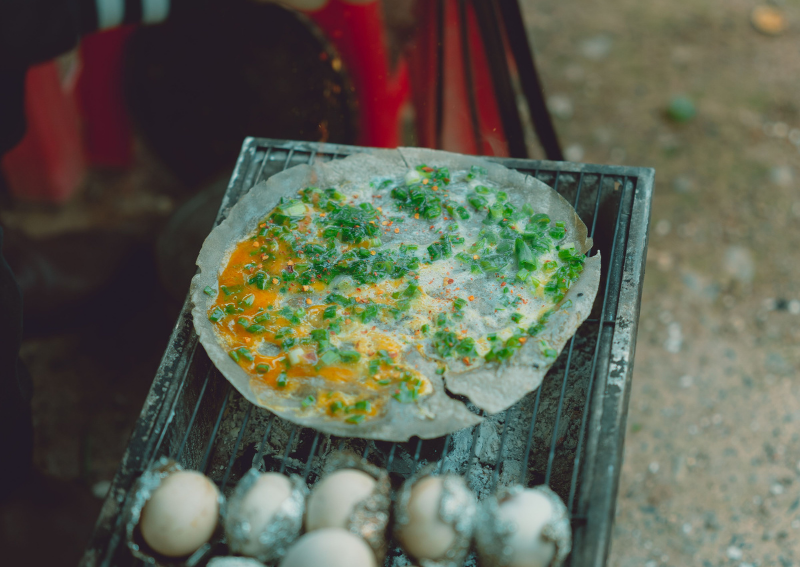
Often nicknamed Vietnamese pizza, this version started in Da Lat. A single sheet of rice paper is laid flat over a small charcoal grill and topped with a quail egg, dried shrimp, pork floss, scallions, and a drizzle of chili sauce and mayonnaise, then grilled until crisp and slightly charred at the edges.
Banh trang cuon (rolled rice paper)
Rather than being mixed, the rice paper here is rolled around the same kinds of ingredients found in banh trang tron, then dipped into a separate sauce on the side.
Banh trang muoi tac (salt and kumquat rice paper)
A simpler, lighter version made with just rice paper, shrimp salt, kumquat juice, and fried onions, favored by those who prefer something less heavy than the fully loaded mixed salad.
Banh trang me (tamarind rice paper)
A close cousin of the classic mix, built around a noticeably sweet and tangy tamarind based sauce as the star flavor.
Each style offers a different texture and intensity, so trying a few side by side is a fun way to understand just how versatile this single ingredient can be.
Where to Find the Best Banh Trang Tron in Saigon
Banh trang tron is genuinely everywhere in Ho Chi Minh City, but a few spots stand out for consistency and flavor.
- Ben Thanh Market: One of the most convenient stops for travelers, this bustling market in the heart of District 1 has multiple vendors selling rice paper salad alongside other Saigon street food staples, making it an easy first taste.
- Cach Mang Thang Tam and Nguyen Trai streets: Known locally for having a concentration of snack shops, these streets offer more spacious seating than a typical street cart, making it easier to sit down and enjoy the dish properly rather than eating on the move.
- Local markets in District 1: Beyond Ben Thanh, smaller neighborhood markets throughout District 1 often have a dedicated banh trang tron vendor tucked into a corner, usually identifiable by the small crowd gathered nearby.
How to Enjoy Banh Trang Tron the Right Way
Eating banh trang tron well comes down to a few small habits that locals pick up early.
- Eat it fresh, right after mixing. The rice paper continues to soften the longer it sits in the sauce, so the best texture, a balance of chewy and slightly crunchy, only lasts for the first several minutes.
- Don’t skip the herbs. Vietnamese coriander is not a garnish here, it is a core flavor. Its sharp, slightly citrusy bite is what keeps the salad from tasting one note, cutting through the richness of the jerky and peanuts. Ask for extra if the vendor seems to be holding back.
- Mix everything together, not just on top. A common mistake is letting the herbs and toppings sit unmixed on the surface. Toss everything thoroughly so each bite gets a bit of mango, jerky, peanut, and herb all at once.
- Pace yourself with the spice. Vendors often ask how spicy you would like it, so don’t hesitate to start mild if you are unsure, since the chili sate sauce can build up quickly as you continue eating.
- Pair it with iced tea. Locally, banh trang tron is almost always enjoyed alongside a cup of iced lemon tea, which helps balance the salty, tangy, and spicy notes of the salad.
- Try more than one vendor. Because recipes vary so much from cart to cart, comparing a few different versions across a day of exploring is genuinely one of the more enjoyable ways to understand why this snack has so many devoted fans.
Where to Stay for Easy Access to Saigon’s Best Street Food
After an afternoon spent hopping between street carts and markets chasing the best version of this addictive snack, a comfortable place to rest nearby makes the whole experience easier to enjoy.
Staying at one of the best hotels in Saigon places you steps away from Nguyen Hue Walking Street, Ben Thanh Market, the Saigon riverfront, and every major landmark District 1 has to offer.
Recognized among the best boutique hotels in Saigon, La Siesta Premium Saigon Central offers elegant comfort right in the heart of District 1, making it a natural and effortless base for exploring Saigon food map, from the bustling banh trang tron carts near Ben Thanh Market to every other street food discovery waiting just around the corner.