



Turtle Lake Saigon 2026: The Roundabout With No Turtle and a History Spanning Three Centuries
Right in the middle of one of Saigon’s busiest intersections sits a strange, slightly surreal landmark. Locals call it Ho Con Rua, or Turtle Lake, even though the turtle that gave it its name has not actually been there since the 1970s. The lake itself is more of a fountain than a body of water. And the official name on city maps, International Square, is rarely used by anyone at all.
That contradiction is part of what makes this spot so fascinating. Turtle Lake has survived a Vietnamese citadel, French colonial redevelopment, war memorials, feng shui legends, and decades of teenagers gathering after dark, all on the same small patch of land in District 1’s neighboring District 3.
This guide walks through the full story behind Turtle Lake Saigon, from its earliest days as part of a royal citadel gate to the layered colonial and post colonial chapters that followed, what the site means to locals today, and a few of the stranger stories connected to it. At the end, we will also point you toward a place to stay nearby that puts you close to this landmark and everything else worth seeing in central Saigon.
An Overview of Turtle Lake – One of Must-visit Saigon attractions
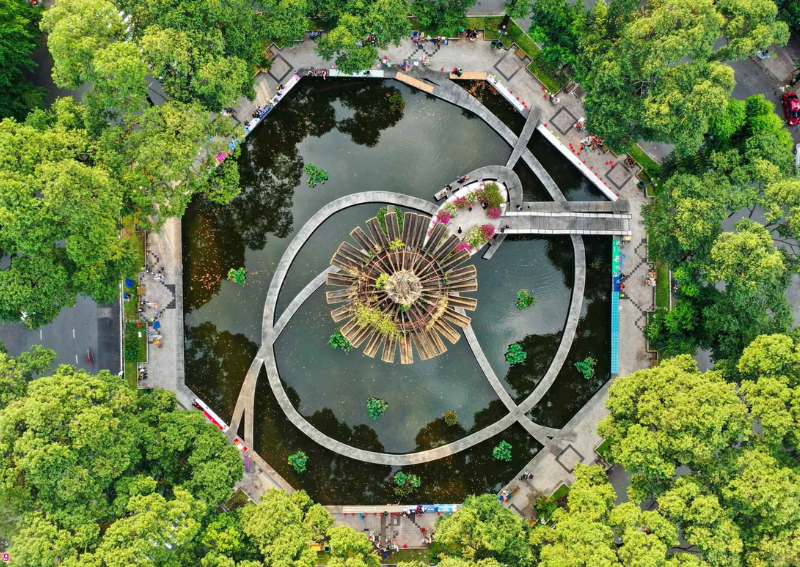

Turtle Lake sits at the intersection of Pham Ngoc Thach, Vo Van Tan, and Tran Cao Van streets, just a short walk from Notre Dame Cathedral and the Saigon Central Post Office.
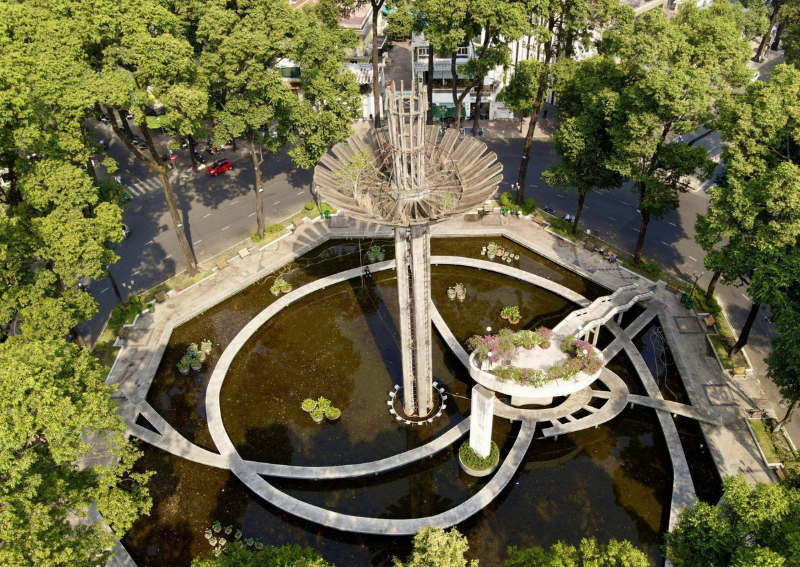
The structure itself is an octagonal lake with a raised platform in the center, originally topped by a large turtle statue, surrounded by five tall, curved concrete pillars that fan outward like petals. Despite the name, there is no real lake here in the traditional sense. It functions more as a decorative fountain at the heart of a busy roundabout.
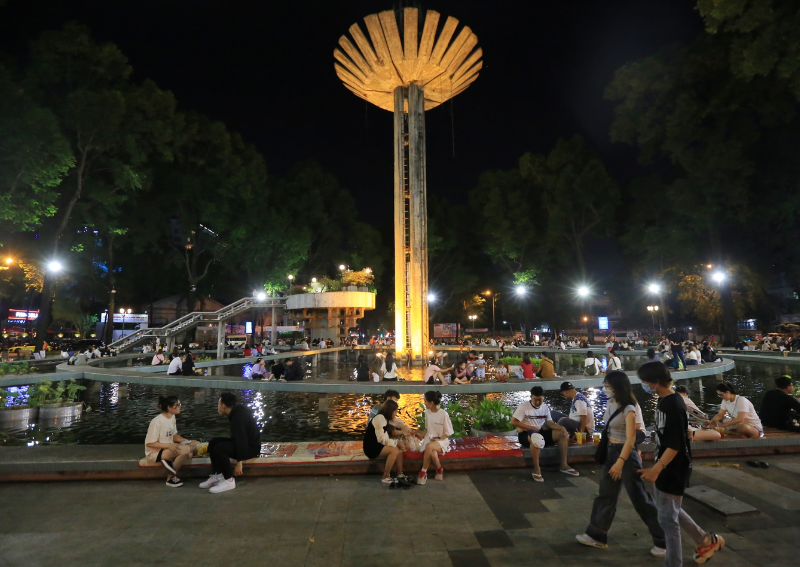
During the day, traffic circles steadily around it. In the evening, the area transforms into one of Saigon’s most popular hangout spots, with students, couples, and street food vendors filling the surrounding walkways well into the night.
The Layered History Behind Turtle Lake Saigon
The story of this site begins long before the lake itself existed.
In 1790, the location was the site of the Kham Khuyet Gate, one of the entrances to the Bat Quai Citadel built under Emperor Gia Long. After a rebellion in the 1830s, Emperor Minh Mang ordered the citadel dismantled and replaced with a smaller fortress nearby.
When the French captured Saigon in 1859, they tore down what remained of the old citadel and began replanning the city according to a new colonial layout. In 1877, while laying the foundations of nearby Notre Dame Cathedral, workers discovered a deep underground aquifer. The following year, in 1878, the French built Saigon’s first water tower on this very spot to supply drinking water to the growing colonial city.
That water tower stood for over four decades before it was demolished in 1921, no longer able to keep up with the city’s expanding population. The site was then renamed Place Marechal Joffre, and in 1927, the French erected a war memorial here honoring soldiers who died in the First World War, featuring statues of three soldiers. Locals began calling the area Cong Truong Ba Hinh, or Three Figures Square.
That monument did not last either. It was partially destroyed during a protest in 1964, and the area became known simply as Soldiers Square for several years afterward.
The Turtle Lake structure that exists today was finally built between 1965 and 1967, designed by architect Nguyen Ky, and officially named Cong Truong Quoc Te, or International Square. During the 1970s, the design was further enhanced with the addition of the five distinctive concrete pillars that still define the landmark’s silhouette today.
A Feng Shui Legend Worth Knowing – Saigon Travel Guide
One of the most repeated stories about Turtle Lake involves feng shui, and it connects directly to one of Saigon’s most significant government buildings.
According to local legend, a feng shui advisor at the time believed that the Independence Palace, located not far away, represented the head of a powerful dragon, with Turtle Lake marking the dragon’s tail. The advisor reportedly suggested that this dragon’s tail was unstable and needed to be anchored, lest the fortunes tied to the palace remain shaky.
The proposed solution was to build an octagonal lake, a shape tied to the eight trigrams used in traditional feng shui practice, and place a large bronze turtle statue at its center to symbolically pin the dragon’s tail in place and ensure long term stability.
Whether or not the story influenced the actual design decisions, the turtle statue did exist for years afterward, giving the site its enduring nickname. In early 1976, however, the turtle and its stone stele were destroyed in an explosion. The structure was never rebuilt, yet the name Turtle Lake stuck so firmly in everyday speech that it remains the only name most locals and visitors use today, regardless of what is or is not actually there.
What Turtle Lake Means to Locals Today – One of Best Places to visit in Saigon
Much of the political and historical weight once carried by this site has faded from everyday memory, but Turtle Lake has taken on a different, equally meaningful role in modern Saigon life.
Today, it functions as one of the city’s most beloved informal civic spaces, one of Saigon photography spots. In the evenings, the walkways surrounding the lake fill with street food vendors selling everything from grilled rice paper to sweet soups and stir fried snacks, drawing both lifelong Saigon residents and curious travelers exploring the area for the first time.
It is also a well known gathering spot for young people, who come here in the evenings to chat, people watch, and enjoy the relatively open, breezy public space in a city that does not always offer many quiet corners to simply sit outside.
In many ways, Turtle Lake represents Saigon’s broader character: a city that absorbs each new chapter of its history, layers it onto what came before, and keeps moving forward without losing its sense of humor or its attachment to the stories that came before, even when the literal turtle is long gone.
Interesting Stories and Details Worth Knowing
Beyond the headline history, a few smaller details add extra texture to a visit here. The water tower that once stood on this site was historically significant enough that the building that eventually replaced its function, the Saigon Waterworks complex nearby, has since been formally recognized as a heritage site, ensuring at least one physical link to this layer of the area’s history remains protected today.
The site has also gone through more official name changes than almost any other landmark in the city, from Place Marechal Joffre to Cong Truong Ba Hinh to Soldiers Square to its current designation as International Square, yet none of those names ever managed to replace Turtle Lake in everyday conversation.
Even the surrounding street food scene tells its own quiet story about the city. Many of the vendors working around the lake today come from various regions across Vietnam, each bringing their own regional specialties and culinary traditions into this single shared public space, reflecting Saigon’s long history as a city shaped by migration and exchange.
Tips for Visiting Turtle Lake
A few simple suggestions will help you make the most of a stop here.
- Go in the evening. This is when the area is most alive, with lights illuminating the structure and food vendors setting up around the perimeter.
- Bring an appetite. The street food surrounding Turtle Lake is genuinely excellent and varied, making it a great spot for a casual dinner or late night snack while people watching.
- Combine it with nearby landmarks. Notre Dame Cathedral and the Saigon Central Post Office are both within easy walking distance, making it simple to fold Turtle Lake into a broader afternoon or evening of sightseeing.
- Watch the traffic carefully. As a functioning roundabout, the area around the lake has constant motorbike and car traffic, so take care when crossing to reach the central platform.
- Look for the details in the architecture. The five curved concrete pillars and the layered platform design are worth studying up close, a striking piece of 1960s architecture that still feels distinctive today.
These small details are exactly what make Turtle Lake one of the more rewarding things to do in Saigon for travelers who enjoy uncovering the layered history behind a city’s everyday landmarks.
Where to Stay for Easy Access to Turtle Lake and Beyond
After an evening spent wandering around Turtle Lake and sampling the street food stalls nearby, a comfortable place to stay close to the action makes the rest of your Saigon exploring much easier.
Staying at one of the best hotels in Saigon places you steps away from Nguyen Hue Walking Street, Ben Thanh Market, the Saigon riverfront, and every major landmark District 1 has to offer.
Recognized among the best boutique hotels in Saigon, La Siesta Premium Saigon Central offers elegant comfort right in the heart of District 1, making it a natural and effortless base for exploring Saigon food map, including the lively evening scene around Turtle Lake and the historic landmarks that surround it.