



Bun Cha Hanoi 2026: The Story Behind the Dish That Even Won Over a US President
Some dishes are inseparable from the city that created them. For Hanoi, that dish is bun cha. Among the endless options that define Hanoi street food, bun cha holds a special place. It is humble, refined in its own quiet way, and powerful enough to charm even the most discerning visitors, including a sitting president of the United States. If you are searching for authentic Vietnamese food in Hanoi to build into your itinerary, this is the dish you cannot skip.
This guide walks you through where bun cha comes from, how it is made, the now famous story involving former President Barack Obama, the best places in the city to try it, and a few simple tips that will help you enjoy the dish the way locals do. At the end, we will point you toward a place to stay that captures the spirit of this neighborhood completely, a base from which every bowl, every street, and every quiet moment of rest feels like part of the same well planned trip.
The Origins of Bun Cha – Hanoi Grill Pork Noodles: A Dish Rooted in the Old Quarter
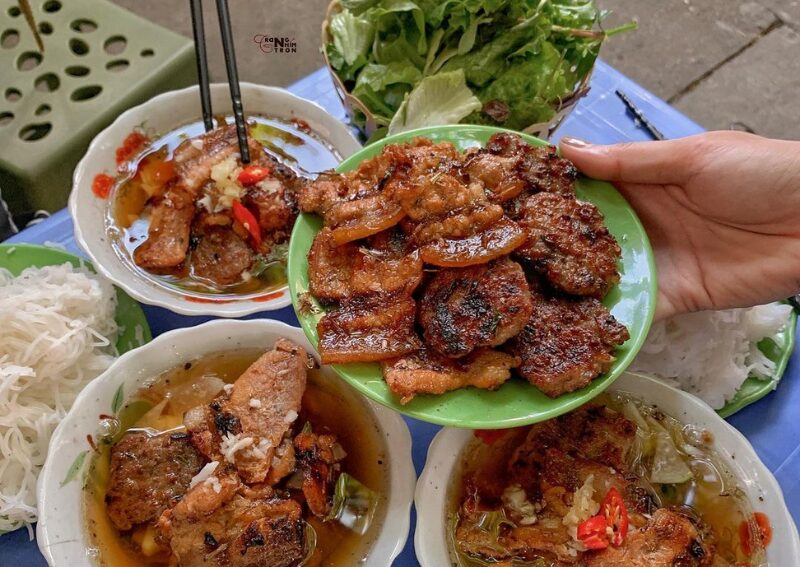
No one can pinpoint the exact moment bun cha was born, but food historians generally agree the dish originated in Hanoi itself, woven into the daily rhythm of life in the city’s Old Quarter sometime in the mid twentieth century. Vietnamese food writer Vu Bang, in his writing on Hanoi cuisine back in 1959, described the city as a place utterly transfixed by bun cha, a clear sign that the dish had already become part of the local identity decades before it found global fame.
In its earliest form, bun cha was simple street food, cooked and sold by small vendors tucked into the narrow lanes of the Old Quarter. Over time, through cultural exchange during the French colonial period, the techniques for grilling the pork and balancing the dipping sauce were gradually refined, shaping the more polished version of the dish that travelers enjoy today. What began as an everyday lunch for working class Hanoians has grown into one of the dishes most associated with Vietnamese cuisine internationally, standing right alongside pho as a symbol of the city’s culinary identity.
How Bun Cha Is Made: The Details That Make It Special
A proper bowl of bun cha Hanoi consists of three essential parts that never stand apart: grilled pork, rice vermicelli, and a bowl of dipping sauce, all served alongside a generous plate of fresh herbs.
The grilled pork typically comes in two forms: cha vien, small patties of seasoned ground pork, and cha mieng, thin slices of pork belly or shoulder. The real skill lies in choosing the cut. Good bun cha relies on meat with the right balance of lean and fat so it stays juicy on the grill rather than drying out. The pork is marinated with fish sauce, shallots, garlic, and sometimes a touch of caramelized sugar or molasses for that signature amber color, then grilled over charcoal. It is the charcoal, not gas or electric heat, that produces the smoky aroma drifting through the alleys, one of the most memorable parts of any Hanoi street food experience.
The rice noodles, known as bun, are soft, thin vermicelli noodles made fresh daily so they stay tender without becoming mushy.
The dipping sauce, the heart of every great bowl, is what truly separates an average bun cha from an unforgettable one. A classic Hanoi style sauce blends good fish sauce, vinegar or lime, sugar, garlic, and chili, often finished with thin slices of pickled green papaya and carrot for a touch of sweetness and crunch. The exact ratio is usually a closely guarded family recipe, and it is often the single biggest reason one restaurant stands out from another using nearly identical ingredients.
The traditional way to eat it is to dip noodles and fresh herbs (lettuce, perilla, Vietnamese mint, Thai basil) into the bowl of sauce along with a piece of grilled pork, letting every flavor mix together before it reaches your mouth. Many restaurants also serve nem cua be, crispy fried crab spring rolls, on the side, a perfect contrast in texture to the soft noodles and tender meat.
Bun Cha Obama: A Six Dollar Bowl of Bun Cha That Made Headlines Worldwide
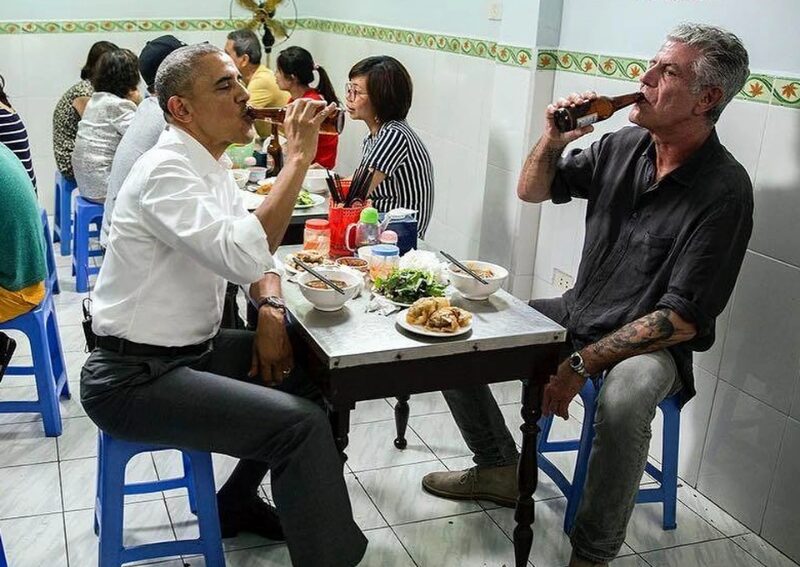
If there is one story that turned bun cha Hanoi into a name recognized around the globe, it happened on a warm evening in May 2016. During his visit to Vietnam, former US President Barack Obama joined the late celebrity chef Anthony Bourdain for dinner at a modest, unassuming restaurant at 24 Le Van Huu Street, filming a segment for the CNN show Parts Unknown.
The total bill for dinner with the President came to six dollars, and Bourdain picked up the check. The photo of the two men seated on low plastic stools, beers in hand, traveled across international media within hours. Before that night, Bun Cha Huong Lien had simply been a neighborhood spot that had been quietly serving locals for more than two decades, never known much beyond its own street.
Everything changed afterward. The dishes the President ordered are now sold as the famous Combo Obama, a tribute that has even spread as far as Ho Chi Minh City, more than 1,500 kilometers south, where some restaurants advertise their own bun cha under the same name. The original restaurant has gone a step further, preserving the exact table and chairs where the two men sat inside a glass display case so visitors can see the spot for themselves.
The behind the scenes story is just as interesting. According to the owners, they were only told a few days beforehand that journalists would be stopping by, with no idea that the President of the United States himself would be sitting at one of their tables. Years later, when news of Bourdain’s passing reached the restaurant, the owner spoke fondly of him as warm, down to earth, and genuinely in love with Vietnamese food, especially the fish sauce in her bun cha.
Today, even though the story is well known, the restaurant remains a must visit stop for anyone building a Hanoi food tour, both for the quality of the food and for the chance to stand in a small piece of culinary history.
The Best Places to Eat Bun Cha Hanoi
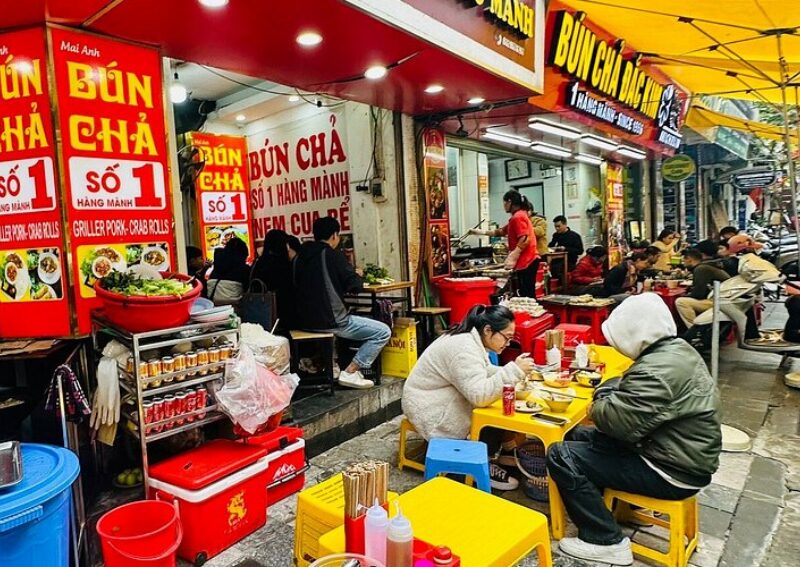
Here are the addresses both locals and international travelers consistently point to as the best bun cha in the city, several of them conveniently close to the Old Quarter.
- Bun Cha Huong Lien (24 Le Van Huu Street): This is the restaurant behind the Obama bun cha story above. It draws plenty of tourists these days, but the rich dipping sauce and smoky grilled pork have held up to decades of local praise long before the world found out about it.
- Bun Cha Dac Kim (1 Hang Manh Street): Widely regarded as one of the oldest and most iconic bun cha restaurants in Hanoi, running for nearly 60 years. The standout here is the pork, cut from the belly or the cut just under the shoulder, well marinated and grilled to a tender, fragrant finish without ever drying out.
- Bun Cha Hang Quat (74 Hang Quat Street): Tucked into a narrow alley in the Old Quarter, this small spot is constantly busy despite its size. The pork is grilled twice for extra depth of flavor, and the balance between sauce, noodles, and fresh herbs is hard to beat.
- Bun Cha Sinh Tu (63 Duong Thanh Street): Founded in the early 1970s, this remains one of the most respected names in the city. The secret is in the meat itself, sliced evenly with a careful balance of lean and fat, paired with a dipping sauce so well seasoned it needs no extra garlic or vinegar.
- Bun Cha Tuyet (34 Hang Than Street): Recognized with a Michelin Bib Gourmand distinction, this is an excellent choice for travelers who want a top tier bowl of bun cha without paying a premium price.
All of these spots sit in or near the Old Quarter, making it easy to fold one or two stops into a single day while exploring the rest of the things to do in Hanoi.
Tips for Enjoying Bun Cha the Right Way
A few small details will help you get the most out of the experience:
- Go at lunchtime. Bun cha has always been a midday dish, and many of the older, most authentic restaurants only open from late morning into early afternoon before closing for the day, regardless of demand.
- Don’t skip the low plastic stools. Sitting at street level is part of the cultural experience, the same way President Obama did. It feels far more genuine than dining in a polished restaurant setting.
- Order the crab spring rolls. Nem cua be brings a satisfying crunch that balances perfectly against the soft noodles and tender pork.
- Mix everything together before eating. Dip the noodles and fresh herbs into the sauce along with the pork rather than eating each component separately.
- Expect some smoke. The charcoal grilling can leave a smoky scent on your clothes, so plan accordingly if you have photos or other plans right after your meal.
- Budget friendly all around. A bowl typically costs between 35,000 and 80,000 VND (roughly 1.50 to 3.50 USD), making it one of the best value meals in the city.
These small rituals are exactly what make Hanoi such a rewarding destination for travelers chasing real, authentic Vietnamese food rather than a polished tourist version of it.
Where to Stay to Complete Your Bun Cha and Old Quarter Experience
After a day spent wandering narrow lanes and working through bowl after bowl of smoky, charcoal grilled bun cha, what you need most is a place to stay that keeps you close to the action while still offering a genuine sense of calm at the end of the day. This is exactly where Hanoi La Siesta Premium Hang Be is a natural choice.
Sitting in the heart of the Old Quarter, one of the most well-located positions in Hanoi for reaching both the city’s transport connections and its most compelling neighborhood experiences, the hotel puts you just steps away from the bun cha addresses listed above, along with the lakeside walks and night markets that define this part of the city.
It has earned consistent recognition as one of the best boutique hotels in Hanoi through a combination of carefully considered design, genuinely warm hospitality, and the kind of peaceful atmosphere that makes a busy travel itinerary feel manageable rather than exhausting. For travelers searching for the best hotels in Hanoi Old Quarter, somewhere that balances easy access to incredible food with a calm space to recharge in between, Hanoi La Siesta Premium Hang Be is the kind of base that ties an entire Hanoi trip together, one bowl of bun cha at a time.