



Bun Dau Mam Tom Hanoi 2026: The Hanoi Dish That “Smells Like Trouble, Tastes Like Heaven”
There is a saying many foreign visitors use to describe bun dau mam tom Hanoi: it smells terrifying but tastes like heaven. That line sounds like an exaggeration, but it is almost exactly right. Among all the dishes that make up Hanoi street food, bun dau mam tom is the one that makes the most travelers hesitate before their first bite, and also the one that quietly convinces a surprising number of them to order a second round in the very same trip.
If you are looking for a truly authentic Vietnamese food experience in Hanoi, one that comes with a bit of a dare attached, this is the dish. This guide will walk you through where bun dau mam tom comes from, how it is prepared and what makes it so distinctive, a few of the cultural stories behind it, the best places in the city to try it, and some simple tips that will help you enjoy it fully, including what to order instead if the smell of fermented shrimp paste is not for you.
At the end, we will point you toward a place to stay in the heart of the Old Quarter that makes the rest of your culinary adventure that much easier.
The Origins of Bun Dau Mam Tom: From Humble Leftovers to Hanoi Icon
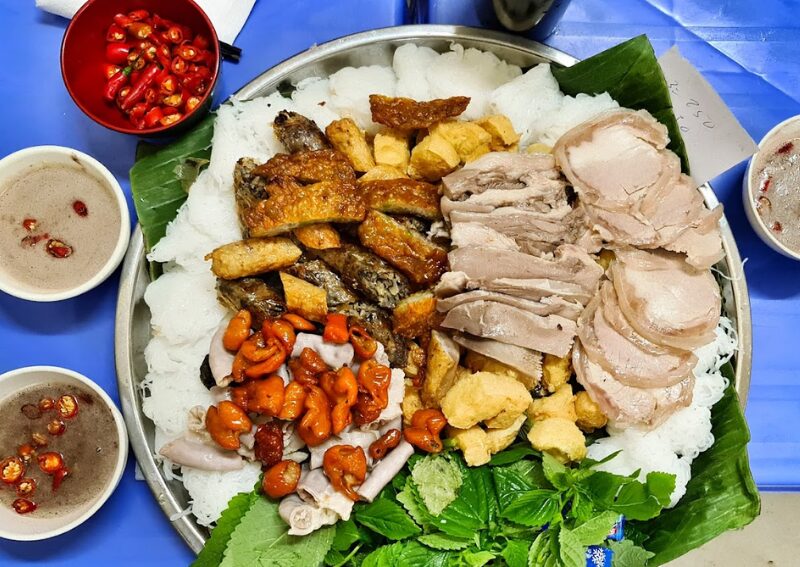
Unlike dishes with a clear, documented history, the exact origin of bun dau mam tom remains something passed down mostly through oral tradition. Almost every Vietnamese person will tell you with confidence that the dish comes from Hanoi, yet no one can say precisely when or how it first appeared.
One popular story tells of a woman in the countryside outside Hanoi who put together a simple meal from whatever was left in her kitchen: rice noodles, fried tofu, and fermented shrimp paste, an ingredient common in poorer households at the time because it kept well and could be used in many dishes. What started as a humble, improvised meal turned out to have a flavor far more memorable than anyone expected.
From there, bun dau spread through the city carried by street vendors balancing bamboo poles loaded with baskets, stopping wherever a customer called out and frying the tofu fresh on the spot. That image, a woman with her shoulder pole pausing on a corner of the Old Quarter to cook for a small crowd gathered around her, was once an everyday part of life in old Hanoi.
Over time, this rustic street food grew into a full chain of beloved restaurants across the city, eventually traveling south and winning over diners in Ho Chi Minh City too, cementing its place as one of the most recognizable dishes in northern Vietnamese cuisine.
How Bun Dau Mam Tom Hanoi Is Made and What Makes It Special
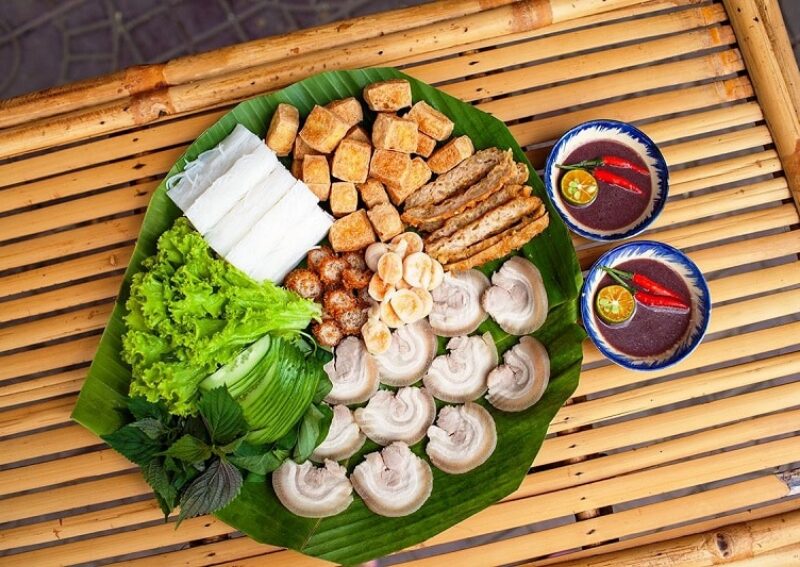
A proper bun dau mam tom tray comes with everything arranged separately on a round bamboo platter lined with banana leaves, rather than mixed together like many other noodle dishes.
The noodles
Served as bun la or loosely packed bun, traditionally come from Phu Do village on the outskirts of Hanoi, long known for its rice noodle making tradition. The strands here are thinner and softer than typical bun, and pressed into neat little squares known as bun la, a shape that appears almost exclusively in this one dish.
The Tofu
The Tofu is traditionally made following the recipe of Mo village, another well known craft village in Hanoi. It is fried until golden and crisp on the outside while staying soft and rich on the inside, and this contrast in texture is a big part of what makes the dish so satisfying.
The Shrimp Paste
The most divisive ingredient on the tray but also the true star of the dish, is often sourced from Thanh Hoa province, renowned for producing some of the best mam tom in the country. It is whisked together with lime juice, sugar, a splash of white rice wine, and a touch of hot oil, which creates a frothy, fragrant mixture that smells strong but tastes surprisingly rich and well balanced once you try it.
Beyond these three core elements, a modern bun dau platter usually includes thin slices of boiled pork leg, cha com (a type of pork patty made with young green rice flakes), fried or boiled blood sausage, fried spring rolls, and sometimes pork offal. Everything is served with a generous pile of fresh herbs, including perilla, Vietnamese balm, Thai basil, fish mint, and sliced cucumber, all of which help balance the boldness of the shrimp paste.
The Local Way to Eat Bun Cha
The proper way to eat it is to use your chopsticks to pick up a piece of noodle, tofu, or meat, dip it into the bowl of mam tom, and eat it together with a bit of fresh herb. Many restaurants will offer guests a piece of chewing gum after the meal to help clear any lingering scent before you head back out, a small but thoughtful detail that says a lot about the hospitality behind this humble dish.
The Cultural Stories Behind a Dish People Either Love or Fear
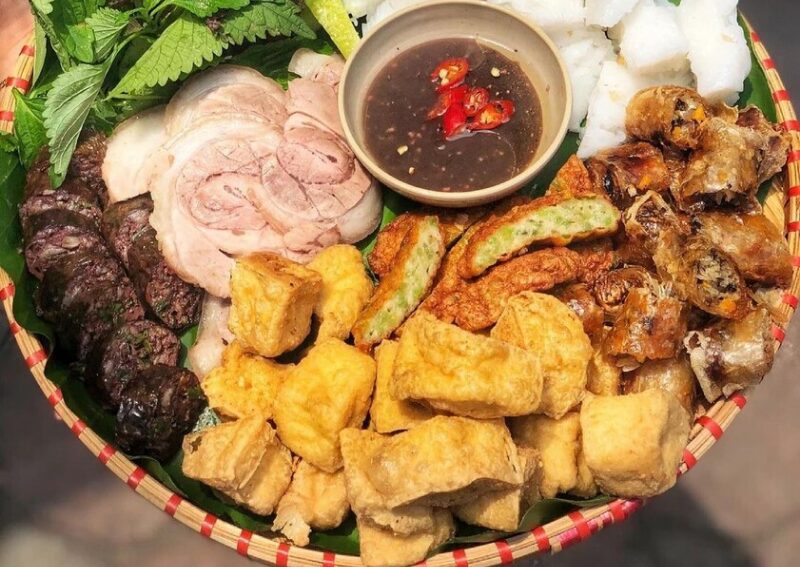
Bun dau mam tom is probably the most divisive dish among all of Hanoi’s street food when it comes to first impressions from international travelers. Plenty of foreign food bloggers open their articles admitting they were nervous about the smell, only to end the same piece confessing they cleared the entire tray. That contrast between the initial hesitation and the actual experience is exactly what has turned bun dau mam tom into one of the most talked about food challenges travelers set for themselves on a trip to Vietnam.
Another detail worth knowing is the image of the shoulder pole vendor, frying tofu fresh on a portable stove right on the street, which defined this dish for generations in old Hanoi. Most restaurants today operate from a fixed location rather than a moving stall, but that same rustic, unpretentious spirit lives on in how the tray is presented on banana leaves and eaten while seated on low plastic stools, an experience that feels far closer to a family meal than a meal designed for tourists.
It is exactly this combination of boldness and challenge that has earned bun dau mam tom a spot on many international food lists of must try street dishes in Southeast Asia, treated less as a simple meal and more as a genuine cultural rite of passage.
The Best Places to Eat Bun Dau Mam Tom in Hanoi
Here are the addresses both locals and international travelers consistently point to as serving the most authentic bun dau mam tom in the city, many of them within easy reach of the Old Quarter.
- Bun Dau Co Tuyen (31 Hang Khay Street) One of the most famous bun dau spots in the city, this place gets especially busy on weekends. The standout here is the boiled pork, tender and not overly fatty, arranged beautifully on banana leaves.
- Bun Dau Dong Thai (11 Dong Thai Alley) Tucked into the well known Dong Thai Alley in the heart of the Old Quarter, this restaurant uses shrimp paste imported directly from Thanh Hoa, widely considered by regulars to be one of the richest and most flavorful dipping sauces in the area.
- Bun Dau Doan Tran Nghiep (42 Doan Tran Nghiep Street) The highlight here is the fried blood sausage, cooked to a deep golden color rather than simply boiled the way most other restaurants prepare it, giving the dish a different texture and flavor worth trying at least once.
- Bun Dau Ngo Gach (4 Ngo Gach Alley) Despite being a small roadside spot, this is a favorite among locals for its clean setup and attentive service.
Most of these spots fit easily into a day of exploring the things to do in Hanoi around the Old Quarter, especially if you are already wandering the lakeside streets nearby.
Tips for Enjoying Bun Dau Mam Tom the Right Way
A few simple tips will help you get the most out of this distinctive dish:
- If you are not used to the smell of shrimp paste, do not worry. Most restaurants are happy to serve a sweet and sour fish sauce mixed with lime and chili as an alternative dipping sauce. This is a very common choice for first time visitors and is never seen as a less authentic way to enjoy the meal.
- Go at lunchtime. This is traditionally a midday dish, and most authentic shops only open from around 10am to 2pm before closing for the day.
- Don’t overload your bite with sauce. Dip lightly, piece by piece, so you can actually taste the richness of the sauce rather than overwhelming the dish with too much at once.
- Mix in plenty of fresh herbs. The slightly peppery taste of Thai basil or perilla helps balance out the boldness of the shrimp paste beautifully.
- Accept the chewing gum if it’s offered. It is a small gesture that helps clear the lingering scent before you continue with the rest of your day.
- Budget friendly through and through. A full tray typically costs between 45,000 and 90,000 VND per person (roughly 2 to 4 USD), making it one of the best value, most memorable meals you can have in the city.
These exact kinds of bold, slightly challenging experiences are what make a real Hanoi food tour so rewarding, not just the dishes that are easy to love right away, but the ones that ask you to be a little more open minded along the way.
Where to Stay to Complete Your Hanoi Culinary Adventure
After a bold and memorable lunch of bun dau mam tom, what you need next is a place to stay that keeps you close to the rest of your exploring while giving you the calm and comfort to recover your appetite before the next meal. This is exactly where Hanoi La Siesta Premium Hang Be is a natural choice.
Sitting in the heart of the Old Quarter, one of the most well-located positions in Hanoi for reaching both the city’s transport connections and its most compelling neighborhood experiences, the hotel puts you within easy walking distance of the best bun dau mam tom addresses listed above, along with countless other food stops worth discovering along the way.
It has earned consistent recognition as one of the best boutique hotels in Hanoi through a combination of carefully considered design, genuinely warm hospitality, and the kind of peaceful atmosphere that makes a busy travel itinerary feel manageable rather than exhausting. For travelers searching for the best hotels in Hanoi Old Quarter, somewhere that lets you take on bold, local dishes by day and unwind in real comfort by night, Hanoi La Siesta Premium Hang Be is the kind of base that ties the entire Hanoi food adventure together.