



Hanoi Opera House 2026: The Complete Travel Guide to the The Palais Garnier Hanoi
Quick Facts
| Vietnamese Name | Nhà Hát Lớn Hanoi |
| Address | No. 1 Trang Tien Street, Cua Nam Ward, Hanoi |
| Year Built | 1901 to 1911 |
| Architectural Style | French Neoclassical (inspired by the Palais Garnier, Paris) |
| Seating Capacity | Approximately 900 seats |
| Exterior Visit | Free, accessible at all hours |
| Guided Tour Ticket | 120,000 VND per person |
| Tour with Art Show | 400,000 VND per person |
| Art Show Only | Approximately 300,000 VND per person |
| Performance Tickets | 100,000 VND to 2,000,000 VND depending on event and seating |
| Guided Tour Hours | Tuesday to Sunday, 8:00 AM to 5:00 PM (closed Mondays) |
| Performance Times | Evenings, typically 7:30 PM to 8:00 PM |
| Distance from Hoan Kiem Lake | 700 meters, approximately 8 minutes on foot |
| Distance from Old Quarter | Approximately 1.5 km, 10 to 15 minutes on foot |
The Building That Changed a City’s Skyline
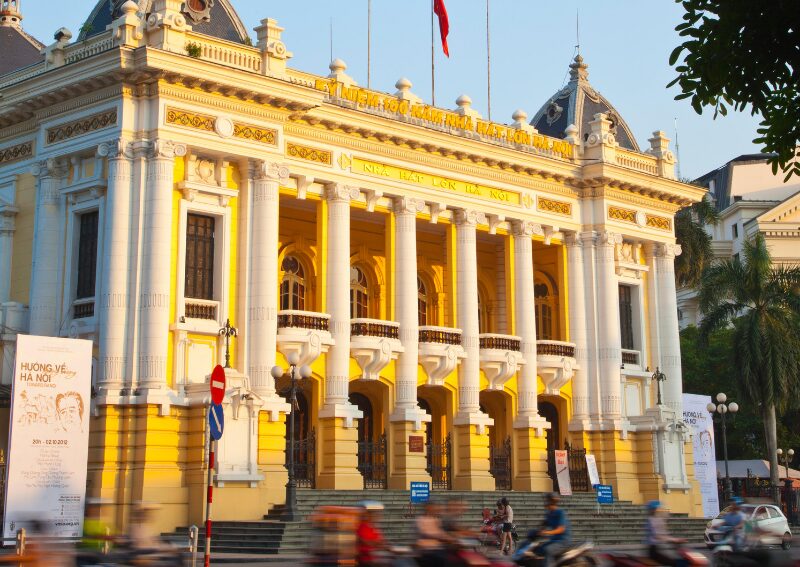
This magnificent bright yellow building, constructed in 1911, is the most iconic architectural heritage left by the French colonial period in Hanoi. Stand anywhere in the open square at the eastern end of Hanoi French Quarter and the Hanoi Opera House announces itself with a clarity that very few buildings in Southeast Asia can match: grand Ionic columns, iron balconies, ornate stone friezes, and a facade that belongs entirely to the European classical tradition and yet, after more than a century, feels entirely at home in the Vietnamese capital.
The Hanoi Opera House is not simply a beautiful building. It is the building through which Hanoi’s French Quarter announces its own identity, the architectural centrepiece around which the city organized itself, and the stage on which some of the most significant moments in modern Vietnamese history have unfolded.
For international visitors, it offers three distinct things worth traveling for: an architectural encounter with one of the finest examples of French neoclassical design outside of France itself; a history that connects the building to the founding moments of the Vietnamese nation; and a genuine performing arts venue where world-class concerts, opera, ballet, and Vietnamese traditional arts continue to be staged in a setting of extraordinary beauty. This guide gives you everything you need to experience it well.
Built in a Swamp: The Story of Its Construction
The Decision to Build
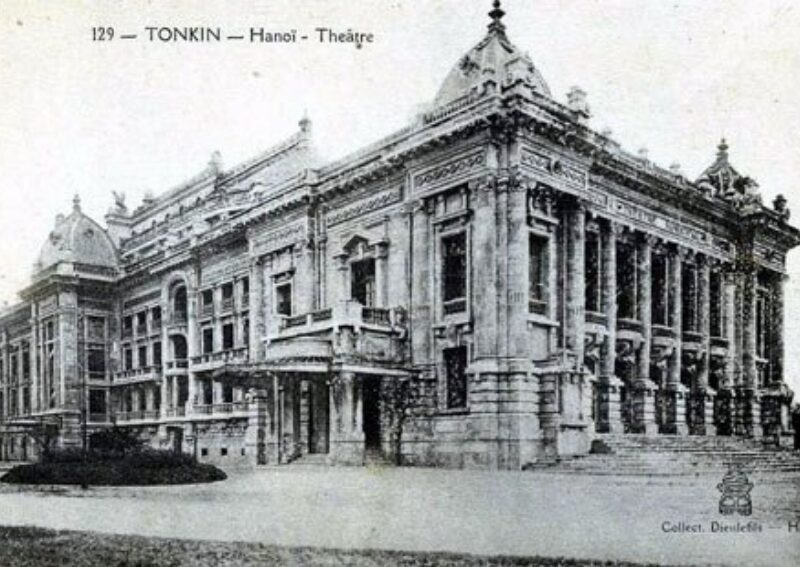
Construction began in 1901 and finished in 1911, making it a significant structure from the French colonial period. The French conceived it as a cultural hub, primarily for the European elite and upper-class Vietnamese.
The decision to build a grand opera house in Hanoi was a deliberate statement of colonial ambition. After establishing control over Vietnam in 1883, the French administration set about transforming Hanoi into a city that would reflect the prestige and permanence of French civilization in Indochina. A grand opera house, designed in the style of the great cultural institutions of Paris, was central to that vision.
Construction of the Hanoi Opera House was started in 1901 and completed in 1911. It was designed by the architects Boyer, V. Harley, and later Francois Lagisquet as a miniature of the Garnier Palace in Paris. Hence, the Opera House in Hanoi has a classical European style, bringing about the most luxurious academic art space in Indochina.
Built on Bamboo: The Engineering Challenge
This area was originally a swamp, an extension of Hoan Kiem Lake, and French engineers used tens of thousands of bamboo stakes driven into the ground to stabilize the foundation, supporting this massive stone structure.
The engineering behind the Hanoi Opera House is as remarkable as its architecture. The chosen site was waterlogged, unstable ground at the edge of what was then a much larger Hoan Kiem Lake system. Rather than abandon the location, French engineers drove thousands of bamboo piles deep into the earth to create a stable platform. The building that rose above this hidden bamboo foundation has stood for over a century without significant structural compromise, a testament to both the ingenuity of the engineers and the quality of the construction.
That the grandest symbol of French cultural authority in Indochina rests on a Vietnamese material, bamboo, driven into Vietnamese soil, carries its own quiet irony.
A Decade in the Making
Construction took ten full years. The scale of the project was enormous by the standards of colonial Hanoi, requiring materials imported from France alongside local Vietnamese labour and craftsmanship. The building was inaugurated in 1911, and its opening marked a cultural moment in the colonial capital: for the first time, Hanoi had an entertainment venue that could stage the full range of European performing arts at a level comparable to major French provincial cities.
Architecture: The Palais Garnier Hanoi
The Exterior
The Hanoi Opera House architecture style reflects the elegance of French colonial architecture, blending European design elements with local influences. Its grand exterior, marked by neoclassical columns, ornate balconies, and decorative friezes, symbolizes Hanoi’s cultural legacy. The facade features a symmetrical design and intricate stone carvings, showcasing meticulous craftsmanship. Large arched windows and wrought-iron railings enhance its sophisticated appearance, while the yellow ochre walls, typical of French colonial buildings, create a striking contrast against Hanoi’s urban backdrop.
The building’s famous yellow ochre colour is characteristic of French colonial architecture across Southeast Asia, a warm tone that reads differently under tropical light than it would under the grey skies of Paris, becoming something more luminous and more urgent. Against this warm base, the white stone columns, balustrades, and decorative details create a graphic contrast that photography renders particularly well.
The main facade faces west toward August Revolution Square and the elegant tree-lined boulevard of Trang Tien Street, one of Hanoi’s most distinguished urban axes. The approach to the opera house along this street, flanked by colonial buildings and luxury hotels, was designed to prepare the visitor for an arrival of some ceremony.
The Interior
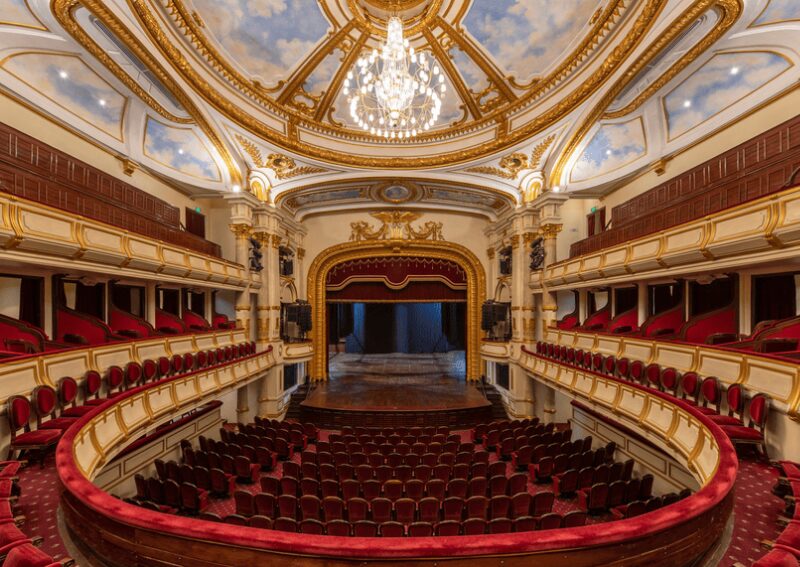
The design of the Hanoi Opera House combines neoclassical grandeur with adaptations for Hanoi’s tropical climate. The symmetrical facade, with its grand portico and ornate balustrades, is complemented by a lavish interior featuring Italian marble, gilded moldings, and plush velvet seating. High ceilings and large windows provide natural ventilation, while the horseshoe-shaped auditorium ensures excellent acoustics and visibility.
The Hanoi Opera House features Ionic columns on the facade, Corinthian columns in the auditorium, a domed roof, and a lavish interior with chandeliers, statues, and murals. The interior is divided into the main lobby, mirror room, and auditorium.
The Mirror Room, a reception space lined with large ornate mirrors, gilded frames, and crystal chandeliers, is one of the most photographically striking interiors in Hanoi. The main auditorium seats approximately 900 people in tiered seating that rises from the orchestra level through dress circle and upper circle to the gods, its horseshoe form giving virtually every seat a clear line of sight to the stage. The acoustic qualities of the auditorium, carefully engineered over the original 1901 to 1911 construction and maintained through successive restorations, are considered among the best in the region.
The 1990s Restoration
A major restoration project was undertaken in the late 20th century, notably in the mid-1990s, supervised by French-Vietnamese architect Ho Thieu Tri. This painstaking work restored the Hanoi Opera House to its original grandeur, ensuring its continued significance as a historical witness to Hanoi’s development.
The restoration, completed in 1997, returned the building to a condition closer to its original 1911 form than anything seen since the colonial period.
Original decorative elements were repaired or recreated using period-accurate techniques and materials. The result is a building that reads as authentically historical rather than as a modern reproduction: the wear and patina of a century are present, but the grandeur is fully intact.
Hanoi Opera House History: The Stage on Which Vietnam Changed
Colonial Cultural Showcase: 1911 to 1945
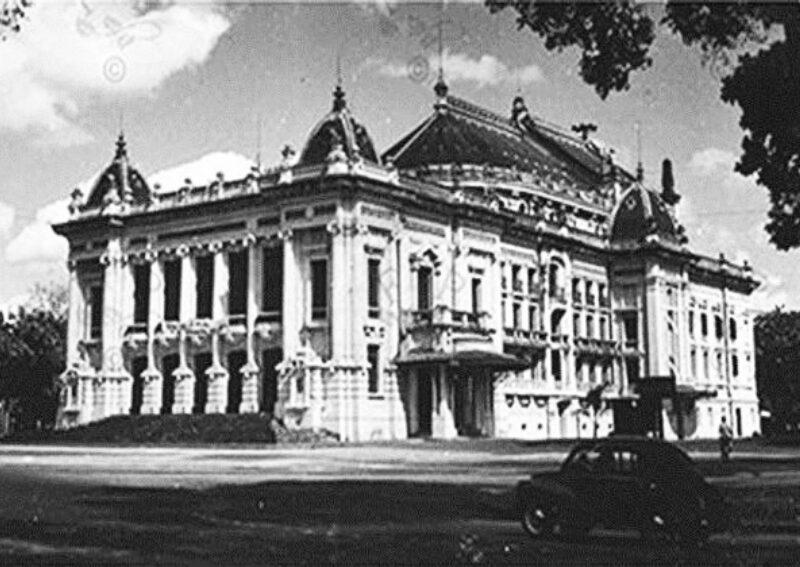
For its first three decades, the Opera House functioned as its builders intended: a venue for European performing arts catering to the French colonial community and the Vietnamese upper class who had adopted the cultural forms of their colonizers. Opera, ballet, theatrical productions, and concert performances from France and Europe were staged here with some regularity, making Hanoi’s opera house the most significant performing arts venue in French Indochina.
The August Revolution: 1945
The most historically significant day in the Hanoi Opera House’s long story was not an opening night or a celebrated performance. It was August 19, 1945.
During the 1940s, especially around the August Revolution, the Opera House became a gathering place for important public meetings and political events. Two milestones stand out in its history: September 16, 1945: Ho Chi Minh addressed the public here during the “Golden Week” campaign, calling for donations to support the newly independent Vietnamese state.
In the final weeks of World War Two, as Japanese authority in Indochina collapsed and French colonial power had not yet been restored, the Viet Minh led by Ho Chi Minh seized the moment. On August 19, 1945, the opera house became the assembly point for the mass meeting that launched the August Revolution. A crowd of tens of thousands gathered in the square before the building. The red flag with gold star flew from its balconies for the first time. The Viet Minh called for the seizure of government power, and within days, the revolution had swept through Hanoi and across the country.
The building that the French had built as a monument to their cultural authority became the stage on which the Vietnamese reclaimed their own.
The National Assembly of 1946
In early 1946, the first session of the National Assembly of the Democratic Republic of Vietnam was held in the opera house, a deliberate choice that connected the new Vietnamese state to the building that had once symbolized French authority. The physical transformation was complete: a colonial monument had become a national one.
What to Do at the Hanoi Opera House
Attend a Performance
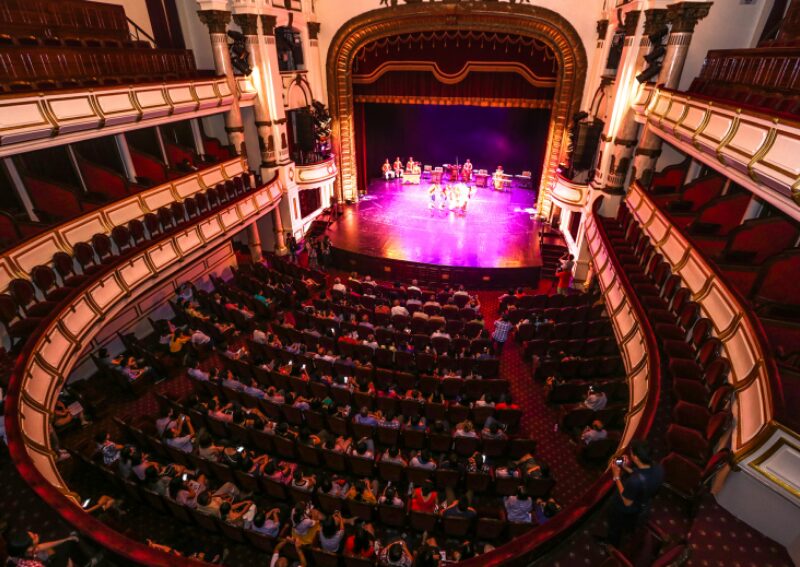
This is the fullest possible way to experience the opera house, and the one that most visitors who have done it describe as a highlight of their entire Hanoi trip. The Vietnam National Opera and Ballet (VNOB) is one of the main resident companies at the Opera House Hanoi. Their performances are a highlight, blending international quality with Vietnamese flair. From elegant ballets to emotionally powerful operas, the VNOB brings the stage to life.
Regular programming includes symphony concerts from the Vietnam Symphony Orchestra and the Hanoi Philharmonic Orchestra, opera productions, ballet performances, Vietnamese traditional music and dance, contemporary dance, and theatrical productions. International touring companies and soloists also perform here regularly, making it possible to see genuinely world-class performances in a setting of exceptional beauty.
Ticket prices vary by event and seating position, ranging from approximately 100,000 VND to 2,000,000 VND. Most performances begin at 7:30 PM or 8:00 PM. Book in advance through the official website (hanoioperahouse.org.vn) or at the on-site box office, as popular performances do sell out.
Take a Guided Interior Tour
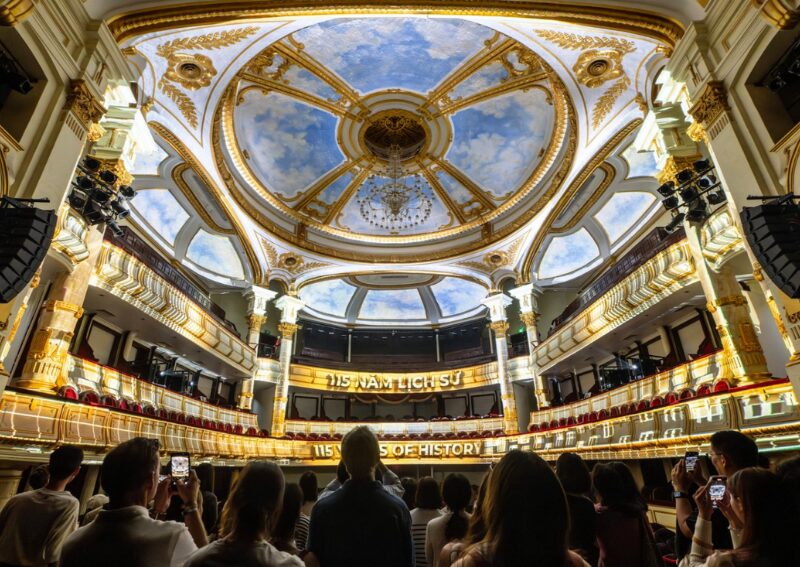
For visitors who want to see the opera house from the inside without committing to an evening performance, guided architectural tours are available. Guided tours take you through the grand foyer, Mirror Room, and auditorium. These tours are ideal for those who love history and design. They offer a deep look into the building’s French influences, unique decor, and how it has evolved over time.
The Hanoi Opera House is open for tours on Mondays and Fridays, with each visit lasting about 1.5 hours from 10:30 AM to 12 PM. There are two tour packages available: the Hanoi Opera House Tour costs VND 120,000 per person, and the Hanoi Opera House Tour and Art Show is VND 400,000 per person. Tour schedules are subject to availability and event programming, so always verify on the official website before your visit.
Photograph the Exterior: When and Where
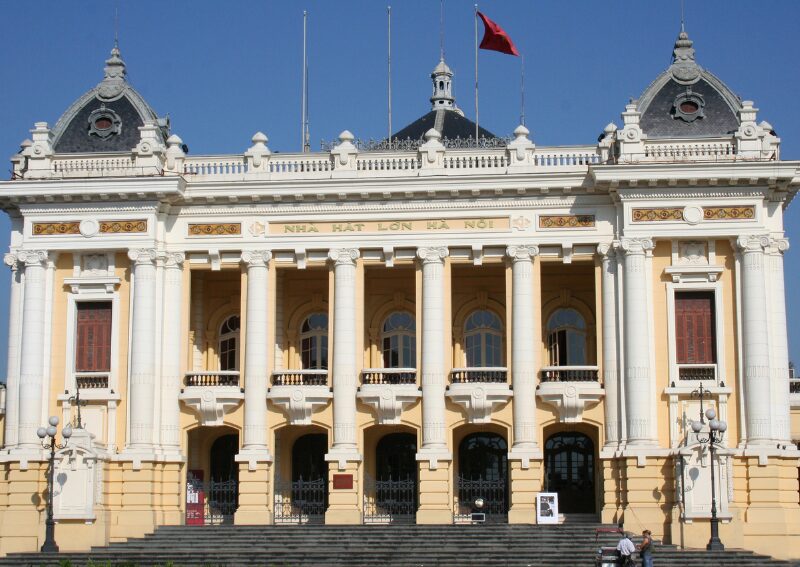
The Hanoi Opera House is one of Hanoi’s most rewarding photographic subjects, and the quality of the image changes dramatically depending on time of day.
Best time for photos: during the evening (Blue Hour). When the sky turns deep blue and the opera house lights up with golden light, it is the most beautiful moment to capture the architecture. The illuminated building against a deep blue sky, with August Revolution Square in the foreground, creates one of the most striking architectural photographs available in Hanoi.
- Early morning (7:00 to 9:00 AM) is also excellent: the warm yellow facade catches the morning light, the square is quieter, and you can position yourself anywhere in the open space without navigating around crowds.
- For midday visits, the eastern approach along Trang Tien Street offers a classic composition with the opera house centered at the end of the boulevard.
Coffee at Highlands: Architecture Without a Ticket
On the right side of the opera house, there is a Highlands Coffee known as the “Music in the Garden” area. If you do not wish to watch a show, you can buy a cup of coffee here and sit in the outdoor garden area to closely appreciate the architectural details of the opera house’s side.
This is a genuinely excellent recommendation. The outdoor seating area at Highlands Coffee puts you at close range with the opera house’s northern facade, at pavement level, with a coffee in hand, in an atmosphere that combines Parisian boulevard culture with distinctly Vietnamese street life. For visitors who want to absorb the building’s character at leisure without a tour or performance ticket, this is the way to do it.
How to Get to the Hanoi Opera House
The Hanoi Opera House is located at No. 1 Trang Tien Street, Hoan Kiem District, at the eastern end of August Revolution Square.
- On foot
- from Hoan Kiem Lake: Approximately 700 meters east along Trang Tien Street, an 8 to 10-minute walk through the heart of the French Quarter. This is the most pleasant approach and passes the Vietnam National Museum of History along the way.
- from the Old Quarter: Approximately 1.5 km south through the transition zone between the Old Quarter and the French Quarter, 15 to 20 minutes for a comfortable walking pace.
- By Grab: From Old Quarter hotels, a Grab ride costs 30,000 to 50,000 VND and takes 5 to 10 minutes. From the French Quarter, many hotels are within easy walking distance.
- By public bus: Routes 09, 14, and 36 stop near Hoan Kiem Lake, from which the opera house is a short walk east. Bus fare is 7,000 to 15,000 VND.
- By cyclo: A cyclo from the Old Quarter or lakeside area takes approximately 20 minutes and offers an atmospheric approach to the building, arriving as a visiting dignitary might once have arrived: slowly, with time to register the building’s impact.
Practical Visitor Information
Exterior Viewing
The exterior of the Hanoi Opera House is freely accessible at all hours. The square in front of the building is a public space where visitors can photograph, sit, and experience the architecture without any ticket or schedule.
Guided Tours
Available Tuesday to Sunday, guided tours of the interior run from approximately 10:30 AM to 12:00 PM and require advance booking or on-site purchase. Tour tickets cost 120,000 VND per person for the architectural tour, or 400,000 VND for the combined tour and art show package. Confirm the current schedule at hanoioperahouse.org.vn before your visit as tours may be affected by rehearsals or special events.
Performance Tickets
Tickets for evening performances range from 100,000 VND to 2,000,000 VND depending on the event and seat position. Book through the official website or at the on-site box office. For major performances by the Vietnam National Opera and Ballet or visiting international companies, advance booking of several days to several weeks is advisable.
Dress Code
Smart casual dress is appropriate for guided tours. For evening performances, the atmosphere of the venue calls for a step up in formality: avoid flip-flops, shorts, or very casual attire. The experience of attending a performance in the grand auditorium is enhanced considerably by dressing for the occasion.
Accessibility
The Hanoi Opera House is accessible for travelers with disabilities. Features include wheelchair ramps, an accessible elevator, an accessible restroom, video guides and hearing kits for hearing-impaired visitors, and audio guides for visually impaired visitors.
What to See Around the Hanoi Opera House: Hanoi French Quarter Circuit
The opera house sits at the heart of Hanoi’s French Quarter, a neighborhood whose colonial-era architecture, wide tree-lined boulevards, and quiet residential streets are among the most walkable and rewarding in the city. A well-planned morning or afternoon can combine the opera house with several other major sites:
- Vietnam National Museum of History: Immediately adjacent to the opera house on Trang Tien Street. Housed in a fine example of Franco-Vietnamese colonial architecture built in 1932, this is the best overview museum for Vietnamese history from prehistoric times to the present. Allow 90 minutes minimum.
- Hoan Kiem Lake: 700 meters west via Trang Tien Street. The symbolic heart of Hanoi, with Ngoc Son Temple on its central island and the red Huc Bridge crossing to it. The combination of a morning at the opera house and a walk around the lake covers two of Hanoi’s most essential sites in a single outing.
- St. Joseph’s Cathedral: 800 meters northwest. Hanoi’s principal Gothic Catholic cathedral, built in 1886, sits at the intersection of three Old Quarter streets and anchors a neighborhood of boutique shops and excellent coffee houses on Nha Tho Street.
- Hoa Lo Prison (Hanoi Hilton): 1.2 kilometers west. One of Hanoi’s most historically significant and sobering sites. The juxtaposition of the opera house (French colonial culture at its most self-congratulatory) with Hoa Lo (French colonial power at its most brutal) creates a complete and honest picture of the same historical period from two very different angles.
A Stay for the Best Hanoi Opera House Experience: Hanoi La Siesta Premium Hang Be
Experiencing the Hanoi Opera House fully, whether for an architectural tour, an evening performance, or a morning walk through the French Quarter that brings you to its square, calls for a base that places you inside the life of the city rather than at its edges.
Hanoi La Siesta Premium Hang Be is a natural choice. Sitting in the heart of the Old Quarter, one of the most well-located positions in Hanoi for reaching both the city’s transport connections and its most compelling neighborhood experiences, it has earned consistent recognition as one of the best boutique hotels in Hanoi through a combination of carefully considered design, genuinely warm hospitality, and the kind of peaceful atmosphere that makes a busy travel itinerary feel manageable rather than exhausting.
From Hanoi La Siesta Premium Hang Be, the Hanoi Opera House is a 10 to 15-minute walk south through the boundary between the Old Quarter and the French Quarter, a transition that is itself one of the most interesting walks in the city. Hoan Kiem Lake is equally close. St. Joseph’s Cathedral, Hoa Lo Prison, and the Vietnam National Museum of History are all within easy reach on foot or by a brief Grab ride.
For visitors building a serious Hanoi cultural itinerary around the opera house, the French Quarter, and the Old Quarter, among all the best hotels in Hanoi Old Quarter, La Siesta Premium Hang Be offers both the location and the quality of experience that the journey deserves.
Frequently Asked Questions
What is the Hanoi Opera House?
The Hanoi Opera House (Nha Hat Lon Ha Noi) is a French neoclassical performing arts venue built between 1901 and 1911 at No. 1 Trang Tien Street in Hanoi’s French Quarter. Inspired by the Palais Garnier in Paris, it seats approximately 900 people and hosts opera, ballet, symphony concerts, and Vietnamese traditional arts. It is also the site of the August Revolution mass meeting of 1945 and one of the most significant architectural landmarks in Vietnam.
How much does it cost to visit the Hanoi Opera House?
The exterior is free to visit at all hours. Guided interior tours cost 120,000 VND per person (approximately USD $5 / AUD $7.50 / GBP £4). The combined tour and art show package is 400,000 VND. Evening performance tickets range from 100,000 VND to 2,000,000 VND depending on the event and seat position.
Can you go inside the Hanoi Opera House without a performance ticket?
Yes. Guided tours of the interior, including the grand foyer, Mirror Room, and auditorium, are available Tuesday to Sunday from approximately 10:30 AM to 12:00 PM and cost 120,000 VND per person. Check the official website (hanoioperahouse.org.vn) for current availability.
What performances are on at the Hanoi Opera House?
The opera house hosts a regular program of symphony concerts, opera, ballet, Vietnamese traditional arts, and contemporary dance. The Vietnam National Opera and Ballet and the Vietnam Symphony Orchestra are the main resident companies. Check the current schedule at hanoioperahouse.org.vn.
What is the best time to photograph the Hanoi Opera House?
Blue Hour in the evening, when the sky turns deep blue and the building is illuminated with golden light, produces the most striking architectural photographs. Early morning between 7:00 and 9:00 AM is also excellent for quieter conditions and warm natural light on the yellow facade.
How far is the Hanoi Opera House from the Old Quarter?
Approximately 1.5 kilometers, a 15 to 20-minute walk south through the French Quarter. By Grab, the journey takes 5 to 10 minutes and costs 30,000 to 50,000 VND.
What is the dress code for the Hanoi Opera House?
Smart casual is appropriate for guided tours. For evening performances, visitors are encouraged to dress in keeping with the formal atmosphere of the venue. Avoid flip-flops, shorts, or very casual clothing for performances.
Is the Hanoi Opera House connected to the August Revolution?
Yes. On August 19, 1945, the opera house was the site of the mass meeting that launched the August Revolution, during which the Viet Minh called for the seizure of power from the colonial government. It subsequently hosted the first session of the National Assembly of the Democratic Republic of Vietnam in 1946. These events transformed the building from a colonial cultural monument into a site of Vietnamese national significance.