



Pho Ga Hanoi 2026: Why Chicken Pho Hanoi Deserves Its Own Spotlight
Most travelers arrive in Hanoi thinking about beef pho. They leave thinking about chicken. Pho ga Hanoi, the chicken noodle soup that has been a fixture of Hanoi’s morning streets since the mid-20th century, is quieter than its beef counterpart, less dramatic in color and aroma, and considerably easier to underestimate.
It is also, for many food-minded visitors, the bowl they remember longest: a broth of extraordinary delicacy, a plate of golden-skinned chicken that falls cleanly from the bone, and a texture of noodle and herb that achieves balance rather than intensity. In 2026, the Michelin Guide recognized five separate pho ga restaurants in Hanoi. That is not a coincidence. It is a verdict.
The Origins of Pho Ga Hanoi : A Wartime Necessity That Became a Classic
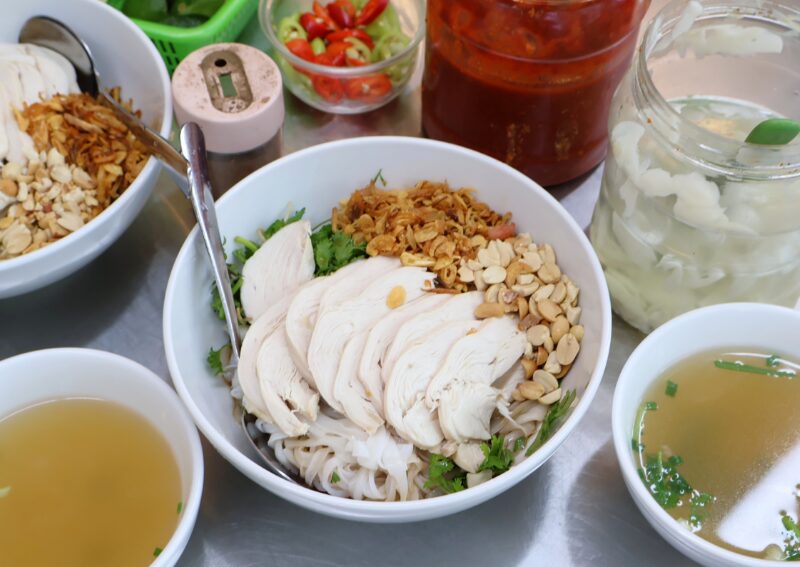
Hanoi Chicken Pho origins are closely tied to the particular pressures of mid-20th century Hanoi rather than to any single chef or creative moment. Beef pho had been the established standard since the early 1900s, but during the years of wartime austerity and food rationing that followed the 1954 division of Vietnam, beef became scarce and expensive in the northern capital. Home cooks and street vendors began adapting the pho formula to chicken, which was more affordable and more reliably available.
The adjustment was not simply a matter of substituting one protein for another. Chicken produces a fundamentally different broth from beef, requiring different aromatics, different timing, and a different sensibility about what a finished bowl should taste like. Hanoi’s pho ga cooks developed that sensibility over decades, and the results were distinct enough that pho ga eventually stopped being considered a compromise version of beef pho and became a dish with its own identity, its own loyal following, and its own set of standards for what a good bowl should achieve.
Today, pho ga is eaten throughout Vietnam, but Hanoi remains its spiritual home and the place where the most demanding and most refined versions are found. The morning pho ga culture of the Old Quarter and surrounding neighborhoods, where dedicated kitchens open at dawn and close when the broth runs out, is one of the defining experiences of Vietnamese culinary travel.
How Pho Ga Is Made: The Art of the Clear Broth
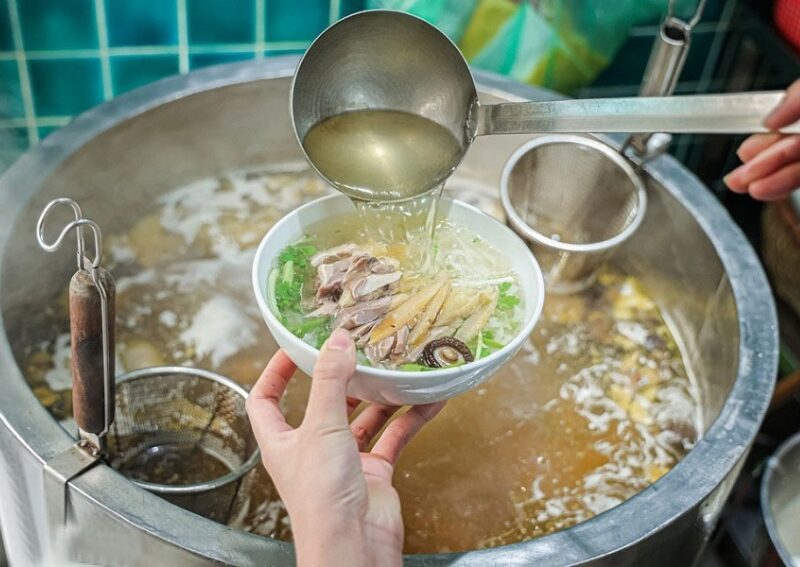
The foundation of pho ga is the broth, and the broth is where everything is decided. Unlike pho bo, which draws its depth from long-simmered beef bones and the caramelized sweetness of charred onion and ginger, pho ga broth is built almost entirely on chicken bones, typically from free-range birds that have been raised long enough to develop genuine flavor in the meat and bones. The best kitchens in Hanoi use what locals call ga ta or ga ri, older hens that have finished laying, whose bones are denser, their fat more flavorful, and their connective tissue richer in the collagen that gives a finished broth its slight, silky body.
The process begins before dawn. Chickens are cleaned and rubbed with ginger and salt, then added to cold water and brought to a simmer rather than a boil, a technique that keeps the broth clear and prevents the scum that develops when proteins hit water that is already at full heat. Fresh ginger, sometimes briefly charred over an open flame, is added alongside a modest quantity of sugar and seasoning. Veteran cooks remove the skin around the neck and head before the chicken enters the pot, another technique for maintaining the broth’s clarity.
The chicken cooks for 40 to 50 minutes in the simmering liquid, then is lifted out, cooled, and butchered into parts: breast, thigh, wing, and giblets are separated and displayed on stainless steel trays at the front of the restaurant, where customers choose their preferred cut before sitting down. The broth continues to simmer and develop until service begins.
The aromatics in pho ga are lighter and more floral than those in beef pho. Lime leaves, sometimes called kaffir lime leaves, are a defining addition in many Old Quarter kitchens, giving the broth a subtle citrus perfume that has no equivalent in pho bo. The fragrance that rises from a freshly poured bowl of pho ga in a good Hanoi kitchen is one of the more genuinely distinctive smells in Vietnamese food.
Pho Ga vs Pho Bo: Understanding the Difference
The contrast between two of the greatest Hanoi street food is worth understanding before ordering, because it shapes what a first encounter with pho ga should feel like and what to look for in a good bowl.
| Feature | Pho Bo (Beef Pho) | Pho Ga (Chicken Pho) |
| Broth color | Deep, rich amber | Pale gold to light amber |
| Broth character | Bold, pronounced savory depth | Delicate, clean, lighter body |
| Simmering time | Minimum 6 hours, often longer | 40 to 50 minutes for the chicken, bones longer |
| Aromatics | Charred onion, charred ginger, cinnamon, star anise, cloves, coriander seeds | Ginger, lime leaf |
| Spice complexity | Full spice rack, warm and complex | Significantly simpler, floral and citrus-forward |
| Noodle type | Flat, wide, soft rice noodles | Flat rice noodles or banh da (wider, chewier) |
| Protein options | Rare sliced beef, brisket, tendon, tripe | Thigh, breast, wing, giblets, unlaid eggs |
| Most popular cut | Rare beef slices (tai) or brisket (gau) | Chicken thigh (dui ga) |
| Eating experience | Immediate impact, bold from first spoonful | Quieter, rewards attention as broth cools slightly |
| Flavor revelation | Front-loaded, aromatic on arrival | Builds mid-bowl as natural chicken flavor opens up |
| Best paired with | Garlic vinegar (giam toi), fresh chili | Lime, light chili |
The experience of eating pho ga is quieter and more contemplative than pho bo. The bowl asks for attention rather than delivering immediate impact, and the reward comes in the middle of the meal when the broth has cooled slightly and its full flavor becomes apparent.
The Michelin Guide Hanoi: Five Pho Ga Restaurants in Hanoi 2026
In 2026, the Michelin Guide recognized five chicken pho restaurants in Hanoi across its Bib Gourmand and Michelin Selected categories, the largest concentration of pho ga recognition in any single guide year. Here are some of the best Pho Ga in Hanoi:
Pho Ga Nguyet
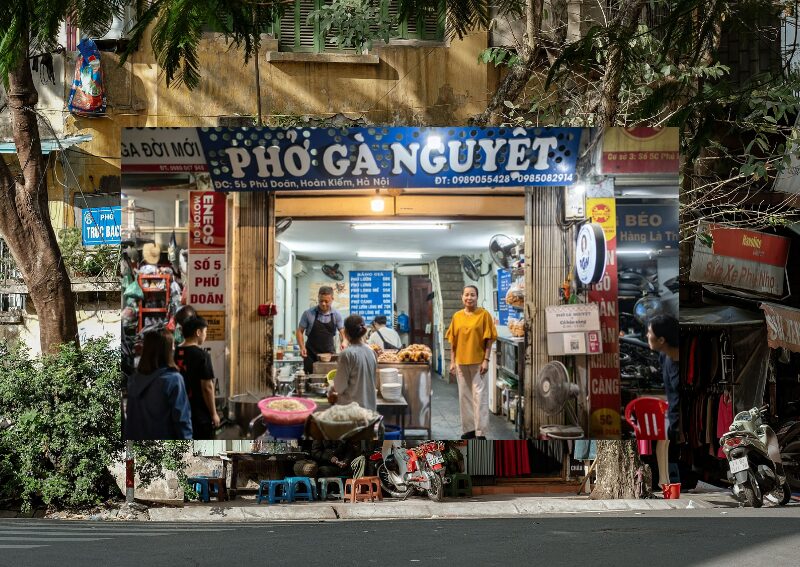
- Address: 5B Phu Doan Street, Hoan Kiem District, Hanoi
- Opening hours: Morning until early afternoon, then evening until midnight. Closed for a midday break.
- Prices range from 35,000 to 80,000 VND. Cash only.
The standard-bearer of Hanoi’s Michelin pho ga scene and the only restaurant to hold the Bib Gourmand designation for four consecutive years from 2023 to 2026, Pho Ga Nguyet was described by Michelin itself as a “hidden gem” for chicken pho lovers in the Old Quarter. Owner Le Thi Minh Nguyet opened the stall in 2009 after years of selling meat at local markets, beginning with a sidewalk setup on Chan Cam Street before eventually acquiring a permanent address on Phu Doan. The kitchen uses free-range hybrid hens weighing between 2.7 and 3 kilograms, delivered fresh at 4:00 AM daily.
Diners choose their preferred cut at the counter, the broth is poured to order, and the dry version, pho tron, mixed with light sauce, fried shallots, and herbs, is a house specialty worth ordering alongside the soup.
Pho Ga Huyen Huong
- Address: 20 Bao Khanh Street, Hoan Kiem District, Hanoi
- Opening hours: 6:30 AM to 9:00 PM daily.
- Price: could reach 150,000 VND
A fourth-generation family kitchen and Michelin Selected 2026, Pho Ga Huyen Huong is known among Hanoi food enthusiasts as the city’s most expensive chicken pho restaurant, with certain bowls reaching 150,000 VND. The premium is justified by an 18-hour bone broth that develops a depth unusual for chicken pho, and by the use of premium free-range chickens selected for their firm meat and crispy golden skin.
The menu extends well beyond the basic bowl to include chicken hearts, livers, feet, unlaid eggs, and chicken meatballs, giving regulars considerable range to explore across visits. The fried dough sticks served alongside are notably good here, slow to absorb broth and therefore crisp throughout the meal. Staff speak workable English, and the two-floor space is more comfortable than most pho ga addresses in the Old Quarter.
Pho Ga Cham
- Address: 68 Yen Ninh Street, Ba Dinh District, Hanoi
- Opening hours: 6:00 AM to 2:00 PM daily.
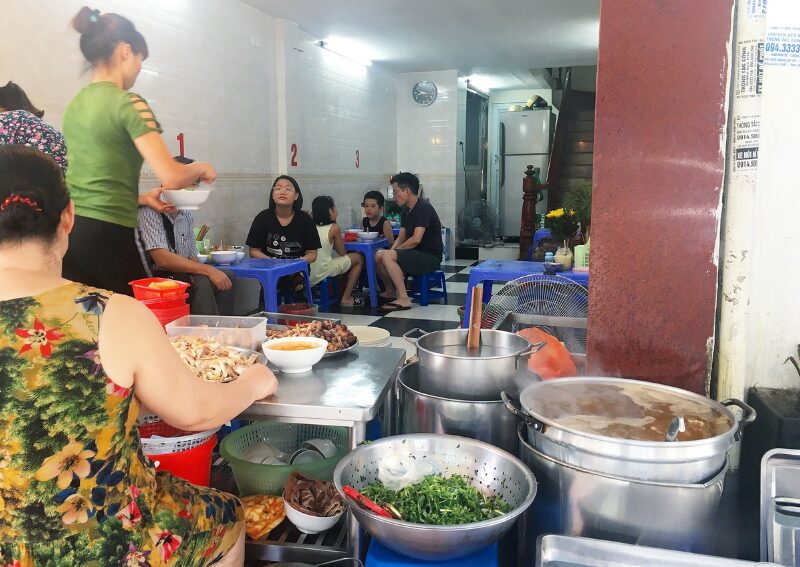
A Michelin Selected restaurant in both 2025 and 2026, Pho Ga Cham operates out of Ba Dinh District slightly removed from the Old Quarter concentration and has built its following through a broth made from locally sourced organic chicken with a clarity and lightness that regulars consider among the best in the city. The mixed chicken pho, pho ga tron, is the most popular dish among both locals and visiting food travelers.
Bowls of Pho Ga Cham arrive in ceramic rather than the standard steel bowls used at most street operations, a small detail that reflects the kitchen’s approach to presentation as part of the experience. The morning-only service hours mean arriving early is not optional.
Pho Ga Tien
- Address: 103 Nguyen Truong To Street, Ba Dinh District, Hanoi
- Opening hours: 6:00 AM to 1:00 PM daily.
Michelin Selected in 2023, 2025, and 2026, Pho Ga Tien is one of the few pho ga addresses in Hanoi to offer spacious seating and free parking, making it practical for larger groups. The broth here is sweet and savory, fragrant with lime leaves, and served at a temperature that keeps the chopped scallions from becoming pungent before the bowl is finished. Chicken offal options including unlaid eggs and intestine are specifically recommended by Michelin inspectors and distinguish the menu from more conservative kitchens. The chicken thigh pho is the bestseller and tends to sell out before lunchtime.
Pho Ga Ha
- Address: Hang Hom Street, Hoan Kiem District, Hanoi
- Opening hours: Morning service.
The newest addition to Hanoi’s Michelin pho ga map, Pho Ga Ha on Hang Hom Street in the Old Quarter received its first Michelin Selected recognition in 2026. The kitchen focuses on a clean, traditionally prepared chicken broth using free-range birds, with a presentation and seasoning style that represents the classic Hanoi approach without embellishment.
Practical Tips for Eating Pho Ga in Hanoi
Pho ga is a morning dish. The most serious kitchens open between 6:00 AM and 7:00 AM and frequently sell out of the best cuts before 10:00 AM. The chicken thigh, universally considered the most flavorful and moist option, disappears first. Arriving after 9:00 AM at a popular address often means settling for breast meat or finding the broth thinner than at the beginning of service.
Order by cut at the counter before sitting down. At most traditional pho ga setups, you specify your preferred chicken part when purchasing, and the kitchen prepares accordingly. If you are uncertain, ask for dui ga, the thigh, or tell the counter staff that it is your first visit and they will typically guide you toward the house specialty.
The condiments at a pho ga table differ slightly from those at a pho bo restaurant. A good pho ga address will offer giam toi, a garlic-infused rice vinegar that adds acidity without the heat of chili, alongside fresh lime wedges and chili sauce. The garlic vinegar in particular is a distinctly Hanoi addition that complements the delicate broth without overwhelming it.
Pho ga does not require the full herb plate that accompanies pho bo in many southern-influenced kitchens. In the Hanoi tradition, the bowl comes already garnished and is eaten largely as served, with condiments adjusted at the table rather than herbs added in bulk.
Where to Stay for the Full Hanoi Pho Ga Experience
Every Michelin-recognized pho ga restaurant in Hanoi’s Old Quarter and Hoan Kiem District is a short walk or a very brief taxi ride from a well-chosen base in the neighborhood. The timing of the dish means your hotel’s location determines whether you can make a 7:00 AM bowl feel like a natural start to the day or a logistics challenge.
Hanoi La Siesta Premium Hang Be is a natural choice. Sitting in the heart of the Old Quarter, one of the most well-located positions in Hanoi for reaching both Pho Ga Nguyet on Phu Doan Street and Pho Ga Huyen Huong on Bao Khanh Street on foot within minutes, the hotel puts the city’s best chicken pho within easy reach before the thigh meat sells out. It has earned consistent recognition as one of the best boutique hotels in Hanoi Old Quarter through a combination of carefully considered design, genuinely warm hospitality, and the kind of peaceful atmosphere that makes an early-morning pho run feel like a pleasure rather than an obligation.
For travelers searching for the best hotels in Hanoi that position them squarely within Hanoi’s food culture from the first morning to the last, Hanoi La Siesta Premium Hang Be is the kind of base that ties the entire pho ga experience together into something that feels entirely natural and entirely your own.