

Moc Chau: Vietnam’s Most Underrated Highland Escape 2026
Four hours from Hanoi and a world away from it, Moc Chau sits on a plateau in Son La Province at an elevation that gives it something rare in northern Vietnam: genuine seasons, each one with its own distinct character and its own reasons to visit. Plum blossoms in January, wild sunflowers in May, persimmons ripening through autumn, white mustard flowers blanketing the hillsides in November, and wild yellow daisies (dã quỳ) lighting up December. The plateau shifts color throughout the year with a regularity that keeps both first-time visitors and returning travelers coming back at different points on the calendar.
Moc Chau Vietnam is not a single attraction but an entire landscape to move through slowly, on motorbike or by car, stopping where the light and the season dictate. This guide covers everything you need to plan the trip well.
Where Is Moc Chau?
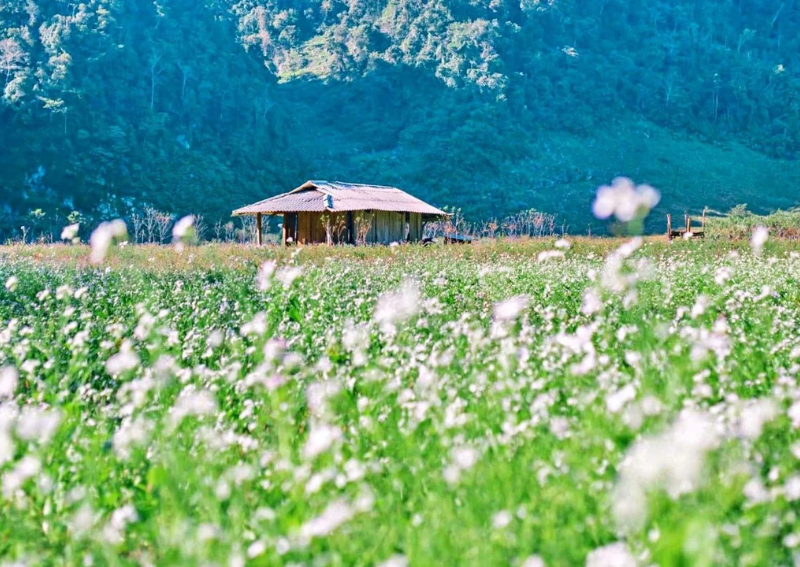
Moc Chau is a district within Son La Province in northwestern Vietnam, situated approximately 200 kilometers from central Hanoi on the road toward the Lao border. The plateau sits at elevations between 1,000 and 1,200 meters above sea level, which gives it a temperate climate noticeably cooler than the lowland capital. The surrounding landscape is a mosaic of tea plantations, dairy farms, fruit orchards, forest-covered hillsides, and traditional Thai minority villages, all connected by roads that reward slow travel.
Best Time to Visit Moc Chau
One of the most asked questions about Moc Chau is when to go, and the honest answer is that the plateau is genuinely rewarding across all four seasons. Each period offers a different landscape and a different set of experiences.
January to February – Moc Chau Plum Blossom Season
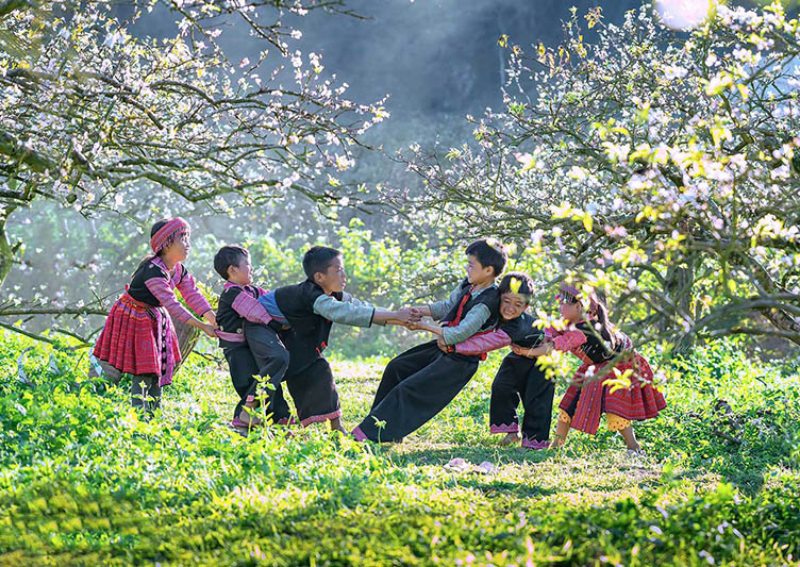
The most celebrated window for visiting Moc Chau Vietnam. Plum, peach, apricot, and cherry blossom trees flower across the hillsides in successive waves of white and pink, transforming the plateau into something that looks like a highland painting. The tea plantations put out fresh bright-green growth during the same period, creating a visual contrast that photographers particularly love. This is peak season and accommodation books up quickly.
May to June – Plum Harvest
The plum orchards of the Mu Nau and Na Ka valleys enter full harvest, and the roadside vendors selling freshly picked fruit are a fixture of the landscape. The weather is warm and clear, the hillsides are green, and the plateau is well-suited to outdoor activities and camping. A quieter period than blossom season, with more space to explore at your own pace.
August to October – Persimmon Season
The persimmon orchards of Moc Chau ripen from August through December, with crisp varieties (hồng giòn) arriving earlier in the season and astringent varieties (hồng chát) ripening through to year’s end. The autumn light on the plateau at this time of year is particularly beautiful.
November to December – Flower Fields.
White mustard flowers (hoa cải trắng) bloom across the plateau from November onward, and by December the wild yellow daisy fields add another layer of color to the landscape. It is one of the most visually distinctive periods to visit, less crowded than the spring blossom season, and atmospheric in a quieter way.
The best time to visit Moc Chau for first-time visitors is broadly January through February for the blossoms, or November through December for the mustard flower and daisy season. Both periods offer dramatic visual rewards that justify the four-hour journey from Hanoi.
Getting to Moc Chau from Hanoi
By Motorbike
The most rewarding way to make the journey, following the old National Highway 6 from Hanoi through the hills of Hoa Binh Province and into Son La. The road passes through genuinely beautiful countryside and includes the famous S-bend viewpoint in Van Ho District, where almost every rider stops to photograph the sweeping curve of road below. Journey time runs four to five hours depending on stops. Note that sections of the old highway have deteriorated in places, so road awareness is important, particularly on the descents.
By Coach
Regular coach services run from both My Dinh and Yen Nghia bus stations in Hanoi toward Son La, with a stop at Moc Chau. Quality-class coach tickets cost approximately $8 (~200,000 VND) per person. A practical and comfortable option for travelers who would prefer not to ride.
By Private Car
The most straightforward option for families or groups. The road is wide and well-maintained through most of its length, though the mountain passes require careful attention to speed and lane discipline. Morning fog on the Thung Khe section can reduce visibility, and rain during summer months occasionally affects road conditions. Allow four to four and a half hours for the journey.
Where to Stay in Moc Chau
Moc Chau offers a range of accommodation that leans comfortably toward the rustic and the ecological. Standard guesthouses in the town center provide basic private rooms from approximately $8 to $12 (~200,000 to 300,000 VND) per night, with even more affordable options available at smaller local establishments.
For a more atmospheric stay, the plateau’s growing collection of lake-view homestays and eco-lodges offers considerably more character at prices that remain genuinely reasonable. Well-regarded options include MAMA’s House, Le Chalet du Lac, Fairy House Moc Chau, House By Lake, The Nordic Village, and Moc Chau Retreat, with rooms ranging from approximately $12 to $40 (~300,000 to 1,000,000 VND) per night.
Booking ahead is strongly recommended during the January to February blossom season and the November to December flower field period, when availability at the better properties disappears quickly.
What to Do in Moc Chau: The Plateau’s Best Experiences
Two full days covers the highlights at a reasonable pace. Three to four days allows for deeper exploration, including side trips to nearby areas like Mai Chau and Thung Nai. Here is what deserves your time.
Ban Ang Pine Forest
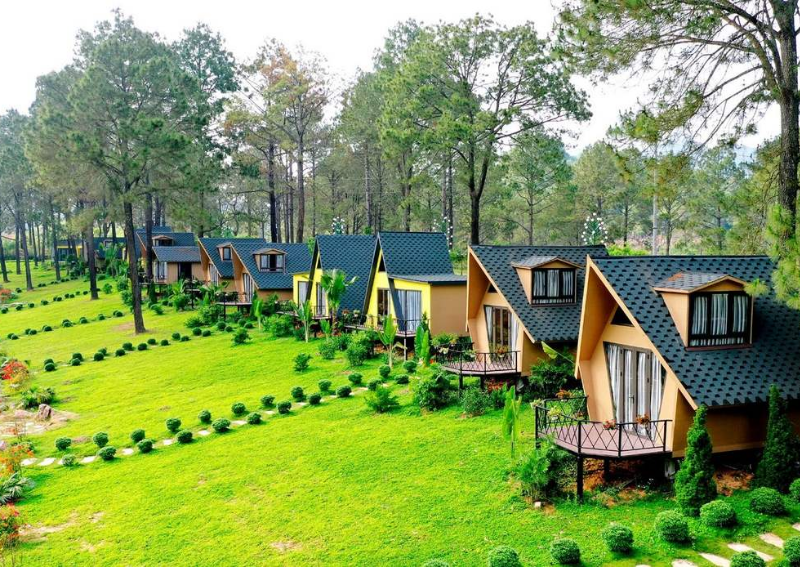
Located in Dong Sang Commune, approximately 2 kilometers from the town center along National Highway 43, the Ban Ang Pine Forest covers over 43 hectares of tall pines growing across red-brown hillsides above a clear natural lake. The combination of the forest, the water, and the surrounding landscape has made it one of the most popular camping destinations in northern Vietnam. The atmosphere here is cool, quiet, and genuinely restorative in a way that flat urban parks simply cannot replicate.
Mu Nau Plum Valley
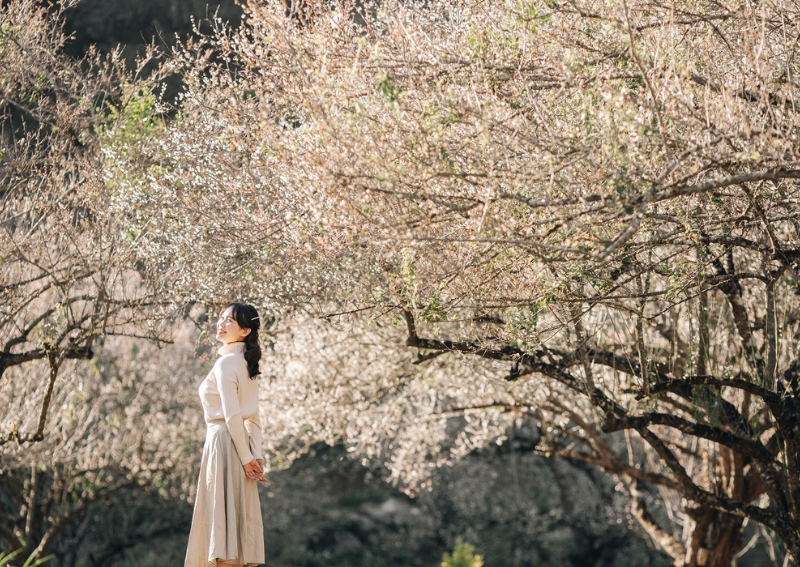
The plum orchards of Mu Nau ripen slightly earlier than those at Na Ka and Phieng Khoang, making early May visits particularly rewarding. The road into Mu Nau is rough enough to require a manual motorbike rather than an automatic one for most riders, and first-time visitors are advised to hire a local motorbike taxi for the return trip rather than navigating the slopes independently. Entry to the orchard costs approximately $0.80 (~20,000 VND) per person. Visitors can pick and eat fruit within the orchard but are asked not to pick unripe plums for play.
Sunflower Garden (Vuon Hoa Huong Duong)
A relatively new addition to Moc Chau’s visitor landscape, the sunflower garden sits deep in a valley off National Highway 6, just past the Km 106 marker heading toward Son La. There are no roadside signs, so navigating by landmark is necessary. Early May sees the first blooms opening. By mid-May the field is at full flower and one of the best photography destinations on the plateau. Entry costs approximately $1.20 (~30,000 VND) per person.
Moc Chau Tea Hills
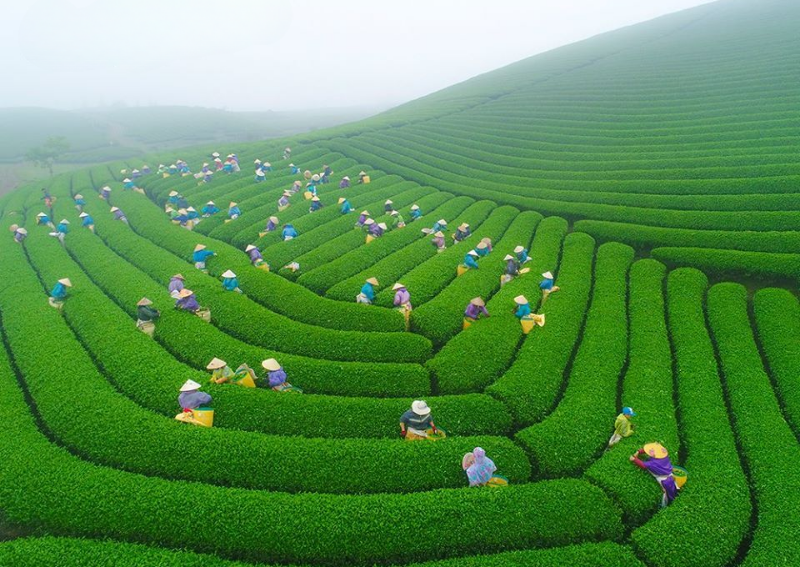
The entire district of Moc Chau is defined by its tea. The surrounding hills are covered in tea plantations, and the agricultural station (Nong Truong) at the center of the district, about 7 kilometers from town, is surrounded by rolling green fields of exceptional photographic appeal. The most distinctive spots are the S-curve tea hill and the heart-shaped tea hill, located on the road toward Ngu Dong Ban On Cave, approximately 15 kilometers from the station. Both are best visited in the early morning when the light is soft and the air is clear.
Chieng Khoa Waterfall
Reaching Chieng Khoa Waterfall involves descending approximately 200 steps down a steep earthen path to the base, where the falls drop into a clear pool surrounded by forest. Local operators rent bamboo rafts for visitors who want to be photographed on the water rather than from the bank. Entry involves a small environmental fee of approximately $0.40 (~10,000 VND) per person, plus parking and raft rental if required. The descent is steep enough that high heels and sandals are genuinely inadvisable. Early morning visits avoid the midday heat on the climb back up.
Fairy Waterfall Moc Chau (Thac Nang Tien)
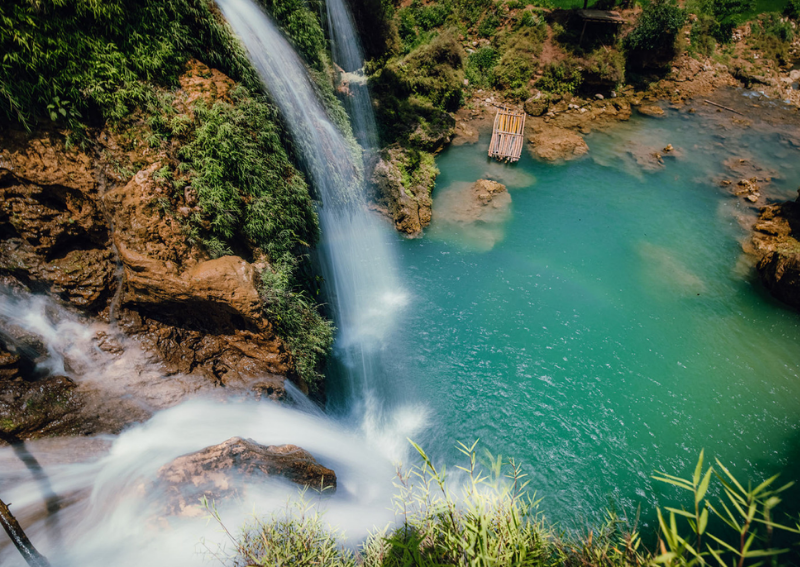
A three-tiered waterfall approximately 25 kilometers from Moc Chau town along National Highway 43, Thac Nang Tien (Fairy Waterfall) reaches an estimated height of 150 meters from base to the third tier. The lowest pool is waist-deep and swimmable, with crystalline water that draws visitors in warm weather. Ascending to the second and third tiers requires careful footwork on slippery moss-covered rock faces, and the effort is rewarded with increasingly dramatic views of the falls dropping into jade-green pools.
The most beautiful season for this waterfall is March through May, as spring transitions to early summer. Entry costs approximately $0.80 (~20,000 VND) per person, with additional charges for raft photography sessions at the upper tiers. The waterfall can be combined naturally with Chieng Khoa, located 2 kilometers further along the same road.
Dai Yem Waterfall Moc Chau (Thac Dai Yem)
Moc Chau’s most impressive waterfall by volume and drama, Thac Dai Yem drops over 100 meters from a limestone cliff in two distinct sections: nine upper tiers and five lower tiers, separated by a flat area of ground that serves as a natural rest and viewing platform. The water flows from the Vat Stream, its source fed by two mountain channels that merge in a Thai minority village of considerable age before reaching the falls.
The distinctive feature of Dai Yem is its behavior: rather than falling as a single curtain, the water is divided and dispersed by unusually shaped rock formations across the cliff face, producing dozens of separate streams that fan out softly before rejoining in the pool below. The effect is far more delicate than the scale of the falls might suggest. Entry costs approximately $4 (~100,000 VND) per person, and a full range of food and drink vendors operate near the base.
Dong Co 68 (Grassland 68)
Originally planted as grazing pasture for the dairy cattle that Moc Chau is famous for, the grasslands at Dong Co 68 have become an unlikely photography destination, particularly among younger Vietnamese travelers. The rolling green hills, dotted with dairy cows and framed by the surrounding highlands, make for an unexpectedly picturesque landscape. The best light here falls after 5 PM, when the afternoon softens and the golden hour casts long shadows across the grass. Visiting with the permission of the landowner is both courteous and necessary. Located approximately 3 kilometers from town in the direction of Tan Lap Commune.
Nguyen Thuy Village (Primitive Village)
One of Moc Chau’s least-known destinations, the Nguyen Thuy Village sits in Hang Tau Valley in Chieng Hac Commune, accessible only by rough track with no road signs and no tourist infrastructure. Fifteen households share the valley with free-ranging buffalo, cattle, pigs, and chickens across a landscape of total rural tranquility. Navigation requires a local guide, and the track demands a manual motorbike and confident riding. The effort involved is substantial. So is the reward.
Pha Luong Peak Son La
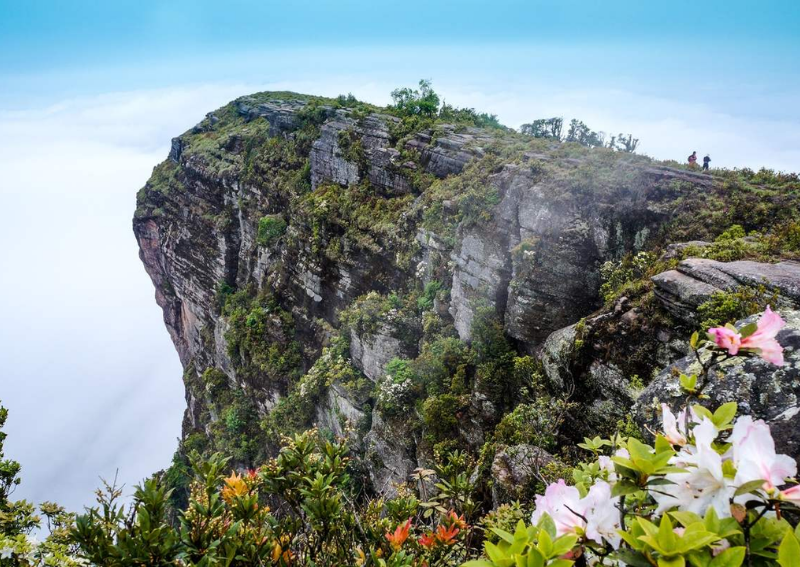
Located 30 kilometers from Moc Chau town, on the Vietnamese-Lao border, Pha Luong Peak at over 2,000 meters is the highest point accessible from the plateau. The ascent from the border outpost at the base takes three to four hours of steady hiking through forest and open ridge terrain. The summit view on a clear day extends across both countries, and the clouds that form below the ridge line create an atmosphere that justifies every step. This is not a casual destination. It rewards travelers who are specifically seeking it.
What to Eat in Moc Chau
Moc Chau’s food culture is built on highland ingredients, ethnic minority cooking traditions, and the extraordinary quality of the dairy products the plateau has become famous for across Vietnam.
Be Chao Moc Chau (Fried Milk-Fed Veal)
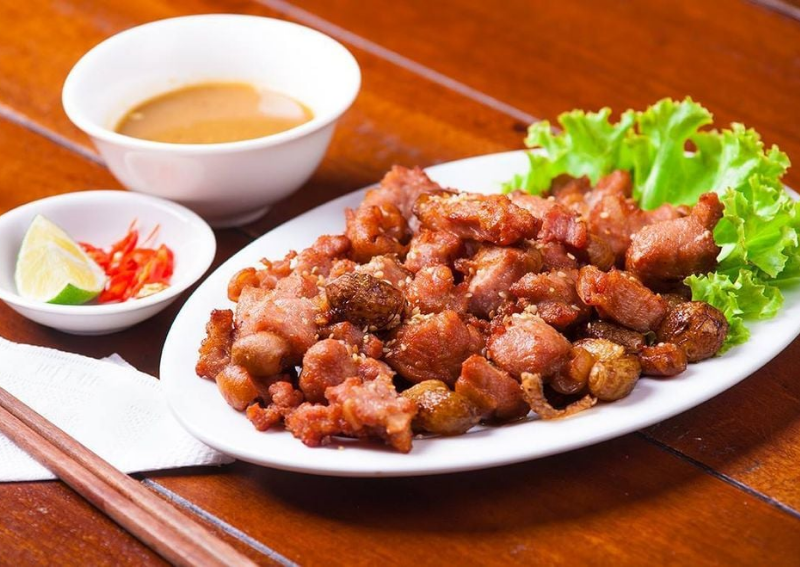
The dish most associated with Moc Chau among Vietnamese travelers. Milk-fed veal, sliced thin and fried at high heat until golden and fragrant, served with dipping sauces and fresh herbs. The flavor is richer and more delicate than standard beef, and the texture is unlike anything you will find in the lowlands. Recommended restaurants include Dong Hai, Xuan Bac 181, Nam Hung 70, Lan Hong 64, and Be Quan Moc Chau.
Moc Chau Fresh Milk Hotpot (Lau Sua Tuoi)
A specialty that surprises most visitors: a hotpot broth made from bone stock enriched with fresh Moc Chau milk, corn, and vegetables, served in the traditional communal hotpot format. As the broth simmers, a skin of warm cream forms on the surface. The flavor is simultaneously savory and gently sweet in a combination that reads as genuinely unusual and genuinely delicious.
Salmon Hotpot (Lau Ca Hoi)
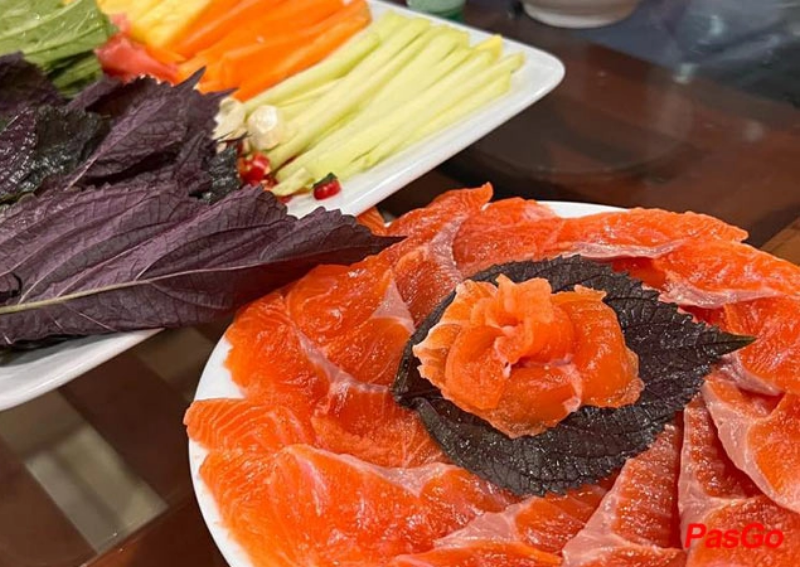
Cold mountain streams around Moc Chau support salmon farming of notable quality. The fish can be ordered as hotpot, grilled, or eaten fresh with Vietnamese perilla and bitter greens in a preparation that echoes Japanese-influenced cooking while remaining distinctly local.
Ca Lang (Catfish)
The rivers around Moc Chau yield excellent catfish, served in multiple preparations: grilled whole, made into salad, or cooked as soup. Goi ca lang, a catfish salad, is a particular local specialty worth seeking out at the town center restaurants.
Thit Trau Gac Bep (Smoked Buffalo Meat)
A Thai minority specialty produced by hanging marinated buffalo meat above a wood fire until it is slowly smoked and dried. The result is intensely flavored, slightly chewy, and unlike standard cured or dried meat from anywhere else in Vietnam. It travels well and makes one of the better edible souvenirs from the plateau.
Com Ngu Sac (Five-Color Sticky Rice)
Each color in this visually striking rice dish is produced using a different natural plant dye, with the sticky rice cooked separately before being assembled into a single serving. The dish is as much about presentation as flavor and represents the Thai minority cooking tradition at its most celebratory.
Moc Chau Strawberries
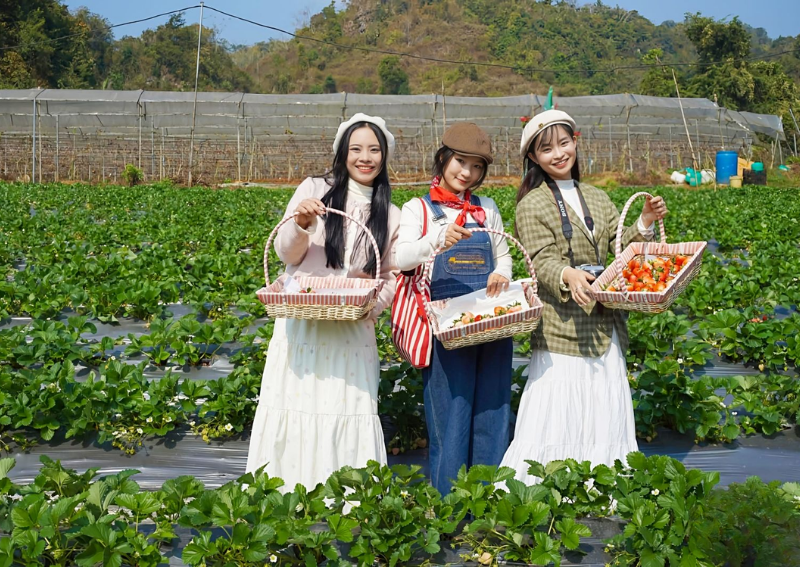
Winter is strawberry season at Moc Chau, where Japanese agricultural technology has helped local farmers produce fruit of a quality that rivals commercial Japanese and Korean varieties in both sweetness and texture. Eaten fresh with Moc Chau yogurt, the combination has developed something of a cult following among Vietnamese food travelers.
Coffee
The café scene at Moc Chau has developed considerably in recent years. Notable spots include Rio Coffee and Tea Skyview, Doi Gio Wind Chill, Moc Coffee, Tom’s Garden Coffee, and Doi Garden Coffee, with drinks averaging $1.60 to $2.40 (~40,000 to 60,000 VND). For a genuinely distinctive atmosphere, Lan Que Phuong Cafe at 165 Sub-zone 6 recreates the dense visual texture of a Hong Kong street with considerable fidelity, with drinks from approximately $1 to $2 (~25,000 to 50,000 VND).
Where to buy local products to take home: The intersections at Km 73, Sub-zone 32, Bo Bun, Km 70, the peach orchard junction, and Sub-zone Chieng Bi all have roadside vendors selling Moc Chau tea, fresh milk, apples, corn, and corn wine.
A Few Practical Notes Before You Go
Pack for temperature variation. Moc Chau can be genuinely warm during the day and significantly cold after dark, with fog and mist common in the early mornings regardless of season. Warm layers, a light rain jacket, and a check of your vehicle’s lights before departure are all worth attending to.
Treat the landscape with care. The mustard flower and vegetable fields that make Moc Chau so photogenic belong to local farming families. Walking through or picking from planted fields without permission causes real economic harm. Stay on established paths, ask before entering private land, and do not break or pick blossoms, branches, or produce.
Back to Hanoi: Come Home to Hanoi La Siesta Classic Hang Thung
After days spent moving through highland valleys, forest trails, and the unhurried rhythm of the plateau, returning to Hanoi is itself a kind of arrival. The capital’s density and energy feel newly vivid after the quiet of Moc Chau, and having the right base in the city makes that transition genuinely pleasurable rather than merely logistical.
Hanoi La Siesta Classic Hang Thung sits in the heart of the Old Quarter, one of the most characterful neighborhoods in Southeast Asia and the natural entry point for travelers returning from the highlands. Recognized as one of the Top 10 Hotels in Asia in 2025 by TripAdvisor, it has earned its reputation as one of the best boutique hotels in Hanoi through beautifully appointed interiors, warm and attentive service, and a four-season pool that has a particular restorative appeal after days of mountain roads and outdoor exploration.
For travelers building a northern Vietnam itinerary around the kind of genuine experiences that Moc Chau delivers, Hanoi La Siesta Classic Hang Thung offers a Hanoi base that matches that standard. Central, considered, and consistently welcoming, it remains one of the best hotels in Hanoi for those who want the city to feel as rewarding as the journey that surrounds it.
See also: Ha Giang Loop: Everything You Need to Know Before You Ride | Quan Lan Island: Vietnam’s Quiet Corner of Bai Tu Long Bay | First-Timer’s Guide to Sapa, Vietnam