


Mu Cang Chai 2026: A Travel Guide to Vietnam’s Most Breathtaking Rice Terrace Country
Some destinations earn their reputation through clever marketing. Mu Cang Chai earns it through sheer, undeniable beauty. Tucked deep in the northwest of Vietnam’s Yen Bai Province, more than 300 kilometers from Hanoi, this remote highland district is the kind of place that stops photographers mid-sentence and makes seasoned travelers quietly reconsider everything they thought they knew about northern Vietnam.
Golden harvest terraces, mist-wrapped mountain passes, Hmong and Thai village life that carries on largely unchanged – Mu Cang Chai Vietnam is not a destination you stumble into. It takes a little effort to reach, and that effort is very much part of the appeal.
Where Is Mu Cang Chai?
Mu Cang Chai is a highland district in Yen Bai Province, sitting in the western foothills of the Hoang Lien Son – Pung Luong mountain range. Together with Van Chan, Tram Tau, and Nghia Lo, it forms a cluster of remote northwestern communities accessible via a single main artery: National Highway 32. This geographical isolation is precisely what keeps the landscape so intact. There are no shortcuts in or out, which means the crowds that descend on Sapa rarely make it this far.
When Is the Best Time to Visit Mu Cang Chai?
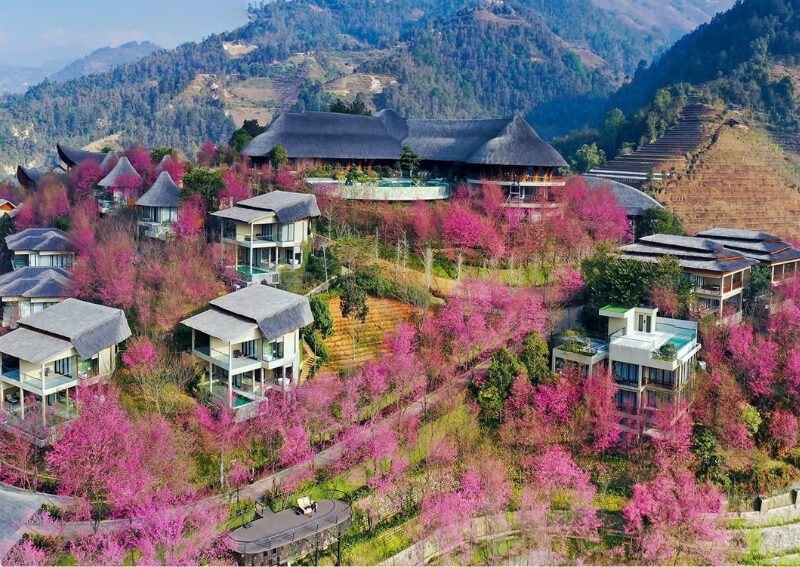
The honest answer is that Mu Cang Chai rewards visitors across every season, each one offers a completely different version of the landscape.
- Late May to early June: the Water Season. Farmers flood the terraces ahead of planting, and the hillsides transform into a cascading series of mirror-like pools reflecting the sky. It’s an ethereal, otherworldly scene that most tourists completely overlook — which means you’ll often have the viewpoints almost to yourself.
- September to October: Golden Season (Peak). This is what most visitors come for, and it delivers everything promised. The rice ripens across more than 2,200 hectares of terraced fields, turning the hillsides from green to deep amber and gold. The best time to visit Mu Cang Chai for photography, atmosphere, and that iconic harvest-season energy is firmly within this window. Expect more company at the popular viewpoints but the scenery earns every fellow traveler you’ll encounter.
- November to February: Winter. The harvested fields take on a quieter, more meditative quality – bare terraces layered across misty hillsides like ink-wash paintings. Late December brings wild peach blossoms to the forest edges, adding unexpected bursts of color to the grey winter palette.
- March to April: Spring. Young rice seedlings emerge a vivid, almost luminous green across the terraces. Warm days, minimal rain, and a genuine sense of renewal make this an underrated window for the trip.
How to Get to Mu Cang Chai from Hanoi
At roughly 300 kilometers, the journey from Hanoi to Mu Cang Chai is comparable in distance to Sapa – but considerably more demanding in terms of road conditions. Highway 32, the only reliable route into the district, winds through steep passes and sharp switchbacks that require patience and a degree of driving confidence, particularly in wet weather.
By Public Bus
Buses from My Dinh Bus Station in Hanoi serve Mu Cang Chai, generally routing through Nghia Lo town. A smaller number of services take the Noi Bai – Lao Cai expressway before rejoining Highway 32, though this adds significant distance. For travelers without their own vehicle, this is the most accessible budget option.
By Private Car
The recommended route follows Highway 32 in its entirety: departing Hanoi through My Dinh and Nhon, passing Son Tay, crossing Trung Ha Bridge, and continuing through Thanh Son, Tan Son, Ba Khe, Van Chan, and Nghia Lo before the final approach through Tu Le, Khau Pha Pass, and into Mu Cang Chai town. Leave Hanoi no later than 5 AM to arrive comfortably by lunchtime.
An alternative route via the Noi Bai – Lao Cai expressway connecting to QL279 and then QL32 is smoother on the expressway section but adds around 50 kilometers overall and involves some rougher road toward the end.
By Resort Transfer
Accommodation-arranged transfers are limited in this area. The most practical option for travelers who want a comfortable base is to stay in Tu Le or Nghia Lo, both of which have better hotel infrastructure, and arrange day transport up to Mu Cang Chai from there.
Where to Stay in Mu Cang Chai
Accommodation in Mu Cang Chai Vietnam leans strongly toward the rustic and community-based end of the spectrum. Luxury options are genuinely scarce here, and for most travelers, that’s entirely the point.
Traditional Stilt House Homestays
The most widely available and culturally immersive option. Communal sleeping arrangements (typically 10 to 30 guests per house) mean these are best suited to solo travelers, backpackers, and those genuinely interested in highland village life. Prices range from 100,000 to 400,000 VND per person per night. Good options cluster around La Pan Tan, Tu Le, and the main terrace viewpoint areas.
Ecolodge-Style Stays
A small number of eco-oriented properties have opened in recent years, including Hello MCC and MCC Eco Lodge in La Pan Tan. These offer a middle ground between homestay authenticity and basic comfort.
Town Hotels
Budget to mid-range hotels (one to three star) concentrate in Mu Cang Chai town center, offering standard amenities at 100,000 to 700,000 VND per night. Options include Hello Mu Cang Chai, Vu Linh Family, Thac Ba, and Ngoc Thuy Homestay.
Tip: If you want something with noticeably more comfort, base yourself in Tu Le or Nghia Lo – both within easy driving distance of the main attractions and served by better hotel options.
What to Do in Mu Cang Chai: Highlights Worth Planning Around
Khau Pha Pass and Lim Mong Valley
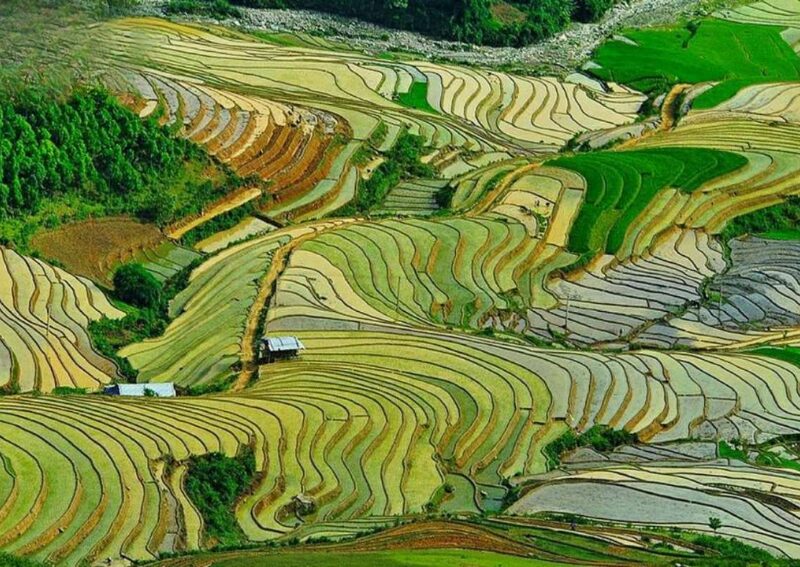
One of Vietnam’s four legendary “great passes,” Khau Pha crests at over 1,200 meters and offers sweeping views across the Lim Mong valley below, home to Thai communities living in traditional villages between the mountain folds. Drive slowly, stop at every viewpoint, and if you’re visiting in September or October, expect the valley floor to be entirely blanketed in gold. It’s also the annual venue for the Bay Tren Mua Vang (Flying Over the Golden Season) paragliding festival, an extraordinary spectacle worth planning your trip around if the dates align.
La Pan Tan, Che Cu Nha, and De Xu Phinh — The Terrace Villages
These three villages form the protected core of Mu Cang Chai’s terrace landscape, with a combined 500 hectares recognized as a National Heritage Site by Vietnam’s Ministry of Culture. The rice terraces here are among the most technically impressive in the country – carved by hand into near-vertical hillsides over generations by the Black Hmong community.
Mam Xoi Hill – The Iconic Viewpoint
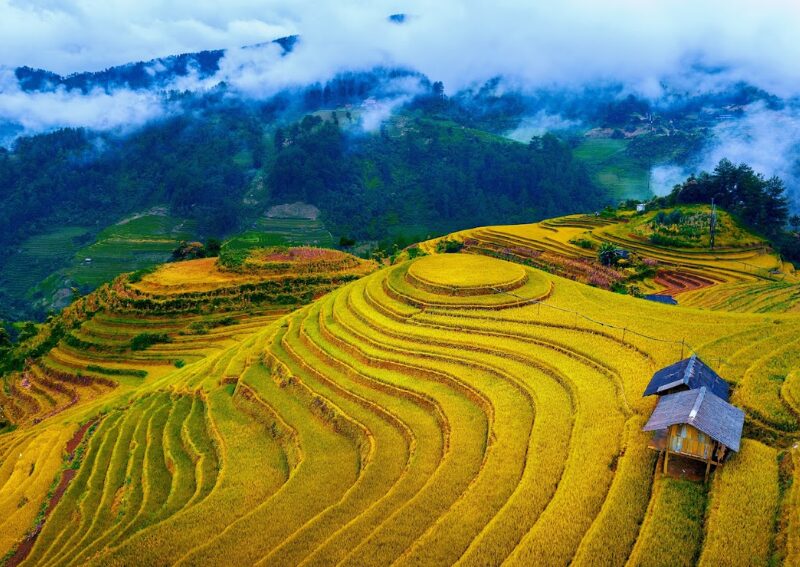
The single most photographed spot in all of Mu Cang Chai Vietnam: a rounded, terrace-covered hilltop in La Pan Tan that has become the defining image of Vietnam’s harvest season. Located about 8 kilometers from the town center along a difficult access road, the standard approach is to park at the base and hire a local motorbike driver for the final stretch. Entry costs 5,000 VND to use the photography platform; an additional 10,000 VND to walk into the rice fields themselves. A buckwheat flower garden and traditional costume rental for photos round out the experience.
Mong Ngua Hill (Horseshoe Terraces) – Sang Nhu
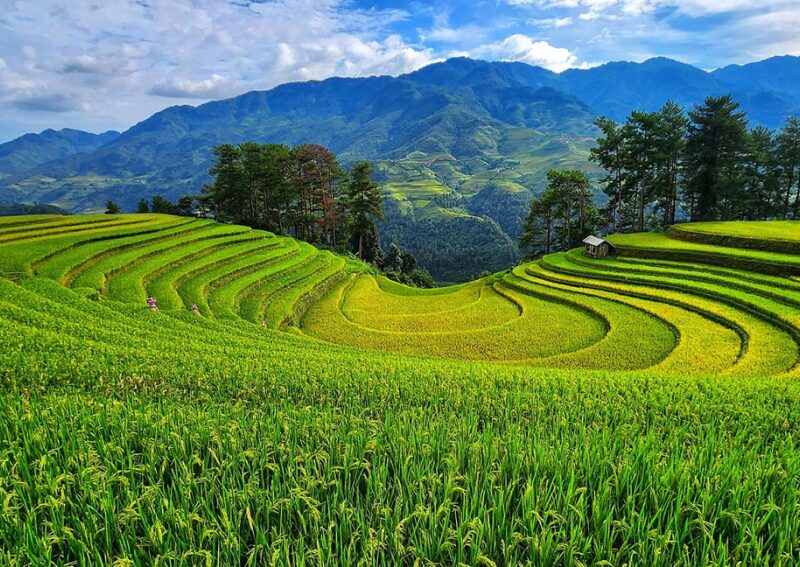
About 2 kilometers from the town center, Mong Ngua Hill offers a striking alternative perspective: semicircular terrace formations that wrap around the hillside in elegant arcs. Every harvest season draws a dedicated community of landscape photographers here. Entry: 20,000 VND for adults, 10,000 VND for children.
Motorbike hire to the summit: 60,000 to 100,000 VND return.
Tu Le Village and the Sticky Rice Fields
Just 3 kilometers past Khau Pha Pass, Tu Le is renowned for a single agricultural product: nep tan sticky rice, a local variety cultivated only on these specific terraces. When harvest begins, the village comes alive with the rhythmic sound of rice pounding and the sweet, grassy scent of freshly made green rice (com). Watch the whole process from field to finished product, and pick up a kilogram or two to take home at around 90,000-120,000 VND per kg.
Vietnam’s Longest Zipline – Aeris Hill, Tu Le
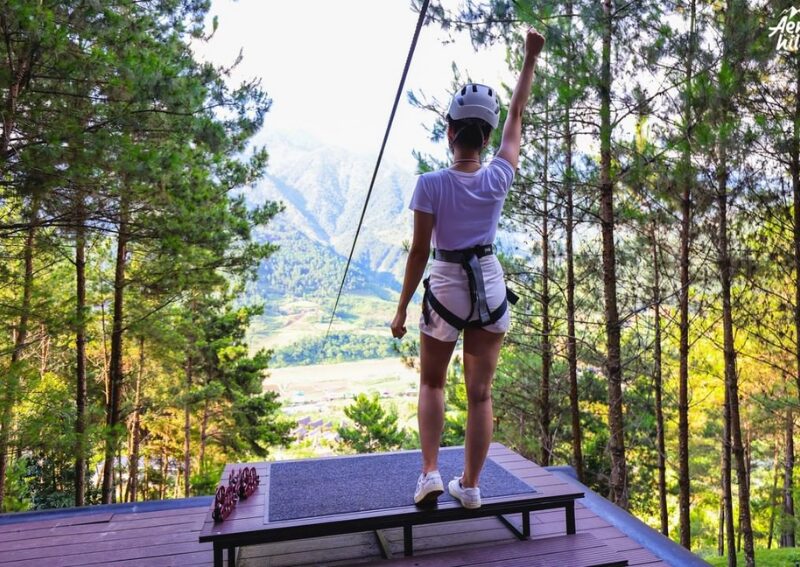
For something with a genuine adrenaline edge, the zipline at Aeris Hill adventure park in Nuoc Nong hamlet, Tu Le, spans 1.2 kilometers across two sections — crossing terraced fields, river valleys, and forested mountain slopes between Van Chan and Mu Cang Chai districts. Open daily except Wednesdays, 8:30 AM to 6 PM. Entry from 200,000 VND per person.
Nha Hang Bamboo Forest – Ban Na Hang Tua
A 60-year-old bamboo grove located 20 kilometers from Mu Cang Chai town, this is a genuinely off-the-beaten-path detour for travelers with extra time. The forest also supplies the area’s prized bamboo shoots. Note: the access road becomes extremely muddy and steep in wet weather – a local guide or motorbike driver is strongly recommended.
Tram Tau Hot Springs
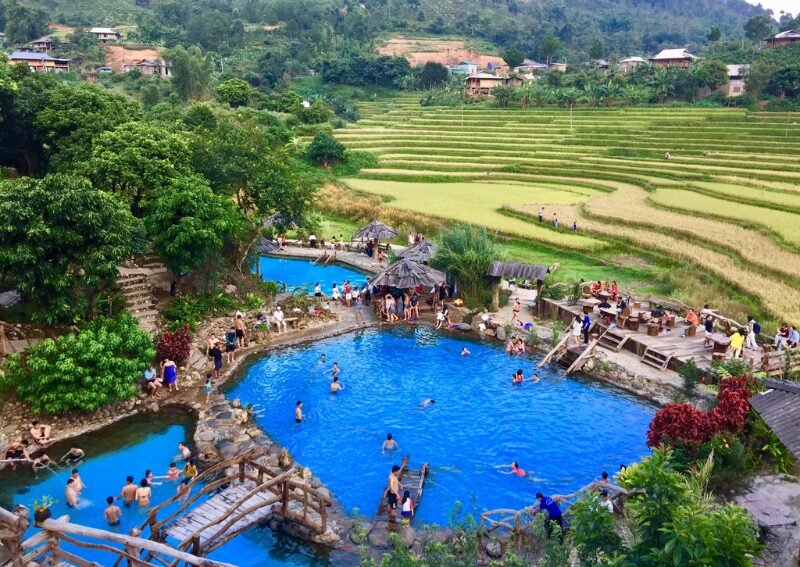
About 100 kilometers from Mu Cang Chai, the natural hot spring pools at Tram Tau make an excellent addition to a broader Yen Bai itinerary – particularly after days of highland trekking. The mineral-rich waters from natural underground springs are said to be especially beneficial for joint and muscle recovery.
Accommodation is available onsite but must be booked in advance. Free natural bathing spots also exist near Ban Coi and Ban Hoc villages for those who prefer the unstructured version.
What to Eat in Mu Cang Chai
Highland cuisine in this corner of Vietnam is hearty, seasonal, and deeply tied to the communities that produce it. These are the dishes and ingredients worth seeking out:
- Com Nep Nương: Fragrant sticky rice from the highland fields, steamed in bamboo and eaten with almost everything. The nep tan variety from Tu Le is considered the finest in the region.
- Thit Lon Den Nuong: Free-range black pork, marinated in local herbs and grilled over charcoal. A highland staple shared across ethnic minority communities throughout the northwest.
- Nhong Ong Rung: Wild forest bee larvae, typically stir-fried or grilled. A genuine local delicacy – not for the faint-hearted, but worth trying once.
- Mang Dang Xao: Bitter bamboo shoots stir-fried with pork and local herbs. Perfectly balanced between earthy and savory.
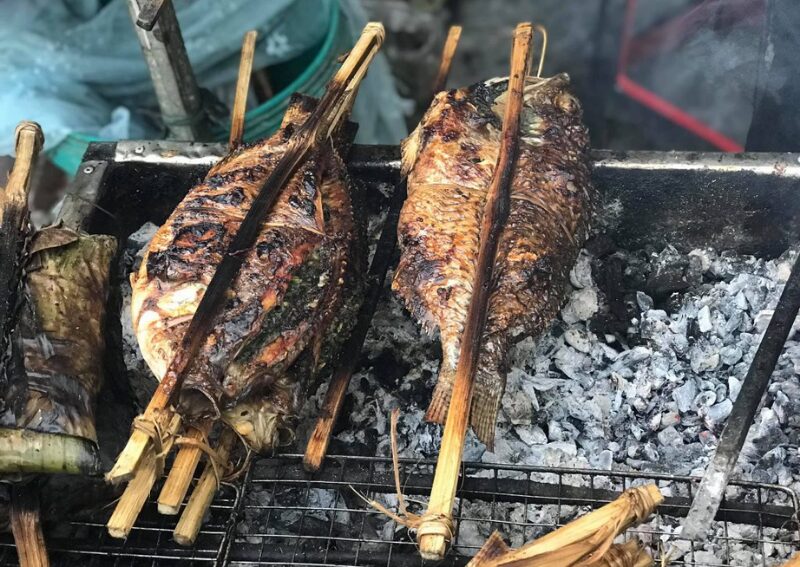
- Ca Suoi Nuong (Pa Pinh Top): Stream fish marinated in lemongrass, ginger, and wild herbs, then grilled over an open flame. A signature dish of the Thai community throughout the northwest.
- Ca Hoi and Ca Tam Khau Pha: Cold-water salmon and sturgeon farmed in the streams near Khau Pha Pass. Served grilled, hotpot-style, or as light sashimi.
- Com Xanh Tu Le: Fresh green rice made from the nep tan sticky rice variety harvested before full ripeness. You can watch the traditional hand-pounding process in Tu Le and purchase directly from producers at around 90,000 VND per kilogram.
A Suggested Three-Day Itinerary
- Day One: Hanoi to Tram Tau Hot Springs Depart Hanoi early (by 5 AM) for the 220-kilometer drive to Tram Tau via Trung Ha Bridge, Thanh Son, Thu Cuc, Van Chan, and Nghia Lo. Arrive around midday, check in, rest, and spend the afternoon soaking in the hot springs.
- Day Two: Khau Pha Pass, Lim Mong Valley, Tu Le, Mu Cang Chai From Tram Tau, the drive to Khau Pha Pass covers about 90 kilometers of scenic highland road – allow 2.5 hours. Stop at the pass viewpoint, descend into Lim Mong and Lim Thai valleys, visit Tu Le for com xanh, then continue to Mu Cang Chai town for the evening. The night market here is a great introduction to local food and community life.
- Day Three: Mam Xoi Hill, Mong Ngua Terraces, Return to Hanoi Dedicate the morning to La Pan Tan and the Sang Nhu terrace viewpoints before beginning the return journey to Hanoi. The 300-kilometer drive back is long, factor in stops and aim to be back in the capital by evening.
Estimated total budget per person: approximately 3,000,000 VND for transport, accommodation, meals, and entry fees.
A Few Things to Keep in Mind
- Responsible travel matters here more than most places. Mu Cang Chai’s landscape is a working agricultural environment, not a theme park, and the communities who maintain it deserve that respect.
- Don’t litter, and carry your waste out if no bins are available. Avoid crowding locals for photos without permission, and resist the impulse to hand out sweets or money to children along the roadside, it creates dependency that undermines community wellbeing over time.
- Pack a light jacket regardless of season. Daytime temperatures can feel genuinely warm in the valleys, but evenings at altitude drop quickly, and mountain weather has a habit of changing without notice.
Before You Head North – Settle In at the Heart of Hanoi
A journey to Mu Cang Chai demands an early start and a clear head. For travelers departing from central Hanoi, having the right base the night before makes a meaningful difference to how the whole trip begins.
Hanoi La Siesta Classic Mã Mây sits in the thick of the Old Quarter – one of the most storied and walkable neighborhoods in the capital – within easy reach of bus terminals, car hire services, and the transport connections that feed the routes northwest. As one of the most warmly regarded boutique hotels in Hanoi, it offers the kind of genuine character and attentive hospitality that larger properties rarely manage: traditional architecture, well-appointed rooms, and a calm that feels genuinely restorative before a long highland journey ahead.
Whether you’re mapping out your route over a quiet breakfast or simply need a comfortable, centrally located hotel in the Old Quarter that won’t leave you scrambling across the city at 5 AM, La Siesta Classic Mã Mây earns its place among the best hotels in Hanoi for travelers who care about starting and finishing their northern Vietnam adventures on exactly the right note.
See also: A Complete Guide to Traveling from Hanoi to Sapa | The Ha Giang Loop: Everything You Need to Know Before You Ride