

Mui Ne 2026: Sand Dunes, Seafood and the Kitesurfing Coast
Four hours east of Ho Chi Minh City, the coastal scrub gives out and the ground turns to sand. Not beach sand, but proper dunes, hundreds of hectares of them, rolling inland from the sea in ridges that shift with the wind and look, in the right light, like somewhere considerably further from Vietnam than they are.
Mui Ne is the strip of coast where those dunes meet a long beach, a working fishing village and some of the most reliable wind in Asia. It has been a kitesurfing destination for twenty years, a Vietnamese beach resort for longer, and a place that most first time visitors to Vietnam skip entirely because it does not fit neatly into the Hanoi, Hoi An, Saigon triangle.
That is a reasonable decision on a two week trip and a loss on a three week one. The dunes are genuinely extraordinary, the seafood is excellent and cheap, and the wind between November and April is the kind that people plan holidays around.
This guide covers how to get there, how long to stay, what is worth your time among the attractions, and when to come depending on whether you want to be on the water or beside it.
Where Mui Ne Is and How to Get There
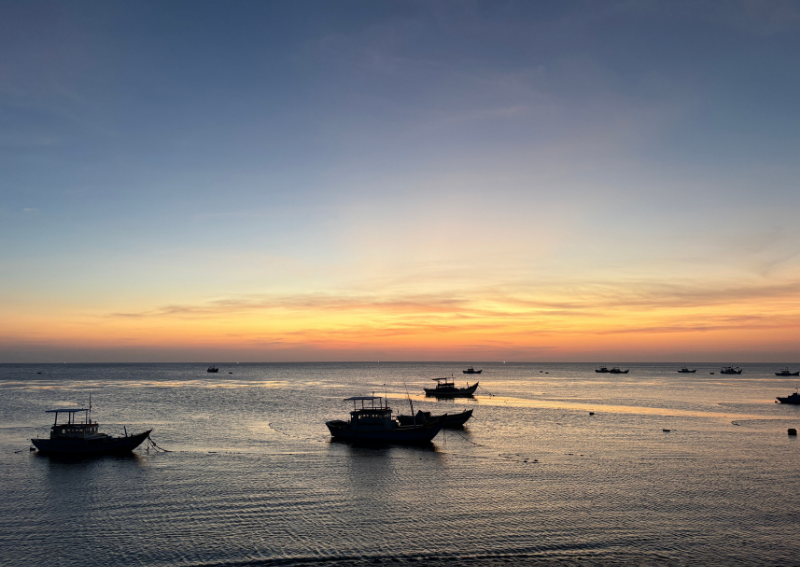 Mui Ne Vietnam sits on the south central coast. It sits on Vietnam’s south central coast, about 200 kilometres east of Ho Chi Minh City and roughly 20 kilometres north east of the city of Phan Thiet.
It is not a town so much as a coastal strip: one long road running parallel to the beach for about ten kilometres, with hotels, restaurants and kitesurfing schools along it, the fishing village at one end and the dunes beyond.
Ho Chi Minh City to Mui Ne
| Option | Time | Rough cost | Notes |
|---|---|---|---|
| Private car | 3.5 to 4.5 hours | 1,800,000 to 3,000,000 VND per car | Most flexible, door to door, allows stops |
| Train to Phan Thiet plus transfer | 4 to 5 hours total | 150,000 to 400,000 VND plus a short taxi | Comfortable, scenic, limited departures |
| Sleeper bus | 4.5 to 6 hours | 150,000 to 300,000 VND | Cheapest, overnight options, variable comfort |
| Shared shuttle | 4.5 to 5.5 hours | 250,000 to 450,000 VND | Hotel to hotel, popular with backpackers |
The expressway running east out of Ho Chi Minh City has cut the drive significantly in recent years, so older guides quoting five or six hours by road are out of date.
Getting there from elsewhere
From Dalat. Around four hours by road, through the pass down from the highlands. A popular pairing, since the two are very different and close together.
From Nha Trang. Four to five hours south along the coast.
By air. Phan Thiet has an airport under development. Check whether commercial flights have started before planning around it; at the time of writing the road and the train are the options.
Arriving in Mui Ne
Addresses along the strip are usually given as a number on Nguyen Dinh Chieu or Huynh Thuc Khang, the two main roads. Tell a driver the hotel name and the road, and pin it on a map.
How Many Days You Need in Mui Ne
As a day trip from Saigon. Not recommended. Eight hours of driving for a few hours on the coast, and you would arrive at the dunes in the worst light of the day. If someone offers you this, decline.
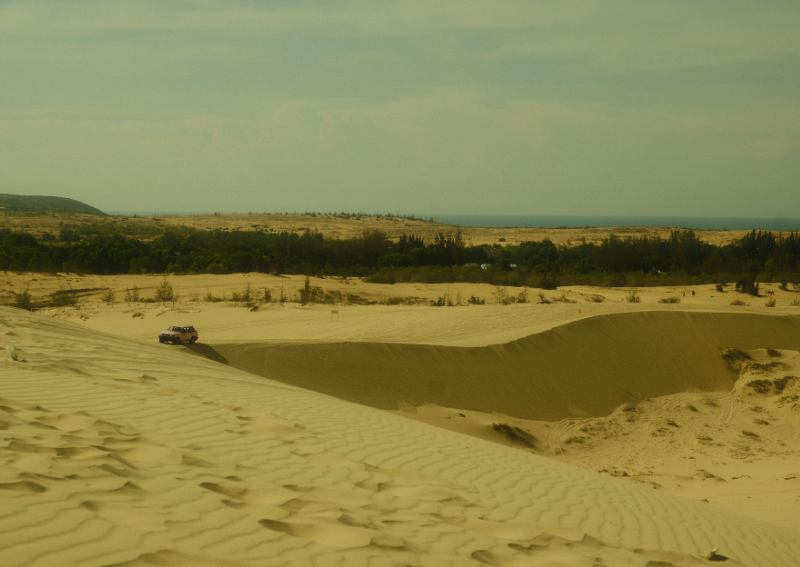
One night, two days. Workable. Arrive in the afternoon, dunes at sunrise the next morning, beach and seafood, leave after lunch. Tight but it covers the main reason to come.
Two nights, three days. The right length for most people. One morning for the dunes, one day for the beach or the water, and an afternoon for the fishing village, the Fairy Stream and a long seafood dinner.
Three nights or more. For kitesurfers, and for anyone who wants to actually relax rather than tick things off. Lessons take several days before you are riding independently.
A note on pacing in Mui Ne
Mui Ne is not a place with a long list of attractions. The dunes and the Fairy Stream together take one morning. What is left is a beach, good food and the wind, which is either exactly what you want or not enough.
Be honest with yourself about which before booking four nights
The Mui Ne Sand Dunes
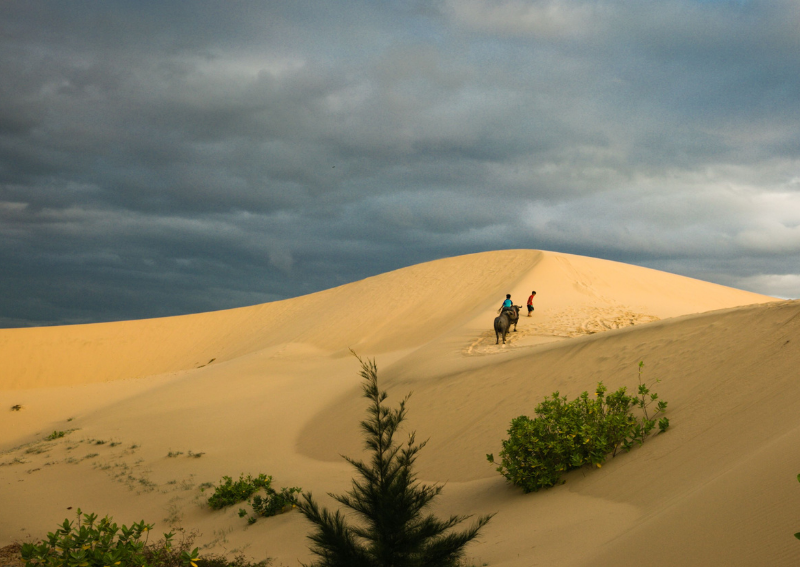 There are two sets of Mui Ne dunes, about twenty five kilometres apart, and they are different enough that most people see both.
The White Sand Dunes
The reason to come. A large field of pale, fine dunes around a freshwater lake lined with lotus, about twenty five kilometres north east of the strip. The scale is the thing: ridges running to the horizon, with nothing in them but sand and sky.
Go at sunrise. The light is better, the sand is cool enough to walk on barefoot, and you will share it with far fewer people. This means leaving your hotel at about half past four, which is the single least popular sentence in this guide and the most important one.
By ten in the morning the sand is too hot to walk on comfortably and the quad bikes are everywhere.
The Red Sand Dunes
Much closer to the strip, smaller, and a deep orange red. Best at sunset, when the colour intensifies.
They are also busier, more commercial and more worked over, with children renting plastic sleds to slide down the slopes. If you have seen the white dunes, the red ones are a short stop rather than an event.
Getting to the Mui Ne dunes
Jeep tour. The standard. Old open sided jeeps run a circuit of the white dunes, the red dunes, the Fairy Stream and the fishing village, in either a sunrise or a sunset version. Shared or private, and bookable through any hotel.
Private car. More comfortable, less atmospheric, and better if you only want the white dunes at dawn.
Motorbike. Possible if you ride, though the road is busy with trucks and the final stretch is sandy.
The honest take on the Mui Ne dunes
The dunes are heavily commercialised. At the white dunes you will be offered quad bikes within thirty seconds of arriving, and at the red dunes you will be followed by children selling sled rides. Prices quoted to visitors are high and negotiable.
None of that diminishes the landscape. Walk ten minutes away from the car park in any direction and the noise stops, which is the whole trick.
Practical
Bring water, sunglasses and something over your shoulders. There is no shade whatsoever. Sand gets into cameras, so bring a bag that closes. If you take a quad bike, agree the price and the duration first and wear the helmet.
Beyond the Mui Ne Dunes
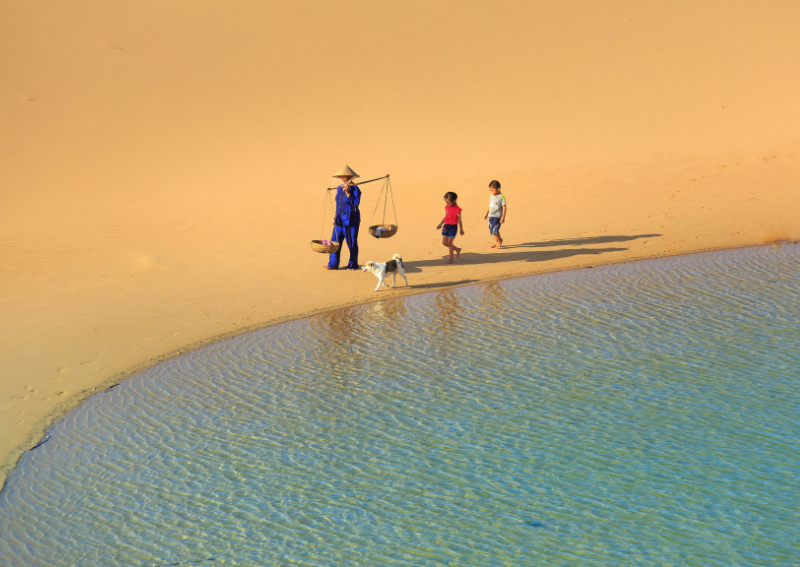 The Fairy Stream
A shallow stream running through a small canyon of eroded red and white sandstone, reached by walking up it barefoot in ankle deep water. Twenty minutes in, twenty minutes back.
It is pleasant and photogenic, the water is warm, and it is a genuinely unusual landscape. It is also short, often busy, and there will be someone at the entrance suggesting you need a guide. You do not.
Go early. Leave your shoes somewhere you are willing to pay a small fee to retrieve.
The fishing village
At the eastern end of the strip, a working harbour full of the round woven coracles that southern Vietnamese fishermen use to get out to their boats. The morning catch comes in early and the beach fills with baskets, buyers and ice.
This is the most interesting half hour in Mui Ne for anyone who likes watching a place work. It also smells exactly as a fishing harbour should, which some visitors are unprepared for.
Po Shanu Cham Towers
Three small brick towers on a hill outside Phan Thiet, built by the Cham people around the eighth or ninth century, among the oldest surviving Cham structures in the country. Small, quiet and worth half an hour, with a good view over the coast.
Ke Ga Lighthouse
South west along the coast, a nineteenth century French lighthouse on a rocky island reached by small boat. A half day trip from the strip, and a pleasant one on a calm sea.
The dragon fruit farms
You will pass hectares of them on the drive in. Binh Thuan is Vietnam’s dragon fruit heartland, and the plants are grown on concrete posts under lights that are switched on at night to extend the season. Driving past the fields after dark, lit up for kilometres, is one of the more surreal sights on this coast.
Phan Thiet
Phan Thiet, the city twenty kilometres down the road from Mui Ne, with a market, a riverfront and the fish sauce factories the region is known for. Worth an afternoon if you want somewhere that is not built around tourism.
Kitesurfing Mui Ne: Wind, Lessons and Watersports
 This is what put Mui Ne on the map for a particular kind of traveller, and it is the one thing here that is genuinely world class.
Why the wind is good
The coastline faces into a steady north east monsoon through the dry season, and the long shallow bay produces consistent cross shore wind with manageable water. From roughly November to April the wind blows most afternoons, often at a strength that suits intermediate riders perfectly.
The season is reliable enough that European and Russian kiters book months in advance.
Learning
A dozen or more schools operate along the strip, most run by international instructors, most offering courses in English and several in Russian or German.
Realistic expectations. A first lesson gets you comfortable flying a kite on land and in the water. Three to five days of lessons is the usual range before most people can ride independently in a straight line. One afternoon will not teach you to kitesurf, whatever the brochure implies.
Rough costs. Private tuition generally runs in the region of 50 to 80 US dollars an hour, with multi day packages cheaper per hour. Equipment hire for independent riders is widely available.
Shop around in person. The schools sit next to each other, prices vary, and the instructor matters more than the brand.
Windsurfing and surfing
Windsurfing has a long history here and the same conditions suit it. There is also a modest surf season when the swell comes up, roughly the same months, though nobody travels to Mui Ne specifically for waves.
If you do not do any of this
The wind that makes the kitesurfing good also makes the beach choppy and the sand blow around in the afternoons. From November to April, mornings are calm and afternoons are windy, so plan sunbathing for before lunch.
This is the single most useful thing to understand about the Mui Ne climate, and the reason some visitors arrive expecting a calm beach holiday and find a sports destination.
What to Eat in Mui Ne
Mui Ne is a fishing coast, and it shows.
Mui Ne seafood
Seafood is the default in Mui Ne and the reason to come hungry. Squid, prawns, crab, scallops, clams and whatever came in that morning, usually grilled over charcoal with spring onion oil and peanuts, or steamed with lemongrass.
The pattern at most places is that you choose from tanks or trays by the door and it is cooked to order and priced by weight. Confirm the price per kilo before you point, which prevents the one complaint visitors regularly have.
The cheapest and best eating is at the small local places rather than the resort restaurants along the beach road.
Phan Thiet specialities
Banh canh cha ca. Thick tapioca noodles in a clear fish broth with fish cake. The regional breakfast, and better here than almost anywhere.
Lau tha. A Phan Thiet speciality and something of an event: raw fish, usually mackerel, served with herbs, rice paper, vermicelli and a peanut and chilli sauce, assembled at the table. Ask for it; it is not always on an English menu.
Banh xeo. The southern crisp turmeric pancake, made here with fresh seafood.
Banh can and banh hoi. Small rice cakes and fine rice vermicelli sheets, both common local breakfasts.
Nuoc mam
Phan Thiet is one of the historic centres of Vietnamese fish sauce production, alongside Phu Quoc, and has been making it commercially for well over a century. Some factories accept visitors. A bottle of properly made local nuoc mam is one of the better things to take home from this coast.
Dragon fruit
Buy it from a roadside stall rather than a supermarket. It is grown within sight of where you are standing and costs almost nothing.
The Russian question
You will see Russian on menus and signs along the strip. Mui Ne became a popular Russian holiday destination in the 2000s and much of the infrastructure dates from then. Numbers have fluctuated considerably since, but the legacy means a strip of Eastern European restaurants alongside the Vietnamese ones, which is a genuinely odd and occasionally useful feature of the place.
Best Time to Visit Mui Ne
Mui Ne is one of the driest places in Vietnam, which is part of why the dunes exist. It gets markedly less rain than Ho Chi Minh City four hours away.
| Period | Weather | Wind | Best for |
|---|---|---|---|
| November to March | Dry, warm, 24 to 30C | Strong and consistent most afternoons | Kitesurfing, the dunes, the clearest skies |
| April | Dry, hotter, 26 to 33C | Easing | The last of the wind, still excellent |
| May to August | Hot, occasional showers | Light and variable | Calm sea, swimming, lower prices |
| September to October | Wettest months, still mostly dry by Vietnamese standards | Light | Fewest visitors, green landscape, some rain risk |
Choosing between the two seasons
For the wind, come between November and April. This is the high season, prices are higher and the better kite schools book up.
For a calm beach, come between May and August. The sea is flatter, the afternoons are still, and the strip is quieter. The trade off is heat and the occasional downpour.
For the dunes, any time. They are at their best early in the morning year round, and the only real variable is whether you have to walk through recent rain.
One scheduling note
Vietnamese domestic holidays fill this coast quickly, particularly Tet and the end of April public holidays. If your dates overlap, book well ahead and expect higher prices.
Mui Ne: Practical Tips
A few things worth knowing before you go. For wider trip planning, Vietnam’s national tourism site is the official reference.
Getting around Mui Ne locally. The strip is ten kilometres long, so you will not walk between everything. Grab operates but with far fewer drivers than in a city. Most people use hotel arranged transport, a rented scooter, or taxis flagged on the main road. Agree taxi fares in advance, since metered cars are less common here.
Money. ATMs are along the strip and most hotels and larger restaurants take cards. Small restaurants, roadside stalls and dune activities are cash.
The Mui Ne beach. Erosion has been a long running issue along parts of this coast, and several stretches have sea walls or narrow sand at high tide. Beach quality varies significantly hotel by hotel, so check recent photographs rather than brochure images before booking.
Swimming. Generally fine in the calm months. In the windy season the water is choppy and there is a shore break in places. There are few lifeguards. Pay attention to what local people are doing.
What to pack for Mui Ne. Sun protection well beyond what you think you need, a hat that stays on in wind, something to cover your shoulders, and a dry bag or a closing camera bag because of the sand.
Scams and overcharging. Low level and avoidable. The usual ones are dune activity prices quoted high to visitors, taxi fares negotiated loosely, and seafood priced by weight without a quoted rate. Ask the number first in all three cases.
Mosquitoes. Present, particularly around the Fairy Stream and in the evening. Repellent is worth packing.
Connectivity. Mobile coverage along the strip is good. Hotel wifi is generally reliable.
Pairing it with Dalat. The four hour road between Mui Ne and Dalat links the coast with the highlands and is one of the better value multi stop routes in southern Vietnam. Beach, then pine forest and 18C evenings.
Mui Ne: Frequently Asked Questions
Where is Mui Ne? On Vietnam’s south central coast, about 200 kilometres east of Ho Chi Minh City and 20 kilometres from the city of Phan Thiet.
How do you get to Mui Ne from Ho Chi Minh City? By private car in three and a half to four and a half hours, by train to Phan Thiet plus a short transfer, or by sleeper bus or shared shuttle in four and a half to six hours.
Is Mui Ne worth visiting? Yes, if you want the sand dunes, excellent seafood or world class wind for kitesurfing. Less so if you want a classic calm beach holiday, since the wind that makes the sport good makes the beach choppy from November to April.
How many days do you need in Mui Ne? Two nights is the sensible minimum and three is comfortable. Kitesurfers should allow three to five days for lessons.
Can you do Mui Ne as a day trip from Saigon? Not sensibly. It would mean around eight hours of driving for a few hours on the coast, arriving at the dunes in the worst light of the day.
What are the Mui Ne sand dunes? Two separate areas. The White Sand Dunes, a large field of pale dunes around a lotus lake about 25 kilometres from the strip, best at sunrise. The Red Sand Dunes, smaller, closer and orange red, best at sunset.
When is the kitesurfing season in Mui Ne? Roughly November to April, when the north east monsoon brings consistent afternoon wind. The season is reliable enough that schools book up in advance.
What is the best time to visit Mui Ne? November to April for wind, sun and the clearest skies. May to August for a calmer sea, lower prices and fewer people, at the cost of heat and occasional showers.
Where to Stay on the Saigon Leg
Almost nobody arrives in Mui Ne directly. Most people come at the end of three days in Ho Chi Minh City. The coast sits at the end of a four hour road from Ho Chi Minh City, which means Saigon is where most trips here begin and end.
Recently honored with the Top 9 Best of the Best Hotels in Vietnam award from Tripadvisor and included in the 2026 Selection of the MICHELIN Guide, La Siesta Premium Saigon is one of the best boutique hotels in Saigon and a practical base for the nights either side. Cars and shuttles to Mui Ne leave from the centre, and the train station is a short ride away.
For travellers researching the best hotels in Saigon, the contrast is also part of the appeal: a dense, loud, air conditioned city at one end of the road and an empty dune field at the other, with Indochine inspired interiors and a quiet room to come back to when the sand is finally out of everything.
For anyone comparing the best hotels in Saigon District 1, and as one of the Michelin Guide hotels in Saigon and among the Michelin Guide hotels in Vietnam, it is an easy place to start a trip east and a better one to end it.