


Mekong Delta Vietnam 2026: The Complete Guide to Vietnam’s Most Extraordinary River Region
There’s a version of Vietnam that moves at a completely different speed to the cities. No motorbike horns. No construction noise. Just the low hum of a boat engine, the rustle of coconut palms overhead, and the extraordinary sight of a floating market coming to life before sunrise. That version of Vietnam lives in the Mekong Delta and it’s unlike anything else the country has to offer.
Whether you’re planning a single-day escape from Ho Chi Minh City or a multi-day immersion into one of Southeast Asia’s most fertile and culturally layered regions, this guide covers everything you need to know for a Mekong Delta Vietnam first-timers, and returning travelers alike will find genuinely useful.
Where Is the Mekong Delta Vietnam?
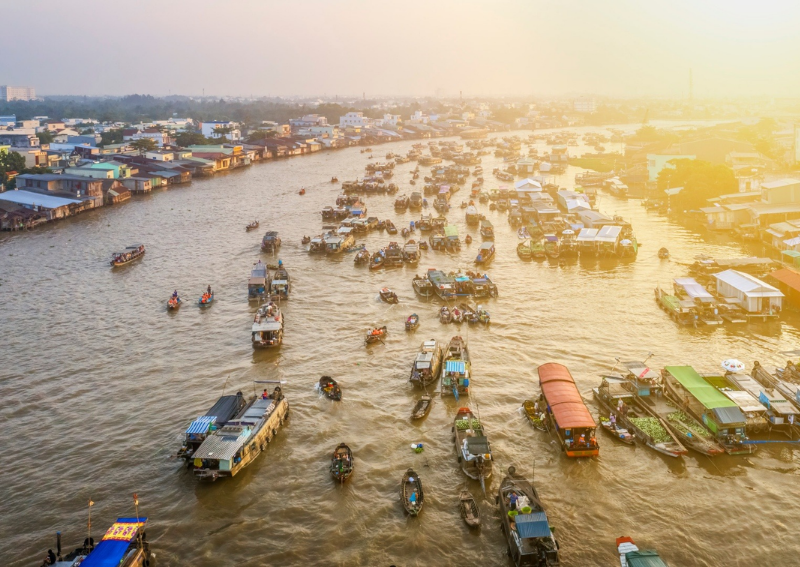 The Mekong Delta, known locally as Mien Tay, or simply “the West”, occupies the vast southern floodplains where the Mekong River fans out into a web of tributaries, canals, and channels before meeting the sea. Spanning approximately 40,600 square kilometers across 12 provinces and one municipality, it is one of the largest river deltas in the world and Vietnam’s most productive agricultural region.
The provinces that make up the delta are: Can Tho, An Giang, Tien Giang, Kien Giang, Hau Giang, Long An, Tra Vinh, Soc Trang, Dong Thap, Vinh Long, Bac Lieu, Ca Mau, and Ben Tre.
The terrain is predominantly flat – average elevation sits between just 0.5 and 1.2 meters above sea level – and almost entirely shaped by water. The Mekong and Cuu Long rivers have deposited extraordinarily rich alluvial soil across the delta over thousands of years, creating conditions that support roughly half of Vietnam’s total rice production and an astonishing diversity of tropical fruit cultivation.
Is a Mekong Delta Trip Worth It?
Without hesitation: yes. But it’s worth understanding what kind of destination this is before you arrive.
The Mekong Delta is not a place built around tourist spectacle. It’s a working river civilization – boats loaded with produce on those famous Mekong Delta floating markets, fishing communities on the water at dawn, farmers tending paddies that stretch to every horizon. What makes it compelling is precisely that ordinariness: the sense that you’re glimpsing a way of life that has remained largely consistent for generations, and that the river governs everything.
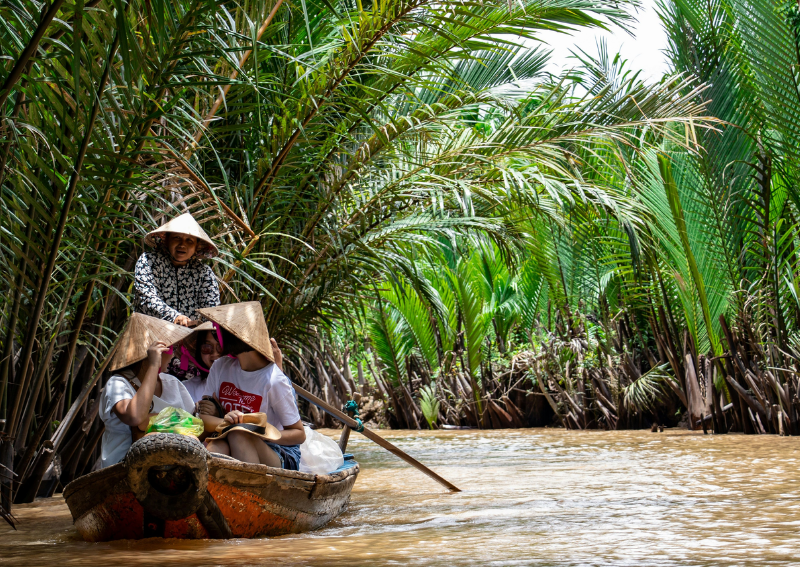
The people here are famously warm and open. The food, heavily influenced by neighboring Cambodia and Thailand, and built around freshwater fish, tropical fruit, and fermented flavors, is some of the most distinctive regional cuisine in Vietnam. And the landscape, whether you’re drifting through narrow water channels overhung with banana trees or watching the sun set over the Ca Mau peninsula, is consistently, quietly beautiful.
Weather in the Mekong Delta Vietnam: What to Expect
The weather in Mekong Delta follows a straightforward tropical pattern with two well-defined seasons – useful to know when planning your visit.
Wet Season (May – October) Humidity rises, afternoon rains become a daily fixture, and the delta’s waterways swell considerably.
Flooding is common across low-lying areas, particularly from August onward. The landscape takes on a vivid green intensity during these months, and the floating season (September – November), when floodwaters from upstream surge through the delta, creates some of the most atmospheric and photogenic conditions of the year.
Dry Season (November – April) Cooler temperatures, lower humidity, and clear skies make this the most comfortable window for travel. Roads and river access are more reliable, and the best time to visit Mekong Delta for most first-time travelers falls squarely within this period.
When Is the Best Time to Visit the Mekong Delta Vietnam?
Each season in the delta has its own distinct character and its own reasons to visit:
- June – August: Fruit Season The orchards of Ben Tre, Tien Giang, and Vinh Long are at their most abundant. Durian, mangosteen, longan, and rambutan ripen across the region, and most boat tours will include stops at working fruit gardens where you can taste directly from the tree.
- September – November: Floating Season in the Mekong Delta – the annual flood pulse from upstream transforms the landscape. Vast areas of An Giang and Dong Thap flood completely, creating conditions for boat-based exploration through submerged forests and fields. It’s also the season for migratory birds, making Tram Chim National Park in Dong Thap particularly spectacular.
- December – February: Tet and Flower Season The approach to Lunar New Year brings the famous flower villages of Sa Dec, Tan Dong Quy, and Vi Thanh into full bloom. Markets fill with color and noise, and the delta’s warm community spirit intensifies around the holiday.
The best time to visit Mekong Delta overall – for comfortable travel conditions combined with rich cultural activity – is broadly from November through April, with December to February particularly rewarding.
How to Get to the Mekong Delta from Ho Chi Minh City
 Almost all Mekong Delta trips from Vietnam begin in Ho Chi Minh City – the natural gateway to the entire southwestern region. Travelling from Ho Chi Minh city to the Mekong Delta is straightforward, with several options depending on your budget and travel style.
- By Plane – fastest option: a 45-minute flight from Tan Son Nhat Airport to Can Tho or Phu Quoc. Best for travelers with limited time or those heading directly to the southern islands.
- By Bus – most economical and widely used option: Multiple daily departures from Ho Chi Minh City serve major delta destinations, with comfortable air-conditioned coaches covering most provincial capitals. Travel times vary significantly depending on distance and traffic.
- By Private Car: For groups or families who value flexibility, a private car with driver offers the freedom to stop at local markets, roadside fruit stalls, and viewpoints along the way. The riverside scenery on the approach to Ben Tre and Vinh Long is particularly worthwhile at a leisurely pace.
- By Motorbike: A genuine adventure option for experienced riders. The flat delta roads are well-suited to motorbike travel, though navigating the maze of smaller waterway crossings requires comfort with local traffic conditions.
- By River Cruise or Boat Tour: Multi-day river cruises departing from Ho Chi Minh City offer a genuinely immersive way to move through the delta – eating, sleeping, and traveling entirely on the water.
See more about Guided Tour Package for first-time visitors, a well-organized day trip or multi-day tour from Ho Chi Minh City that removes logistics entirely and ensures you don’t miss the key experiences.
What to Do in the Mekong Delta Vietnam: Eight Provinces Worth Exploring
Can Tho – The Delta’s Urban Heart
Can Tho functions as the commercial and cultural hub of the entire region, making it the most practical base for exploring the western delta. The Cai Rang floating market – best experienced by small boat at 5 AM before the crowds arrive – is one of the most visually extraordinary scenes in all of Vietnam. Vendors sell wholesale produce from boats laden to the waterline, using long poles hung with sample goods to advertise their wares. Beyond the market, Ninh Kieu Wharf offers pleasant riverside walking, and the Binh Thuy ancient houses, a rare surviving example of French colonial-Vietnamese hybrid domestic architecture, are worth a dedicated visit.
Ben Tre – The Kingdom of Coconut
Ben Tre’s entire identity is built around the coconut palm, and the province wears that identity with considerable charm. Canal boat tours weave through coconut groves and small-scale processing workshops where you can watch coconut candy being made by hand. Quy Islet and Phung Islet offer quiet, green spaces for cycling and village exploration. Among all the things to do in Mekong Delta that feel genuinely unhurried and local, an afternoon in Ben Tre ranks near the top.
An Giang – Mountains, Temples, and the Floating Season
An Giang is the only province in the delta where the terrain rises noticeably above the flatlands — Sam Mountain and Cam Mountain provide panoramic views across the surrounding plains that are completely unlike anything else in the region. The Tra Su Cajuput Forest, best visited during the September-November floating season when the forest floor is submerged, is one of the most eerily beautiful landscapes in southern Vietnam. Chau Doc city, right on the Cambodian border, adds a distinct cross-cultural character to the province.
Dong Thap – Birds, Lotus, and River Life
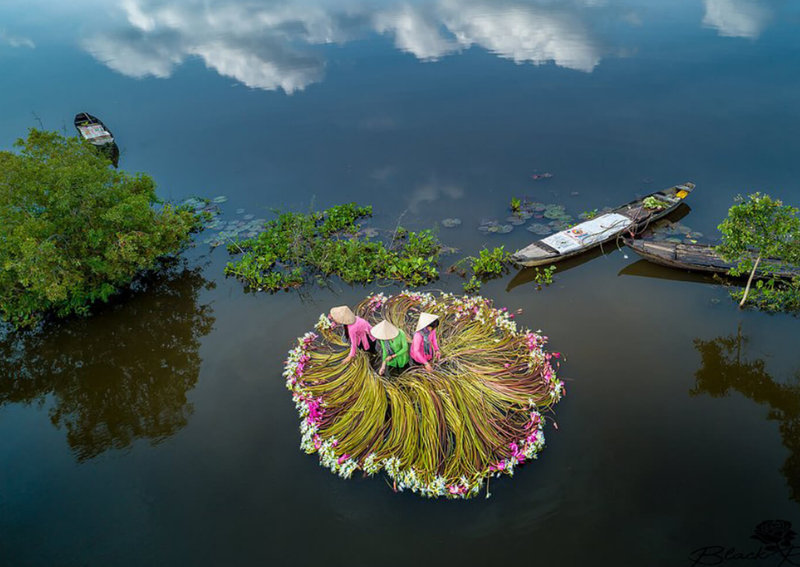 Dong Thap is known for two things above all else: the stork gardens at dawn, where thousands of birds fill the sky in an extraordinary natural spectacle, and the lotus ponds that cover significant stretches of the landscape in vibrant pink and white. Tram Chim National Park is one of Vietnam’s most important wetland bird sanctuaries, and the Sa Dec Flower Village, which supplies blooms to florists across the entire country, is particularly worth visiting in the lead-up to Tet.
Soc Trang – Cultural Crossroads
Soc Trang’s cultural landscape reflects centuries of coexistence between Kinh Vietnamese, Khmer, and Hoa Chinese communities. The result is an unusual density of temples and pagodas, each drawing on different architectural and spiritual traditions. The Bat Pagoda (home to hundreds of fruit bats roosting in the surrounding trees) and Kh’leang Pagoda (a beautifully maintained Khmer Buddhist temple) are among the most distinctive religious sites in the entire delta.
Phu Quoc Islands Kien Giang
Kien Giang province spans from mainland delta towns all the way to Vietnam’s largest island, Phu Quoc – a destination that deserves its own dedicated visit rather than a day trip. The mainland offers quieter pleasures: Tranh Stream, coastal mangroves, and the relaxed pace of a province that sees far fewer international visitors than the island that shares its administrative boundary.
Ca Mau – The Edge of Vietnam
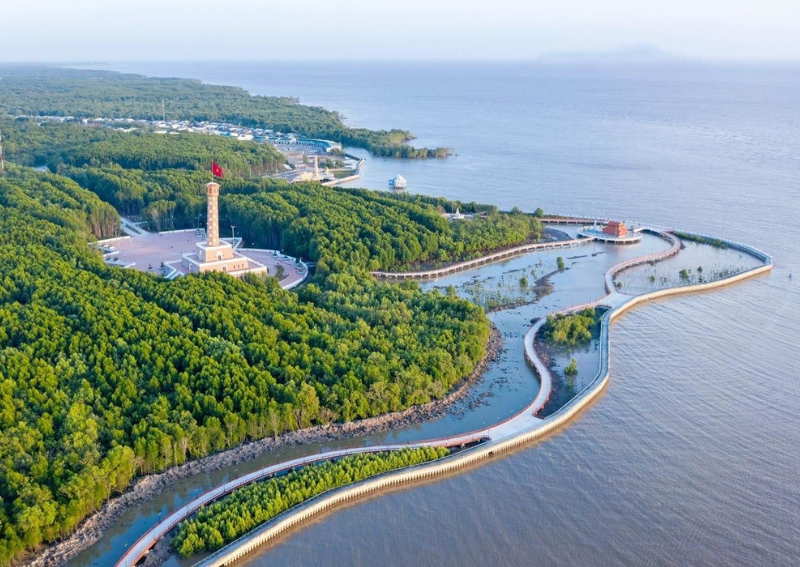 At the very tip of the country, Ca Mau occupies a genuinely remote position that most travelers never reach, which is exactly what makes it compelling for those who do. Dat Mui Landmark, Vietnam’s southernmost point, offers sweeping views across a coastline where three bodies of water meet. The U Minh Ha Forest – a vast peat swamp forest unlike anything in northern Vietnam, and the offshore Hon Khoai Island round out a province that rewards the extra effort required to get there.
Bac Lieu – Wind, Birds, and Tradition
Bac Lieu is home to Vietnam’s largest operational wind farm, a striking industrial landscape set against the flat coastal terrain. The province is also the birthplace of Don Ca Tai Tu, a form of southern Vietnamese chamber music recognized by UNESCO as an intangible cultural heritage. Ancient longan gardens, bird gardens, and the atmospheric Cu Lao Temple, one of the finest examples of Khmer religious architecture in the delta, complete a province with more depth than its relatively low tourist profile suggests.
Getting Around Once You’re There
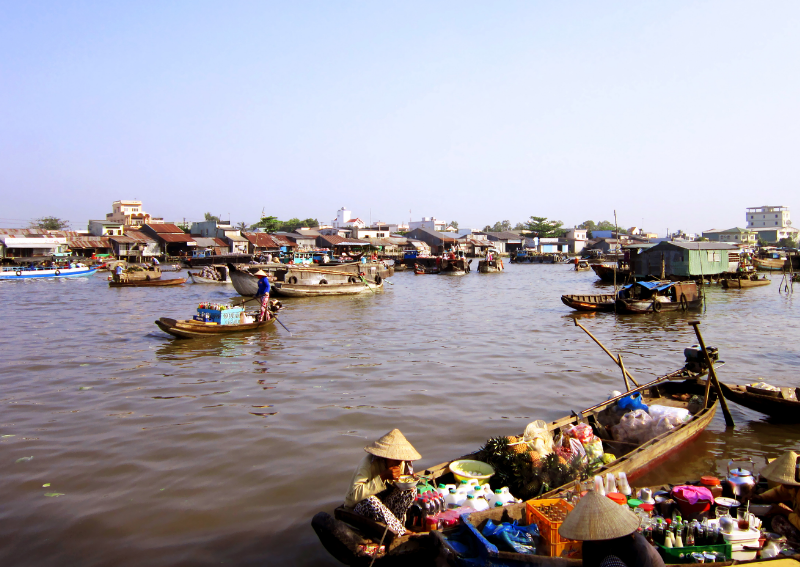 The delta’s geography means that water-based transport isn’t just scenic, it’s often the only practical way to reach certain areas.
- By Boat: The most flexible and immersive option for navigating the smaller waterways. Local boat owners can be hired at most major wharfs, though a guide who speaks both Vietnamese and English is strongly recommended for anything beyond the most straightforward routes.
- By Bicycle: The flat terrain makes cycling genuinely pleasant across most of the delta’s mainland areas. It’s the best way to explore at a pace slow enough to notice the details, and to stop spontaneously at a roadside stall or canal crossing whenever the mood strikes.
- By Mekong Delta River Cruise: For comfort and comprehensive coverage, a multi-day cruise covers considerable ground while keeping logistics entirely handled. The trade-off is a fixed itinerary and higher cost.
- By Motorbike: The most freedom-oriented option. Rental bikes are widely available, and the main delta roads are well-maintained and relatively low-traffic outside of provincial capitals.
Your Gateway to the Mekong Delta – La Siesta Premium Saigon
Every great Mekong Delta trip in Vietnam begins in Ho Chi Minh City, and where you spend that first night in Saigon sets the tone for everything that follows.
La Siesta Premium Saigon is the kind of arrival experience the journey deserves. Sitting in the beating heart of District 1, it’s consistently recognized as one of the best boutique hotels in Saigon, a reputation built on genuinely considered Indochine-inspired design, attentive personal service, and a location that gives you immediate, effortless access to the transport connections, tour operators, and riverside energy that feed the routes southwest into the delta.
Think of it as your southern Vietnam basecamp: the place you return to after days on the water, ready for a proper bed and a well-earned dinner, before the next leg of your journey. For travelers who want the warmth of a boutique property without sacrificing any of the practical convenience, La Siesta Premium Saigon stands apart from the rest of the best hotels in Saigon as both a restorative retreat and a genuinely strategic starting point for a Mekong Delta day trip from Ho Chi Minh city.