Where Hu Tieu Saigon Actually Comes From
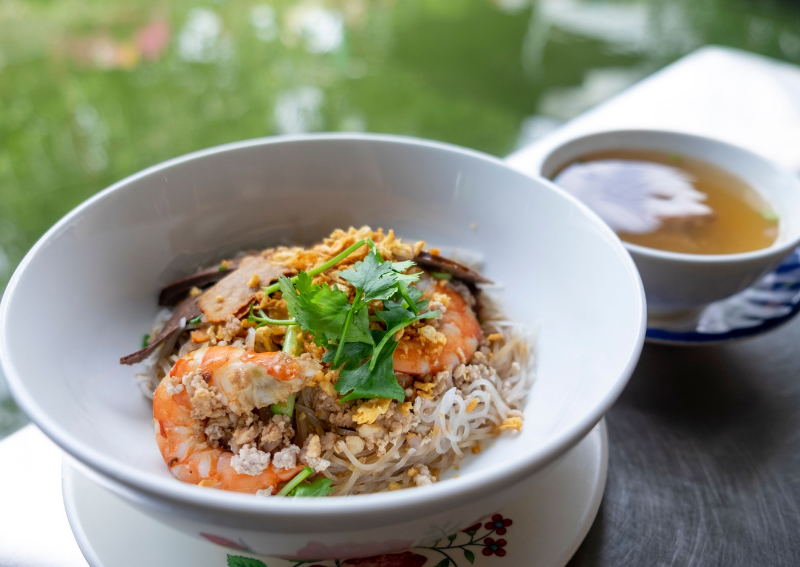
Hu tieu’s roots trace back to Chinese immigrants, specifically from the Teochew-speaking community, who brought the dish through Cambodia before it eventually made its way into southern Vietnam. The name itself comes from the Teochew language, and it’s also sometimes written as hu tiu. While it’s commonly assumed that hu tieu Saigon originated with Khmer cooks in Cambodia, the dish was actually introduced by Chinese communities living in Phnom Penh, which is why hu tieu is also known elsewhere as Phnom Penh noodle soup or kuy teav.
The original Chinese version used soft, flat noodles that closely resembled pho noodles, and that similarity turned out to be exactly the problem once the dish reached Saigon. Vietnamese cooks in the south wanted something with its own identity, so they took advantage of the Mekong Delta’s abundant rice supply and developed a chewier, more translucent noodle made from tapioca starch. This became known as hu tieu dai, and it’s the noodle most strongly associated with the dish today.
By the 1950s and 60s, hu tieu Saigon had become a fixture of daily life across Saigon, a Saigon street food. Vendors pushed carts decorated with Chinese-style paintings through narrow alleys, announcing themselves by knocking two bamboo sticks together, a tradition that gave rise to the name “hu tieu go”, or “knocking hu tieu.” The bamboo sticks have mostly been replaced by metal bars today, but the tradition still survives in pockets of Ho Chi Minh City.
How Hu Tieu Saigon Is Made

What separates hu tieu Saigon from other Vietnamese noodle soups is almost entirely in the broth. It’s slow-cooked for around 7 to 8 hours using pork bones, a long simmer that draws out a natural sweetness reflecting the southern Vietnamese palate’s general preference for slightly sweeter flavors compared to the more savory broths found further north. White carrots are often added to deepen that sweetness even further.
Two more ingredients give the broth its real character: grilled red onions and dried squid or dried shrimp. These are added in small enough quantities that the soup never tastes overtly of seafood, but they contribute a subtle smoky depth and a faint sea-like note that makes the broth genuinely complex rather than simply sweet. The end result is a soup that’s clear, light, and delicate rather than rich or heavy, which is precisely why it works so well as a breakfast or late-night dish in a hot, humid climate.
There are two main noodle choices: soft flat rice noodles similar to pho, or the chewier, more translucent hu tieu dai made from tapioca starch. The second option is generally considered more distinctive and is what most hu tieu Saigon specialists serve.
Toppings vary widely from one vendor to the next, but the most common include sliced pork, pork ribs, pork innards, shrimp, squid, wonton dumplings, quail eggs, fried garlic, fried shallots, and scallions, with fresh herbs scattered on top just before serving. There are roughly twenty recognized regional variations across Vietnam, with hu tieu Nam Vang, named after the Vietnamese term for Phnom Penh, generally considered the most iconic style.
The Gordon Ramsay Story
Hu tieu’s most famous international moment came during a trip to the Mekong Delta, when Gordon Ramsay sat on a small wooden boat at the Cai Rang floating market near Can Tho and ate a bowl prepared by a local vendor. “This bowl of hu tieu, a stunning, delicious slow-cooked Vietnamese pork noodle soup, is the greatest dish I’ve ever had,” Ramsay said at the time. Not the greatest Vietnamese dish, not the greatest bowl of street food: the greatest dish, full stop, from a chef holding multiple Michelin stars and a reputation for being almost impossible to impress.
That moment stuck with him. Hu tieu Saigon was later featured on the American competitive cooking show MasterChef in 2013, when Ramsay, serving as judge, tasked his contestants with preparing bowls of Vietnamese hu tieu as an elimination challenge, a sign of just how much the dish had impressed him on his travels. Ramsay’s broader love affair with Vietnamese cuisine extended well beyond hu tieu. He has named Vietnam among his favorite food destinations in the world, describing the country as an extraordinary melting pot of flavor built on a refreshingly humble approach to incredible food.
Where and When to Eat Hu Tieu Saigon

Hu tieu Saigon is most popular across southern Vietnam, particularly in Ho Chi Minh City and the Mekong Delta, though it can also be found on the streets of Hanoi for travelers exploring the north first. Like pho, it isn’t typically a midday dish. The tropical heat at lunchtime makes a steaming bowl of noodle soup considerably less appealing, so locals tend to eat hu tieu for breakfast or as a late-night snack instead.
You’ll find it everywhere from simple streetside stalls with plastic stools to dedicated noodle shops that have specialized in the dish for generations. For travelers who want the full story behind their bowl, the floating markets of the Mekong Delta, including Cai Rang near Can Tho, offer a genuinely memorable way to eat hu tieu Saigon close to where its modern Vietnamese identity took shape, prepared by vendors continuing a culinary tradition passed down through families for decades.
Giang Lam Ky (Mi Chu Cau) – Address: Stall 41, Tan Dinh Market, Ho Chi Minh City
Hu Tieu Muc Nghi Long – Address: 71 Cuu Long Street, Ho Chi Minh City
Hu Tieu Nam Vang Saigon (Trung Coi) – Address: 80 Cao Thang Street, Ho Chi Minh City
Thanh Dat (one of the best Hu Tieu Nam Vang shops in Saigon) – Address: 316 Nguyen Thuong Hien, Ho Chi Minh City
Nhat Quan (a great Hu Tieu Nam Vang spot in Saigon) – Address: 123 Nguyen Van Nghi Street, Ho Chi Minh City
Hong Phat (a beloved hu tieu shop in Saigon) – Address: 389–391 Vo Van Tan Street, Ho Chi Minh City
Ca Can (Banh Bao & Hu Tieu, the Original) – Address: 110 Hung Vuong Street, Ho Chi Minh City
Hu Tieu Ca Saigon Nam Loi – Address: 43 Ton That Dam Street, Ho Chi Minh City
Di Nam (an authentic Hu Tieu Sa Dec shop in Saigon) – Address: 166 Bui Thi Xuan Street, Ho Chi Minh City
Truong Thanh (the best spot for Hu Tieu Bo Vien in Saigon) – Address: 145/6 Nguyen Thien Thuat Street, Ho Chi Minh City
A Few Tips for First-Timers
Don’t expect pho. The broth is lighter, sweeter, and the noodles have a noticeably different texture, especially with hu tieu dai. Going in expecting a different dish rather than a pho substitute will make the first bowl land better.
Look for hu tieu Nam Vang on menus if you want the style most travelers consider the benchmark version.
Add herbs and lime to taste. Most stalls serve a side plate of fresh herbs, bean sprouts, and lime wedges so you can adjust the balance yourself.
Try it for breakfast, the way locals do, rather than as a heavy lunch option.
Combine a food trip with a Mekong Delta day tour from Ho Chi Minh City if you want to see the floating market culture that shaped the dish firsthand.
Where to Stay While You Explore Vietnamese Cuisine
A trip built around food this good deserves a base in Ho Chi Minh City that’s just as considered. La Siesta Premium Saigon stands out among the best hotels in Saigon, offering a calm and elegant retreat right in the city center, an easy starting point whether you’re heading out for a bowl of hu tieu at a nearby noodle shop or organizing a day trip to the Mekong Delta floating markets that first put the dish on Gordon Ramsay’s radar.
The hotel’s Indochine-inspired design reflects the same layered cultural history found throughout Saigon’s food scene, a city shaped by Chinese, Khmer, and French influence in equal measure, while genuinely attentive service provides real rest after a day spent eating your way across the city. Recognized as one of the best boutique hotels in Saigon, La Siesta Premium Saigon suits travelers who want both refined comfort and easy access to the noodle shops, markets, and street food corners that make Ho Chi Minh City one of the most rewarding food destinations in Southeast Asia.
