


Vietnam Reunification Day: Everything You Need to Know About April 30
Every year on April 30, something remarkable happens across Vietnam. Flags appear on every doorstep. Streets fill with music, red banners, and a collective energy that’s difficult to describe unless you’ve stood in the middle of it. Vietnam Reunification Day is not a quiet Vietnam public holiday – it’s a genuinely felt national celebration, and for travelers lucky enough to be in the country on this date, it offers a window into Vietnamese identity that no museum or guided tour can replicate.
Here’s everything you need to know about the holiday, what it means, how it’s celebrated, and what to do in Ho Chi Minh city if you’re spending April 30 in the city.
What Is Vietnam Reunification Day?
 Reunification Day Vietnam is a Vietnam national holiday, which falls on April 30 each year, commemorating the moment in 1975 when the long division of Vietnam came to an end. Known formally as Liberation Day, it marks the point at which the country was reunified under a single government for the first time in decades – closing the chapter on thirty years of conflict and foreign occupation.
When April 30 falls on a weekend, the public holiday shifts to the following weekday. Combined with International Labor Day on May 1, the result is a consecutive long-weekend holiday that sees Vietnamese families travel, gather, and celebrate across the country in considerable numbers. Plan your accommodation and transport accordingly – this is one of the busiest travel periods of the Vietnamese calendar.
The History Behind April 30
Understanding why this date matters so deeply to Vietnamese people requires a brief look at what happened in the weeks leading up to it.
From late 1974 through early 1975, following a series of military advances through the Central Highlands and the coastal cities of Hue and Da Nang, Vietnam’s Politburo authorized the launch of the Ho Chi Minh Campaign, a decisive push to liberate Saigon and end the war. The outer defensive lines protecting the capital at Xuan Loc and Phan Rang fell in the days that followed.
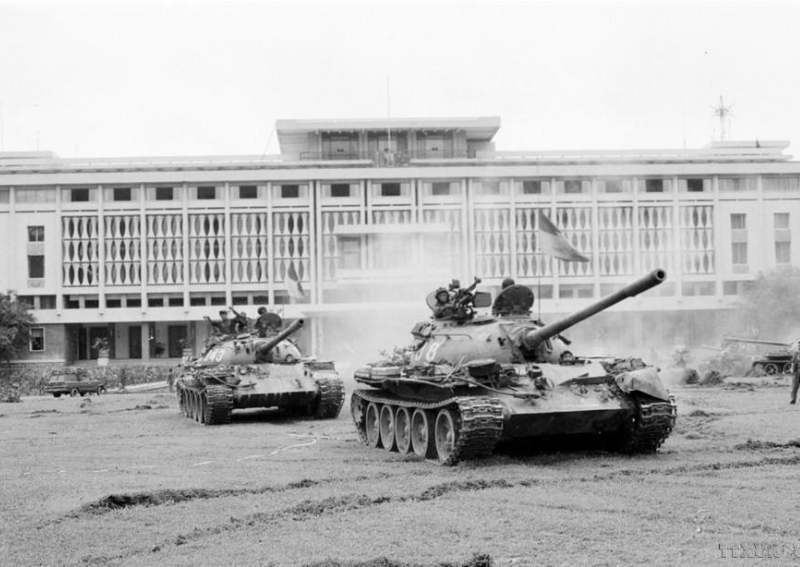
On April 26, 1975, the final offensive began. Four days later, at 10:45 AM on April 30, Vietnamese tanks rolled through the gates of the Independence Palace in the heart of Saigon. Duong Van Minh, who had been installed as South Vietnam’s president just two days earlier, surrendered unconditionally. At 11:30 AM, the Vietnamese flag was raised above the palace and the war was over.
The significance of that moment extends well beyond Vietnam’s borders. It marked the first time in modern history that a small, economically underdeveloped nation had successfully defeated a major imperial power – a fact that resonated deeply with independence movements across Asia, Africa, and Latin America. For the Vietnamese people, April 30 remains a symbol of extraordinary resilience, national pride, and hard-won peace.
Vietnam & Saigon Reunification Day Celebrations
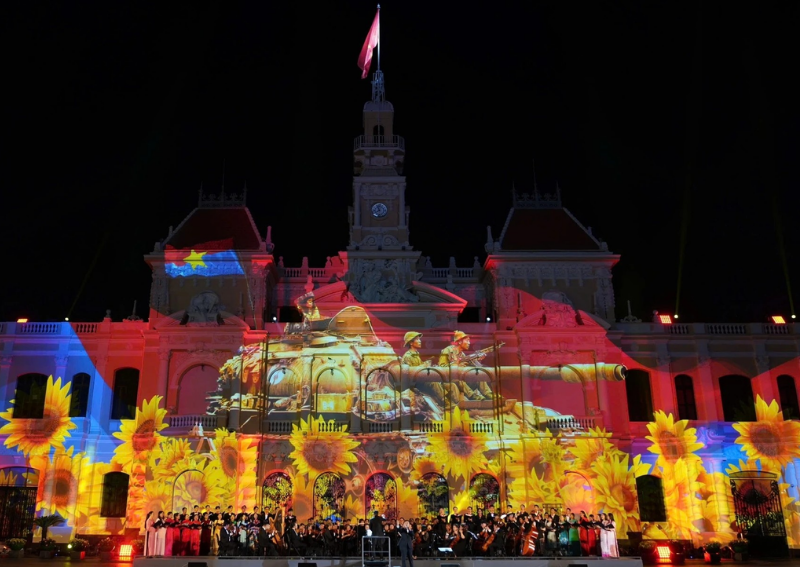 The atmosphere across Vietnam on April 30 is unlike anything the country produces for its other public holidays. Cities dress themselves in red: flags on every building, banners strung across major boulevards, and public squares transformed into open-air gathering spaces for concerts, performances, and community celebrations.
Historically significant songs fill the air from loudspeakers and live stages throughout the day – music that carries real emotional weight for older generations who lived through the years the lyrics describe. Government offices, international businesses, and most commercial operations close entirely, giving the holiday a genuine pause-everything quality that’s increasingly rare in Vietnam’s fast-moving urban centers.
In Ho Chi Minh City, formerly Saigon, and the symbolic heart of the reunification story, the celebrations are especially concentrated and atmospheric. The Nguyen Hue pedestrian boulevard, the area around the Independence Palace, and the waterfront along the Saigon River all become focal points for the city’s festivities, culminating in fireworks displays after dark that draw enormous crowds.
What to do on Reunification Day in Ho Chi Minh City
If you’re spending Reunification Day in Saigon, here’s how to structure the day to take in the historical significance, the street atmosphere, and the city’s best celebratory energy.
Start the Day at Independence Palace Ho Chi Minh city
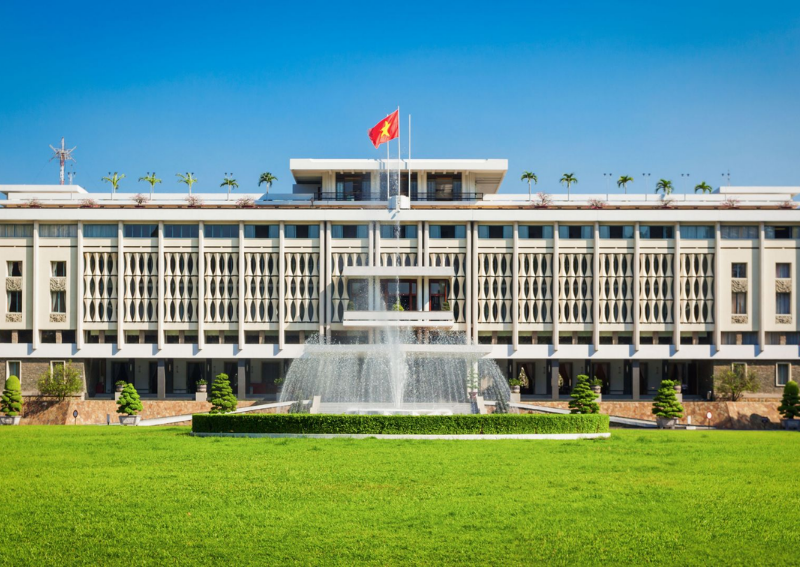 Address: 135 Nam Ky Khoi Nghia, Ben Thanh Ward, HCMc
- Opening hours: 7:00 AM – 6:00 PM
- Entry fee: 40,000 VND (~$2)
There is no more fitting place to begin April 30 than the site where history actually happened.
The Independence Palace, now preserved as a historical landmark, is where Vietnamese tanks entered on the morning of April 30, 1975, and where the flag was raised that afternoon. The building itself is a remarkable piece of mid-century architecture: a considered blend of modernist structure and traditional Vietnamese symbolism, designed by architect Ngo Viet Thu to express ideas of national sovereignty and Eastern philosophical harmony.
Walking through it on the anniversary of the events it witnessed is a genuinely moving experience. Audio guides are available for visitors who want historical context as they move through the rooms. Dress respectfully and avoid bringing large bags — security checks are standard.
Late Morning – Sightseeing by Bus or Waterbus
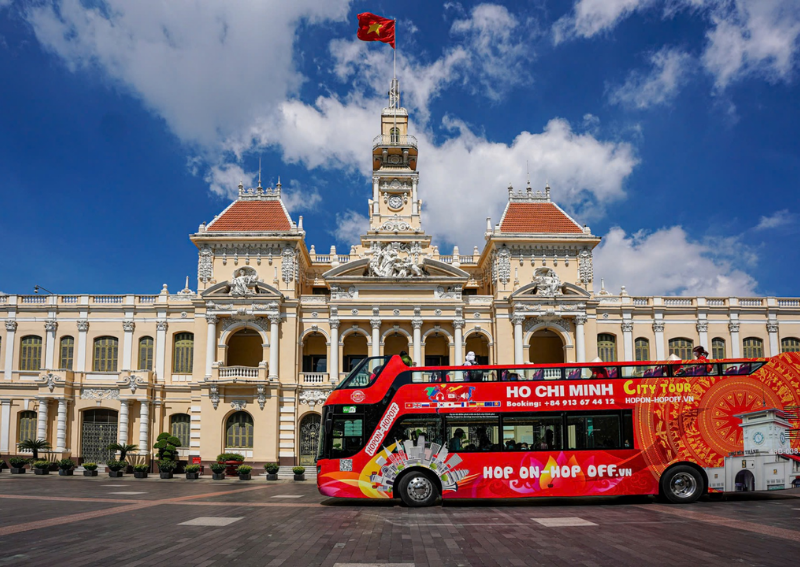 After the Palace, let the city come to you. Ho Chi Minh City’s two most enjoyable forms of orientation transport happen to be perfectly suited for a Saigon sightseeing tour when the streets are dressed for celebration.
| Saigon Waterbus | Hop on Hop off: Double-decker Bus | |
| Price | 30,000 VND (1,5 dollars) – Round Trip |
|
| Schedule | Every 30 minutes from 8:30 AM – 10:30 PM |
|
| Start point | Bạch Đằng Deck, 2 Ton Duc Thang St., Ben Nghe ward, HCMc |
|
| Itinerary | Alongside Saigon River | Ba Son Bridge; Bach Dang Pier; Ben Thanh Market; Bitexco Tower; City Hall; Independence Palace; Majestic Hotel; Nguyen Hue walking Street; Notre Dame Cathedral; Sai Gon Central Post Office; Sai Gon Zoo; War Remnants Museum; Western Area |
Afternoon troll at Nguyen Hue Walking Street
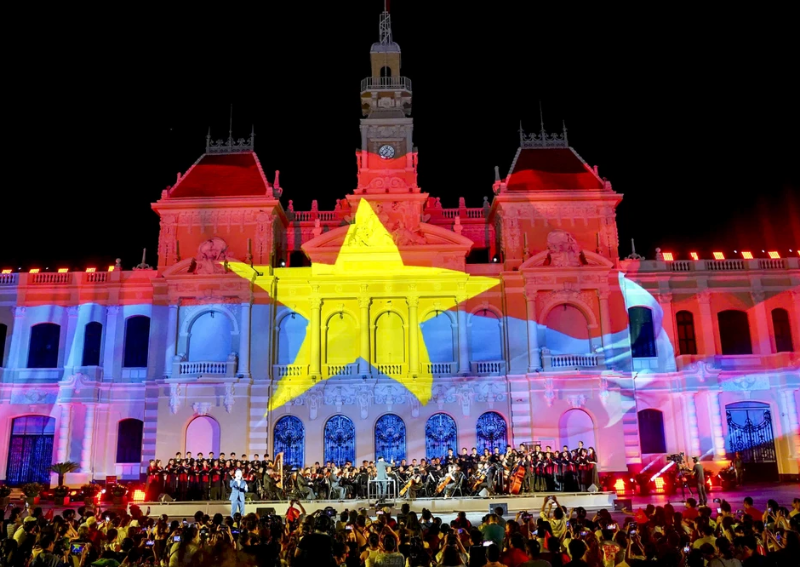 Address: Nguyen Hue Street, District 1
- Opening hours: 24 hours; best experienced from 5 PM onward
- Entry: Free
By late afternoon, Nguyen Hue Boulevard becomes the beating heart of Saigon’s April 30 celebrations. On any regular evening this pedestrian street draws a crowd – skaters, families, coffee drinkers in the old apartment-block cafes tucked along its edges, street performers working the wide open pavement. On Reunification Day, multiply all of that considerably.
Red flags canopy the boulevard from end to end. Local families photograph each other in front of the decorations. Impromptu performances break out. The collective mood is warm, proud, and genuinely festive in a way that feels entirely organic rather than staged for visitors. This is one of the best places in the city to simply absorb the atmosphere of the holiday – no agenda, no admission ticket, just the energy of a city marking a moment that still means something real to the people celebrating it.
Dinner with a View at Cloud Nine Saigon
-
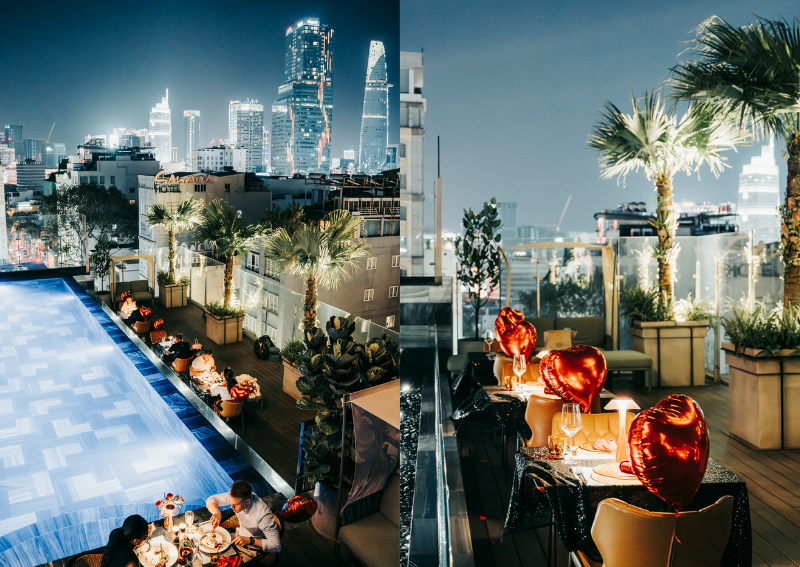
Dine with a panoramic on Vietnam Reunification Day at Cloud Nine Saigon Location: 11th Floor, 180–188 Ly Tu Trong, Ben Thanh Ward, HCMc
- Opening Hours: 11:30 AM – 10:15 PM (last order)
- Cuisine: Asian-European fusion by Chef Hien — signatures include Wagyu steak and Wagyu Beef Pho
- Pricing: 800,000 – 1,000,000 VND per guest
As the sun drops and the city lights begin their evening display, pull up a seat above it all at Cloud Nine Saigon.
The panoramic views from the 11th floor take on a particular quality on April 30 – a city that fought for fifty years to reach this moment, now glittering below in unmistakable prosperity. It’s worth pausing over dinner to sit with that thought. The food earns its place too: the kitchen balances Vietnamese culinary heritage with contemporary European technique in ways that feel considered rather than gimmicky.
A True National Festival – Vietnam Rising Night at Twilight Sky Bar
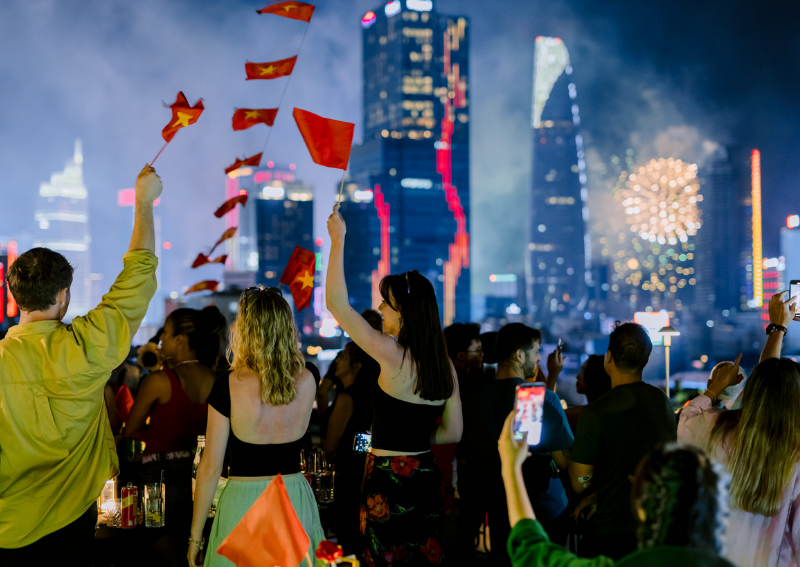
- Location: 12th Floor, 180-188 Ly Tu Trong, Ben Thanh Ward, HCMc
- Opening hours: 5:00 PM – 12:00 AM
The evening’s finale belongs to Twilight Sky Bar – one of the best rooftop bars in Ho Chi Minh city, one floor above Cloud Nine Saigon, where the Vietnam Rising Night event transforms April 30 into something genuinely celebratory.
From this rooftop vantage point, the boundary between the city below and the sky above feels almost dissolved, particularly when the fireworks begin. Live DJ sets, dancers, games, and lucky draws fill the evening, but the real spectacle is Saigon itself, lit up in celebration, stretching in every direction beneath you. Few better places exist to mark the end of Vietnam’s Reunification Day with the city’s skyline as your backdrop.
Where to Stay for April 30 Celebrations – La Siesta Premium Saigon
Location makes or breaks a Reunification Day experience in Ho Chi Minh City. The closer you are to District 1’s core – the Independence Palace, Nguyen Hue Boulevard, the riverside – the more effortlessly the day unfolds.
La Siesta Premium Saigon places you exactly where you need to be. Widely regarded as one of the best boutique hotels in Saigon, this elegantly designed property brings together Indochine-inspired aesthetics, genuinely attentive hospitality, and a District 1 address that keeps every major landmark, celebration point, and historical site within comfortable walking distance.
As one of the best hotels in Saigon for visitors who care equally about comfort, character, and cultural immersion, La Siesta Premium Saigon doesn’t just give you a place to sleep during the holiday, it puts you at the center of the celebration itself.