



Nguyen Hue Walking Street 2026: Saigon’s Most Spectacular Boulevard for Food, Fun and City Life
What Is Nguyen Hue Walking Street Saigon?
If Saigon has a beating heart, it runs along Nguyen Hue Walking Street. This grand pedestrian boulevard stretches nearly 700 meters through the core of District 1, connecting the iconic City Hall of Ho Chi Minh City at its northern end to the Saigon River waterfront at its southern tip. Wide, tree-lined, and beautifully lit after dark, Nguyen Hue is where the city comes to breathe, celebrate, and show itself off to the world.
For international visitors from Europe, North America, Australia, and beyond, Nguyen Hue Walking Street offers one of the most accessible and rewarding introductions to modern Saigon. It is simultaneously a public park, an outdoor dining strip, a festival ground, a photography destination, and a front-row seat to Vietnamese city life in full motion. Whether you visit at sunrise for a quiet coffee or at midnight to catch the tail end of a weekend crowd, the street delivers something memorable at every hour.
A Quick History of Nguyen Hue Boulevard
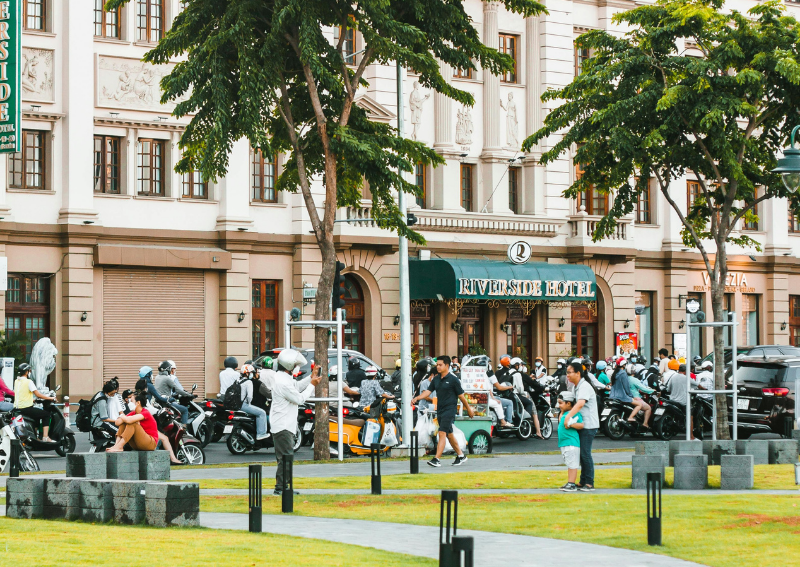
The story of Nguyen Hue begins in the French colonial era. Originally constructed in the late 19th century as a canal connecting the city center to the Saigon River, the waterway was filled in and paved over in 1887, becoming one of Saigon’s most elegant commercial boulevards. Named after the great Vietnamese emperor Nguyen Hue, who famously routed Chinese invaders during the Battle of Dong Da in 1789, the street carries a name that resonates deeply with Vietnamese national pride.
For most of the 20th century, Nguyen Hue Boulevard was a busy vehicular thoroughfare lined with banks, government offices, luxury hotels, and French colonial architecture. The dramatic transformation into a pedestrian-only walking street was completed in April 2015, when the city closed the road to traffic, laid down granite paving stones, installed a central fountain complex, and replanted trees along its entire length. The reopening was celebrated with one of the largest public gatherings in the city’s recent history.
Today the street anchors District 1’s identity as Saigon’s most vibrant and photogenic urban corridor, and it serves as the primary venue for the city’s biggest public events including Lunar New Year (Tet) celebrations, National Day festivities, and international festivals.
How to get to Nguyen Hue Walking Street
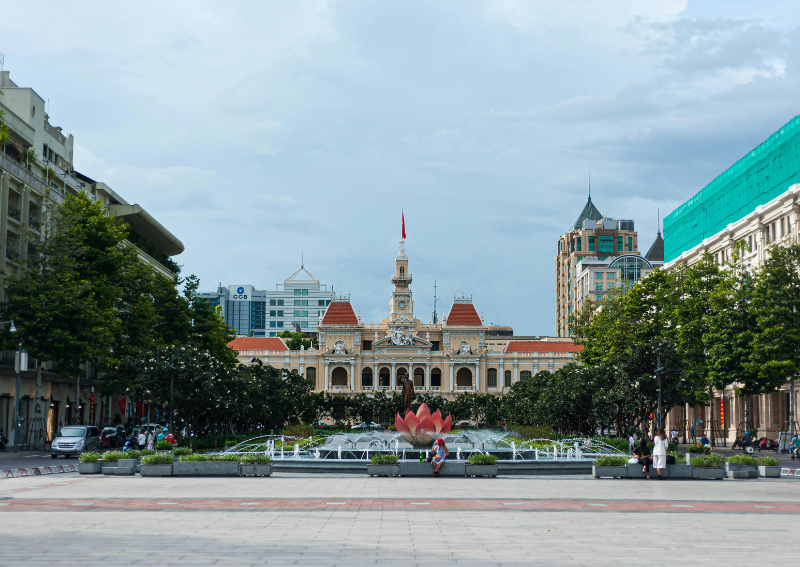
Location: Nguyen Hue Walking Street runs north to south through the center of District 1, Ho Chi Minh City. The northern end begins at Ho Chi Minh City People’s Committee (City Hall) and the southern end meets Me Linh Square and the Saigon River promenade.
- By Metro: Ho Chi Minh City Metro Line 1 serves the area via Ben Thanh Station, approximately a 10-minute walk from the southern entrance of the walking street. The metro runs from 6:00 AM to 10:00 PM and is the cleanest, fastest, and most affordable way to reach the District 1 center from outlying neighborhoods.
- By Grab (Ride-Hailing): Grab is the most practical option for most visitors. Set your destination to “Nguyen Hue Walking Street” or a specific address such as “Vincom Center A, 171 Dong Khoi” which sits directly adjacent. Fares from most District 1 hotels are between 30,000 and 60,000 VND. Always confirm the fare in-app before departure.
- By Taxi: Licensed metered taxis from companies such as Vinasun and Mai Linh are safe and reliable. Ask your hotel concierge to assist with flagging one if needed. Always insist the meter is running from the moment you depart.
- On Foot: Nguyen Hue Walking Street is within easy walking distance of virtually every hotel in District 1. From Ben Thanh Market it is a flat, shaded 10-minute walk east along Le Loi Boulevard. From Dong Khoi Street the walk is under five minutes. This is a walkable city center and exploring on foot is one of the genuine pleasures of a District 1 stay.
When to Visit Nguyen Hue Walking Street Saigon
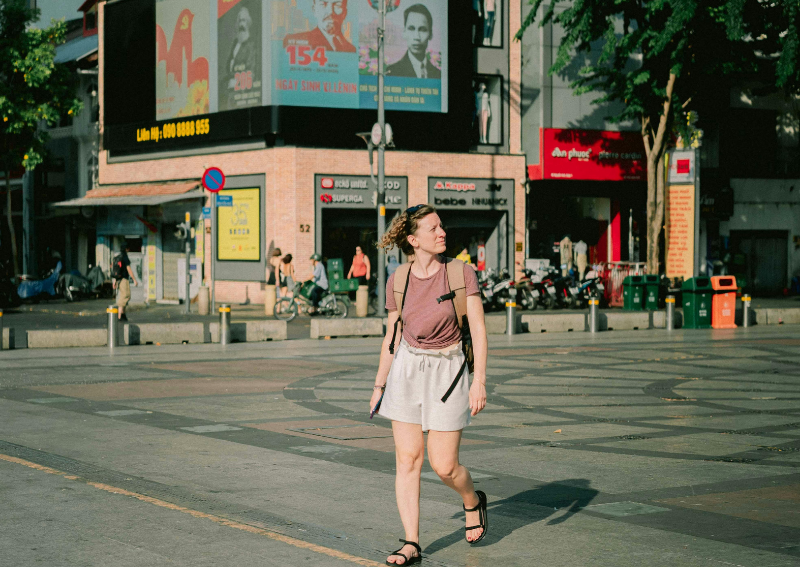
The walking street is open to pedestrians 24 hours a day, seven days a week. However, the experience changes dramatically depending on when you arrive.
- Early morning (6:00 AM to 8:00 AM): The street is quiet and golden with morning light. Local joggers, tai chi practitioners, and elderly residents use it as a park. This is the best time for photography without crowds.
- Midmorning to afternoon (9:00 AM to 5:00 PM): Cafes and restaurants along the flanking streets open fully. Street vendors set up flower arrangements, books, and small crafts. Foot traffic builds gradually through the day.
- Evening (6:00 PM to 10:00 PM): This is peak Nguyen Hue. The central fountain illuminates in color, food stalls and outdoor dining areas fill with locals and tourists, street performers appear, and the atmosphere shifts into something genuinely festive. Weekends are particularly lively, with families, couples, and groups of young Vietnamese filling every square meter of the boulevard.
- Late night (10:00 PM onward): The crowd thins but never disappears entirely. The riverside end of the street remains active well past midnight, especially on weekends.
- Special events: During Tet (Lunar New Year, typically late January or early February), Nguyen Hue transforms into the city’s main flower market and festival ground. Hundreds of thousands of residents gather here over the holiday week. If your visit coincides with Tet, arriving early evening on the first or second day of the new year is an extraordinary cultural experience.
What to Do on Nguyen Hue Walking Street
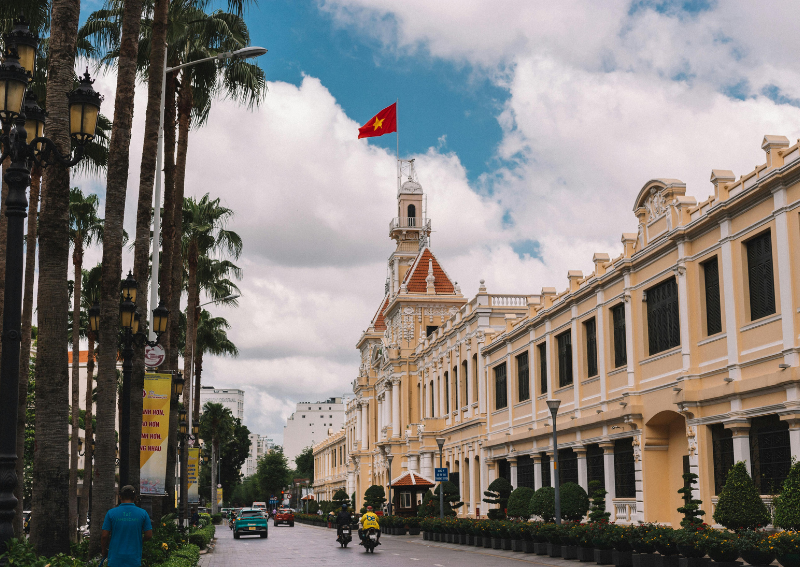
Visit the. Ho Chi Minh City People’s Committee Building
The ornate yellow French colonial building at the northern end of the street is one of the most photographed facades in Vietnam. Built between 1902 and 1908, it served as the Saigon City Hall during the French colonial period and now houses the municipal government. The building is not open to the public interior, but the exterior and the square in front of it, anchored by a large statue of Ho Chi Minh, make for one of Saigon’s most iconic photo opportunities.
Explore the Fountain and Central Promenade
The pedestrianized center of the boulevard features a series of interactive water fountains that light up after dark in rotating colors. Families with children gravitate here throughout the evening. The space is also used for temporary art installations, outdoor exhibitions, and weekend performances.
Discover the Saigon River Waterfront
Following the boulevard south leads to Me Linh Square and the Saigon River promenade, a wide riverside walkway with views across to Thu Thiem District and the dramatic Bach Dang wharf. River cruise operators depart from nearby Bach Dang Pier, offering one- to two-hour evening cruises along the Saigon River that provide a completely different perspective on the city skyline.
Browse Books at the Saigon Book Street
Directly connected to Nguyen Hue Walking Street via a short walkway is Ho Chi Minh City Book Street (Duong Sach), a charming lane lined with independent bookshops, stationery stores, and small cafes. Open from 8:00 AM to 10:00 PM daily, it is a lovely detour for anyone interested in Vietnamese literature, art books, maps, and locally produced gifts.
Shopping Along the Boulevard
Nguyen Hue is flanked by several of Saigon’s most upscale retail destinations. Vincom Center A at 171 Dong Khoi and Vincom Center B at 45A Le Thanh Ton together form one of the largest shopping complexes in District 1, offering international brands, Vietnamese fashion designers, a supermarket, and a cinema.
Union Square at 171 Dong Khoi also hosts premium international retail. For something more local, the side streets of Le Loi, Dong Khoi, and Mac Thi Buoi are lined with independent boutiques, art galleries, and specialty stores.
Where to Eat Near Nguyen Hue Walking Street
The streets immediately surrounding Nguyen Hue Walking Street form one of the densest and most diverse dining corridors in all of Ho Chi Minh City. From humble street food carts to rooftop bars with panoramic skyline views, the range of options within a 10-minute walk is remarkable.
Nguyen Hue Street – Street Food and Local Eats
- Banh Mi Huynh Hoa (26 Le Thi Rieng, 5 minutes by Grab): Consistently rated among the best banh mi in Saigon. Expect a short queue, a stuffed-to-bursting sandwich, and a price of around 45,000 VND. Worth every second of the wait.
- Bun Thit Nuong stalls on Pasteur Street: Just two blocks west of Nguyen Hue, Pasteur Street is lined with small restaurants serving vermicelli noodles with grilled pork, pickled vegetables, and crispy spring rolls. A filling lunch costs under 60,000 VND.
- Com Tam Ba Ghien (multiple locations in District 1): The definitive Saigon broken rice experience. Charcoal-grilled pork chop, a fried egg, shredded pork skin, and a bowl of clear broth. The quintessential local meal.
Nguyen Hue Street – Cafes and Coffee
- The Workshop Coffee (27 Ngo Duc Ke, 3 minutes walk): A beautifully designed specialty coffee shop on the fourth floor of a heritage building one block from Nguyen Hue. Vietnamese single-origin pour-overs and flat whites are exceptional. The space is calm, creative, and a perfect midday refuge.
- Cong Caphe (multiple District 1 locations): A beloved Vietnamese chain known for its coconut coffee, retro decor inspired by the 1970s North Vietnamese aesthetic, and very affordable prices. Perfect for a casual hour of people-watching.
Nguyen Hue Street – Restaurants
- Nha Hang Ngon (160 Pasteur Street): A sprawling courtyard restaurant set in a French colonial villa. The menu covers Vietnamese dishes from all three regions of the country, each prepared by cooks who specialize in their regional cuisine. A reliable, atmospheric choice for a full sit-down dinner with international visitors.
- The Deck Saigon (38 Nguyen U Di, Thu Duc): A short Grab ride from the walking street, this riverside restaurant set in a converted colonial building is one of the most romantic dinner settings in the city. Best reserved in advance.
Saigon Attractions Within Walking Distance
Nguyen Hue Walking Street functions as the ideal starting point for a self-guided District 1 sightseeing circuit. Every major landmark in central Saigon is reachable on foot.
- Saigon Opera House (Municipal Theatre): 200 meters north, this is one of the finest examples of French Beaux-Arts architecture in Southeast Asia. Evening performances are listed on the official website and tickets can be purchased at the box office.
- Ben Thanh Market: 600 meters west via Le Loi Boulevard. Saigon’s most iconic covered market for food, souvenirs, and local colour. Allow at least 90 minutes.
- Bitexco Financial Tower: 300 meters south on Hai Trieu Street. The 68-floor skyscraper features a helipadshaped observation deck on the 49th floor called the Saigon Skydeck, open daily from 9:30 AM to 9:30 PM.
- Notre-Dame Cathedral and Central Post Office: 1.2 kilometers north. Two of the most visited colonial landmarks in Vietnam, best visited together on a single morning walk up Dong Khoi Street.
- War Remnants Museum: 1.5 kilometers northwest. One of the most sobering and important historical museums in Southeast Asia. Allow a minimum of two hours and plan to visit in the cooler morning hours.
- Reunification Palace: 1.8 kilometers west. An essential piece of 20th-century Vietnamese history. The modernist interior is entirely preserved as it appeared on April 30, 1975.
Practical Tips for Visiting Nguyen Hue Walking Street
- Safety: Nguyen Hue Walking Street is among the safest urban public spaces in Ho Chi Minh City. Police and security personnel are present, particularly during evening peak hours. Keep bags on your front and be alert in very dense crowd situations.
- Motorbikes: While the boulevard itself is pedestrian-only, crossing the surrounding streets requires caution. Motorbike traffic in District 1 is dense. Walk confidently at a steady pace and traffic will flow around you.
- Heat: Ho Chi Minh City averages 32 to 35 degrees Celsius throughout the year. Early morning and evening visits are significantly more comfortable than midday. Keep a small bottle of water with you at all times.
- Currency: Small food vendors and street stalls operate in cash only. ATMs are available at every major bank along Nguyen Hue and the surrounding streets. Vincom Center and major restaurants accept credit cards.
- Photography: The street is extraordinarily photogenic. The best light for photography is the golden hour just after sunrise (roughly 6:00 to 7:30 AM) and the blue hour just after sunset (roughly 6:30 to 7:30 PM), when the fountain lights and building illumination contrast beautifully against the evening sky.
Where to Stay for the Best Nguyen Hue Experience
Staying at one of the best hotels in Saigon places you steps away from Nguyen Hue Walking Street, Ben Thanh Market, the Saigon riverfront, and every major landmark District 1 has to offer.
Recognized among the best boutique hotels in Saigon, La Siesta Premium Saigon Central offers elegant comfort right in the heart of District 1, making it a natural and effortless base for exploring Nguyen Hue and the surrounding city. Guests can walk to the boulevard in minutes, return for a midday rest during the heat of the afternoon, and head back out for the evening atmosphere without ever needing to plan transport or lose time in traffic. The hotel combines attentive Vietnamese hospitality with thoughtfully designed rooms and a location that simply cannot be improved upon for a sightseeing-focused stay in Saigon.
For travelers who want to experience Nguyen Hue Walking Street at its best, including early morning calm, evening spectacle, and late-night riverside energy, being this close to the action makes all the difference.
Frequently Asked Questions
Is Nguyen Hue Walking Street free to visit?
Yes, the boulevard is a public space and entirely free to enter at any time of day or night.
What is the best time to visit Nguyen Hue Walking Street?
Weekend evenings from 6:00 PM to 10:00 PM offer the most vibrant atmosphere. Early weekday mornings are ideal for quiet photography and a peaceful start to the day.
Is Nguyen Hue Walking Street safe at night?
Yes. It is one of the best-lit and most actively patrolled public spaces in Ho Chi Minh City and is considered very safe for tourists throughout the evening and into the night.
How far is Nguyen Hue Walking Street from Ben Thanh Market?
Approximately 600 meters, or a 10-minute walk west along Le Loi Boulevard. Both are easily combined into a single half-day itinerary.
What happens on Nguyen Hue Walking Street during Tet?
During the Lunar New Year period, the boulevard transforms into the city’s main Tet flower market and festival ground, with elaborate floral displays, cultural performances, and massive public gatherings. It is one of the most spectacular events on the Saigon calendar.