



Con Dao 2026: The Island of Prisons, Beaches and Sea Turtles
Con Dao is two islands occupying the same stretch of sea.
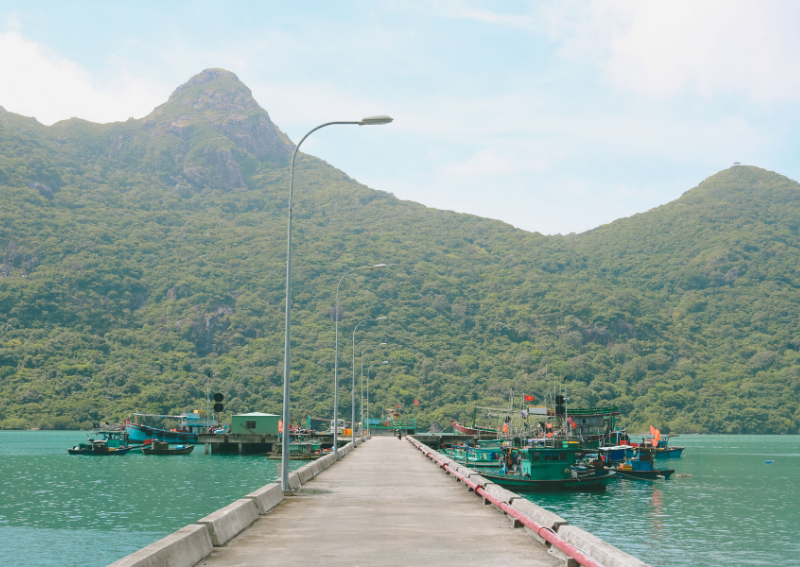
One is a small archipelago of forested peaks and empty beaches an hour’s flight from Ho Chi Minh City, with coral reefs, nesting sea turtles and a road along the coast that most visitors describe as the most beautiful drive in Vietnam.
The other is the place where the French built a prison in 1862, where successive Vietnamese governments and then the Americans kept using it for more than a century, and where somewhere around twenty thousand people died. The cells are still there. So is the cemetery.
Most Vietnamese visitors come primarily for the second island. Most foreign visitors arrive knowing only the first. Both are the same place, and the gap between those two trips is the thing that makes Con Dao unlike anywhere else in the country.
This guide covers how to get there, how to divide your time, what the prison sites actually involve, and when to come if you want to see turtles nesting.
Where Con Dao Is and How to Get There
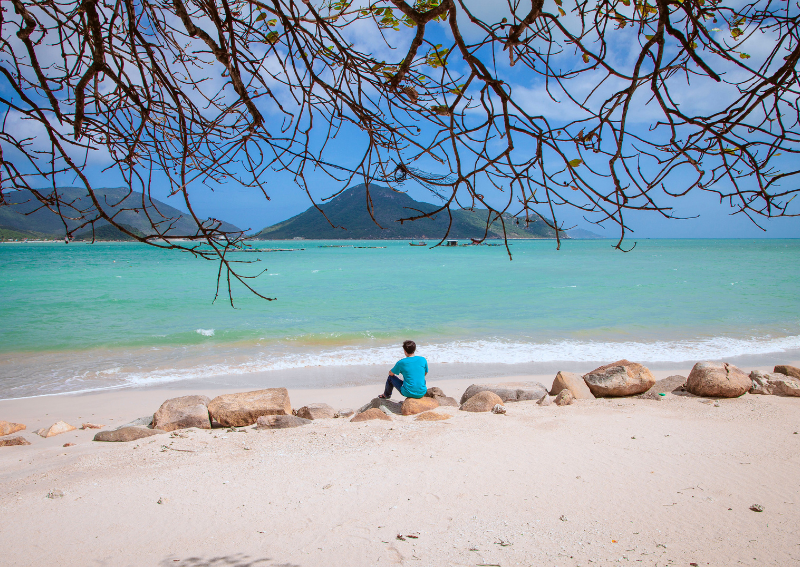
Con Dao Island, strictly an archipelago of sixteen islands, roughly 230 kilometres south east of Ho Chi Minh City, out in the South China Sea. Almost everything happens on Con Son, the main island, which is about fifteen kilometres long with a single small town on its southern shore.
The town itself is unusual: wide French colonial streets, low buildings, almost no traffic, and the sea on one side and forested hills on the other. It has the atmosphere of a provincial town that happens to be on an island rather than of a resort.
Getting there
| Option | Time | Rough cost | Notes |
|---|---|---|---|
| Flight from Ho Chi Minh City | About 1 hour | 1,500,000 to 4,000,000 VND return | The usual route. Small aircraft, limited daily services |
| Flight from Hanoi | About 2 hours | Higher | Fewer services, often seasonal |
| Fast ferry from Vung Tau | 3.5 to 4 hours | 500,000 to 900,000 VND each way | Longer crossing, more exposed sea |
| Fast ferry from Tran De, Soc Trang | 2.5 to 3 hours | 300,000 to 600,000 VND each way | The shortest crossing, but a 4 hour drive from Saigon first |
The important caveat
Air and ferry services to Con Dao have been disrupted more than once in recent years, by airport works, by aircraft availability and by weather. Routes and operators have changed, suspended and resumed.
Check current services before you plan anything around this island, and build a buffer day into your schedule if you have an onward international flight. People do get stranded here when the sea turns, and that is part of the character of the place rather than an unusual event.
Getting to the town from the airport
Co Ong airport sits at the northern end of the island, about fifteen kilometres from the town. Hotels arrange transfers, and the drive along the coast road takes about twenty five minutes. It is a genuinely spectacular introduction.
How Many Days You Need in Con Dao
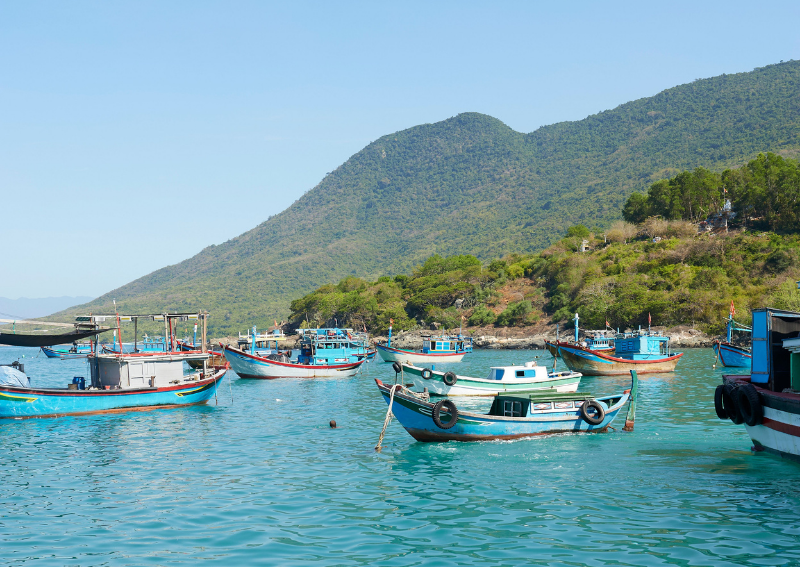
Two nights. The minimum that makes the journey worthwhile. One day for the prison sites and the cemetery, one for a beach and the coast road.
Three nights. The right length. Adds a boat trip to the outer islands, a proper beach day, and time to drive the island slowly.
Four or more. For divers, for anyone visiting during turtle season, and for anyone who wants to do very little in a place that rewards it.
How to split the time
The history and the coast do not mix well in a single day, and most people find they should not try.
The prison sites and Hang Duong Cemetery take a morning and leave you quiet for several hours afterwards. Plan something undemanding for that afternoon: a drive, a swim, a long dinner. Several visitors say the same thing about Con Dao, which is that the beach day after the museum day is the one they remember most clearly.
A note on the day trip idea
Con Dao does not work as a day trip. The flights and ferries do not support it, and the island asks for more time than that.
The Con Dao Prison History
What happened here
The French established a penal colony on Con Son in 1862, almost immediately after taking southern Vietnam. They called the island Poulo Condore, and they used it for what islands are used for: holding people a long way from anywhere they could reach.
For more than eighty years it held Vietnamese political prisoners, including many of the figures who would later lead the independence movement. After 1954 the prison system passed to the South Vietnamese government and, through the American war, continued to hold political detainees.
It closed in 1975. Over that span, estimates of the number who died here run to around twenty thousand people.
The Con Dao prison sites
Several Con Dao camps and buildings are preserved and open to visitors, generally on a single combined ticket. The main ones are Phu Hai, the oldest and largest of the French camps, and the areas holding the cells known as the tiger cages.
Phu Hai. Long communal halls with shackle bars running the length of the floor, where prisoners were chained in rows. The scale is the first thing that registers.
The tiger cages. Small stone cells with open grilles above them, from which guards could look down on the prisoners and, by accounts from the period, pour lime or water on them. Their existence was publicly documented in 1970 by American visitors, which caused a significant international reaction at the time.
The museum. Con Dao’s main museum sets out the history of the island across the whole period, with documents, photographs and personal belongings.
Visiting the Con Dao prison sites
Allow a full morning for the Con Dao museum and the main camps. A guide is worth having, and local guides here are often connected to the island’s history personally.
The sites use mannequins to show conditions in the cells. Some visitors find this effective and some find it difficult. Either way, be prepared for it.
How to be here
A visit to Con Dao is not a dark tourism curiosity. For Vietnamese visitors it is close to a pilgrimage, and many of the people walking through the same rooms as you have family connections to what happened in them.
Keep your voice down. Do not pose for photographs in the cells. Dress as you would for a memorial. If a Vietnamese family is standing quietly somewhere, give them the room.
These are small things and they are noticed.
Hang Duong Cemetery and Vo Thi Sau
The cemetery
Hang Duong is where most of those who died in Con Dao in the prison system are buried, many of them in graves marked only with a star. It sits at the edge of the town under the hills, and it is the most visited place on the island.
It is quiet, well kept and large. Walking it takes half an hour and is the part of Con Dao that most people find hardest.
Vo Thi Sau
One grave receives more visitors than all the others. Vo Thi Sau was a teenage member of the resistance against French colonial rule, captured and brought to Con Dao, and executed here in 1952. She was nineteen, or by some accounts younger.
In the decades since she has become one of the most widely revered figures in Vietnam, far beyond what her short life would suggest, and particularly in the south. Streets and schools across the country carry her name.
The midnight visits
This is the part that surprises visitors most.
Vietnamese people come to her grave at midnight. Not a few, but a steady flow of them, through the night, every night. They bring offerings that reflect what she was: a young woman. Mirrors, combs, hairpins, cosmetics, white flowers, fruit. People pray there for health, for family matters, for luck.
The cemetery at midnight, lit by incense and candles with several hundred people moving quietly between the graves, is an extraordinary thing to witness and one of the few genuinely unusual experiences left in Vietnamese tourism.
If you go at midnight
It is open and visitors are welcome, including foreign ones. Go quietly and dress modestly, with shoulders and knees covered.
Do not photograph people praying. A wide shot of the cemetery is generally fine; a camera pointed at someone’s face while they are at a grave is not.
If you want to bring an offering, white flowers or fruit are appropriate and are sold near the entrance. Follow what others do.
And be aware of what you are attending. This is an act of devotion by people for whom this island is a wound, not a tourist attraction with an unusual opening time.
Con Dao National Park and the Sea Turtles
Con Dao National Park covers most of the land area of the islands and a large area of sea around them. It is one of the better protected marine environments in Vietnam, largely because the island was closed to ordinary visitors for so long.
The Con Dao sea turtles
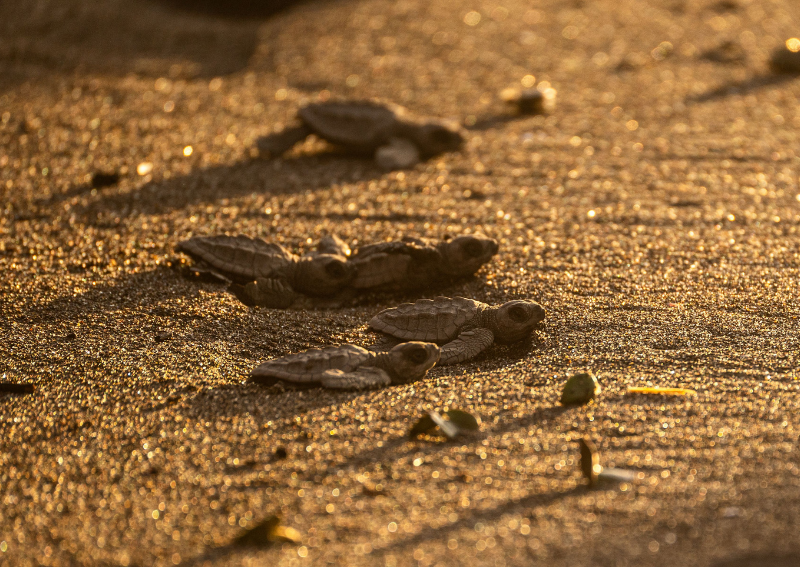
Con Dao is the most important green turtle nesting site in Vietnam. Females come ashore at night between roughly June and September to lay, and the hatchlings emerge several weeks later.
Bay Canh island, a short boat ride from Con Son, is the main nesting beach and the base for the park’s conservation programme.
How visiting works. The park runs overnight turtle watching trips during the season, with limited places. You travel out in the afternoon, sleep in basic accommodation on the island, and are woken when rangers find a nesting female. Groups are small, lights are restricted and the rules are strict.
Booking. Through the national park, usually well in advance, and often through your hotel. Places are limited deliberately.
Expectations. It is wildlife, so nothing is guaranteed. The conditions are basic, the night is short and the experience is, by almost every account, worth it.
Diving and snorkelling
The reefs around the outer islands are among the healthiest in Vietnam. Visibility is best between roughly March and September. A small number of operators run dives and snorkelling trips out of the town.
The waters also hold dugong, feeding on the seagrass beds, which is rare enough in Vietnam to be notable even though sightings are uncommon.
Hiking
Marked Con Dao trails run through the forest on Con Son, the best known leading to So Ray, an old plantation area with macaques and a view over the bay, and the trail down to Ong Dung beach on the far side of the island.
Trails are short, steep and humid. Some require a permit or a ranger, which the park office arranges.
Boat trips
Con Dao day trips run to the outer islands for snorkelling and beaches, weather permitting. In the rougher months they are cancelled frequently, which is worth knowing before you build a day around one.
The Con Dao Beaches
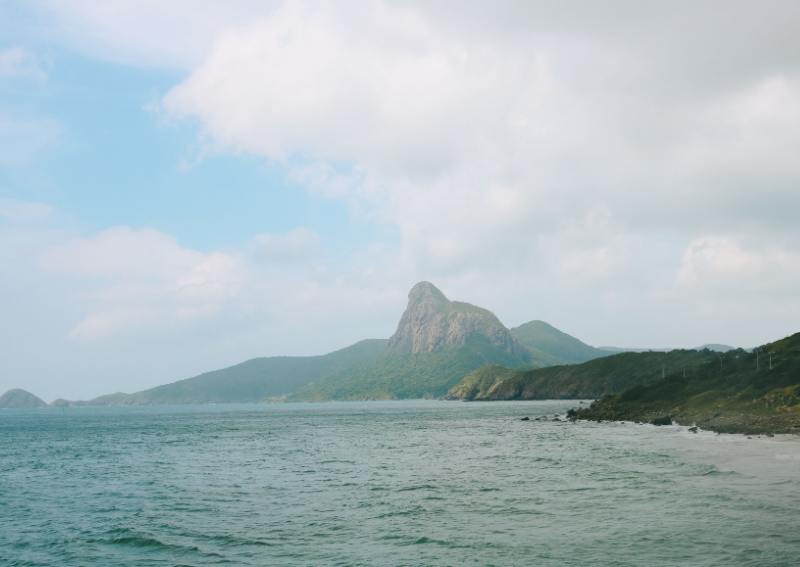
Con Dao’s beaches are quiet in a way that has largely disappeared from the Vietnamese coast, because the island has a small airport, limited accommodation and a long history of being closed.
Dam Trau
The best known Con Dao beach, at the northern end near the airport. A wide curve of pale sand backed by trees, with aircraft passing low overhead on approach, which has become its signature image.
It is the busiest beach on the island, which here means there are other people on it.
An Hai
The long beach on the edge of the town, lined with casuarina trees. Convenient rather than spectacular, and the easiest place for a swim at the end of a day.
Lo Voi
Also on the town side, close to the cemetery, and generally very quiet. Better at high tide.
Nhat Beach
Small, south of the town past the headland, and only properly a beach at low tide. When the tide is out it is one of the most striking spots on the island. Check a tide table before making the trip.
Ong Dung
On the far side of the island, reached by a short walk through the national park forest. Rocky rather than sandy, and worth it for the walk as much as the destination.
The outer islands
The beaches on the uninhabited islands, reached by boat, are the emptiest of all. Bay Canh combines one with the turtle programme.
Swimming and conditions
The sea around Con Dao is calm and clear in the dry months and considerably rougher from around October to February, when some beaches become unswimmable and boat trips are cancelled.
There are few lifeguards. There are also jellyfish at certain times of year. Ask locally rather than assuming.
The Con Dao coast road
Worth mentioning on its own. The road running round the island past Nhat beach and the headland, with the sea on one side and forested cliffs on the other, is the single most enjoyable thing to do on Con Dao and costs nothing beyond the price of a scooter.
Con Dao Food, Money and Practicalities
A few things worth knowing before you fly. For wider trip planning, Vietnam’s national tourism site is the official reference.
Con Dao food. Seafood, as you would expect, and very good. The town market in the early morning is the place to see what came in. There are a handful of local restaurants around the market and along the seafront, plus hotel dining. The range is narrow compared with the mainland, and that is part of being on a small island rather than a complaint.
Look for the local speciality of mut hau, a sea snail dish, and the dried squid.
Prices are higher than the mainland. Everything except fish arrives by boat or plane. Expect food and accommodation to cost noticeably more than equivalent quality in Saigon.
Money. There are ATMs in Con Dao town and larger hotels take cards, but carry cash. Small restaurants, scooter rental and boat trips are cash only, and an ATM outage on an island is a different problem from an ATM outage in a city.
Getting around Con Dao. A rented scooter is the standard, at roughly 120,000 to 200,000 VND a day, and the island roads are quiet and in good condition. Bicycles work for the town. Taxis exist but are limited, and there is no ride hailing network to speak of. Hotels arrange cars.
If you do not ride, book transfers through your hotel rather than assuming you can find transport on the spot.
Connectivity. Mobile coverage is reliable in the town and patchier in the national park and on the outer islands. Hotel wifi is generally fine.
Accommodation. Con Dao is limited in both quantity and range, from simple guesthouses to one or two high end resorts. Book ahead, particularly during Vietnamese holidays and the turtle season.
What to pack. Sun protection, insect repellent for the forest and the evening, decent shoes if you intend to hike, and something modest to wear at the cemetery and the prison sites.
Medical. Check the season before you book, since weather drives everything here. There is a small hospital on the island for routine problems. Anything serious means an evacuation to the mainland, which weather can delay. Travel insurance matters more here than in a city.
Best Time to Visit Con Dao
| Period | Sea and weather | What it suits |
|---|---|---|
| March to May | Calm sea, dry, hot, best visibility | The best overall window. Diving, boat trips, beaches |
| June to September | Warm, some rain, generally workable sea | Turtle nesting season. Busiest with Vietnamese visitors in the summer holidays |
| October to December | Roughest months, wind and swell, more rain | Ferries and boat trips cancelled frequently. Flights more weather affected |
| January to February | Cooler, windy, variable | Quieter, but boat trips still unreliable |
The short version on when to visit Con Dao
For everything except turtles, come between March and May.
For turtles, come between June and September and book the national park programme well ahead.
Avoid October to December unless you are flexible about dates and content to spend a day indoors if the weather closes in.
The reliability caveat
Con Dao is an island, and the sea decides. If the dates slip, Phu Quy and Vinh Hy are easier alternatives on the mainland coast. Ferries are cancelled regularly in the rough season and occasionally outside it. Flights are small aircraft and are affected by weather more than a jet would be.
If Con Dao is at the end of your trip, leave a buffer day before an international departure. This is the single most practical piece of advice in this guide.
Vietnamese holiday periods in Con Dao
Con Dao fills during Tet, the April and May public holidays and the summer school break. Accommodation is limited, so these dates need booking well in advance and prices rise sharply.
Con Dao vs Phu Quoc: Which Island?
Con Dao and Phu Quoc are the two island questions people ask about southern Vietnam, and they are not really comparable.
| Con Dao | Phu Quoc | |
|---|---|---|
| Size | Small, one town | Large, several towns and resort strips |
| Getting there | 1 hour flight or 3 to 4 hour ferry, limited services | Frequent flights from across Vietnam and internationally |
| Development | Minimal. A handful of hotels | Extensive. Large resorts, theme parks, a cable car |
| Beaches | Empty, wild, variable with the season | Long, developed, reliable |
| Nightlife | Essentially none | Night markets, bars, resort entertainment |
| Nature | National park, turtles, healthy reefs | National park, but under more pressure |
| History | Central to the visit | Present but secondary |
| Cost | Higher than expected for what it is | Wide range, from budget to very expensive |
| Visa | Standard Vietnam rules | Has historically had its own exemption arrangement, worth checking |
| Suits | Travellers who want quiet, history and nature | Families, resort holidays, first time beach trips |
The straight answer
Go to Con Dao if you want somewhere genuinely quiet, you are interested in Vietnamese history, you dive, or you want to see turtles nesting. It rewards a slower trip and it will stay with you.
Go to Phu Quoc if you want a straightforward beach holiday with choice, reliability and things for children to do.
Do not try to do both on a two week Vietnam trip. They are at opposite ends of the southern coast and both need the time they take.
Con Dao: Frequently Asked Questions
Where is Con Dao? An archipelago of sixteen islands about 230 kilometres south east of Ho Chi Minh City. Almost all visitors stay on Con Son, the main island.
How do you get to Con Dao? By air from Ho Chi Minh City in about an hour, or by fast ferry from Vung Tau in three and a half to four hours, reached from the city via the airport road, or from Tran De in Soc Trang in two and a half to three. Services change, so check current schedules.
How many days do you need in Con Dao? Two nights is the minimum, three is comfortable, and four or more suits divers and anyone visiting during turtle season.
What is Con Dao prison? A penal colony established by the French in 1862 and used until 1975, holding political prisoners under French, South Vietnamese and American era administrations. Around twenty thousand people are thought to have died there. Several camps and the museum are open to visitors.
What are the Con Dao tiger cages? Small stone cells with open grilles above them, from which guards could look down on prisoners. Their existence was publicly documented by American visitors in 1970 and caused significant international reaction.
Why do people visit Hang Duong Cemetery at midnight? To pay respects at the grave of Vo Thi Sau, a teenage resistance member executed on the island in 1952 and widely revered across Vietnam. Visitors bring offerings and pray through the night, every night.
When can you see turtles in Con Dao? Green turtles nest between roughly June and September. Con Dao National Park runs overnight watching trips to Bay Canh island with limited places, bookable in advance.
Con Dao or Phu Quoc, which is better? Con Dao for quiet, history, diving and nature. Phu Quoc for a developed beach holiday with more choice and easier access. They suit different trips rather than competing.
Where to Stay Before and After
Every route to Con Dao runs through the mainland, and for most visitors that means Ho Chi Minh City at one or both ends. Flights are short but limited, ferries are weather dependent, and the buffer night before or after is not optional so much as sensible.
La Siesta Premium Saigon Central offers an elegant retreat in the heart of District 1, within easy reach of Ben Thanh Market, Nguyen Hue Walking Street and the Saigon riverfront, and a straightforward ride from Tan Son Nhat for an early island flight.
For travellers comparing the best hotels in Saigon, that central position does the practical work at both ends of the trip: somewhere to leave from without a long transfer, and somewhere to come back to when the sea has had its say about your departure date.
Recognised among the best boutique hotels in Saigon, it combines Vietnamese inspired design, thoughtful service and a calm atmosphere. For anyone comparing the best hotels in Saigon District 1, it is also a useful contrast: a few days on an island with one town, bracketed by a city that never stops.