



Goi Cuon and the Rolls of Southern Vietnam 2026
Every Vietnamese table has something on it that is fried, something that is grilled, something in a broth, and then one plate that is none of those: a row of translucent white cylinders with green herbs and pink shrimp showing through the wrapper.
That is goi cuon, and it is the lightest thing in Vietnamese cooking. Nothing in it is cooked at the moment of assembly. Rice paper, cold vermicelli, poached pork, boiled shrimp, lettuce and a handful of herbs, rolled tight and eaten at room temperature with a sauce that does all the heavy lifting.
It is also the dish most consistently mistranslated on English menus, where it appears as fresh spring rolls, summer rolls, salad rolls and occasionally just spring rolls, which is how people end up ordering the fried ones by accident.
This guide covers what goi cuon actually is, how it differs from the fried version, the whole family of southern Vietnamese rolls that most visitors never meet, which sauce belongs with which, and where to eat them in Saigon.
What Goi Cuon Is
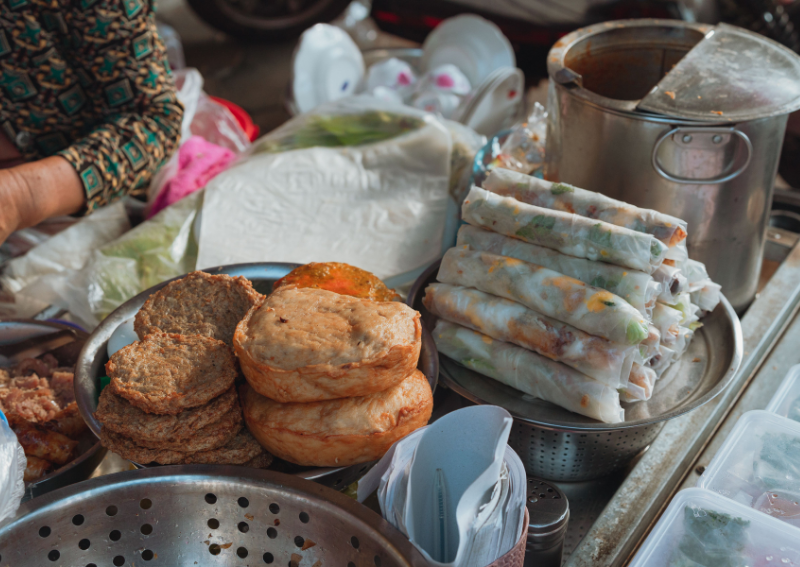
Goi cuon is a southern Vietnamese roll of poached pork and boiled shrimp with rice vermicelli, lettuce and fresh herbs, wrapped in softened rice paper and served cold with a dipping sauce. Nothing is fried and nothing is cooked once it is rolled.
The name translates roughly as salad roll, which is closer to the truth than spring roll.
The five components
Banh trang, the rice paper. A brittle translucent disc of dried rice flour, dipped in water for a few seconds until pliable. It is the skill in the dish: too dry and it tears, too wet and it turns to paste.
Bun, the vermicelli. Thin rice noodles, cooked and cooled, giving the roll its body.
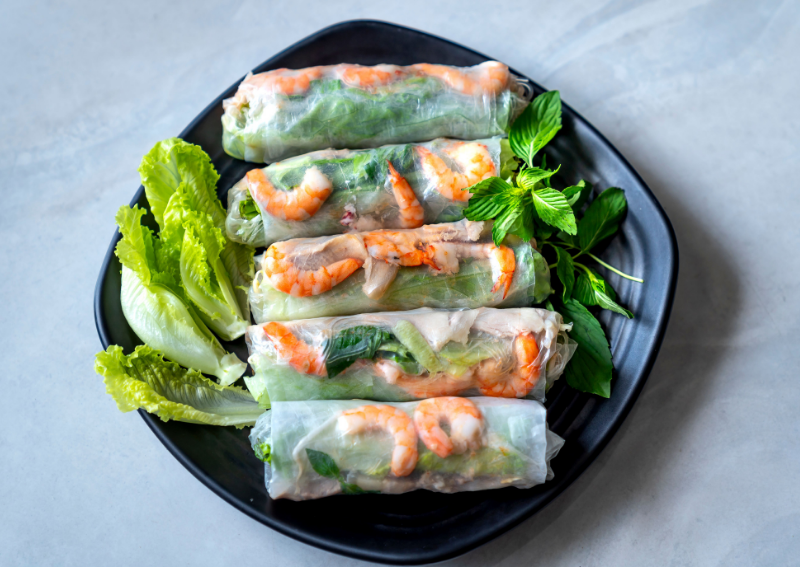
The protein. Classically thinly sliced poached pork belly and halved boiled shrimp, the shrimp laid against the wrapper so the pink shows through.
The greens. Lettuce, perilla, mint, coriander and often a length of garlic chive left deliberately poking out of one end, which is how you recognise a properly made one.
The sauce. Served alongside rather than inside. See the section below, because this is where the dish is won or lost.
Why it is not a spring roll
The English name causes genuine confusion. A spring roll in most English speaking countries is fried and crisp. Goi cuon is neither. On a Vietnamese menu, fried rolls are cha gio in the south and nem ran in the north.
If a menu lists both as spring rolls, look for the words fresh or fried.
Where it comes from
Goi cuon is a southern dish, built on southern ingredients and southern tastes: fresh herbs in volume, a sweet dipping sauce, nothing heavy. It has spread nationwide and across the Vietnamese diaspora, and it is one of the few Vietnamese dishes that travels well, because it requires no cooking.
Goi Cuon vs Cha Gio: Which Is Which?
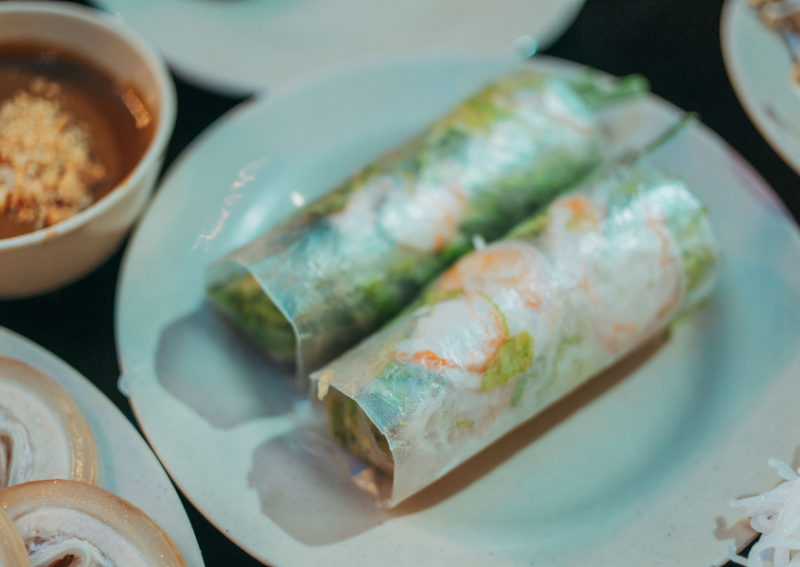
The single most common confusion on a Vietnamese menu, answered plainly.
| Goi cuon | Cha gio | |
|---|---|---|
| English name | Fresh spring roll, summer roll, salad roll | Fried spring roll |
| Northern name | Also goi cuon | Nem ran |
| Cooked? | No, assembled from cooked and raw components | Yes, deep fried |
| Wrapper | Soft rice paper, translucent | Rice paper fried until crisp and golden |
| Served | Cold or room temperature | Hot |
| Filling | Pork, shrimp, vermicelli, lettuce, herbs | Minced pork, wood ear mushroom, glass noodles, sometimes crab |
| Sauce | Peanut and hoisin, or nuoc cham | Nuoc cham |
| Eaten as | A starter or a light meal | A starter, or with bun cha and rice dishes |
How to order the one you want
Say “goi cuon” for the fresh ones and “cha gio” for the fried ones. Both are understood everywhere in the south.
If you are reading an English menu and it only says spring rolls, ask “fresh or fried?” and the answer will come immediately. Most restaurants serve both.
The honest comparison
Cha gio is the crowd pleaser. Goi cuon is the one you will still want to eat on the fourth day of a trip, when everything else has been rich and you want something clean. Order both and the table balances.
The Wider Family of Southern Rolls
Goi cuon is the one everyone knows. These are the ones worth seeking out once you have had it.
Bi cuon
Shredded pork skin and roasted ground rice powder, rolled with vermicelli and herbs. Nutty, chewy and much more interesting than the description suggests. A southern street food staple that almost no visitor orders.
Bo bia
Nothing to do with beef, despite the name. Jicama and carrot cooked down until soft, with Chinese sausage, dried shrimp and shredded egg, rolled small and eaten several at a time with a peanut and chilli sauce. Sold from carts and often by vendors on bicycles. Cheap, light and faintly sweet.
There is also a dessert version, bo bia ngot, with malt sugar, sesame and coconut in a thin wafer.
Nem nuong cuon
Grilled pork sausage, hot from the charcoal, rolled with cold herbs, vermicelli and often a strip of fried rice paper for crunch. A Nha Trang speciality that has spread across the south. The hot and cold contrast is the point, and the sauce is usually a thick, slightly sweet fermented one.
If you order one thing from this list, order this.
Banh trang cuon thit heo
A central Vietnamese dish, from Da Nang, and a cousin of banh xeo, but widely served in Saigon. Boiled pork belly with both fat and skin, rolled with a mountain of herbs and dipped in mam nem, fermented anchovy sauce. Pungent and excellent.
Goi cuon chay
The vegetarian version, with fried tofu, mushroom and sometimes a sweet fried banana in place of the pork and shrimp. Common around the pagodas and in the vegetarian restaurants of District 1 and District 3.
Banh uot cuon
Steamed rice sheets rolled around pork and mushroom, closer to the northern banh cuon but served rolled rather than folded.
The Dipping Sauces
A roll is mostly rice paper, noodles and lettuce. The sauce is where the flavour is, and Vietnamese cooks take it seriously.
Tuong xay, the peanut sauce
The classic partner for goi cuon in the south. A thick brown sauce of fermented soybean or hoisin, cooked down with crushed peanuts, sometimes with coconut milk or liver pate for richness, finished with chopped peanuts and a spoonful of chilli.
Sweet, savoury and thick enough to coat. If you have eaten goi cuon in a Vietnamese restaurant abroad, this is the sauce you remember.
Nuoc cham
The universal Vietnamese dipping sauce: fish sauce, lime, sugar, water, garlic and chilli, sometimes with shredded carrot and daikon. Thin, sharp, salty and sour.
Some households and many northern cooks prefer this with goi cuon over the peanut sauce. It is lighter and lets the herbs come through.
Mam nem
Fermented anchovy sauce, cut with pineapple, garlic, chilli and sugar. Powerfully pungent and genuinely delicious once you get past the first encounter.
It is the correct sauce for banh trang cuon thit heo and it is not for everyone. Try a small amount before committing a whole roll to it.
The sweet fermented sauce for nem nuong
A thicker, sweeter sauce made with fermented rice or soybean, often with ground pork or liver in it. Comes with nem nuong cuon and is part of why that dish works.
Which goes with which
| Roll | Standard sauce |
|---|---|
| Goi cuon | Tuong xay peanut sauce, or nuoc cham |
| Bi cuon | Nuoc cham |
| Bo bia | Peanut and chilli sauce |
| Nem nuong cuon | Sweet fermented sauce |
| Banh trang cuon thit heo | Mam nem |
| Goi cuon chay | Soy based sauce or vegetarian peanut sauce |
Adjusting it
There will usually be chilli, lime and sometimes pickled vegetables on the table. Taste first, then adjust. Vietnamese diners routinely add chilli and lime to a sauce that arrives already balanced, because balance is personal.
How to Eat It, and How to Roll Your Own
Eating a ready made roll
Pick it up with your fingers. Dip one end, generously, into the sauce. Bite. Dip the other end when you reach it. Do not use chopsticks, which tear the wrapper.
Two or three rolls is a starter. Five or six is a light meal.
The roll your own version
Many Saigon restaurants serve the components rather than the finished roll, particularly for nem nuong and banh trang cuon thit heo. A plate of rice paper, a basket of herbs, a plate of protein and a bowl of warm water arrive, and you assemble.
This intimidates visitors and it should not. The sequence:
- Wet the rice paper. Dip one sheet in the water bowl for two or three seconds only. It will still feel slightly stiff. That is correct; it softens as it sits.
- Lay it flat on the plate or the table.
- Build a line of filling across the lower third: lettuce first as a barrier, then noodles, then herbs, then the protein. Keep it small. Everyone overfills the first one.
- Fold the bottom up over the filling and press.
- Fold both sides in.
- Roll it away from you, firmly enough that it holds together.
- Dip and eat immediately. Assembled rolls do not keep well.
The mistakes everyone makes
Soaking the paper too long. Three seconds, not fifteen. Over soaked rice paper tears and sticks to itself permanently.
Overfilling. The first roll will burst. The second will be better.
Skipping the lettuce layer. It stops the wet filling touching the wrapper and makes the roll far easier to close.
Being too careful. A badly rolled one tastes identical. Nobody at a Vietnamese table is grading you, and the staff who are watching find it endearing rather than funny.
Where to Eat Goi Cuon in Saigon
Vietnamese fresh spring rolls are sold almost everywhere in Saigon, and our guide to what to eat in Saigon puts it in context, which makes the question less about finding it and more about which kind of place you want.
Street carts and roadside stalls
The cheapest and often the best. A woman with a glass case, a tray of pre rolled goi cuon and bi cuon, and a jar of sauce. Rolls are made in batches through the day and sold as a snack rather than a meal.
Look for carts around the markets, along the late night food streets, outside schools in the late afternoon, and on the smaller streets of District 1 and District 3. The bo bia vendors are often on bicycles.
Specialist roll shops
Small restaurants that do rolls and little else, usually with a short menu covering goi cuon, bi cuon, nem nuong and the fried cha gio. These are where to go if you want to try several kinds in one sitting.
Roll your own restaurants
Larger places, often specialising in nem nuong or banh trang cuon thit heo, where the components arrive and you assemble. Good for groups, and the most fun version of the dish.
Vegetarian restaurants
The com chay and vegetarian places around the pagodas serve goi cuon chay, and many of them do it very well. Worth knowing if you are travelling with a vegetarian, since this is one dish that adapts without feeling like a compromise.
Price guide
| Where | Price |
|---|---|
| Street cart, per roll | 10,000 to 20,000 VND |
| Small shop, plate of four | 50,000 to 90,000 VND |
| Roll your own set for two | 150,000 to 300,000 VND |
| Restaurant in a tourist area | 90,000 to 180,000 VND a plate |
Roughly, a roll from a cart costs under a dollar and a full roll your own dinner for two costs under fifteen.
A note on finding the good ones
The test is the herbs. A good goi cuon has a visible quantity of fresh mint, perilla and coriander, and the chive sticking out of the end. A pale roll with nothing but noodles and a sliver of shrimp is a tourist roll, and you will find them near the busiest corners of Ben Thanh Market.
Goi Cuon: Practical Notes
A few things worth knowing before you order. For wider trip planning, Vietnam’s national tourism site is the official reference.
Vegetarian. Goi cuon chay is widely available and genuinely good. Ask for “goi cuon chay”. Note that the standard peanut sauce often contains fish sauce or shrimp paste, so check if you are strict.
Peanut allergy. This is the dish to be careful with. The standard southern sauce is peanut based, peanuts are crushed over the top, and bo bia comes with a peanut sauce as well. Cross contact in a small kitchen is likely. Say “khong dau phong” for no peanuts, and if your allergy is severe, be aware that this is difficult to guarantee at a street cart.
Shellfish allergy. Shrimp is standard in goi cuon and dried shrimp is standard in bo bia. Fish sauce is in almost everything. Ask carefully.
Food safety. The herbs and lettuce are raw. This is the one component of the dish that carries any risk, and the usual advice applies: choose busy places with high turnover, where the greens look crisp rather than wilted. Rolls that have been sitting in a warm glass case for hours are worth avoiding.
Most visitors eat goi cuon throughout a trip to Vietnam without incident.
Taking them away. They travel badly. The wrapper dries out and toughens within an hour or two, and refrigerating them makes it worse. Eat them where you buy them.
Gluten. Rice paper and rice vermicelli are gluten free. The hoisin in the peanut sauce often is not, and neither are some of the fermented sauces. Ask if it matters.
Ordering phrases. “Goi cuon” for the fresh ones. “Cha gio” for the fried ones. “Chay” for vegetarian. “Khong rau mui” if you are one of the people for whom coriander tastes of soap.
Goi Cuon: Frequently Asked Questions
What is goi cuon? A southern Vietnamese roll of poached pork, boiled shrimp, rice vermicelli, lettuce and fresh herbs wrapped in soft rice paper and served cold with a dipping sauce. Nothing is fried.
What is the difference between goi cuon and cha gio? Goi cuon is fresh, soft and served cold. Cha gio is deep fried, crisp and served hot. In northern Vietnam the fried version is called nem ran.
Are fresh spring rolls and summer rolls the same thing? Yes. Fresh spring roll, summer roll and salad roll are all English names for goi cuon.
What sauce goes with goi cuon? In southern Vietnam, tuong xay, a thick peanut and fermented soybean or hoisin sauce. Nuoc cham, the lighter fish sauce dressing, is the other common choice.
Where can I eat fresh spring rolls in Saigon? Street carts throughout District 1 and District 3, specialist roll shops, roll your own restaurants serving nem nuong, and vegetarian restaurants for the meat free version.
Are goi cuon healthy? Among the lightest things on a Vietnamese menu. Nothing is fried, the filling is mostly vegetables, herbs and lean protein, and the main variable is how much of the sweet peanut sauce you use.
Are fresh spring rolls vegetarian? Not usually, since the standard version contains pork and shrimp. Goi cuon chay is the vegetarian version with tofu and mushroom, and it is widely available.
How much do goi cuon cost in Saigon? Around 10,000 to 20,000 VND a roll from a street cart, which is under a US dollar. A plate of four in a restaurant runs 50,000 to 90,000 VND.
Where to Stay for Saigon’s Street Food
Rolls are a walking food. They come from carts that appear on a corner in the late afternoon and are gone by eight, which makes them hard to plan around and easy to stumble into if you are in the right part of town.
La Siesta Premium Saigon Central offers an elegant retreat in the heart of District 1, within easy reach of Ben Thanh Market, Nguyen Hue Walking Street, the Saigon riverfront and the smaller streets behind them where the roll carts set up.
For travellers comparing the best hotels in Saigon, that central position is the practical argument: the dishes worth seeking out here are cheap, scattered and best eaten on foot, and a stay in the middle of the map turns an evening of them into a walk rather than a series of rides.
Recognised among the best boutique hotels in Saigon, La Siesta Premium Saigon Central combines Vietnamese inspired design, thoughtful service and a calm atmosphere, which is a reasonable thing to come back to after a day spent eating standing up. For anyone comparing the best hotels in Saigon District 1, it sits inside the food map rather than beside it.