



Hanoi SIM Card and eSIM Guide 2026: How to Get Online in Vietnam
Last updated: 28 October 2026. Vietnam SIM card prices, tourist packages and registration rules change regularly, so confirm the current plan at the carrier counter. For wider trip planning, Vietnam’s national tourism site is the official reference.
A Vietnam SIM card is one of the cheapest useful things you will buy on this trip. A month of generous mobile data costs roughly what a sandwich does at a European airport, and it changes how the whole trip works.
That is not an exaggeration about convenience. In Vietnam, data is what lets you call a Grab instead of negotiating with a taxi, read a menu through a translation app, find a street that has three names on three different maps, and send a photograph of an address to a driver who does not read the Latin alphabet the way you write it.
You have two sensible options: a physical SIM bought on arrival, or a Vietnam eSIM installed before you fly. Both work well. Which is better depends mostly on your phone and how much you dislike queueing at an airport.
This guide covers both, with what to pay, where to buy, how the registration rules work and what to do when the data stops.
Do You Actually Need a Vietnam SIM Card?

Short answer: yes. A Vietnam SIM card is the first thing to sort out after immigration.
What wifi covers
Wifi in Vietnam is genuinely excellent. Hotels, cafes, restaurants, bars and even many street food shops have it, it is usually free, and the speeds are better than in a lot of European cities.
You can sometimes manage without a Vietnam SIM card. So if your trip is three days in the Old Quarter and you are happy to plan at breakfast and navigate from memory, you can get by on wifi alone.
What wifi does not cover
The moments you actually need data are the ones where there is no cafe:
Calling a ride. See how to get around Hanoi for the options. Grab is the standard way to get anywhere, and it needs data at the moment you want the car, not twenty minutes earlier.
Navigation. The Old Quarter is a maze, street numbering is inconsistent, and the same street changes name every two blocks.
Translation. Pointing at a phone screen is how a large share of conversations happen here.
Arrival. The drive from Noi Bai to the Old Quarter is the one moment you most want to confirm where you are going, and it is also the moment you have no wifi.
What roaming costs versus a Vietnam SIM card
Usually a great deal more than a Vietnam SIM card, even on a daily roaming bundle. A typical European or Australian roaming pass runs several pounds or dollars per day. A full month of local data in Vietnam often costs less than two days of roaming.
If your home plan includes free roaming in Vietnam, check the fair use data cap before relying on it, since those caps are frequently low.
Vietnam SIM Card or eSIM?
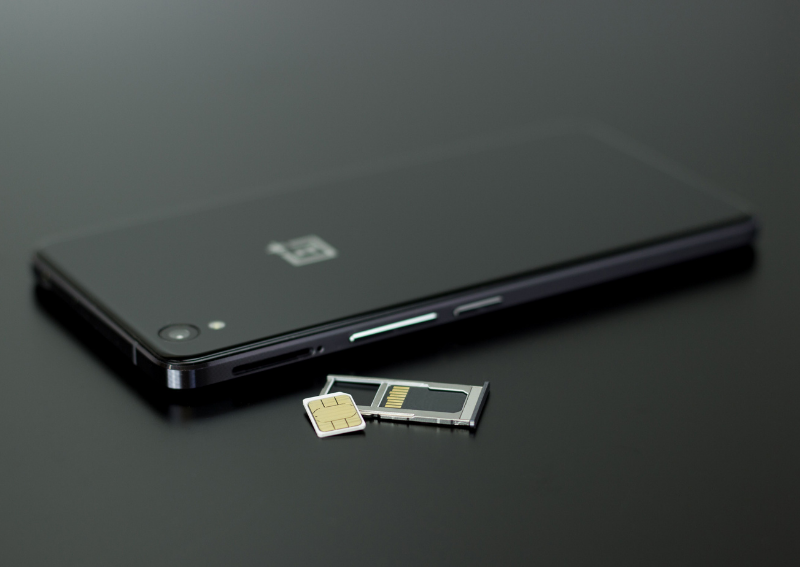
| Physical SIM | eSIM | |
|---|---|---|
| Price | Usually cheaper | Usually slightly more |
| Where you get it | Airport or carrier store on arrival | Online, before you fly |
| Setup time | 5 to 15 minutes at a counter | 5 minutes, at home |
| Phone requirement | Any unlocked phone | eSIM capable and unlocked phone |
| Keeps your home number active | No, unless dual SIM | Yes, your physical SIM stays in |
| Working from the moment you land | After you find the counter | Yes, immediately |
| Local phone number | Yes | Sometimes, depends on the plan |
| Topping up | Easy at any shop | Through an app |
Choose a physical Vietnam SIM card if
A physical Vietnam SIM card suits you if your phone does not support eSIM, you want the cheapest option, you want a Vietnamese phone number for bookings and restaurant reservations, or you are staying several weeks.
Choose an eSIM if
You want data working the second the plane lands, you want to keep your home number receiving messages, you do not want to queue after a long flight, or you are only here for a few days.
Check this before you decide
Your phone must be unlocked before a Vietnam SIM card or an eSIM will work. If you bought it on a contract and have never used another network’s SIM in it, check with your provider before you fly.
For eSIM, check compatibility in your phone’s settings rather than trusting a general list. Most iPhones from the XS onwards and most recent Samsung, Google and other flagship models support it, but regional variants differ, and some models sold in certain markets do not.
Vietnam SIM Card Carriers Compared
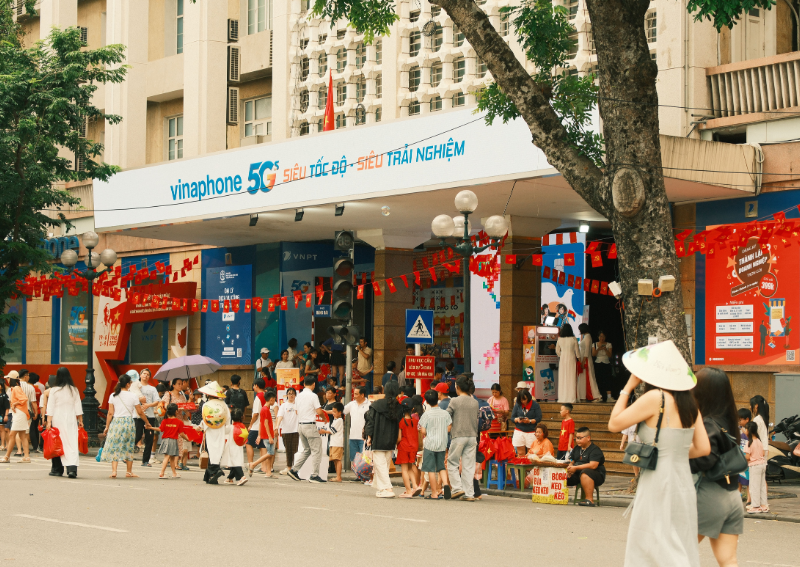
Vietnam has three major networks and a few smaller ones, and your Vietnam SIM card will come from one of them. For a visitor the choice matters less than it might elsewhere, because coverage in Hanoi is good on all of them. It matters more if you are heading north into the mountains.
Viettel
The largest network and the best network in Vietnam for coverage, owned by the military. If any network reaches a remote valley in Ha Giang or a village outside Sapa, it is this one.
The default recommendation for anyone travelling beyond the major cities.
Vinaphone
State owned, strong urban coverage and generally good speeds in Hanoi, Da Nang and Ho Chi Minh City. Competitive tourist packages. Fine for a trip that stays on the standard route.
Mobifone
The third of the big three, comparable to Vinaphone in the cities, slightly weaker in remote areas. Often has the most aggressive promotional pricing.
The smaller networks
Vietnamobile and the newer entrants offer cheap data but noticeably patchier coverage. They are worth considering only if you are staying in one city and price is the only factor.
The practical Vietnam SIM card summary
| Trip | Recommended |
|---|---|
| Hanoi and major cities only | Any of the big three |
| Northern mountains, Ha Giang, Sapa, Mu Cang Chai | Viettel |
| Ha Long Bay and the islands | Viettel |
| Budget priority, city based | Mobifone or a smaller network |
| Business use, reliability matters | Viettel or Vinaphone |
Where to Buy a Vietnam SIM Card
Buying a Vietnam SIM card at Noi Bai Airport
The arrivals hall has official carrier counters selling Vietnam SIM cards. Staff speak English, they register the SIM for you against your passport, they install it, and they will usually test that data is working before you walk away.
This is the simplest option and what most visitors do. Expect to pay slightly more than in the city, and expect a queue after a bank of flights lands.
Allow ten to twenty minutes. Have your passport out.
Official carrier stores in the city
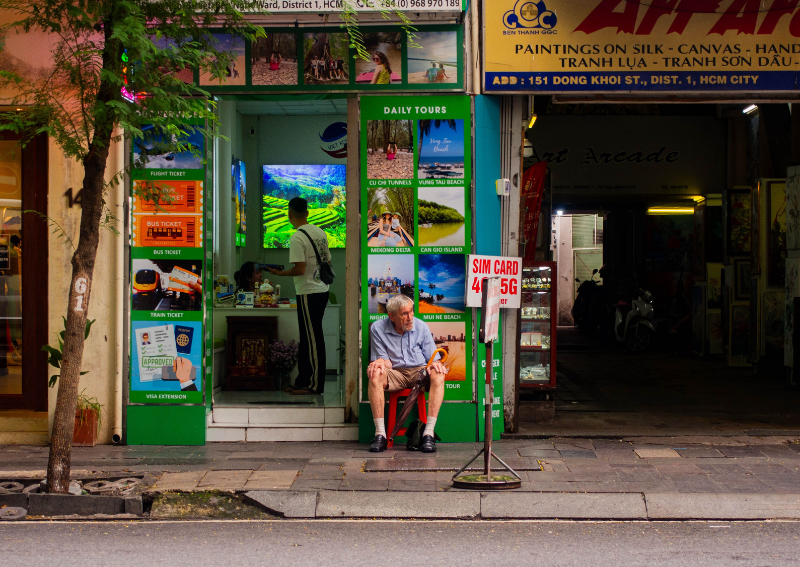
Viettel, Vinaphone and Mobifone all have branded stores across central Hanoi, including several in and around the Old Quarter. Prices are lower than at the airport and the process is the same.
Worth doing if you land late, if the airport queue is long, or if you want to compare plans properly rather than pick from a laminated card.
Convenience stores
Circle K, GS25, WinMart and similar sell prepaid Vietnam SIM cards. Convenient, but staff may not be able to complete registration, and an unregistered SIM gets cut off. If you buy this way, confirm the registration is done before you leave the shop.
Street vendors and phone shops
Avoid. The savings are small and the risks are real: SIMs registered to someone else’s identity, cards that stop working after a few days, and data packages that are not what was described.
Buying an eSIM before you fly
The Vietnamese carriers sell eSIMs directly through their own apps and websites, which is the cheapest route. A number of international eSIM resellers also cover Vietnam; they are simpler to buy from in English but cost noticeably more for the same data.
Whichever you choose, install it a day or two before departure rather than at the gate, and do not delete your home eSIM to make space.
Vietnam SIM Card Prices and Typical Plans
Vietnam SIM card tourist packages are repackaged often, but the shape of the market is consistent. These bands are a guide rather than a quote.
| Plan type | Typical price | What you usually get |
|---|---|---|
| Short trip data, 7 days | 80,000 to 150,000 VND | Several GB a day or a large pooled allowance |
| Standard tourist SIM, 30 days | 150,000 to 300,000 VND | Generous daily data, local calls and texts |
| High data, 30 days | 300,000 to 500,000 VND | Very large or effectively unlimited data |
| eSIM, 7 to 15 days, bought direct | 150,000 to 350,000 VND | Data only, sometimes no local number |
| eSIM via an international reseller | 10 to 25 USD | Data only, convenience premium |
For reference, 100,000 VND is roughly 4 US dollars, 3 pounds or 6 Australian dollars.
What this means in practice
A standard month long tourist Vietnam SIM card costs about the same as two coffees in London. There is very little reason to economise further by choosing a smaller plan.
Topping up a Vietnam SIM card
If you run out, top up cards are sold in every convenience store and phone shop, and the carrier apps take card payments. Ask your hotel if the process in Vietnamese defeats you; it is a routine request.
How to Set Up a Vietnam SIM Card as an eSIM
Do all of this at home, on wifi, at least a day before you fly.
- Check your phone supports eSIM. On iPhone, look in Settings under Mobile Data for an option to add an eSIM. On Android, check Network and Internet settings for the same. If the option is absent, your phone cannot do it.
- Check your phone is unlocked. A phone locked to a home carrier will not accept another network’s eSIM.
- Buy the plan. Direct from a Vietnamese carrier is cheapest; an international reseller is simpler in English and costs more. You will receive a QR code or an activation code by email.
- Install the eSIM, but do not activate it yet if the plan lets you choose. Scan the QR code in your phone’s settings to add the profile. Most plans start counting from first use rather than from purchase, but confirm this, because some start on a fixed date.
- Label it. Name the new line something obvious like Vietnam, so you can tell it apart from your home line.
- Set your preferences before you travel. Choose which line handles calls, which handles data, and turn data roaming off on your home line so you do not get charged by accident.
- On landing, switch data to the Vietnamese line. It should connect within a minute or two of the aircraft doors opening.
If it does not connect
Toggle flight mode on and off. Check the Vietnamese line is enabled and selected for mobile data. Check data roaming is on for that line, which sounds wrong but is often required. Restart the phone.
If none of that works, you still have the fallback that every traveller has: airport wifi and a counter selling physical SIMs forty metres away.
Vietnam SIM Card Registration Rules
Vietnam requires every mobile number, including every tourist Vietnam SIM card, to be registered to an identified person. For a visitor this means your passport.
What this means for you
You need your passport to buy a SIM. Not a photocopy, the physical document. Have it to hand rather than in a bag in the hold.
Registration happens at the point of sale. At an airport counter or a carrier store, staff do it on the spot and it takes a few minutes.
Unregistered SIMs get disconnected. Vietnam has run repeated campaigns to cut off numbers not properly registered, and they do get cut off, usually after a few days to a few weeks.
This is the real reason to buy from an official outlet. A SIM sold from a market stall may be registered to a stranger, or not registered at all. It works today and stops working on Thursday, usually while you are somewhere that makes this inconvenient.
For eSIMs
The registration requirement still applies. Buying direct from a carrier usually means uploading a passport photo during the purchase. Resellers handle it in various ways, and some data-only eSIMs operate differently; if a seller asks for no identification at all, understand that as a question worth asking rather than a convenience.
One practical note
Keep a photo of the Vietnam SIM card packaging, the phone number and the plan details. If you need to top up, visit a store or report a problem, having the number written down somewhere other than inside the phone it belongs to is worth the ten seconds.
Vietnam SIM Card: Practical Tips and Troubleshooting
Coverage in Hanoi is excellent. All three major networks work well throughout the city, including inside the Old Quarter’s narrow streets and on the metro line.
Coverage outside Hanoi varies. Ha Long Bay has reasonable signal near shore and patchy coverage further out. Sapa and the northern mountains are fine in the towns and unreliable on the trails. Ha Giang has long dead stretches on all networks. Viettel is the safest choice if any of this is on your route.
5G exists but do not plan around it. It is live in parts of the major cities and expanding. 4G is what you will use most of the time, and it is fast enough for everything a traveller does.
Hotspotting works. If you are travelling as a couple or a family, one generous data plan shared by hotspot is usually cheaper than two SIMs. Check the plan permits tethering, as a few budget packages restrict it.
Keep your home number alive if you need it. Banking apps and two factor authentication codes often go to your home number. An eSIM solves this neatly. With a physical SIM in a single SIM phone, you will be swapping cards, so keep the home SIM somewhere safe rather than loose in a pocket.
If data stops working mid trip: check whether the plan has expired or the allowance is used; check mobile data and data roaming are enabled for the right line; toggle flight mode; restart. If none of that helps, take the phone and your passport to a carrier store, where they will usually sort it in a few minutes.
Apps worth having before you land. Grab for transport and food delivery, Google Maps with the Hanoi area downloaded offline, Google Translate with Vietnamese downloaded, and your airline and hotel apps. Downloading these at home saves a frustrating first hour.
Vietnam SIM Card: Frequently Asked Questions
Where can I buy a Vietnam SIM card at Hanoi airport? Official Viettel, Vinaphone and Mobifone counters operate in the Noi Bai arrivals hall. Staff register the SIM against your passport and install it, which takes ten to twenty minutes including the queue.
How much does a Vietnam SIM card cost? A standard 30 day tourist SIM with generous data typically runs 150,000 to 300,000 VND, roughly 6 to 12 US dollars. Shorter plans start around 80,000 VND.
How much is mobile data in Vietnam? Very cheap by international standards. A month of large or effectively unlimited daily data costs less than most European roaming passes charge for two days.
Can I get an eSIM for Vietnam? Yes. All three major carriers support eSIM, and international resellers cover Vietnam too. Buying direct from a carrier is cheaper; resellers are simpler in English.
Which network is best in Vietnam? Viettel has the widest coverage, especially in the northern mountains and offshore. Vinaphone and Mobifone are equally good in Hanoi and the main cities.
Do I need my passport to buy a Vietnam SIM card? Yes. Every mobile number must be registered to an identified person, and unregistered SIMs are disconnected.
Is there free wifi in Hanoi? Yes, and it is good. Hotels, cafes, restaurants and many street food shops offer it free. A SIM is still worth having for transport, navigation and translation when you are between places.
Can I use my phone in Vietnam without a Vietnam SIM card? Yes, on wifi, or on international roaming if your plan covers Vietnam. Check your roaming data cap first, since it is often low and the overage charges are high.
Where can I top up a Vietnam SIM card? Top up cards are sold in convenience stores and phone shops throughout the Old Quarter, and the carrier apps accept card payment.
Where to Stay When You Land
The first hour in a new country is the one where being online matters most, and the one where you are least likely to be. An eSIM solves that before you board. A hotel in the middle of everything solves the rest.
Hanoi La Siesta Premium Hang Be is one of the best hotels in Hanoi Old Quarter and sits on Hang Be Street, a short drive from Noi Bai and within walking distance of carrier stores, convenience stores and ATMs, which covers most of the small errands of a first afternoon.
For travellers comparing the best hotels in Hanoi, the practical detail is that the front desk handles arriving guests every day and can point you to the nearest official carrier store rather than the nearest stall selling something that looks like one. Among the best boutique hotels in Hanoi, it offers a quiet, sophisticated base in the middle of the Old Quarter, which is a good place to be once the phone is working and the trip can actually start.