

Vung Tau Beach Guide 2026: Southern Vietnam’s Most Accessible Coastal Escape
Ho Chi Minh City never really stops. That’s part of what makes it so compelling – and occasionally, exactly what makes you want to leave it for a weekend. Fortunately, Vung Tau sits just 100 to 110 kilometers southeast of the city, close enough for a spontaneous Friday afternoon departure and far enough to feel like a genuine change of scene.
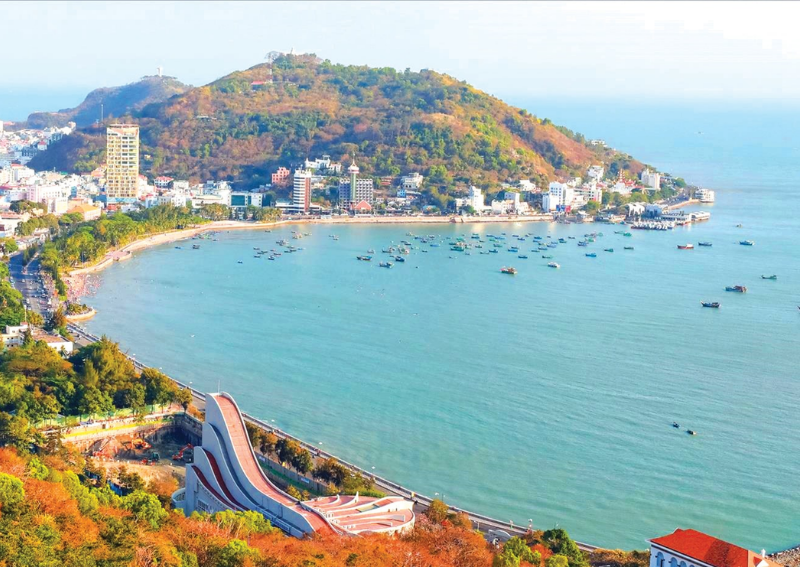
With a long seafront boulevard framed by two coastal peaks, a string of beaches ranging from family-friendly to genuinely secluded, colonial landmarks, ancient temples, and one of the best seafood scenes in southern Vietnam, Vung Tau Beach delivers considerably more than most weekend getaway destinations. Here’s everything you need to plan the trip properly.
Best time to Visit Vung Tau
The most comfortable window for a Vung Tau visit runs from November through April – the dry season brings reliable sunshine, lower humidity, and the kind of calm sea conditions that make beach days genuinely enjoyable. The monsoon months from May to October bring more rain and choppier waters, though the trade-off is significantly fewer crowds and lower accommodation rates.
For most visitors, two to three days covers the key beaches, main landmarks, and a proper sampling of the local food scene without feeling rushed. If you want to venture further afield, to Ho Tram Beach, some of the quieter pagodas, or the more remote viewpoints, build in a third or fourth night.
Getting from Ho Chi Minh City to Vung Tau
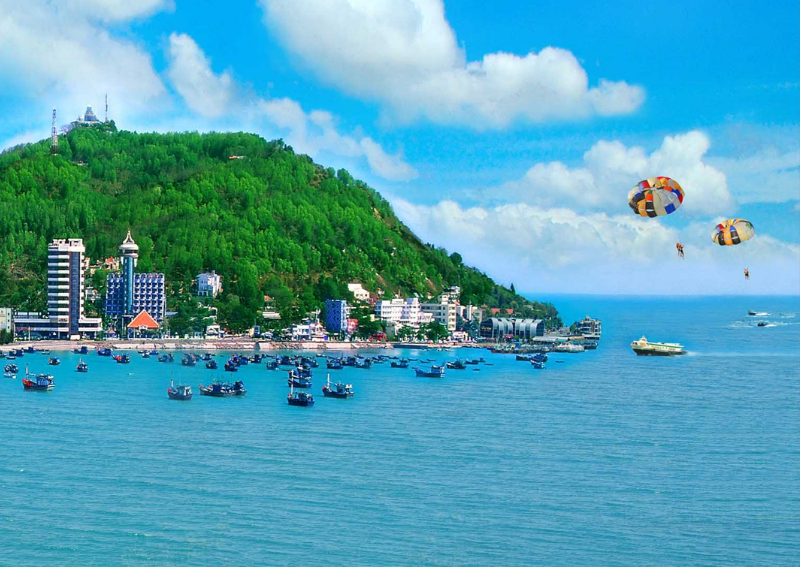
The journey from Vung Tau Ho Chi Minh City is one of the most straightforward coastal transfers in southern Vietnam, with several options across different budgets and travel styles.
- By Ferry – The most atmospheric way to arrive. The ferry glides down the Saigon River through mangrove channels and out into open water, taking approximately two hours. Tickets start at around $17 and should be booked in advance – services are limited, particularly in the low season, and popular departures fill up quickly.
- By Bus – The go-to option for budget travelers. Frequent departures from multiple Ho Chi Minh City bus stations run throughout the day, the journey takes two to three hours depending on traffic, and tickets start at just $7-9. Comfortable, reliable, and very easy to book.
- By Minivan – A step up in comfort and flexibility. Single seats start from around $8, while private group transfers (with hotel pick-up and drop-off) begin at approximately $86. Travel time is comparable to the bus.
- By Private Car – For travelers who value a seamless door-to-door experience, a private car covers the distance in roughly two hours and fifteen minutes. Prices start from around $45 – good value when split across a small group.
Beaches in Vung Tau: What to Expect at Each One
Vung Tau is not a single-beach destination. Each stretch of coastline has its own character, and choosing the right one depends entirely on what kind of beach day you’re after.
Back Beach (Bai Sau) – The Main Event
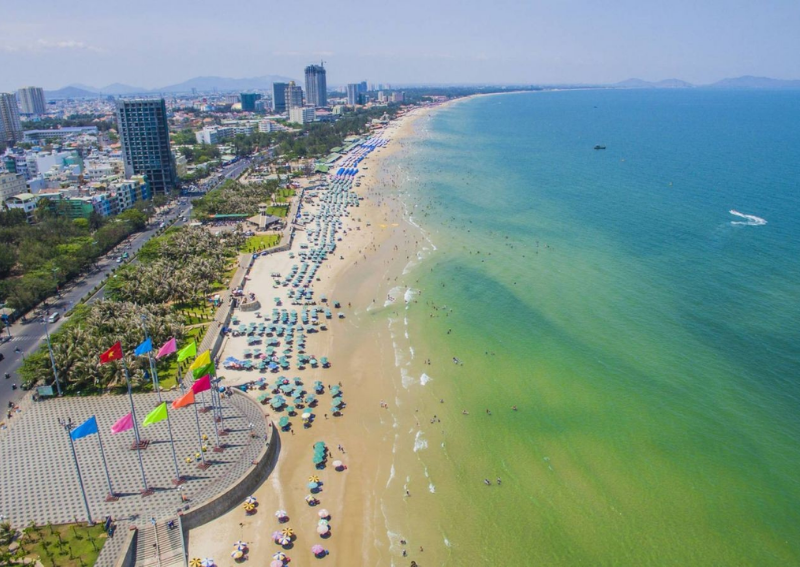
The longest and most developed of Vung Tau’s beaches, Back Beach runs for eight kilometers of soft golden sand with consistently gentle surf conditions. The water is calm enough for confident family swimming, with floating barriers marking safe zones, and the beachfront infrastructure – hotels, restaurants, beach clubs, jet ski operators, parasailing outfitters – is the most complete on the coast. If you want a full beach day with everything on hand, this is where to base yourself. Evening strolls along the promenade, with the coastal peaks as a backdrop, are a particular pleasure.
Access: Via Thuy Van Street from the city center. Most hotels offer shuttle services; walking from central accommodation takes 10–15 minutes.
Front Beach (Bai Truoc) – Sunsets and Harbor Life
Front Beach trades swimming conditions for something more visually distinctive: a crescent of dark volcanic sand tucked into a natural bay between Tao Phung and Tuong Ky mountains, doubling as the city’s main fishing harbor. Anchored vessels limit water activities, but the sunset photography here is exceptional, and the adjacent commercial area and ferry terminal make it a natural evening gathering point. The cultural texture of an active fishing harbor, boats, nets, the smell of the sea, adds something that the more resort-oriented Back Beach simply doesn’t have.
Access: Located on Tran Phu Street in Ward 1, within easy walking distance of most city center stays.
Ho Tram Beach – Luxury and Seclusion
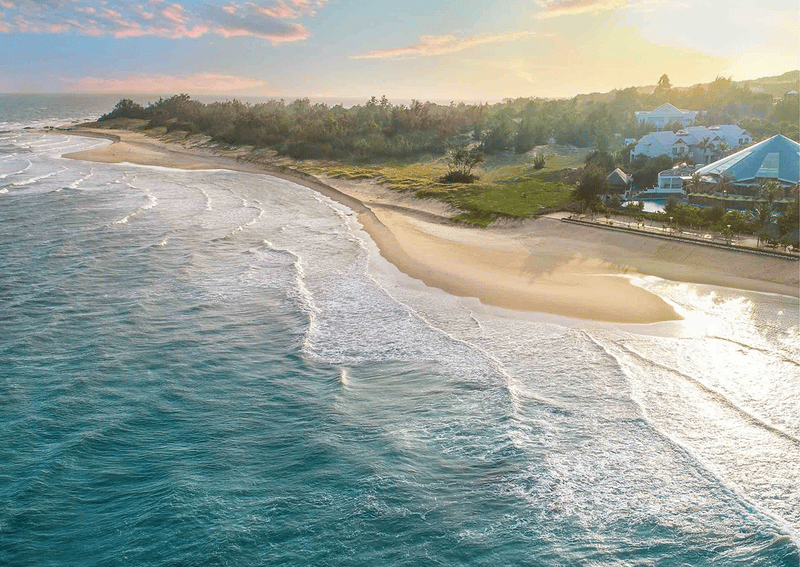
Thirty kilometers north of Vung Tau, Ho Tram is a different proposition entirely: pristine white sand, clear blue water, world-class resort infrastructure, and a pace of life that feels genuinely removed from the city. Beachfront golf courses, spa retreats, and the kind of uninterrupted quiet that the more central beaches can’t offer make Ho Tram the right choice for travelers who prioritize that over convenience and nightlife access.
Access: Highway 51 north from Vung Tau, then follow signs to Ho Tram. Private car or motorbike recommended; most resorts provide direct transfers from both Vung Tau and Ho Chi Minh City.
Pineapple Beach (Bai Dua) – Rocks, Drama, and Photography
The most geologically striking of Vung Tau’s beaches – large volcanic rock formations scattered across soft sand create dramatic natural compositions that draw photographers at low tide, when the exposed formations are at their most sculptural. The beach is quieter than the main strips, and the views across Nghinh Phong Cape add a scenic dimension that’s hard to match. Best visited during low tide for the full visual impact.
Access: Ward 2 on Ha Long Street, reachable by motorbike, taxi, or on foot from central Vung Tau.
What to See in Vung Tau: Landmarks Worth the Climb
The Christ the King Statue
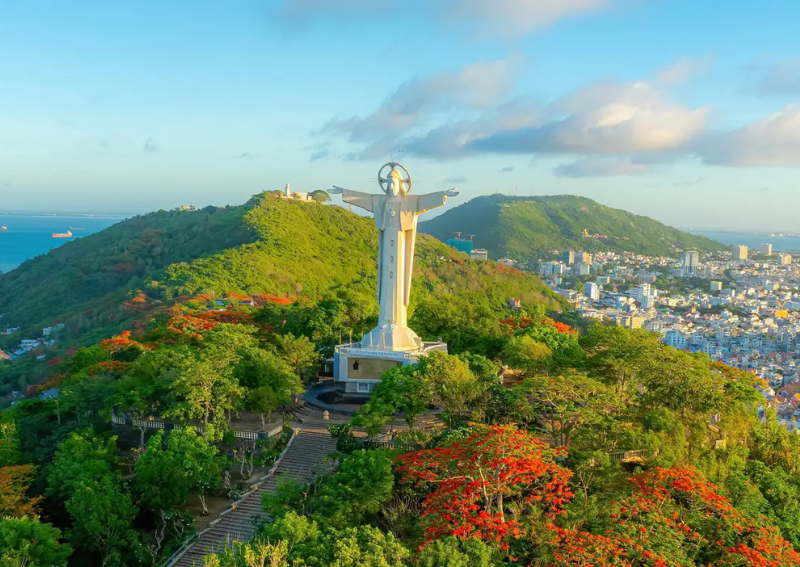 Perched on a headland above the city at 32 meters tall, Vung Tau’s Christ the King statue is one of the most recognized landmarks in southern Vietnam — frequently compared in scale and drama to Rio de Janeiro’s Christ the Redeemer. Getting there requires genuine effort: roughly 800 cobblestone steps to the base, followed by 133 more inside the statue to reach the shoulders. The payoff is a full 360-degree panorama over the city and coastline that is, by any measure, worth every step. Entry is free; modest dress is required as a condition of access.
Vung Tau Lighthouse
Atop Nui Nho (Small Mountain), this lighthouse has guided ships into harbor for over 150 years, making it one of the oldest still standing in Vietnam. The approach road alone – winding through coastal vegetation with the sea appearing between the trees – is considered one of the most scenic short drives in the city. Visitors can arrive by motorbike or taxi, or walk the three-kilometer route at a leisurely pace, stopping at the small cafes and viewpoints along the way. The summit delivers one of the finest sunset vantages on the East Vietnam Sea coast.
Bach Dinh (White Palace)
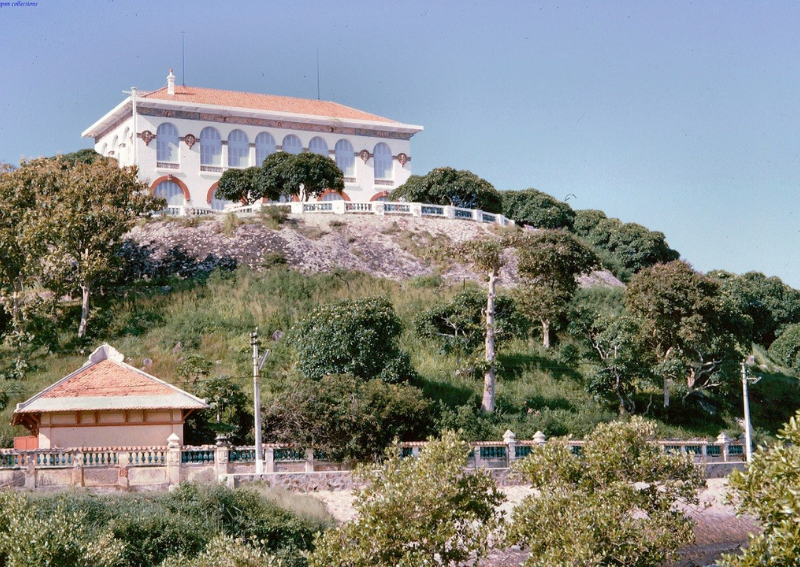 Built in the late 1800s as the official residence of the French colonial governor, and later used as a retreat by both French officials and Vietnam’s last emperor Bao Dai, Bach Dinh is the most architecturally distinguished colonial landmark in Vung Tau. Inside, the building functions as a quietly absorbing museum – the highlight being a collection of Ching Dynasty ceramics recovered from a 17th-century shipwreck discovered off the Vung Tau coast. The surrounding gardens, shaded by mature trees and overlooking the sea, are ideal for an unhurried afternoon.
Nui Lon (Big Peak) and Ho May Park
For a different kind of elevation experience, the cable car at Ho May Park on Nui Lon offers sweeping coastal views without the steps. The park also provides access to a French-built artillery field from the late 19th century, where visitors can examine enormous cannons, some exceeding 15 tons, and explore the underground bunkers that once formed part of the coastal defense network. A distinctively unusual afternoon in a city that already has a lot going on.
Cultural Depth: Temples, Pagodas, and Living Traditions
 What to see in Vung Tau extends well beyond its coastline. The city has a spiritual and cultural landscape of genuine richness, accumulated over centuries of maritime history and multi-ethnic settlement. Niet Ban Tinh Xa Pagoda is reputedly the largest Buddhist pagoda in Vietnam, centered on a 12-meter reclining Buddha and a massive ceremonial bell. The scale of the site, and its hilltop setting, makes it one of the most impressive religious sites along the southern coast.
- Linh Son Co Tu is the oldest temple in Vung Tau, housing a gold-plated stone Buddha estimated by archaeologists to be approximately 1,600 years old – a sobering reminder that this coastline was inhabited and spiritually significant long before colonial or even imperial Vietnamese records.
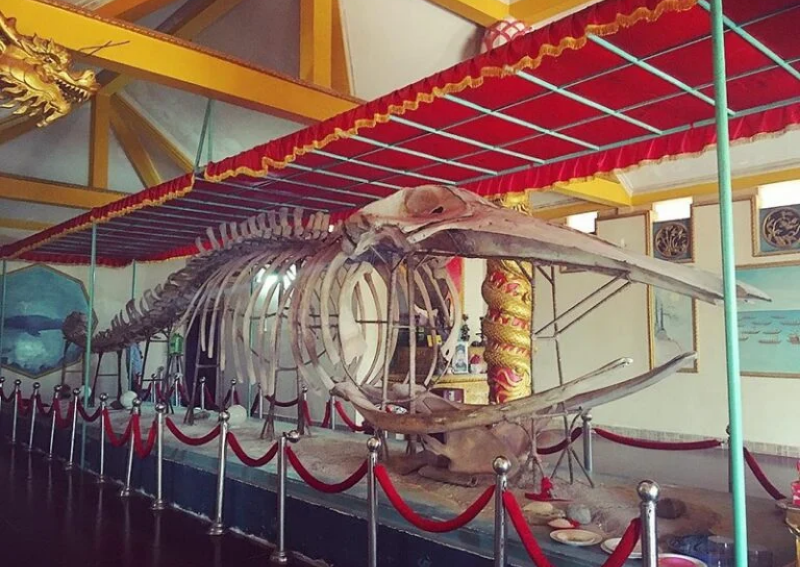
- Lang Ca Ong Temple introduces visitors to one of the most unusual and distinctive local traditions in the region: the whale cult. Coastal fishing communities across southern Vietnam have long revered the whale as a protective deity, and this temple – which houses actual whale skeletons alongside ceremonial artifacts – offers a genuinely singular cultural encounter.
- The annual Nghinh Ong Festival, held in August of the lunar calendar, is one of Vietnam’s 15 nationally significant festivals and the most important annual event in the city’s ceremonial calendar. If your visit coincides with it, clearing your schedule for the day is strongly recommended.
What to Eat in Vung Tau: A Coastal Food Guide
Fresh seafood is the foundation of Vung Tau’s culinary identity, and the city delivers on that promise across everything from roadside stalls to beachfront restaurants. The night seafood market on Back Beach, where you select your own fish, crabs, or shellfish from the vendor’s display and have it cooked to order, is one of the most enjoyable dining experiences in the region.
These are the dishes that define what to eat in Vung Tau:
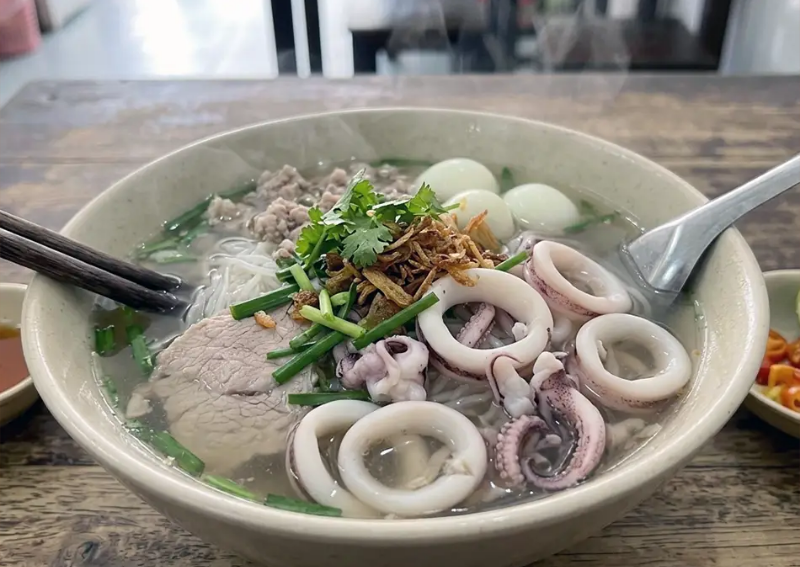 Hu Tieu Muc (Squid Noodle Soup): Vung Tau’s distinctive take on Vietnam’s beloved hu tieu, chewy rice noodles in a clear aromatic broth, loaded with fresh squid rings, quail eggs, and served alongside fresh herbs and a tangy seafood dipping sauce. The local version is lighter and more seafood-forward than the Saigon variant.
- Banh Khot (Mini Crispy Pancakes): The city’s most iconic street food: small, golden, coconut-milk pancakes topped with shrimp or baby squid, eaten wrapped in fresh lettuce leaves with herbs and sweet-sour fish sauce. Best enjoyed at lunch or dinner when they’re made to order and served immediately from the pan.
- Bun Rieu Tom (Shrimp Noodle Soup): A Vung Tau variation on the classic bun rieu that substitutes finely ground shrimp for crab, mixed with pork and egg into a light, delicately flavored broth. Refreshing and distinctly coastal.
- Hau Ne (Sizzling Oysters): Plump oysters cooked in a savory tomato-based sauce with a runny egg, served bubbling hot in the pan alongside crusty bread. An underrated local specialty that deserves far more attention than it gets from visitors. Grilled oysters with cheese are a popular variation at the beachfront restaurants.
- Lau Ca Duoi (Stingray Hotpot): A communal evening dish – stingray simmered with sour bamboo shoots and aromatics in a rich, tangy, lightly spiced broth, served with rice noodles and a spread of fresh vegetables. Particularly well-suited to a breezy Back Beach dinner.
- Cha Gio Ca Trich (Herring Spring Rolls): A distinctly local innovation: crispy fried rolls filled with marinated herring, cassava, and red radish, served with fresh greens and dipping sauce. The combination sounds unlikely; the result is genuinely addictive.
- Banh Bong Lan Trung Muoi (Salted Egg Sponge Cake): The city’s signature souvenir food – a soft, fluffy cake topped with cheese, pork floss, and salted egg. Available at bakeries throughout the city and worth bringing back to Saigon by the boxful.
Back to the City – Come Home to La Siesta Premium Saigon
Every great coastal escape eventually finds its way back to the city, and after a few days of Vung Tau’s beaches, seafood, and hilltop panoramas, returning to the energy of Ho Chi Minh City is its own kind of pleasure.
La Siesta Premium Saigon is where that return lands well. Positioned in the heart of District 1, it has earned its place among the best boutique hotels in Saigon through a combination of Indochine-inspired design, genuinely personal hospitality, and a location that makes the transition from coastal road trip to city life entirely seamless. Whether you’re arriving back on a Sunday evening ferry or a late-night bus from Vung Tau, having a property this central – and this comfortable – waiting for you closes the weekend on exactly the right note.
For travelers using Saigon as a base for exploring the southern coast, the Mekong Delta, or further destinations beyond, La Siesta Premium Saigon functions as the kind of anchor that makes the whole itinerary work. It stands apart from the broader field of best hotels in Saigon not just for what it offers within its walls, but for the ease it brings to everything outside them.
See also: Mekong Delta Trip Vietnam: The Complete Guide | Vietnam Reunification Day: A Traveler’s Guide to April 30 in Saigon