What is Com Tam Saigon?

Com tam literally means “broken rice.” The dish gets its name from the small fragments of rice grains created during the milling process.
Historically, broken rice was considered less valuable than whole grains and was often eaten by rice farmers because it was inexpensive. Over time, however, Saigonese cooks transformed it into a much-loved dish by pairing the rice with grilled pork and a range of savoury toppings.
Today, com tam Saigon is usually served with grilled pork chop, shredded pork skin, steamed egg meatloaf, pickled vegetables and a small bowl of sweet and savoury fish sauce.
What Does Com Tam Saigon Taste Like?
The appeal of com tam comes from contrast. The broken rice itself is soft and slightly more delicate in texture than regular long-grain rice. Grilled pork provides smoky, savoury flavours, while the fish sauce adds sweetness, saltiness and acidity.
Pickled vegetables bring freshness to the plate, while scallion oil adds another layer of richness. A classic plate therefore combines smoky, sweet, savoury, sour and fresh flavours in one meal. The result is comforting without being complicated, which helps explain why com tam has become such an important part of Saigon food culture.
What Usually Comes with Com Tam in Ho Chi Minh city?
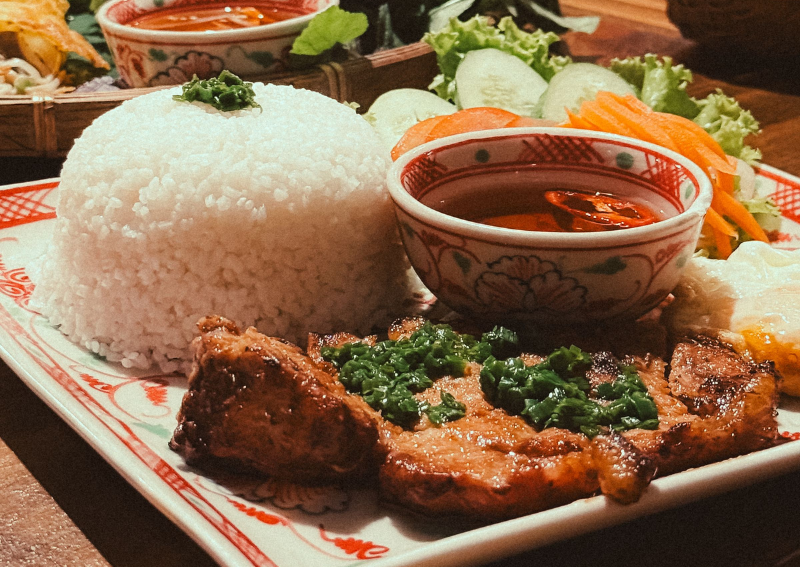
A traditional plate can contain several components, although the exact combination varies from restaurant to restaurant.
Suon nuong
Grilled pork chop is the signature topping and is often the first thing you notice. The pork is marinated before being grilled over charcoal, giving it a smoky aroma and caramelised edges.
Bi
Bi is finely shredded pork skin mixed with roasted rice powder. It has a slightly chewy texture and a distinctive toasted aroma.
Cha trung
Cha trung is a Vietnamese steamed egg and pork mixture. It adds a soft, savoury element to the plate and works particularly well with the grilled pork.
Do chua
Pickled carrot and daikon provide acidity and crunch, helping to balance the richness of the meat and fish sauce.
Nuoc mam
Sweet and savoury fish sauce ties everything together. Every restaurant has its own balance of fish sauce, sugar, water and other ingredients, and it can make a surprisingly noticeable difference to the final dish.
When Do Vietnamese People Eat Com Tam Saigon?
Unlike many traditional dishes associated with a particular occasion, com tam is an everyday meal. In Ho Chi Minh City, it can be eaten for breakfast, lunch or dinner. Some local restaurants open early in the morning, while others continue serving into the evening.
For travellers, this makes com tam particularly easy to include in a Ho Chi Minh City food itinerary. If you see a small restaurant with a charcoal grill outside and rows of marinated pork chops ready to cook, there is a good chance you have found a local com tam spot. The smell of grilled pork drifting into the street is often part of the experience itself.
Why is Com Tam in Ho Chi Minh City Special?

Com tam Saigon is eaten throughout Vietnam, but it has a particularly strong connection with Saigon. As the city developed during the 20th century, com tam evolved from a humble rice dish into a complete meal combining different culinary influences. Modern versions commonly include grilled pork, steamed egg and shredded pork skin, served as a generous plate rather than a simple bowl of rice.
This transformation reflects the character of Ho Chi Minh City itself: practical, diverse and constantly adapting. For many locals, com tam is more than Saigon street food. It is an everyday taste of home.
Where to Eat Com Tam in Ho Chi Minh City
Cơm Tấm Ba Ghiền
Ba Ghien is one of the names most frequently associated with classic Saigon broken rice. The restaurant is known for its generously sized grilled pork chop, prepared over charcoal and served with broken rice and traditional accompaniments. Its Phu Nhuan location takes you beyond the central tourist districts and into a neighbourhood where everyday local dining is part of the experience. For travellers specifically searching for best com tam in Ho Chi Minh City, Ba Ghien is a useful name to know when building a Saigon food itinerary.
Cơm Tấm Nguyễn Văn Cừ
- 74 Nguyen Van Cu, Cau Ong Lanh, Ho Chi Minh City
Located near the boundary of the central districts, Com Tam Nguyen Van Cu is a long-standing option for travellers wanting to explore a more traditional local rice meal. The restaurant focuses on familiar com tam combinations, making it a straightforward choice for first-time visitors. Its location also makes it convenient to combine lunch with exploring the neighbourhoods around Nguyen Van Cu and the southern edge of District 1. Come hungry, as the combination of broken rice, grilled meat and savoury toppings makes for a substantial meal.
Cơm Tấm 701
- 35 Nguyen Van Trang, District 1, Ho Chi Minh City
For visitors who prefer to stay close to the centre, Com Tam 701 offers an easy introduction to com tam in District 1. Its menu focuses on the familiar Saigon combination of broken rice, grilled pork, shredded pork skin and steamed egg. The restaurant’s central location makes it particularly convenient for travellers exploring Ben Thanh Market, Nguyen Hue Walking Street and the surrounding food scene. It is a practical choice when you want to add a local rice dish to a day of sightseeing without travelling far from central Ho Chi Minh City.
Cơm Tấm Saigon – Lê Anh Xuân
- 39 Le Anh Xuan, District 1, Ho Chi Minh City
Com Tam Saigon on Le Anh Xuan is another convenient option for travellers staying around central District 1. The restaurant offers the familiar components associated with Saigon broken rice, making it suitable for visitors trying the dish for the first time. Its central location means it can easily be included in a food-focused walking route around Ben Thanh, the city’s central markets and nearby landmarks. With extended opening hours, it can also work for travellers who want to try com tam outside traditional lunchtime hours.
Cơm Tấm Thuận Kiều
- 54 Thuan Kieu, Ho Chi Minh City
Located in the wider Cho Lon area, Com Tam Thuan Kieu offers an opportunity to combine a meal with an exploration of one of the city’s most culturally distinctive neighbourhoods. The restaurant serves the familiar broken rice format associated with Southern Vietnamese cuisine, with grilled meats and traditional accompaniments. Its early opening hours make it suitable for breakfast or an early lunch. For travellers interested in exploring beyond the main attractions of District 1, this is a useful stop while discovering the food and cultural character of the city’s western districts.
How to Eat Com Tam Like a Local
There is no complicated etiquette involved. The traditional way is to combine a little of everything in each bite. Pick up some broken rice with grilled pork, add a little pickled vegetable and drizzle over the fish sauce according to your preference.
You can use chopsticks for the meat and other toppings, while a spoon is useful for the rice. Before adding extra sauce, try the dish as it arrives. This lets you appreciate how the restaurant balances the sweetness, saltiness and acidity of its fish sauce.
What is the Best Com Tam Dish to Order?
If it is your first time trying com tam, start with com tam suon nuong, broken rice served with grilled pork chop. For a more complete experience, order the combination with suon, bi and cha, often referred to as the classic “suon bi cha” combination.
If you enjoy richer flavours, look for versions with an extra fried egg or additional grilled meat. Vegetables and pickles may look like small side dishes, but they are important because they cut through the richness of the pork and fish sauce.
Tips for Trying Com Tam in Saigon
- Follow the charcoal smoke. Traditional com tam restaurants often grill pork near the entrance.
- Try the classic combination first. Grilled pork, bi and cha give you a good introduction to the dish.
- Taste the fish sauce before adding more. Each restaurant prepares it differently.
- Expect a filling meal. A standard plate can include rice, pork, egg and several accompaniments.
- Explore beyond District 1. Some of the most interesting local food experiences are found in neighbourhoods outside the tourist centre.
- Go during normal meal times. Breakfast and lunch are particularly common occasions for com tam.
- Bring an appetite. The combination of rice and grilled meat makes this one of the more substantial Vietnamese dishes.
Where to Stay for a Com Tam Food Experience in Saigon
After a day spent exploring Ho Chi Minh City’s markets, neighbourhood restaurants and street food stalls, having a comfortable base in the city centre makes it easier to continue discovering Saigon’s food culture. La Siesta Premium Saigon Central offers an elegant retreat in the heart of District 1, within easy reach of Ben Thanh Market, Nguyen Hue Walking Street, the Saigon riverfront and many of the city’s historic landmarks.
For travellers comparing the best hotels in Saigon, its central location makes it a convenient base for exploring both the well-known attractions and the smaller local restaurants where dishes such as com tam are part of everyday life.
Recognised among the best boutique hotels in Saigon, La Siesta Premium Saigon Central combines Vietnamese-inspired design, thoughtful service and a calm atmosphere, offering a comfortable place to return to after a day of exploring the city’s food map.
