Where Is District 5 Ho Chi Minh City?

District 5 was historically located just west of District 1 and forms one of the most important parts of the wider Cholon area.
There is an important detail for travellers to know when searching for addresses today. Following Ho Chi Minh City’s administrative reorganisation in 2025, the former District 5 was dissolved as a district-level administrative unit and its former wards were reorganised into three new wards: Chợ Quán, An Đông and Chợ Lớn.
Chợ Quán was formed from the former Wards 1, 2 and 4. An Đông was formed from Wards 5, 7 and 9, while Chợ Lớn was formed from Wards 11, 12, 13 and 14.
You will still see “District 5” used widely in travel guides, restaurant listings and everyday conversations because it remains the most recognisable name for the area. For visitors, searching for District 5 or Cholon is still one of the easiest ways to find this historic part of Saigon.
What Is Cholon?
Cholon means “Big Market” and refers to the historic Chinese Vietnamese quarter of Ho Chi Minh City.
Although Cholon is strongly associated with District 5, the cultural area extends into neighbouring parts of the city as well. It developed as an important centre of commerce and became home to generations of ethnic Chinese communities, particularly communities with Cantonese, Teochew, Hokkien and other regional Chinese backgrounds.
Today, Cholon remains one of the best places to experience Chinese culture in Ho Chi Minh City.
The heritage is visible everywhere. Chinese characters appear on shop signs, incense burns inside traditional temples, markets sell ingredients used in Chinese cooking, and old family businesses continue to serve local customers. Most importantly, this heritage can be tasted.
Why Is District 5 Famous for Chinese Food?

Food is one of the strongest expressions of Cholon identity.
Over generations, Chinese recipes have adapted to local ingredients and Vietnamese tastes, creating a style of Chinese Vietnamese food that is distinctly connected to southern Vietnam. You will find Cantonese-style dim sum, wonton noodles, roasted duck, char siu, dumplings, congee, herbal soups and a wide range of steamed and stir-fried dishes.
Some restaurants specialise in one particular dish, while others serve large menus designed for family-style dining. Meals are often ordered for the table and shared, making Chinese dining in Vietnam a naturally social experience. For visitors, this is what makes Chinese cuisine in Ho Chi Minh City particularly interesting. You are not simply eating Chinese food. You are experiencing how Chinese culinary traditions have evolved within the culture of Saigon.
The Best Things to Do in District 5
Walk Through Cholon
The easiest way to experience the neighbourhood is to walk. Explore Nguyen Trai, Tran Hung Dao, Hai Thuong Lan Ong and the smaller streets surrounding them. Look for traditional shopfronts, Chinese signs, old apartment buildings and family-run businesses. Do not rush between attractions. Some of the most interesting moments in Cholon happen in ordinary streets, where residents shop for groceries, prepare food or open their businesses for the day.
Morning is particularly atmospheric because markets and noodle shops become busy with local life.
Visit Thien Hau Temple

Thien Hau Temple is one of the most important Chinese temples in Ho Chi Minh City. Dedicated to Mazu, the goddess traditionally associated with the sea, the temple reflects the maritime heritage of Chinese communities who travelled and traded throughout southern Vietnam.
Inside, visitors can see elaborate carvings, ceramic decorations, incense coils and traditional religious artwork. Dress respectfully when visiting and remember that the temple remains an active place of worship rather than simply a tourist attraction.
Explore Binh Tay Market
Binh Tay Market is one of the landmarks most closely associated with Cholon. The market and surrounding streets form an important commercial centre, with traders selling food ingredients, dried goods, spices, household products and other everyday items.
Even if you are not planning to shop, the market is worth visiting for the atmosphere. Watch traders organise their goods, explore the surrounding food streets and pay attention to the architecture. It is also a good starting point for exploring the wider Cholon neighbourhood on foot.
Discover Traditional Chinese Medicine Streets
Hai Thuong Lan Ong is particularly well known for shops selling traditional Chinese medicine and dried herbal ingredients. The colourful displays of herbs, roots and dried ingredients provide a glimpse into a different part of Chinese Vietnamese culture. Even if you are not buying anything, walking through the area gives you a better understanding of how traditional practices remain part of everyday life in Cholon.
Where to Eat Chinese Food in District 5
Tien Phat Hong Kong Dim Sum
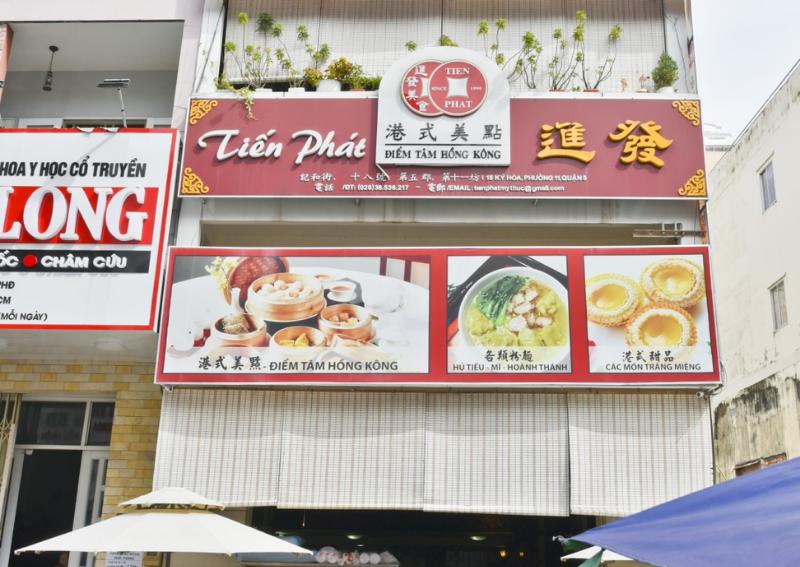
Tien Phat is a well-known destination for traditional Hong Kong-style dim sum and one of the places worth considering for a classic Cholon breakfast. The restaurant is particularly suited to travellers who want to experience dim sum in a lively, local environment rather than a luxury hotel setting. Expect steamed and savoury dishes designed for sharing, with locals often arriving early in the morning. Come hungry and order several different plates for the table to get a better sense of the variety of flavours and textures found in traditional dim sum.
Baoz Dimsum
Baoz Dimsum offers a more contemporary introduction to dim sum in the former District 5 area. Its menu includes steamed, baked and fried dishes, making it easy for first-time visitors to sample several different styles in one meal. The restaurant is particularly convenient if you are exploring An Dong Market and the surrounding streets. It is a good option for groups because dishes are naturally suited to sharing. For visitors new to Chinese food in District 5, the broad menu makes it easy to start with familiar favourites before trying something less familiar.
Van Hoa Restaurant
- Address: 68 to 76 Tan Da Street, Cholon, Ho Chi Minh City
Van Hoa is a long-established local restaurant offering a broad selection of Chinese influenced dishes. Located in the heart of Cholon, it works well as a stop after exploring nearby markets and traditional streets. Rather than focusing on one signature dish, the restaurant allows diners to order several dishes for the table, reflecting the communal style of Chinese dining. It is particularly suitable for families and groups who want a relaxed sit-down meal and an opportunity to try several flavours at once.
Ai Hue Restaurant
- Address: 412 to 418 Tran Hung Dao Street, Cholon, Ho Chi Minh City
Ai Hue is another established restaurant associated with Cantonese-style dining in Cholon. Its traditional atmosphere and broad menu make it a practical choice for travellers who want to enjoy a proper Chinese meal after exploring the neighbourhood. Order several dishes to share rather than choosing individual meals, as this allows you to experience more of the menu. The restaurant is particularly suitable for groups and families looking for a slower dining experience surrounded by the historic atmosphere of Cholon.
Sui Cao Dai Nuong
- Address: 771 to 773 Nguyen Trai Street, Cholon, Ho Chi Minh City
For something simpler, Sui Cao Dai Nuong is a casual option specialising in sui cao, or Chinese-style dumplings. Dumplings are an easy introduction to Cholon food because they are familiar, comforting and available in different preparations. The restaurant is located along Nguyen Trai, one of the neighbourhood’s important commercial streets, making it convenient to combine with a walking tour. Order dumplings alongside noodles or soup for an uncomplicated local meal that showcases one of the most recognisable elements of Chinese cuisine.
What Chinese Dishes Should You Try in Cholon?
If you are visiting Cholon for the first time, these are some of the dishes worth looking for.
- Dim sum: Start with steamed dumplings, rice rolls, steamed buns and other small dishes, particularly in the morning.
- Wonton noodles: Egg noodles served with wontons and a light, savoury broth are a classic choice for a quick meal.
- Roasted meats: Look for restaurants displaying roast duck, char siu and crispy pork in their windows.
- Sui cao: These Chinese-style dumplings can be served in soup or alongside noodles and make an easy introduction to local Chinese food.
- Mi vit tiem: Herbal braised duck served with egg noodles is a particularly distinctive Cholon dish and worth seeking out if you want something beyond dim sum.
- Congee: Rice porridge is commonly enjoyed as a comforting breakfast or light meal.
- Chinese herbal soups: Slow-cooked soups using herbs, meat and other ingredients offer another insight into traditional Chinese food culture.
When Is the Best Time to Visit Cholon?
For food, morning is one of the best times to visit. Dim sum restaurants and noodle shops are active early in the day, while markets are already busy with local shoppers and traders.
For sightseeing, late afternoon can be more comfortable. Explore the temples and streets as the temperature begins to drop, then stay for dinner. If you visit during Lunar New Year or other traditional festivals, the neighbourhood can feel even more atmospheric, with decorations, incense, cultural activities and family gatherings adding another layer to the experience.
How to Explore District 5 Like a Local
Give yourself at least half a day rather than trying to see the entire area in a few hours. A simple itinerary could begin with breakfast or dim sum, followed by Binh Tay Market and a walk through the surrounding streets. Continue towards Thien Hau Temple and the traditional medicine streets before stopping for coffee or a late lunch.
Most importantly, leave some time for unplanned discoveries. Cholon is a neighbourhood where the details matter. A small noodle shop, an old Chinese sign, a family bakery or a quiet temple courtyard can tell you just as much about the area as its major landmarks.
District 5 or Cholon: Which Name Should You Use?
Travellers often see both “District 5” and “Cholon” when researching the area. The two terms are closely connected, but they are not exactly the same. District 5 was an administrative district, while Cholon refers to the historic Chinese Vietnamese cultural and commercial area, which extends beyond the boundaries of the former district.
For travellers searching for food and culture, both terms remain useful. Try searches such as “Chinese food District 5”, “Cholon food”, “Cholon Ho Chi Minh City” or “Chinese restaurants Ho Chi Minh City” when planning your visit.
Where to Stay for Exploring District 5
After an afternoon exploring Cholon, visiting temples and markets, and stopping for dim sum or a bowl of wonton noodles, returning to a comfortable base in central Saigon makes the rest of your itinerary much easier.
La Siesta Premium Saigon Central sits in the heart of District 1, close to Nguyen Hue Walking Street, Ben Thanh Market and the Saigon riverfront. Its central location makes it convenient to explore the city’s major attractions while also providing an easy base for a half-day trip west towards Cholon.
For travellers comparing the Best hotels in Saigon, the hotel combines an excellent central location with elegant interiors, thoughtful service and a calm atmosphere away from the busiest streets.
Recognised among the Best boutique hotels in Saigon, La Siesta Premium Saigon Central is a natural choice for travellers who want to experience the different layers of Saigon, from the historic landmarks of District 1 to the Chinese heritage, markets and food culture of Cholon.
If your itinerary is built around discovering the city’s food culture, staying centrally means you can spend the day exploring Cholon and return easily to the heart of Saigon in the evening.
