



A Traveler’s Guide to Hanoi History Museums 2026: What to See, When to Go, and Why It Matters
Hanoi rewards travelers who slow down enough to look past the lakes and street food stalls and into the rooms where the country’s modern story was written. For anyone serious about understanding Vietnam, not just photographing it, the city’s military and history museums offer something rare: direct contact with the objects, documents, and machines that shaped a nation.
This guide walks through 7 BEST Hanoi history museums, what makes each one worth the detour, and how to plan a route that actually works on foot, by taxi, or by Grab.
Why Hanoi History Museums Deserve a Full Day (or Two)
Most first-time visitors to Hanoi budget an afternoon for “Hanoi museums.” That’s a mistake. The city’s history museums aren’t redundant versions of each other. The Vietnam Military History Museum covers the sweep of armed conflict from ancient times through 1975 and beyond. The Ho Chi Minh Museum is a biographical and symbolic tribute to the country’s founding leader. The B-52 Victory Museum zooms into eleven specific days in December 1972. Each one answers a different question about how Vietnam became what it is today.
If you’re building a Hanoi itinerary around culture and history rather than nightlife, treat these Hanoi museums as a connected trail rather than a single stop. Several sit within the Ba Dinh district near the Ho Chi Minh Mausoleum complex, making it possible to cover three or four of them in a single, well-planned day.
TOP 7 Must-visit Hanoi History Museums
Vietnam Military History Museum
- Address: 28A Điện Biên Phủ, Ba Đình, Hanoi
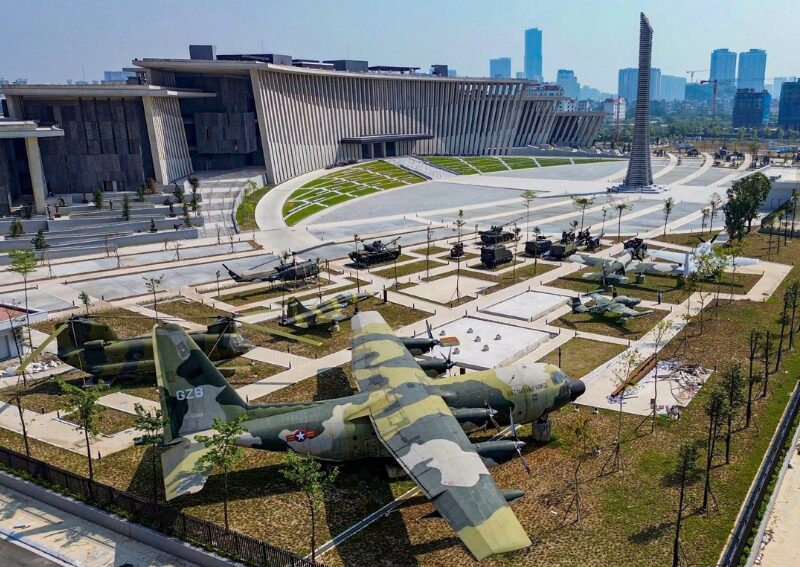
This is the flagship military museum in Hanoi and, for many visitors, the one of the best Hanoi history museums in the city. Now housed in a striking modern building after relocating from its original site, the museum has spent more than six decades collecting and preserving objects tied to Vietnam’s military history. It functions as part of the broader political and ideological apparatus of the Vietnam People’s Army, but for travelers, what matters is the scale and quality of what’s on display.
The museum holds thousands of artifacts, including four objects officially classified as National Treasures of Vietnam: the MiG-21 fighter jet numbered 4324, a second MiG-21 numbered 5121, the operational map used during the Ho Chi Minh Campaign, and the T-54B tank numbered 843, one of the first tanks to break through the gate of the Presidential Palace on April 30, 1975. Standing in front of that tank, knowing exactly what it did and when, is the kind of moment that turns a museum visit into a memory.
The outdoor exhibition area is just as compelling as the indoor galleries. Visitors can walk among an 85mm artillery piece, a 57mm anti-aircraft gun, a PT-67 tank numbered 555, a MiG-17 aircraft numbered 2047, a Su-22 fighter, and an M-107 self-propelled gun nicknamed the “King of the Battlefield.” The combination of documentary footage, photographs, and physical hardware makes complex military history legible even for visitors with no prior background in Vietnamese history. The museum also regularly hosts educational programs for younger visitors, a deliberate effort to keep the line “our people must know our history” alive for new generations.
Good to know: Give yourself at least two hours here. The outdoor aircraft and armor collection alone is large enough to need real walking time, and the indoor galleries are dense with detail worth reading carefully.
Ho Chi Minh Museum
- Address: 19 Ngọc Hà, Ba Đình, Hanoi
Part of the larger Ho Chi Minh Mausoleum complex, this museum was built specifically to honor the life and legacy of Vietnam’s founding president. Its architecture is symbolic rather than purely functional: the building is shaped to evoke a white lotus, representing the purity and simplicity that defined Ho Chi Minh’s public image and personal philosophy.
Inside, the collection moves chronologically and thematically through his life, his role in the independence movement, and his enduring influence on Vietnamese national identity. The displays combine personal artifacts, documents, and large-scale symbolic installations, making this less a conventional war museum and more a tribute museum, comparable in spirit to a presidential library elsewhere in the world.
Good to know: Because it sits inside the Mausoleum complex, plan your visit around the complex’s stricter entry rules, modest dress is required, and the mausoleum itself has separate, limited viewing hours, typically closed on Mondays and Fridays.
Vietnam Museum of Revolution (Vietnam History Museum)
- Address: 25 Tông Đản, Hoàn Kiếm, Hanoi
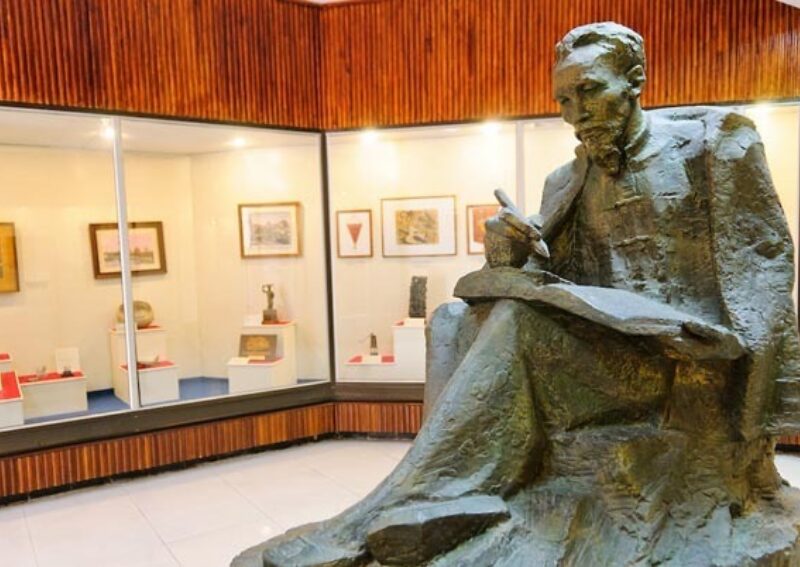
For travelers who want the political and social arc of Vietnam’s independence struggle rather than its military hardware, this museum tells that story across 29 exhibition rooms holding tens of thousands of documents and artifacts. The narrative runs from the 19th century through 1975, covering the colonial period, the rise of revolutionary movements, and the long path to national unification.
This museum rewards visitors who actually read the captions and take time with the documentary material rather than rushing through. It’s less photogenic than a hangar full of fighter jets, but it fills in the political context that makes the military history elsewhere in the city make sense.
Vietnam National Museum of History
This is the deepest dive available into Vietnam’s full historical timeline, and it operates across two separate, architecturally striking buildings, each with an octagonal design that stands out even from the street.
The Tràng Tiền campus covers ancient and medieval Vietnam, including prehistoric archaeology, early dynastic periods, and the centuries of pre-colonial history. The Trần Quang Khải campus picks up the story from the modern colonial period through to the present day. Together, they form the most comprehensive chronological account of Vietnamese history available in any single institution in the country.
Good to know: Because the two campuses cover different eras, decide in advance which period interests you more, or budget time for both. They’re roughly a fifteen-minute walk apart, both easily reachable from the Old Quarter.
Vietnam Air Defence – Air Force Museum
- Address: 171 Trường Chinh, Phương Liệt, Hanoi
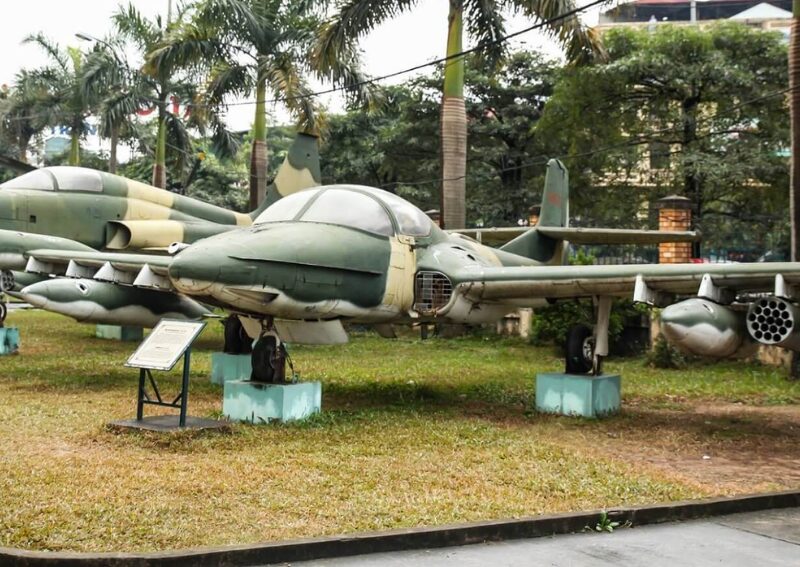
This museum is dedicated specifically to the history of Vietnam’s air defense and air force units, and it has one of the most expansive outdoor collections in the city. The indoor galleries hold documents and photographs tracing the development of the air defense forces, but the outdoor grounds are where most visitors spend their time, walking among anti-aircraft guns, missiles, and aircraft that once defended Hanoi’s skies.
For aviation enthusiasts, this museum and the Vietnam Military History Museum together form a near-complete picture of Vietnam’s air war history, told from the ground defenses up.
Armor Museum
- Address: 108 Hoàng Quốc Việt, Nghĩa Đô, Hanoi
Operated under the Political Department of the Vietnam People’s Army, this museum is dedicated to the history of Vietnam’s armored corps, the tank crews and armored vehicle units who fought through decades of conflict and continue to serve in national defense today. The collection traces their role through the resistance wars and into the postwar period of national construction.
What makes this museum distinct is its role as a living gathering place. Veterans and former tank crew members visit regularly to reconnect with old comrades and revisit shared memories, giving the space an atmosphere that feels less like a static exhibition and more like an ongoing reunion. For visitors, that means the museum carries a personal, human dimension that purely curatorial spaces sometimes lack.
Vietnam Engineering Corps Museum
- Address: 290 Lạc Long Quân, Tây Hồ, Hanoi
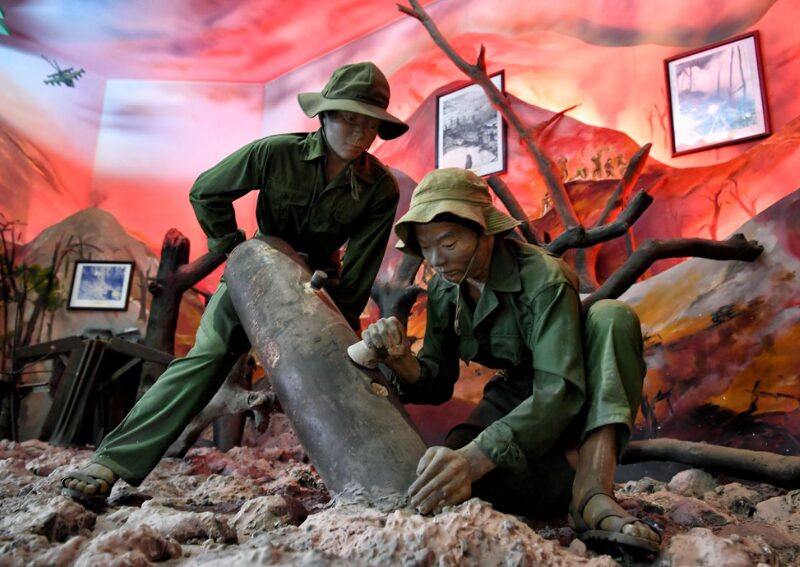
One of the lesser-known stops on this list, and also one of the few that’s completely free to visit. The Engineering Corps Museum is dedicated to the history of Vietnam’s combat engineers, the units responsible for building roads, bridges, fortifications, and clearing paths through some of the most difficult terrain of the war.
Inside, you’ll find documents, photographs, and artifacts tracing the formation and development of these units. The collection of weapons and equipment used by engineering soldiers gives a different, often overlooked angle on the war: the infrastructure and logistics that made military campaigns possible in the first place. Because it’s free and less crowded than the bigger institutions, it’s a good addition for visitors who want a quieter, more reflective stop on their museum route.
Planning Your Hanoi Museums Day
Most of these museums cluster in two areas: Ba Đình (Ho Chi Minh Museum, B-52 Victory Museum, Vietnam Military History Museum) and Hoàn Kiếm/Old Quarter (Vietnam National Museum of History, Vietnam Museum of Revolution). A practical one-day route starts in Ba Đình in the morning, when the Mausoleum complex is open and less crowded, then moves toward Hoàn Kiếm in the afternoon for the history museums closer to the Old Quarter.
A few practical notes for international visitors:
- Most museums are closed on Mondays; check specific hours before you go, especially around Vietnamese public holidays.
- Modest dress (covered shoulders and knees) is expected, particularly at the Ho Chi Minh Museum and Mausoleum complex.
- English-language signage varies by museum; the Vietnam Military History Museum and Vietnam National Museum of History tend to have the most comprehensive English captions.
- Grab (the regional ride-hailing app) is the easiest way to move between sites that aren’t within walking distance of each other.
Where to Stay for the Full Hanoi Experience
After a day spent walking through decades of history, where you rest matters as much as where you explore. For travelers searching for the best hotels in Hanoi, the Old Quarter remains the most logical base, close enough to the history museums in Hoàn Kiếm, a short ride from Ba Đình, and surrounded by the markets, food stalls, and lake views that make Hanoi worth lingering in.
Hanoi La Siesta Classic Ma May, one of the best hotels in Hanoi Old Quarter, sits right in the middle of this. Located on Ma May Street, one of the Old Quarter’s most historically layered corridors, it puts you within easy reach of many Hanoi Museums such as the Vietnam National Museum of History, the Vietnam Museum of Revolution, and the lake itself, while still being close enough to Ba Đình for an early start on the military museums.
The hotel’s traditional architecture and genuinely warm hospitality create the kind of retreat that feels woven into the rhythm of the neighborhood rather than separate from it, a quiet, considered base that restores your energy for another full day of exploring tomorrow.
Among the best boutique hotels in Hanoi, La Siesta Classic Ma May stands out for exactly this reason: it doesn’t pull you away from the city’s story, it puts you closer to it. Whether you’re heading out early to beat the crowds at the Military History Museum or winding down after a long afternoon among tanks and aircraft, this is the kind of place that makes the whole Hanoi experience feel unhurried, well-paced, and entirely your own.

Leave a Reply